

Barbell Bench Press vs Barbell Decline Pullover: Complete Comparison Guide
Barbell Bench Press vs Barbell Decline Pullover — both load the chest heavily, but they do it with different joint mechanics and force vectors. You’ll get clear technique cues, biomechanical explanations (length-tension, force direction, lever arms), equipment needs, and programming advice for hypertrophy and strength. Read this to decide which to prioritize in your program, learn specific cues (retract the scapula, keep feet planted, 5–15° elbow tuck on press; keep slight bend in elbows and control the long lever on pullovers), and see how each exercise recruits pec fibers differently.
Exercise Comparison
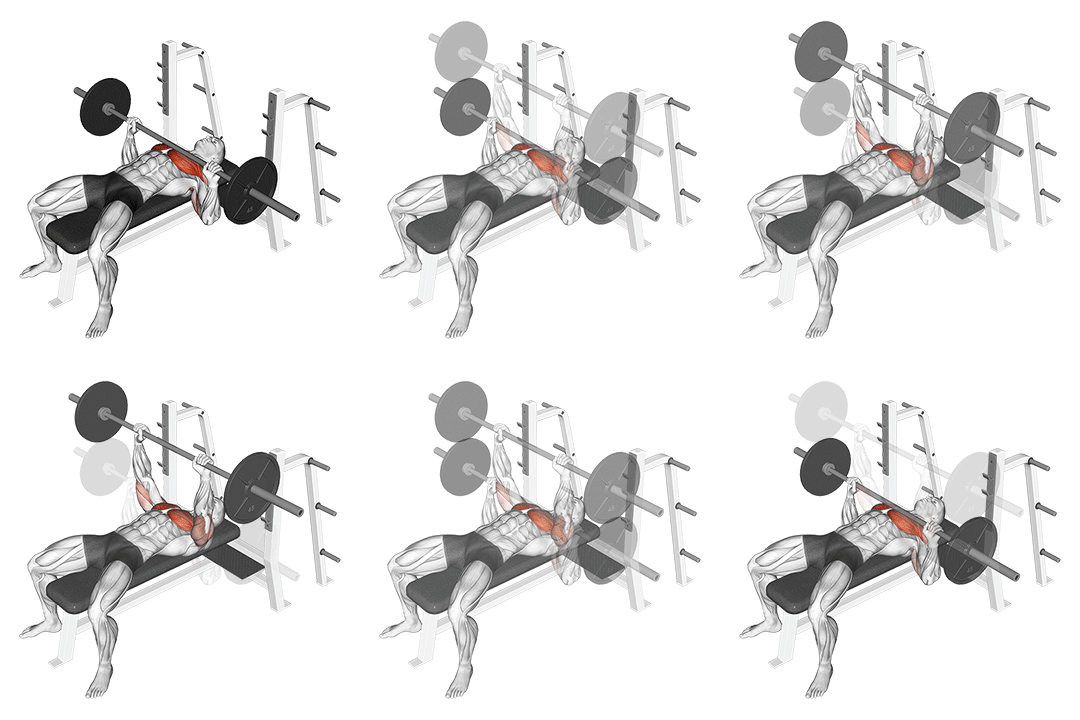
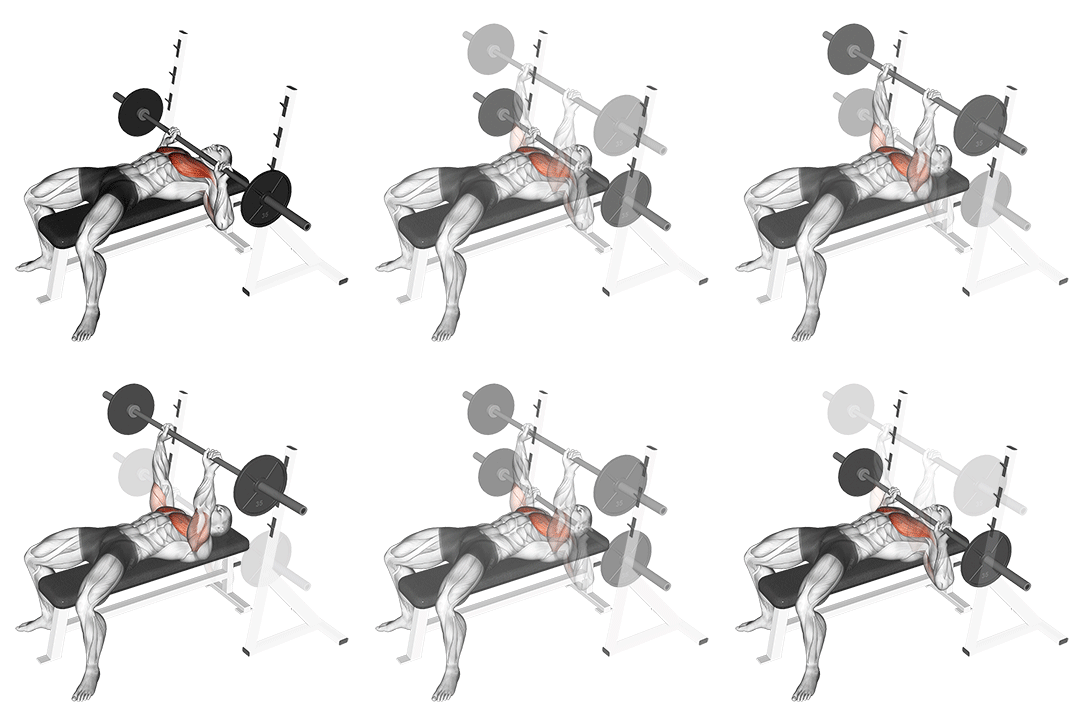
Barbell Bench Press
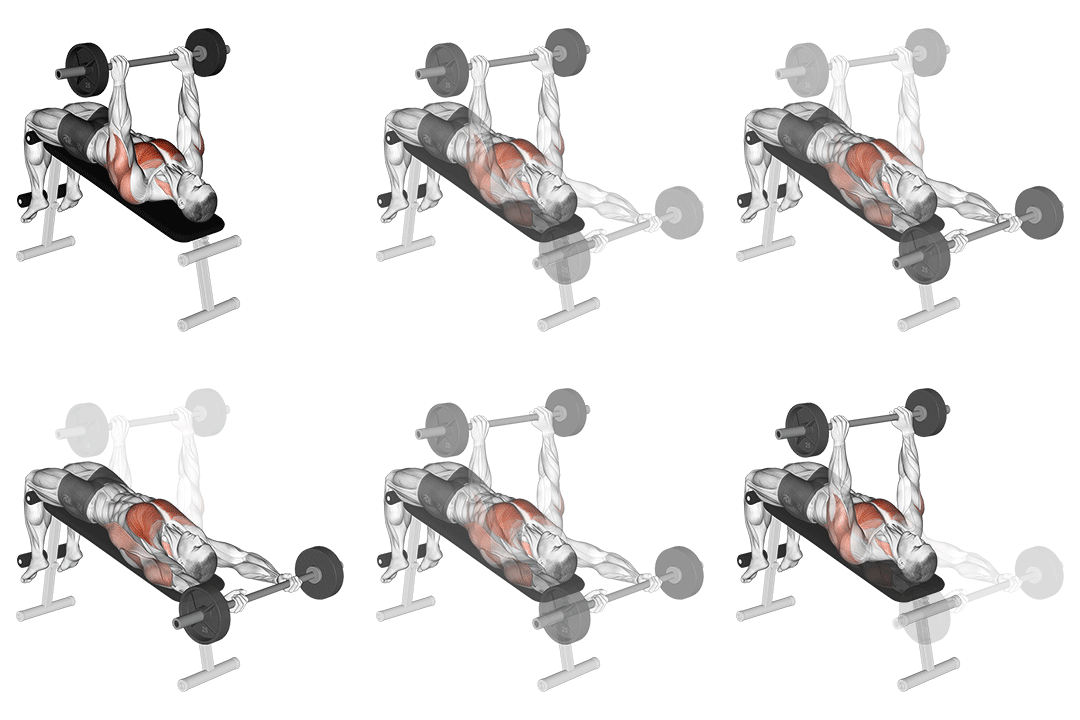
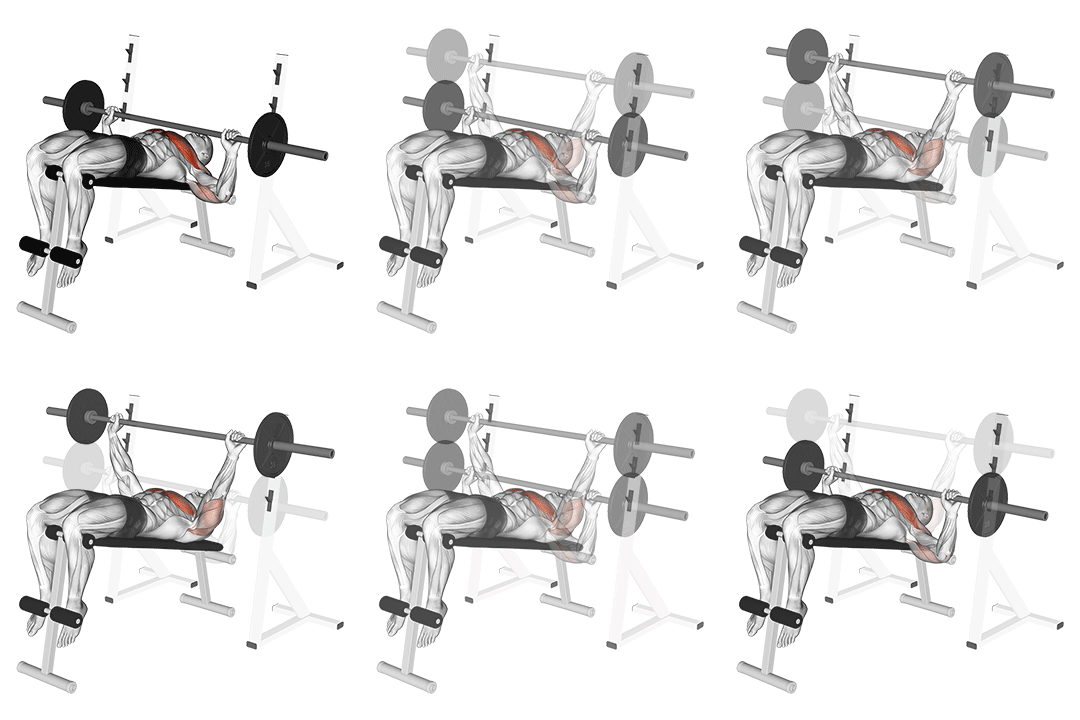
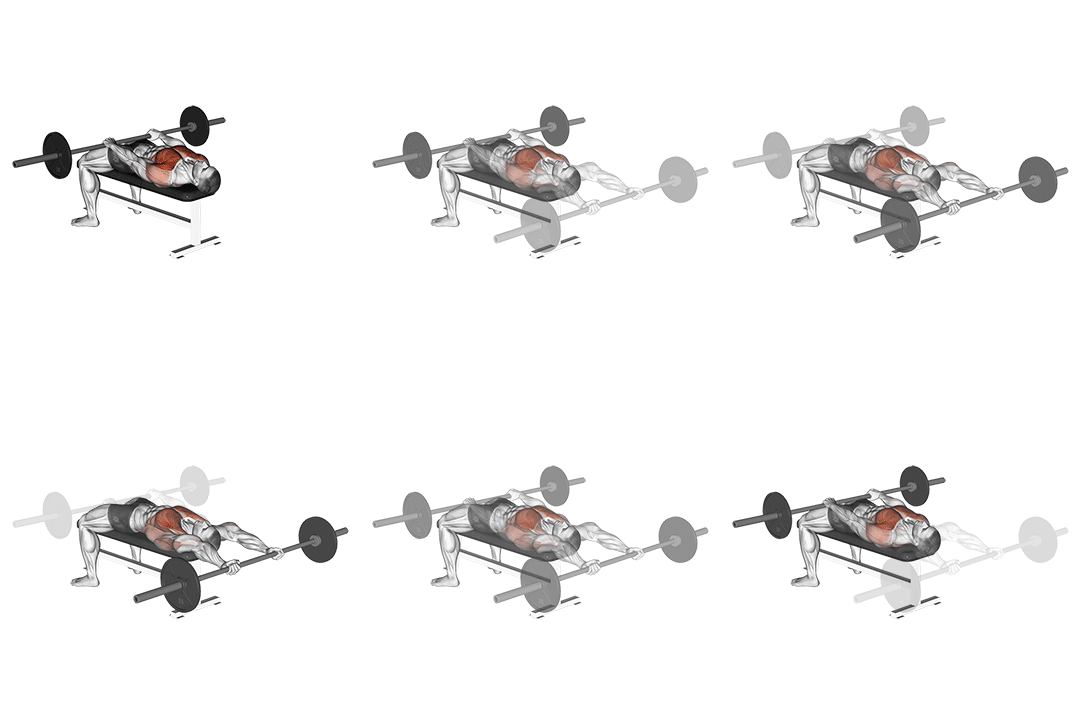
Barbell Decline Pullover
Head-to-Head Comparison
| Attribute | Barbell Bench Press | Barbell Decline Pullover |
|---|---|---|
| Target Muscle |
Pectorals
|
Pectorals
|
| Body Part |
Chest
|
Chest
|
| Equipment |
Barbell
|
Barbell
|
| Difficulty |
Intermediate
|
Intermediate
|
| Movement Type |
Compound
|
Compound
|
| Secondary Muscles |
2
|
2
|
Secondary Muscles Activated
Barbell Bench Press
Barbell Decline Pullover
Visual Comparison
Overview
Barbell Bench Press vs Barbell Decline Pullover — both load the chest heavily, but they do it with different joint mechanics and force vectors. You’ll get clear technique cues, biomechanical explanations (length-tension, force direction, lever arms), equipment needs, and programming advice for hypertrophy and strength. Read this to decide which to prioritize in your program, learn specific cues (retract the scapula, keep feet planted, 5–15° elbow tuck on press; keep slight bend in elbows and control the long lever on pullovers), and see how each exercise recruits pec fibers differently.
Key Differences
- Both exercises target the Pectorals using Barbell. The main differences are in their movement patterns and muscle activation angles.
Pros & Cons
Barbell Bench Press
+ Pros
- Allows high external loads for maximal mechanical tension
- Highly effective for overall chest and pressing strength
- Easy to progress with small weight increments and variations
- Common gym equipment and safer with a rack
− Cons
- Can overload shoulders at extreme loads or poor form
- Less end-range stretch stimulus compared to pullovers
- Requires a spotter or safety pins when pushing near max
Barbell Decline Pullover
+ Pros
- Places pecs under long-length stretch, useful for muscle growth
- Engages lats and serratus for a chest-plus-scapular control stimulus
- Useful accessory for improving thoracic mobility and ribcage expansion
- Can be done with moderate weight and high time under tension
− Cons
- Requires decline bench and more shoulder mobility
- Limited heavy loading due to long lever arm
- Higher technical demand and greater torque on the shoulder
When Each Exercise Wins
Bench press lets you apply heavier loads and target mechanical tension across the pec major using rep ranges of 6–12 and progressive overload. Use pullover as an accessory for added end-range stretch and volume, but primary hypertrophy stimulus comes from heavy, repeatable loading on the bench.
Bench press is a direct strength movement with clear progression (3–6 sets of 1–5 reps) and variations that overload the nervous system. The shorter moment arm and stable setup let you handle heavier absolute loads for neural and structural adaptations.
Beginners benefit from learning a compound horizontal press that builds pressing mechanics, scapular control, and triceps strength with a straightforward bar path. Pullover technique and shoulder control are more advanced and can be introduced later as an accessory.
A flat bench and rack are more commonly available at home than a decline bench; the bench press also scales well (floor press or rack pins) for safety. Decline pullovers require a specific bench angle and more clearance, making them less practical for many home setups.
Frequently Asked Questions
Can I do both Barbell Bench Press and Barbell Decline Pullover in the same workout?
Yes. Pair the bench press as your heavy compound (3–6 sets of 3–8 reps) and use decline pullovers later as an accessory (2–4 sets of 8–15 reps) to increase time under tension and stretch the pecs. Keep total shoulder volume in check and prioritize form to avoid fatigue-related breakdown.
Which exercise is better for beginners?
Barbell Bench Press is better for beginners because it teaches core pressing mechanics, is easier to spot and load progressively, and has a simpler bar path. Introduce pullover variations later once shoulder control and thoracic mobility improve.
How do the muscle activation patterns differ?
Bench press produces peak concentric pec activation in the mid-range under horizontal adduction, while pullover emphasizes eccentric stretch and end-range tension during shoulder extension. Biomechanically, the pullover increases moment arm torque at the shoulder, shifting some load to lats and stabilizers.
Can Barbell Decline Pullover replace Barbell Bench Press?
No — not if your primary goal is strength or heavy mechanical tension. Pullover is a valuable accessory that complements the bench by adding stretch and scapular control, but it cannot match the bench press for progressive overload and maximal strength development.
Expert Verdict
Use the Barbell Bench Press as your primary chest-builder when your goal is heavy loading, strength, or efficient hypertrophy programming. It provides higher mechanical tension, easier progression, and broad accessibility. Reserve the Barbell Decline Pullover as an accessory to add end-range stretch, improve chest length-tension stimulus, and recruit lats and serratus for scapular control. Program pullover sets for 8–15 reps with controlled eccentrics when you need extra volume or mobility work. If you have shoulder issues or limited decline equipment, prioritize variations like dumbbell pullovers or cable pullovers instead.
Also Compare
More comparisons with Barbell Bench Press
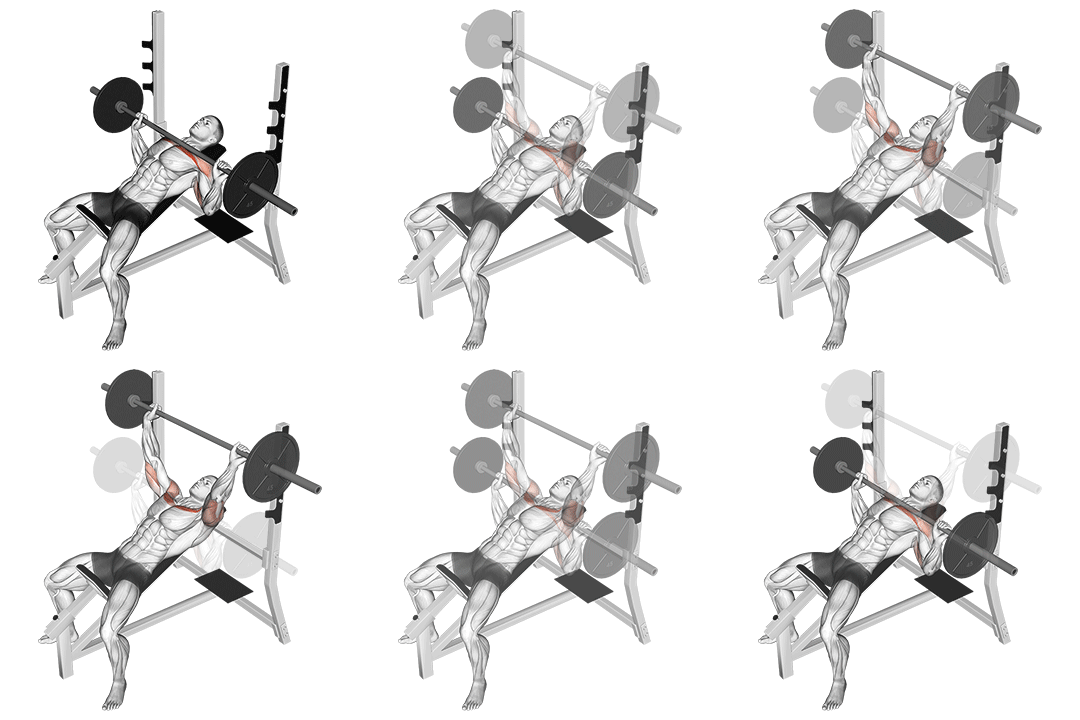
More comparisons with Barbell Decline Pullover
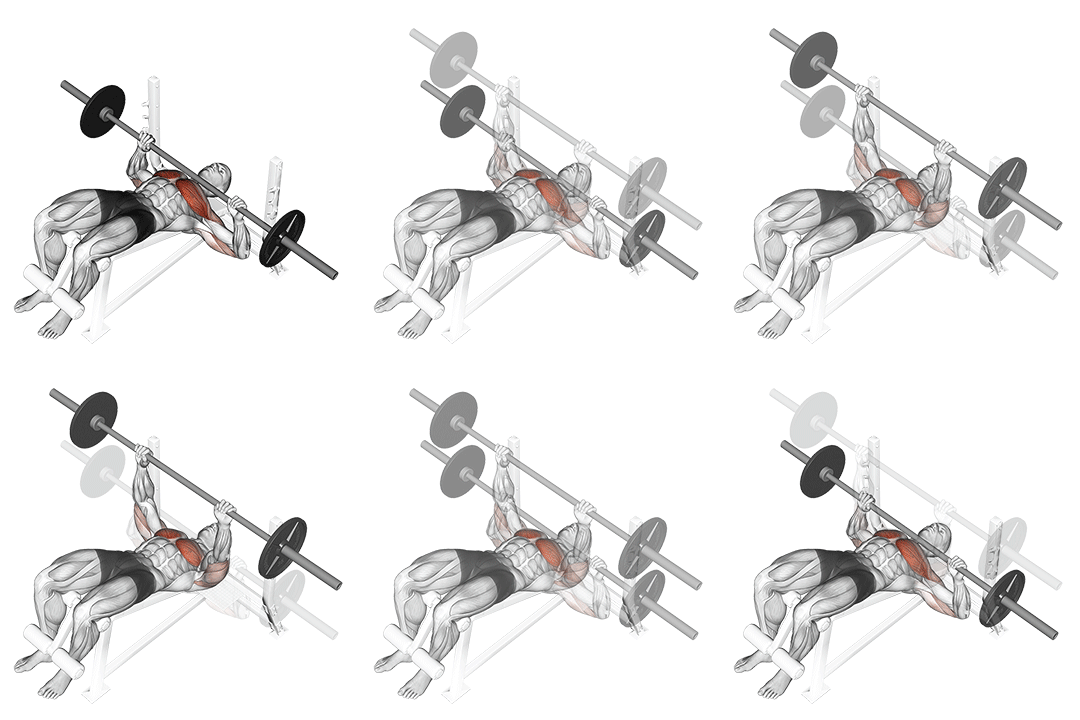
Compare More Exercises
Use our free comparison tool to analyze any two exercises head-to-head.
Compare Exercises