

Barbell Bench Press vs Barbell Decline Wide-grip Press: Complete Comparison Guide
Barbell Bench Press vs Barbell Decline Wide-grip Press — two compound barbell moves that load the pectorals, triceps, and shoulders. You’ll get a clear, practical comparison of muscle emphasis, equipment needs, technique cues, and risk factors. I’ll explain the biomechanics—force vectors, length-tension relationships, and typical angles (decline benches commonly sit between −15° and −30°)—then give decisive recommendations for hypertrophy, strength, beginners, and home setups so you can pick the lift that matches your goals.
Exercise Comparison
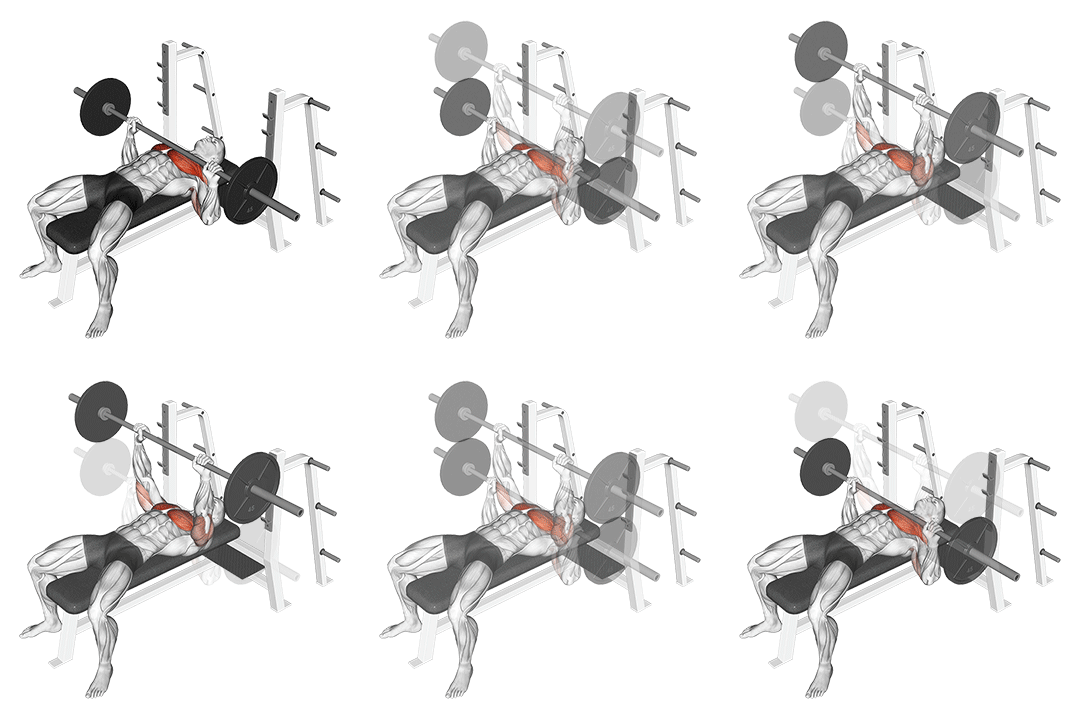
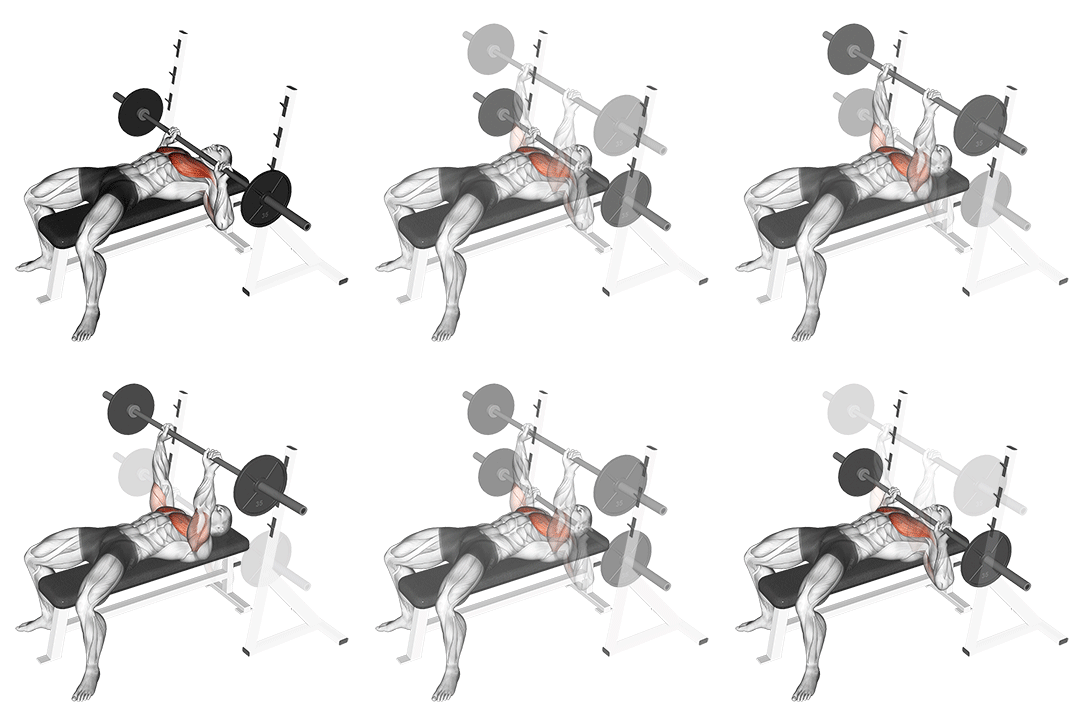
Barbell Bench Press
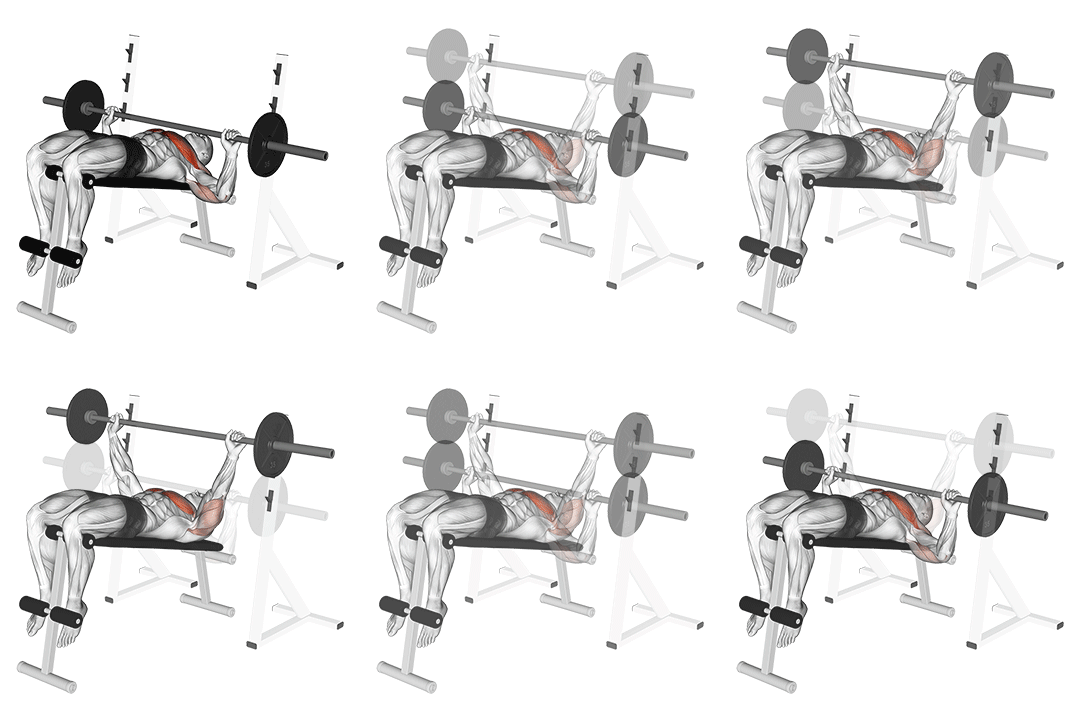
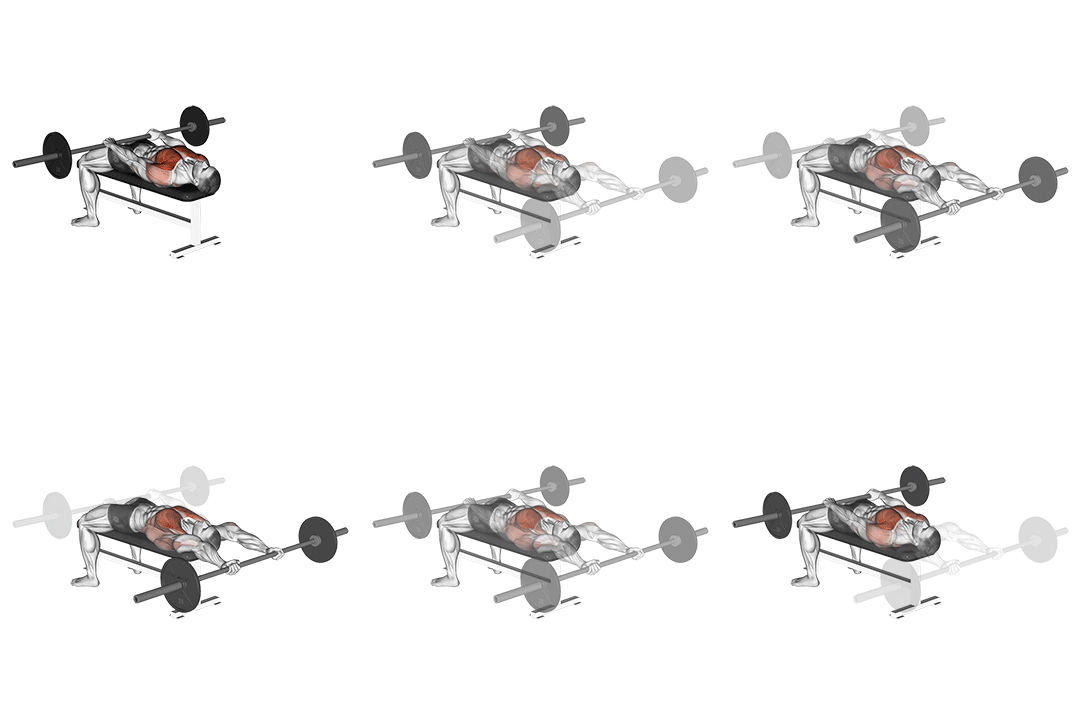
Barbell Decline Wide-grip Press
Head-to-Head Comparison
| Attribute | Barbell Bench Press | Barbell Decline Wide-grip Press |
|---|---|---|
| Target Muscle |
Pectorals
|
Pectorals
|
| Body Part |
Chest
|
Chest
|
| Equipment |
Barbell
|
Barbell
|
| Difficulty |
Intermediate
|
Intermediate
|
| Movement Type |
Compound
|
Compound
|
| Secondary Muscles |
2
|
2
|
Secondary Muscles Activated
Barbell Bench Press
Barbell Decline Wide-grip Press
Visual Comparison
Overview
Barbell Bench Press vs Barbell Decline Wide-grip Press — two compound barbell moves that load the pectorals, triceps, and shoulders. You’ll get a clear, practical comparison of muscle emphasis, equipment needs, technique cues, and risk factors. I’ll explain the biomechanics—force vectors, length-tension relationships, and typical angles (decline benches commonly sit between −15° and −30°)—then give decisive recommendations for hypertrophy, strength, beginners, and home setups so you can pick the lift that matches your goals.
Key Differences
- Both exercises target the Pectorals using Barbell. The main differences are in their movement patterns and muscle activation angles.
Pros & Cons
Barbell Bench Press
+ Pros
- Even pectoral activation across clavicular and sternal heads
- Easier to load progressively and track strength (standard strength test)
- Greater gym accessibility and safer unracking in a power rack
- Versatile accessory options (paused, tempo, slingshot, boards)
− Cons
- Higher anterior shoulder demand if technique is poor
- Less emphasis on lower pec fibers compared with decline
- Bar path and elbow flare errors increase impingement risk
Barbell Decline Wide-grip Press
+ Pros
- Greater emphasis on lower sternal pec fibers and lower chest shape
- Reduced shoulder flexion demand at the top of the lift
- Can feel stronger for some lifters due to shorter ROM at lockout
- Wide grip increases horizontal abduction, enhancing chest shear loading
− Cons
- Requires a decline bench or adjustable setup, less accessible
- Wider grip and angle can raise pec strain risk if overloaded
- Fewer accessory and progression variations compared to flat bench
When Each Exercise Wins
The flat bench allows heavier progressive overload and a consistent mid-range tension across the pecs, which supports 6–12 rep hypertrophy cycles. Use decline presses as an accessory to target the lower pecs and vary fiber recruitment.
The flat bench is the standard strength benchmark with better transfer to powerlifting and heavier absolute loads due to a more stable setup and easier unracking. Train in 1–5 rep ranges with paused and board variations for maximal carryover.
Beginners learn bracing, bar path, and elbow positioning more safely on a flat bench; racks provide easy safety. Start with technique and light progressive loading before adding decline variations.
Most home gyms include a flat bench and rack or can simulate press work with dumbbells; decline benches are less common and harder to set up safely without dedicated equipment.
Frequently Asked Questions
Can I do both Barbell Bench Press and Barbell Decline Wide-grip Press in the same workout?
Yes. Use the flat bench as your primary heavy sets (3–5 working sets) and add 2–3 accessory sets of decline wide-grip at a lighter intensity (6–12 reps) to emphasize the lower pecs without fatiguing your pressing CNS.
Which exercise is better for beginners?
Barbell Bench Press is better for beginners because it’s easier to spot, rack, and learn bar path and breathing. Begin with light loads to master scapular set, elbow angle, and full-range control before introducing decline variations.
How do the muscle activation patterns differ?
The flat bench creates a near-horizontal force vector that distributes tension across clavicular and sternal heads. The decline wide-grip shifts the vector downward, shortening pec fibers earlier and increasing sternal (lower chest) activation while slightly reducing anterior deltoid demand.
Can Barbell Decline Wide-grip Press replace Barbell Bench Press?
Not as a full replacement. Decline presses are a useful variant for targeting lower pecs, but they lack some progression options and standard strength carryover of the flat bench. Use decline presses to complement, not replace, the flat bench based on your goals.
Expert Verdict
Use the Barbell Bench Press as your primary horizontal press: it’s the most accessible, easiest to progress, and gives balanced pectoral development across rep ranges. Prioritize the flat bench for strength cycles (1–5 reps) and hypertrophy blocks (6–12 reps), and employ strict technique cues—scapular retraction, 45° elbow tuck, full chest-bar contact line—to protect shoulders. Add the Barbell Decline Wide-grip Press selectively as an accessory when you want more lower-pec emphasis, a shorter lockout, or reduced shoulder flexion; keep decline angles between −15° and −30° and use moderate width to limit pec strain. Both lifts have a place; program the flat bench as the foundation and the decline press as a targeted variation.
Also Compare
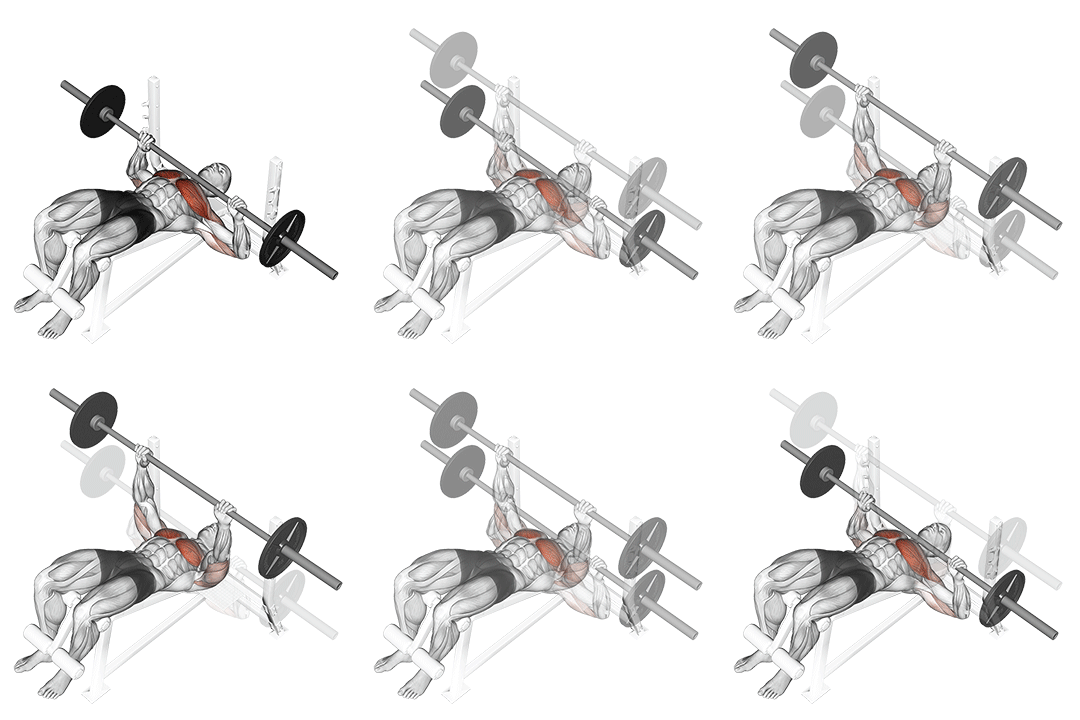
More comparisons with Barbell Bench Press
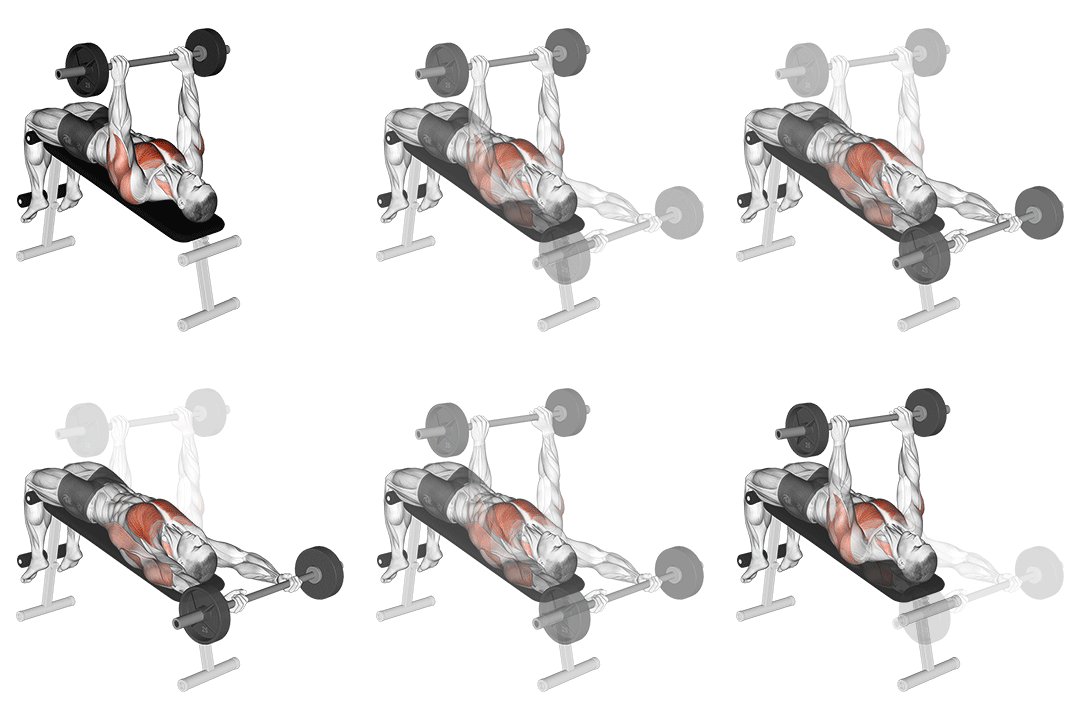
More comparisons with Barbell Decline Wide-grip Press
Compare More Exercises
Use our free comparison tool to analyze any two exercises head-to-head.
Compare Exercises