

Barbell Bench Press vs Barbell Front Raise And Pullover: Complete Comparison Guide
Barbell Bench Press vs Barbell Front Raise And Pullover — two compound barbell moves that hit your chest but in different ways. If you want clear guidance on which to pick, this guide has your back: technique cues, biomechanics, muscle activation, equipment needs, programming tips, and when to prioritize one over the other. You’ll learn how each movement loads the pectorals, how shoulders and triceps assist, recommended rep ranges (3–5 for strength, 6–12 for hypertrophy, 8–15 for accessory work), and practical progressions to match your goals.
Exercise Comparison
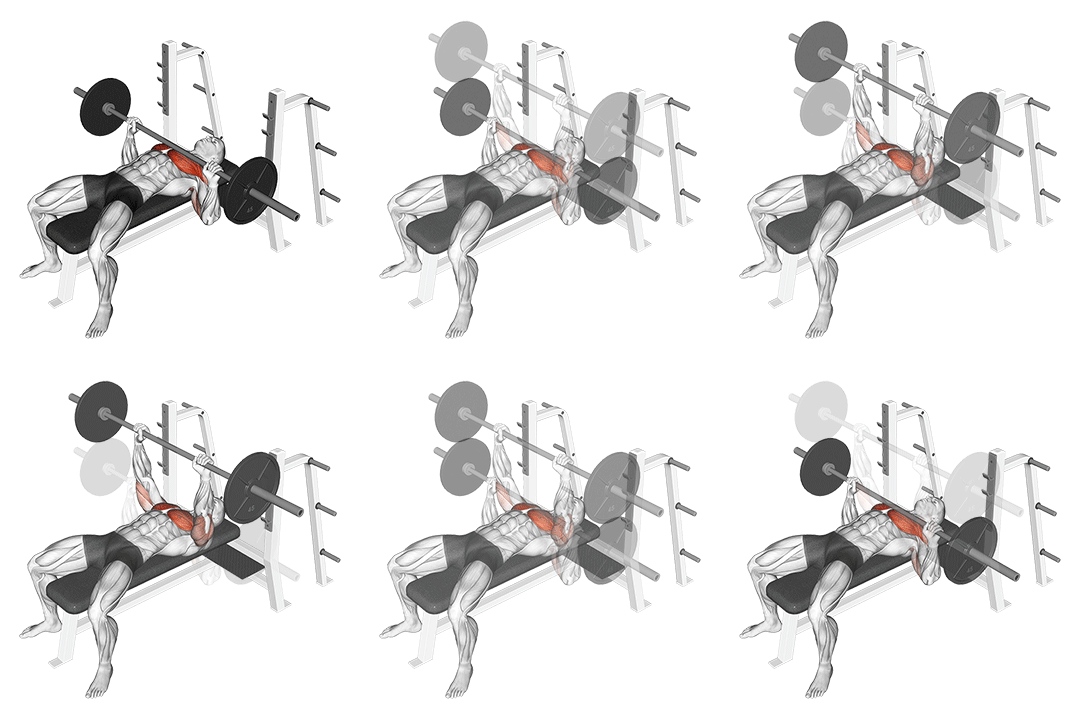
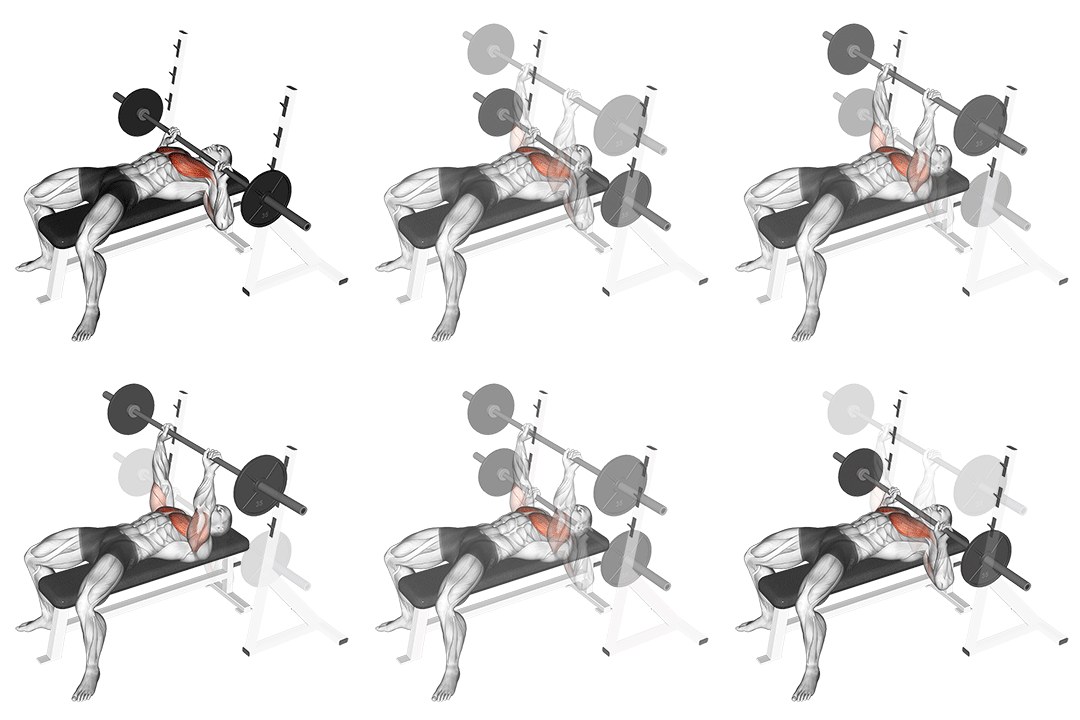
Barbell Bench Press
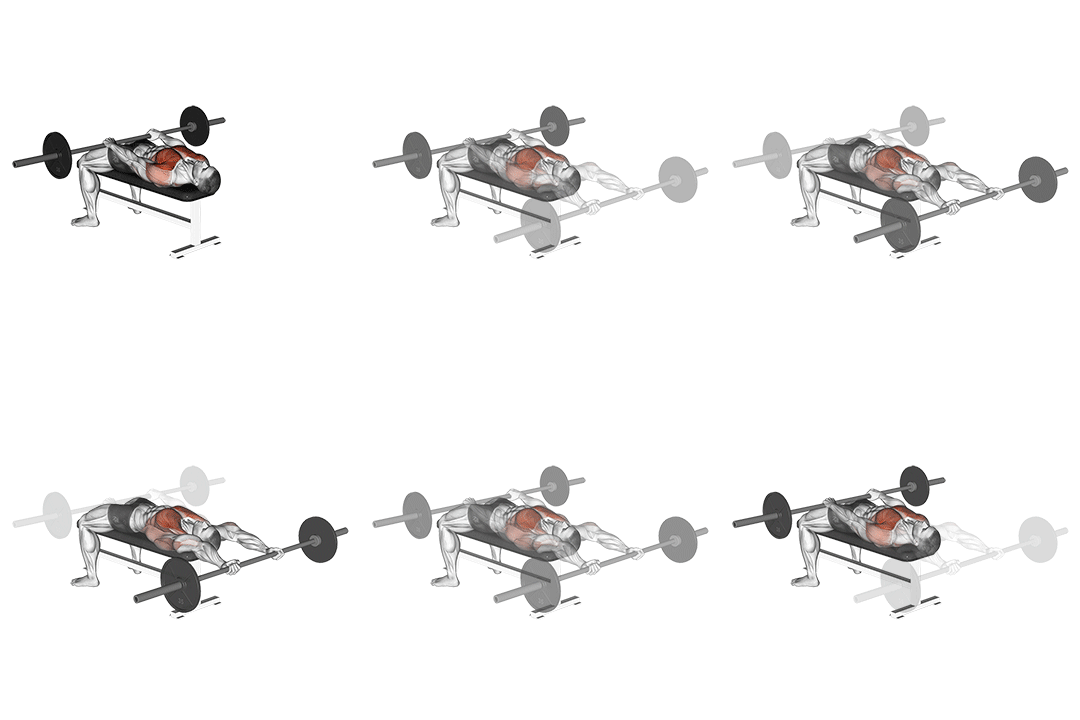
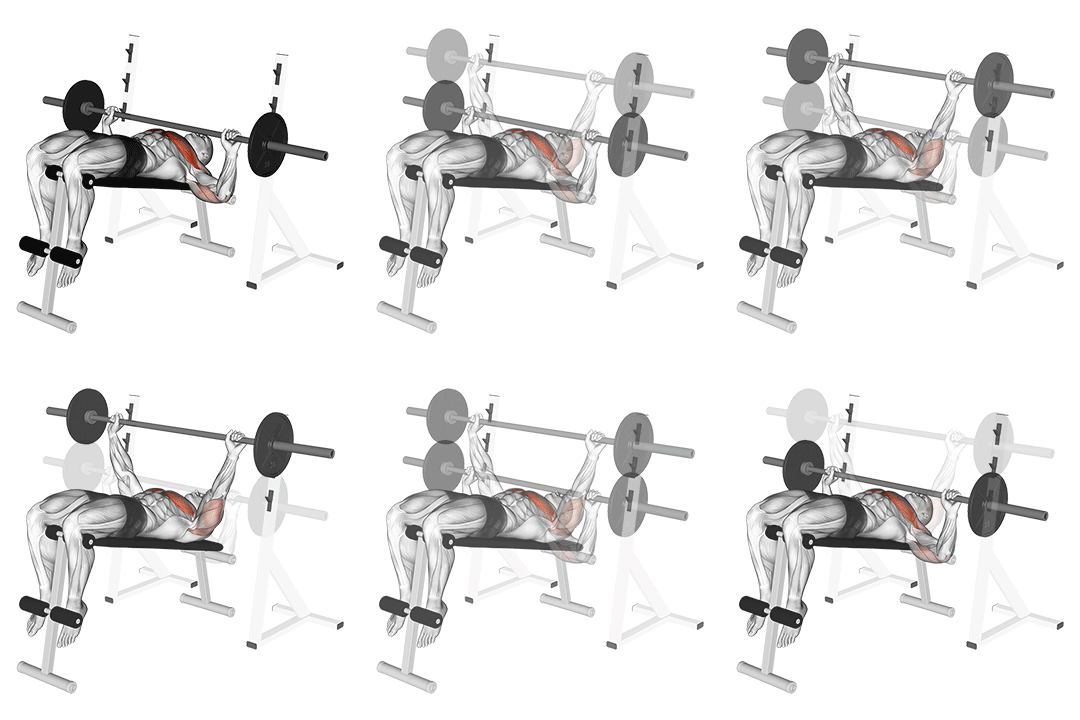
Barbell Front Raise And Pullover
Head-to-Head Comparison
| Attribute | Barbell Bench Press | Barbell Front Raise And Pullover |
|---|---|---|
| Target Muscle |
Pectorals
|
Pectorals
|
| Body Part |
Chest
|
Chest
|
| Equipment |
Barbell
|
Barbell
|
| Difficulty |
Intermediate
|
Intermediate
|
| Movement Type |
Compound
|
Compound
|
| Secondary Muscles |
2
|
2
|
Secondary Muscles Activated
Barbell Bench Press
Barbell Front Raise And Pullover
Visual Comparison
Overview
Barbell Bench Press vs Barbell Front Raise And Pullover — two compound barbell moves that hit your chest but in different ways. If you want clear guidance on which to pick, this guide has your back: technique cues, biomechanics, muscle activation, equipment needs, programming tips, and when to prioritize one over the other. You’ll learn how each movement loads the pectorals, how shoulders and triceps assist, recommended rep ranges (3–5 for strength, 6–12 for hypertrophy, 8–15 for accessory work), and practical progressions to match your goals.
Key Differences
- Both exercises target the Pectorals using Barbell. The main differences are in their movement patterns and muscle activation angles.
Pros & Cons
Barbell Bench Press
+ Pros
- High force production for maximal strength—suitable for 3–5 rep work
- Directly targets sternal pectoralis under heavy load for muscle growth
- Easy progressive overload with small plate increments and variations
- Teaches horizontal push mechanics that translate to many sports
− Cons
- Requires bench and rack or spotter for safe heavy work
- Can irritate shoulders if elbow flare and poor scapular set persist
- Less emphasis on anterior deltoid isolation and long-length pec tension
Barbell Front Raise And Pullover
+ Pros
- Combines anterior deltoid isolation and pec lengthening for TUT
- Requires minimal load to create substantial metabolic stress
- Useful as an accessory to target clavicular pec fibers and shoulder flexors
- Can increase chest stretch through pullover portion, improving ROM
− Cons
- Harder to load for true maximal strength—limited progression ceiling
- Higher technical demand on shoulder mobility and scapular control
- Can transfer stress to lats and triceps, reducing pure pec overload
When Each Exercise Wins
Bench press allows higher absolute loads and progressive overload (6–12 rep ranges with heavy sets), producing greater mechanical tension on the pectorals. Use bench variations plus accessory front-raise/pullover sets to target different fiber angles.
Bench press is the clear strength exercise because you can safely load 3–5 rep sets, manipulate leverage with grip width and bench angle, and apply overload strategies such as paused reps and heavy negatives.
Bench press teaches a basic horizontal pushing pattern with simpler sequencing. Start with light loads, learn scapular retraction and a 30–45° elbow tuck before adding weight; front-raise-plus-pullover requires better shoulder control first.
When you lack a bench or rack, the front-raise-plus-pullover can be done with lighter bars or a single barbell and still deliver chest stimulus through long-arc loading and high time under tension.
Frequently Asked Questions
Can I do both Barbell Bench Press and Barbell Front Raise And Pullover in the same workout?
Yes. Structure the bench press early for heavy compound sets (3–5 or 6–12 reps), then use the front-raise-and-pullover as an accessory for 8–15 reps to increase time under tension and target different fiber angles.
Which exercise is better for beginners?
The bench press is better for most beginners because it teaches horizontal pushing mechanics and scales simply with load increments; beginners should learn scapular retraction and an elbow tuck of ~30–45° before adding heavy weight.
How do the muscle activation patterns differ?
Bench press produces peak pectoral activation in the mid-range under high external load with major triceps and anterior deltoid assistance. The front-raise-plus-pullover sequence isolates anterior deltoid during shoulder flexion, then increases pec activation during the pullover’s eccentric stretch and concentric return.
Can Barbell Front Raise And Pullover replace Barbell Bench Press?
Not if your primary goal is maximal strength or heavy hypertrophy, because the front-raise-pullover combo cannot be loaded to the same absolute intensity. It can replace the bench as a volume or accessory option when equipment is limited or when training around shoulder issues.
Expert Verdict
Use the Barbell Bench Press as your primary chest mover if your goal is maximal strength or hypertrophy—it lets you apply heavy loads, manipulate rep ranges (3–5 for strength, 6–12 for muscle growth), and progress consistently. Add Barbell Front Raise And Pullover as an accessory when you want more anterior deltoid emphasis, pec stretch at long muscle lengths, or a low-load option for chest volume. For balanced chest development, prioritize benching in the main session and program front-raise/pullover variants for higher-rep sets (8–15) or as finishers to increase time under tension and range of motion.
Also Compare
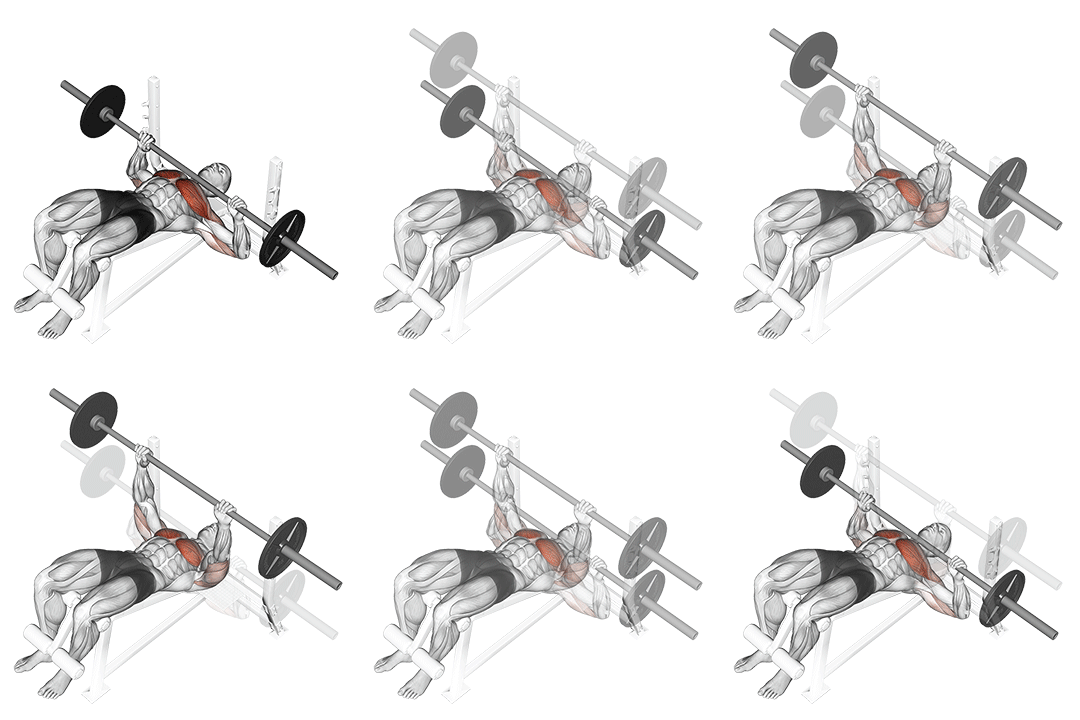
More comparisons with Barbell Bench Press
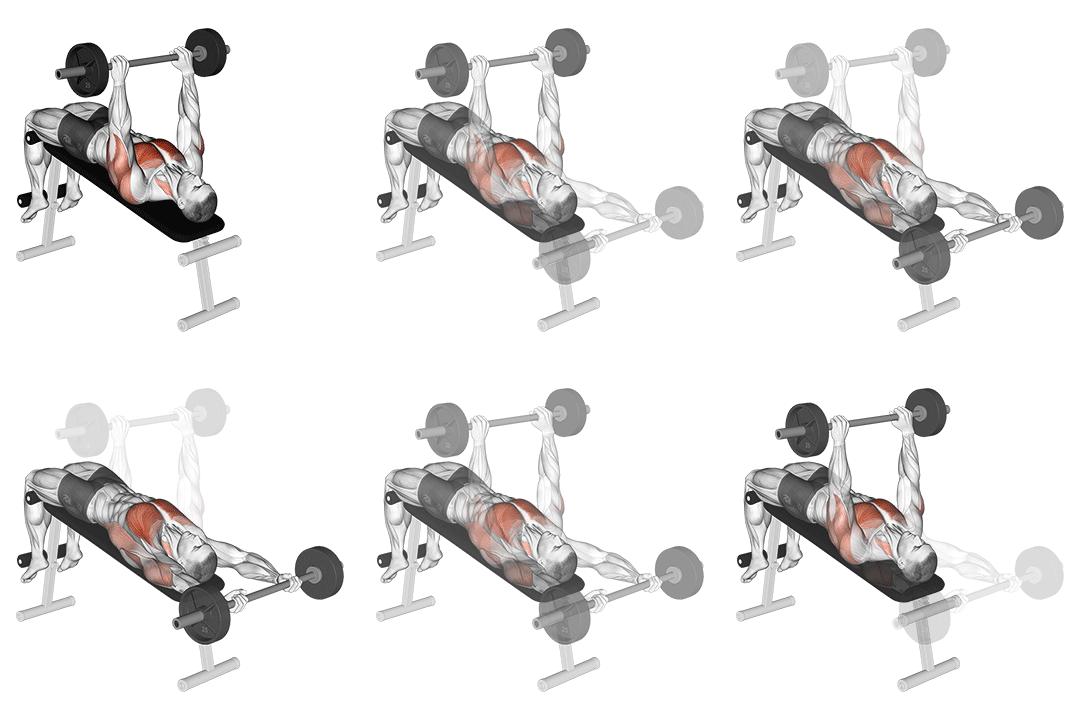
More comparisons with Barbell Front Raise And Pullover
Compare More Exercises
Use our free comparison tool to analyze any two exercises head-to-head.
Compare Exercises