

Barbell Bench Press vs Barbell Guillotine Bench Press: Complete Comparison Guide
Barbell Bench Press vs Barbell Guillotine Bench Press — two compound barbell lifts that both target the pectorals but load the chest and shoulders very differently. If you want clear guidance on which to use for muscle growth, pure pressing strength, shoulder safety, and programming, you’re in the right place. I’ll cover how each exercise stresses the pecs, triceps, and deltoids, show technique cues (grip width, elbow angle, bar path), compare injury risk, and give practical recommendations and rep ranges so you can choose the best tool for your goals.
Exercise Comparison
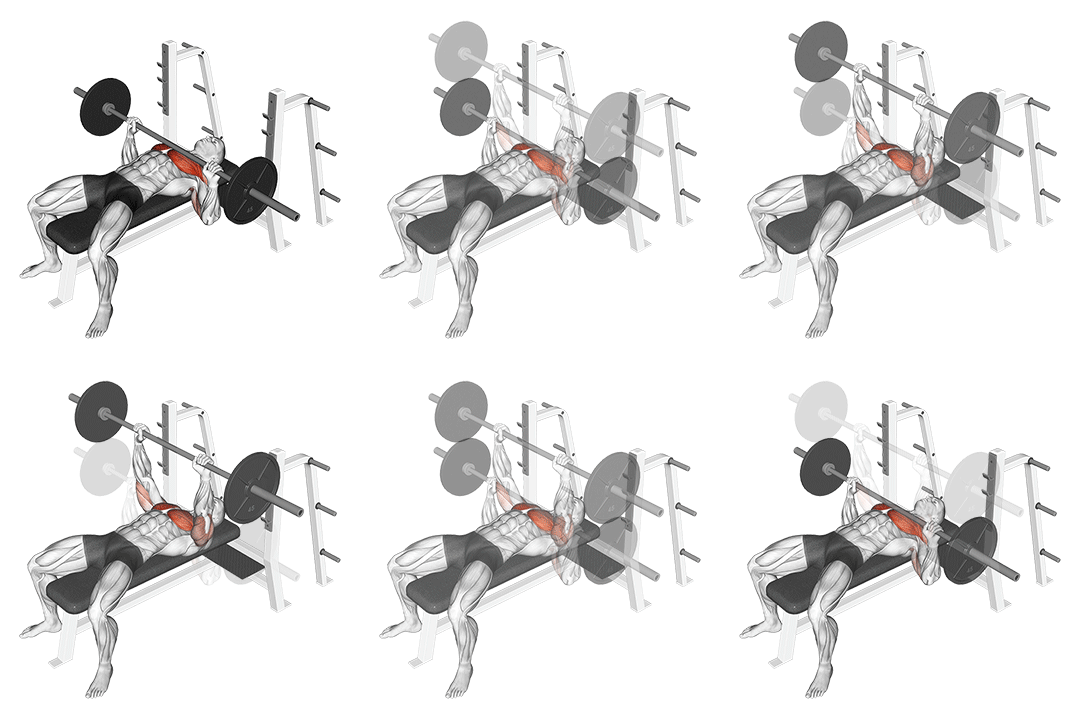
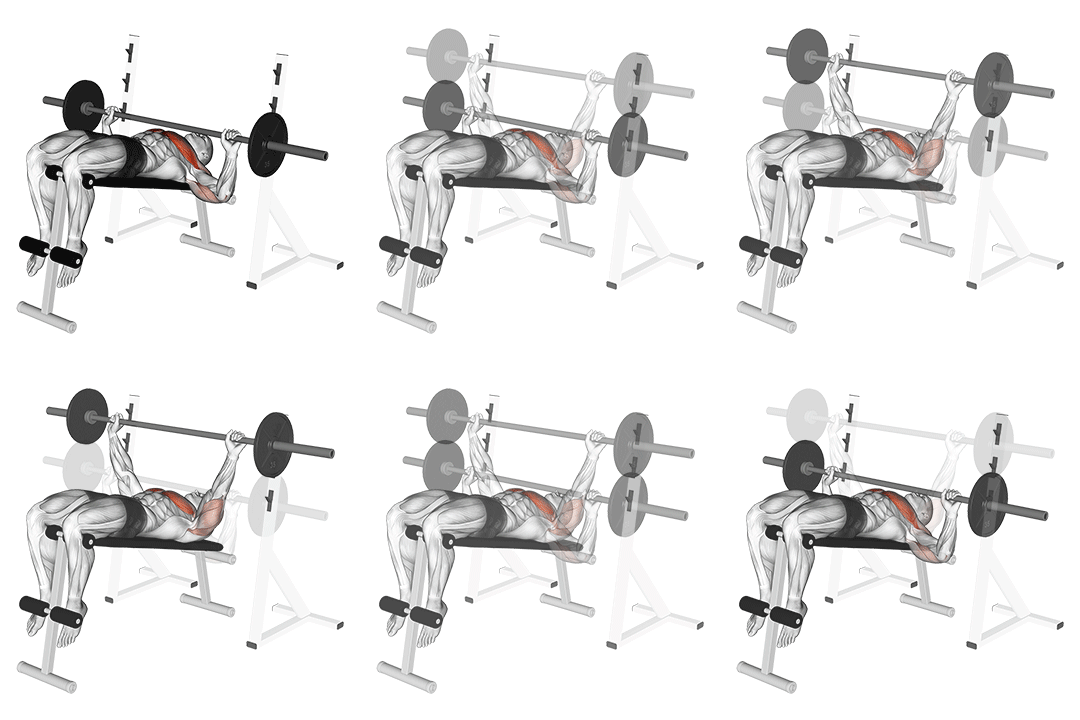
Barbell Bench Press
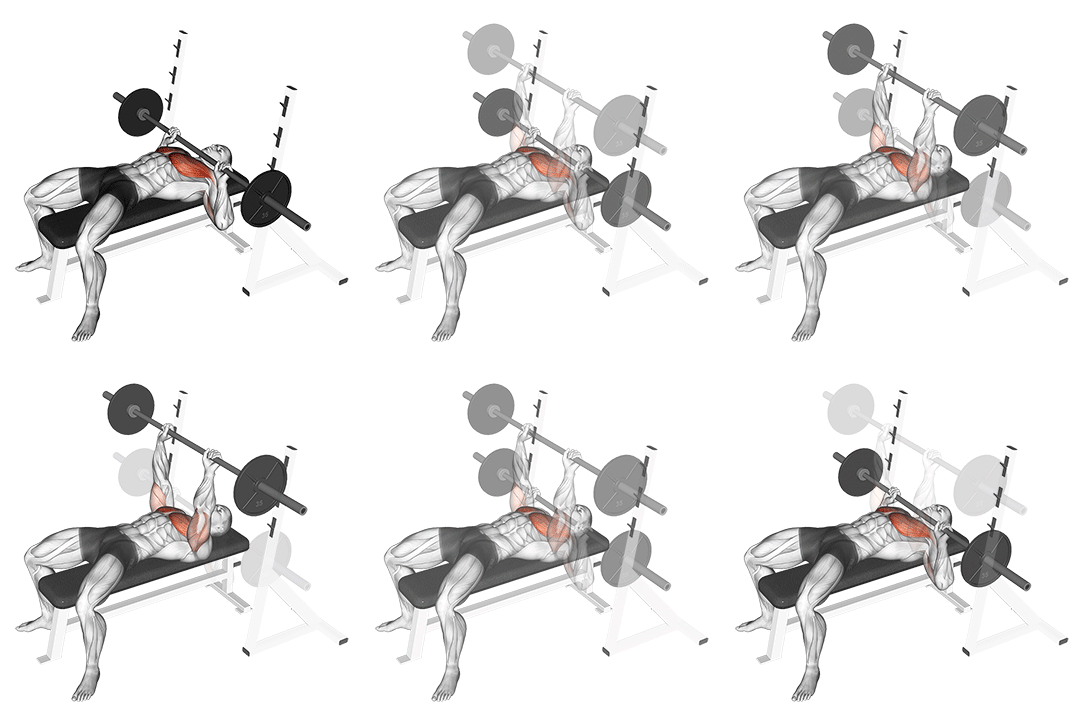
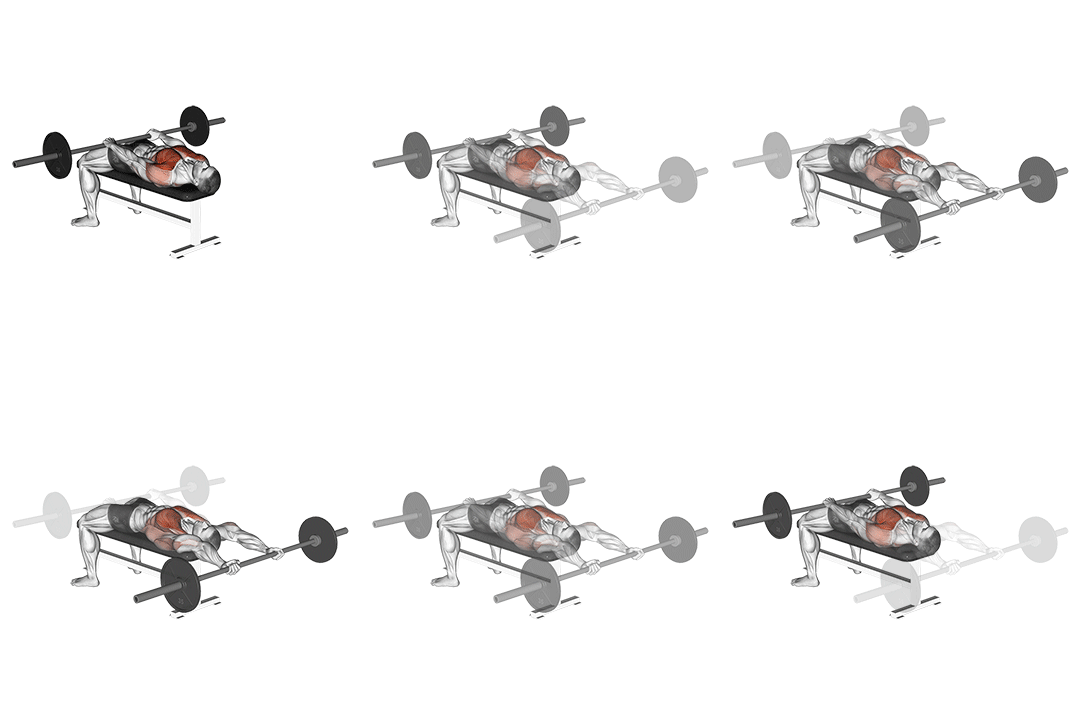
Barbell Guillotine Bench Press
Head-to-Head Comparison
| Attribute | Barbell Bench Press | Barbell Guillotine Bench Press |
|---|---|---|
| Target Muscle |
Pectorals
|
Pectorals
|
| Body Part |
Chest
|
Chest
|
| Equipment |
Barbell
|
Barbell
|
| Difficulty |
Intermediate
|
Advanced
|
| Movement Type |
Compound
|
Compound
|
| Secondary Muscles |
2
|
2
|
Secondary Muscles Activated
Barbell Bench Press
Barbell Guillotine Bench Press
Visual Comparison
Overview
Barbell Bench Press vs Barbell Guillotine Bench Press — two compound barbell lifts that both target the pectorals but load the chest and shoulders very differently. If you want clear guidance on which to use for muscle growth, pure pressing strength, shoulder safety, and programming, you’re in the right place. I’ll cover how each exercise stresses the pecs, triceps, and deltoids, show technique cues (grip width, elbow angle, bar path), compare injury risk, and give practical recommendations and rep ranges so you can choose the best tool for your goals.
Key Differences
- Difficulty levels differ: Barbell Bench Press is intermediate, while Barbell Guillotine Bench Press is advanced.
- Both exercises target the Pectorals using Barbell. The main differences are in their movement patterns and muscle activation angles.
Pros & Cons
Barbell Bench Press
+ Pros
- Pro 1: Efficient for building pressing strength and transferable to powerlifting-style performance
- Pro 2: Safer self-spotting and rack set-up for heavier loads
- Pro 3: Balanced activation of pecs, triceps, and anterior deltoids through full lockout
- Pro 4: Wide progression options (percent-based programs, paused reps, tempo work)
− Cons
- Con 1: May under-emphasize maximal pec stretch compared with deeper variations
- Con 2: Can stress shoulders if form (elbow tuck, scapular retraction) is poor
- Con 3: Less targeted sternal-head specialization without variation
Barbell Guillotine Bench Press
+ Pros
- Pro 1: Places the pecs under greater stretch at the bottom, useful for hypertrophy of the sternal head
- Pro 2: Strong stimulus for eccentric control and chest thickness when performed with moderate loads
- Pro 3: Great accessory for emphasizing mid-chest fiber recruitment and range-of-motion adaptations
- Pro 4: Useful as a specialty tool for experienced lifters seeking variation
− Cons
- Con 1: Higher shoulder and AC-joint stress, increasing injury risk for some lifters
- Con 2: Not ideal for heavy maximal strength training due to changed leverage and safety concerns
- Con 3: Requires a spotter or very specific rack setup and advanced technique
When Each Exercise Wins
The guillotine keeps the pecs at longer muscle lengths and increases stretch-mediated tension, which stimulates sarcomerogenesis when used in 6–12 rep ranges with controlled eccentrics (2–4 seconds). Use lighter loads and strict form to exploit the length-tension benefits safely.
The conventional bench press offers safer leverage for maximal loading, straightforward progressive overload (2.5–10% increments), and better transfer to standard strength tests because it preserves the full lockout and recruits triceps effectively.
Beginners benefit from simpler mechanics, less shoulder strain when learning elbow tuck and scapular retraction, and easier progression using linear programs and basic rep ranges (5–8 reps for strength, 8–12 for hypertrophy).
Home setups usually lack reliable spotters and adjustable low safety pins needed for the guillotine; conventional benching adapts to standard rack heights and offers safer solo training with limited equipment.
Frequently Asked Questions
Can I do both Barbell Bench Press and Barbell Guillotine Bench Press in the same workout?
Yes — but order them strategically. Do the conventional Barbell Bench Press first if you’re training for strength, then add 2–3 sets of Guillotine presses as a hypertrophy-focused finisher with lighter loads and slower eccentrics to avoid excessive shoulder fatigue.
Which exercise is better for beginners?
Barbell Bench Press is better for beginners because it’s easier to learn safe bar path, scapular positioning, and elbow tuck, allowing progressive overload. Guillotine presses demand more shoulder mobility and supervision and should be delayed until technique and scapular control are solid.
How do the muscle activation patterns differ?
The conventional bench builds force through mid-range to lockout, with triceps contributing strongly to the top third; peak pec activation is often mid-range. The guillotine increases pec activation at longer muscle lengths early in the concentric, shifting the peak toward the bottom-to-mid range and reducing triceps demand at the start.
Can Barbell Guillotine Bench Press replace Barbell Bench Press?
Not as a full replacement for strength-focused programs. Replace occasional bench variations with the guillotine for hypertrophy blocks or to target chest thickness, but keep conventional benching for maximal strength and heavy load training due to safer leverage and transfer.
Expert Verdict
Use the Barbell Bench Press as your primary press if you want consistent strength improvements, safer heavy loading, and straightforward programming. It’s the go-to for beginners and strength-focused lifters because the elbow tuck and standard bar path reduce shoulder stress and allow heavier weights. Introduce the Barbell Guillotine Bench Press selectively if your main goal is chest hypertrophy and you’ve already built shoulder resilience; program it for 6–12 reps, controlled 2–4 second eccentrics, and lighter loads (start 10–20% below your regular bench). Always use a spotter, check scapular control, and limit frequency to avoid chronic shoulder irritation.
Also Compare
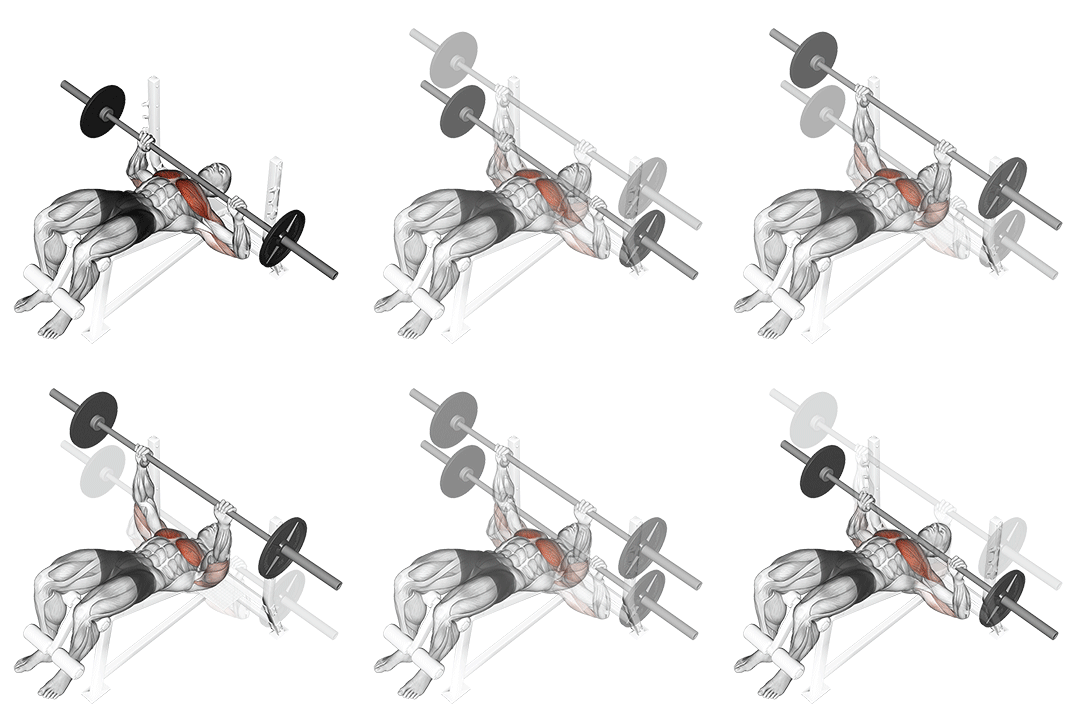
More comparisons with Barbell Bench Press
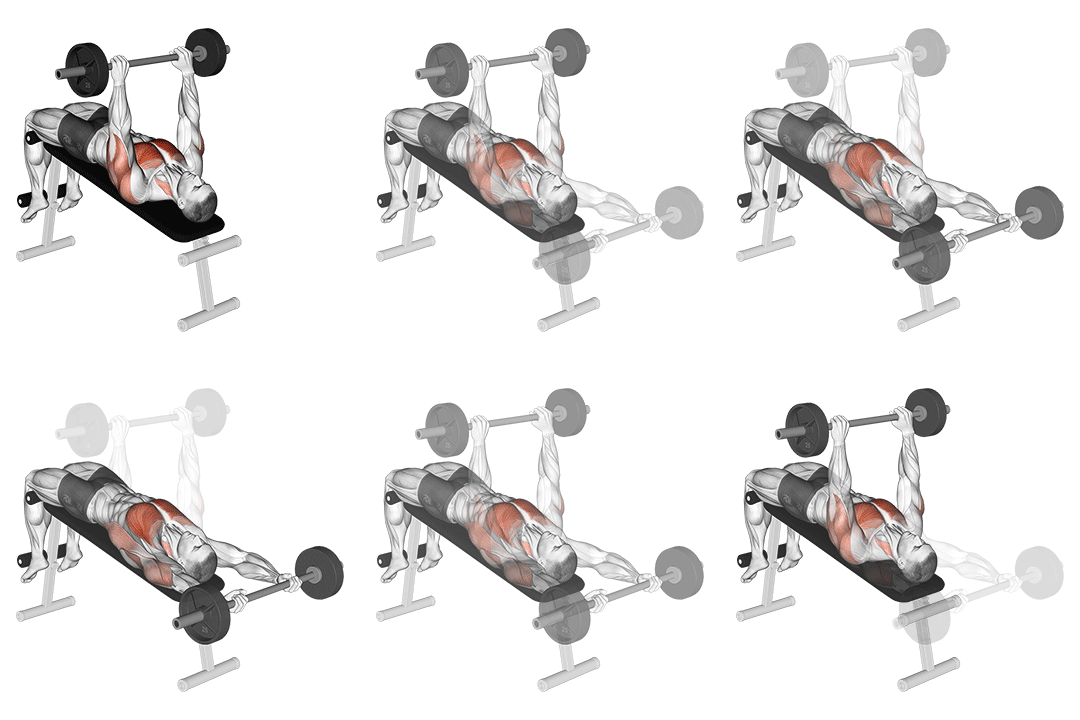
More comparisons with Barbell Guillotine Bench Press
Compare More Exercises
Use our free comparison tool to analyze any two exercises head-to-head.
Compare Exercises