

Barbell Bench Press vs Push-up: Complete Comparison Guide
Barbell Bench Press vs Push-up — you’re deciding which chest builder belongs in your program. I’ll walk you through primary and secondary muscle activation, equipment needs, learning curve, injury considerations, and clear cases when one outperforms the other. You’ll get practical technique cues (elbow angle, hand placement, scapular control), suggested rep ranges for strength and hypertrophy, and straightforward recommendations based on your goals and training environment. Read on to choose the most efficient, safe option for your progress.
Exercise Comparison
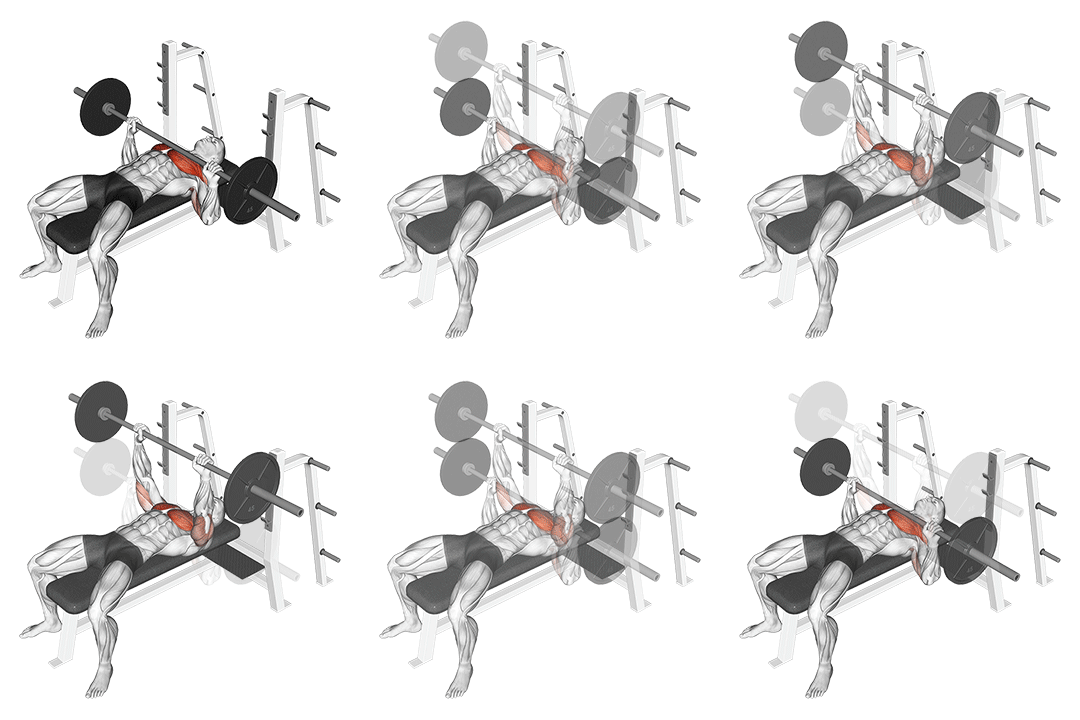
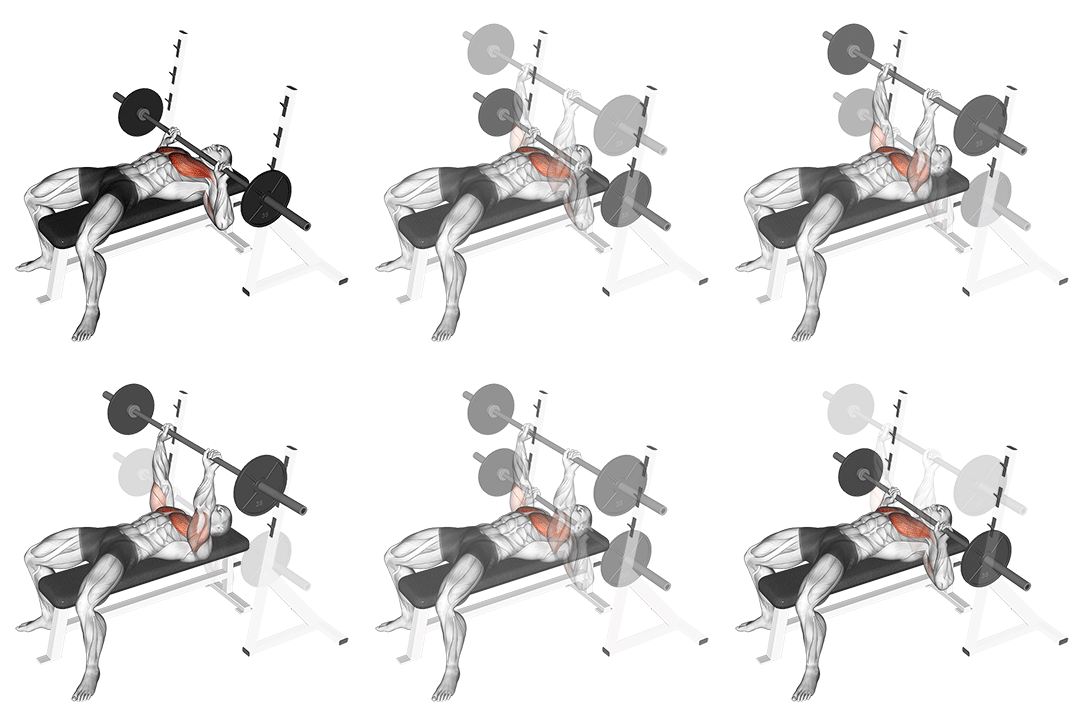
Barbell Bench Press
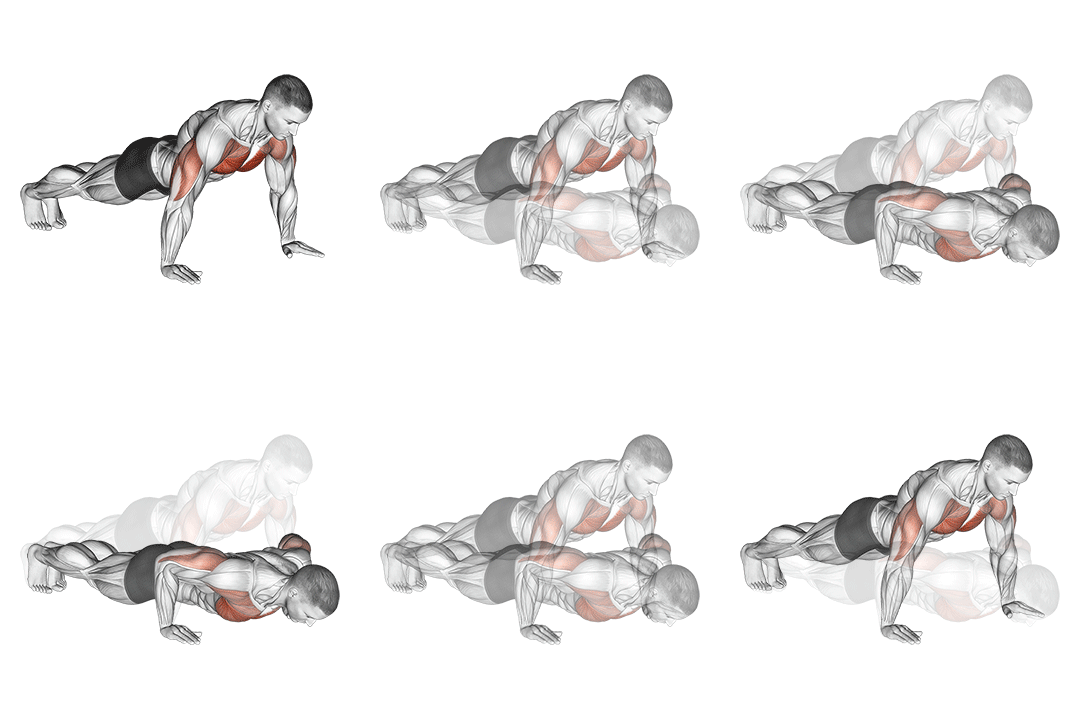
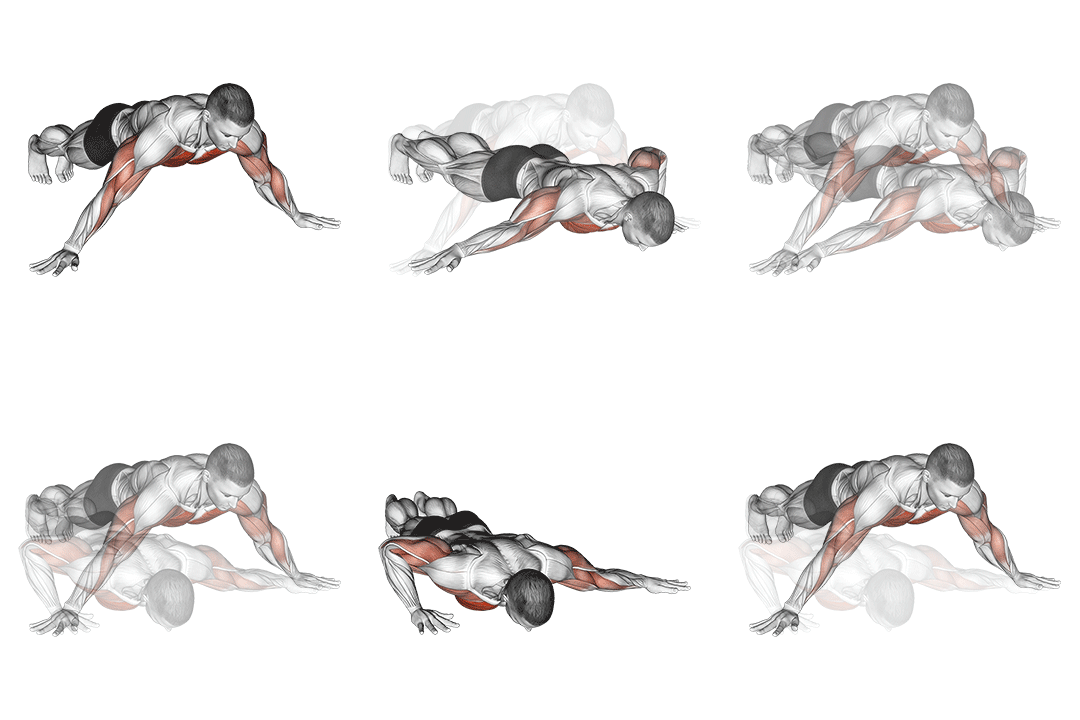
Push-up
Head-to-Head Comparison
| Attribute | Barbell Bench Press | Push-up |
|---|---|---|
| Target Muscle |
Pectorals
|
Pectorals
|
| Body Part |
Chest
|
Chest
|
| Equipment |
Barbell
|
Body-weight
|
| Difficulty |
Intermediate
|
Intermediate
|
| Movement Type |
Compound
|
Compound
|
| Secondary Muscles |
2
|
3
|
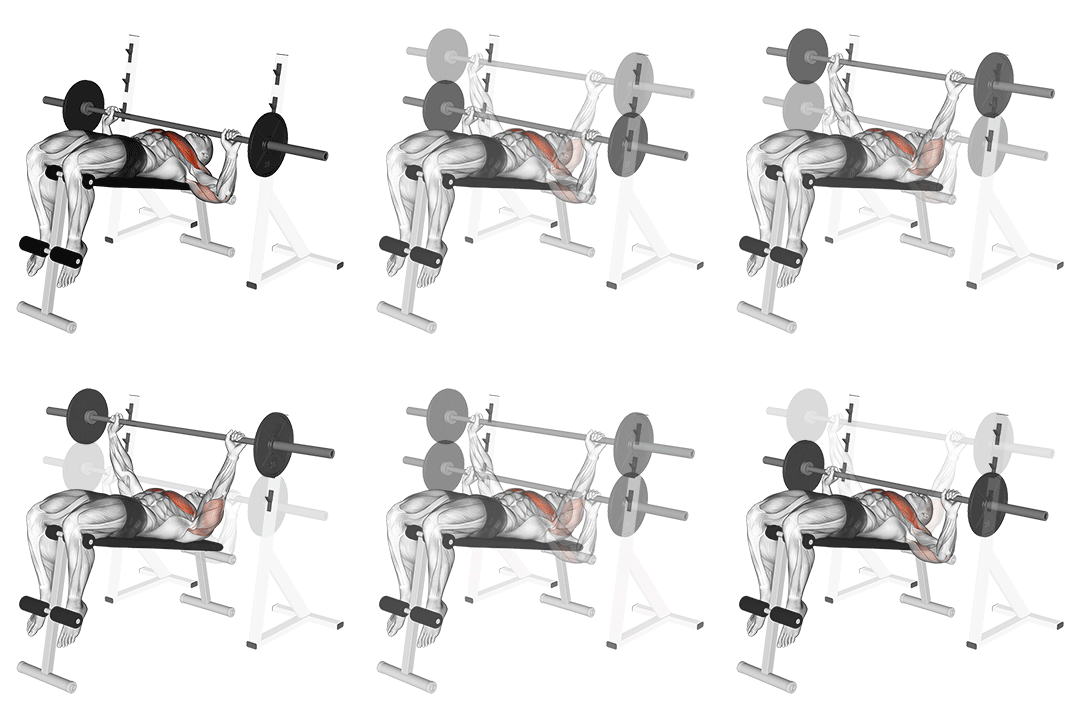
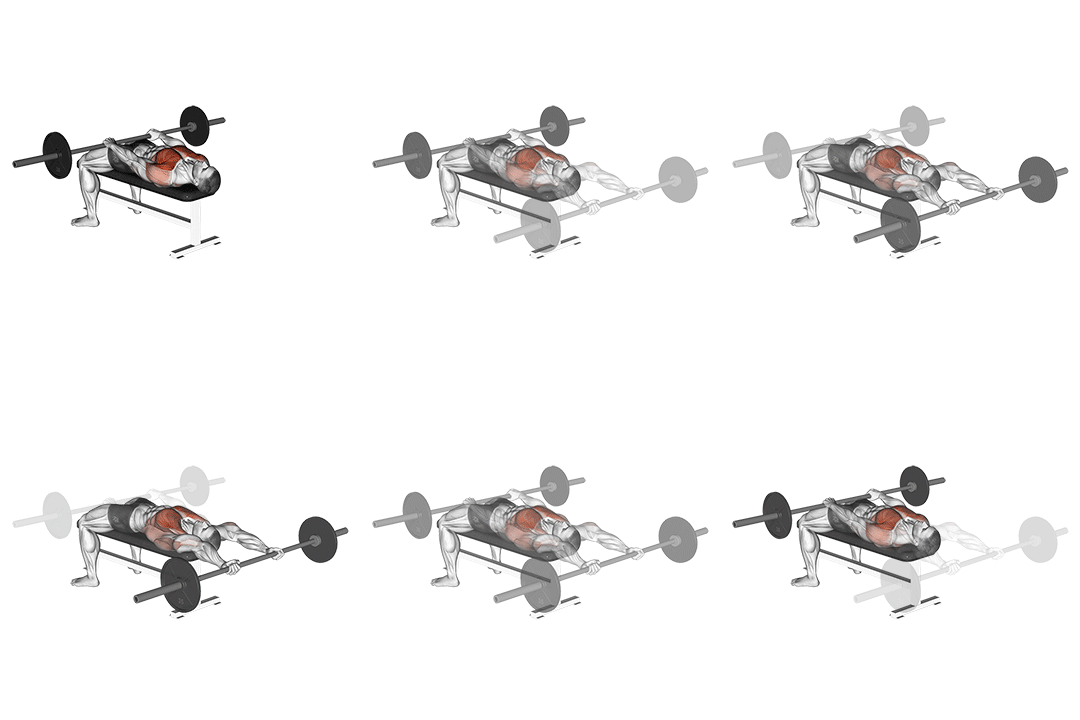
Secondary Muscles Activated
Barbell Bench Press
Push-up
Visual Comparison
Overview
Barbell Bench Press vs Push-up — you’re deciding which chest builder belongs in your program. I’ll walk you through primary and secondary muscle activation, equipment needs, learning curve, injury considerations, and clear cases when one outperforms the other. You’ll get practical technique cues (elbow angle, hand placement, scapular control), suggested rep ranges for strength and hypertrophy, and straightforward recommendations based on your goals and training environment. Read on to choose the most efficient, safe option for your progress.
Key Differences
- Equipment differs: Barbell Bench Press uses Barbell, while Push-up requires Body-weight.
Pros & Cons
Barbell Bench Press
+ Pros
- High mechanical tension and precise progressive overload for muscle growth and 1RM strength
- Easy to quantify load and track weekly progression with small weight increments
- Multiple grip widths and bench angles allow targeted pectoral fiber emphasis
- Better for low-rep maximal strength work (1–5 reps) and structured periodization
− Cons
- Requires equipment (barbell, bench, rack) and often a spotter for heavy sets
- Greater compressive and shear forces on the shoulder joint under heavy loads
- Higher technique demand; poor form increases injury risk
Push-up
+ Pros
- No equipment required and highly accessible for home or travel training
- Promotes scapular mobility and core stability alongside chest and triceps work
- Easy to scale with regressions (knees, incline) and progressions (weighted vest, decline)
- Lower max joint load makes it safer for many lifters when performed correctly
− Cons
- Harder to progressively overload precisely once you exceed bodyweight capacity
- Less absolute load potential for maximal strength development
- Can cause wrist or shoulder discomfort if core and scapular mechanics are poor
When Each Exercise Wins
Bench press allows consistent progressive overload with precise weight increments, producing higher mechanical tension which drives hypertrophy. Use 6–12 rep sets with controlled 2–3 second eccentrics and varied grip widths to target different pectoral regions.
For increasing 1RM and absolute pressing strength, the bench press wins because you can overload with maximal loads (1–5 reps) and manipulate bar speed, pause reps, and deficit/pause variations for neurological and technical improvements.
Push-ups teach spinal alignment, scapular control, and a clear full-body tension cue without heavy external load, making them safer for beginners. Start with 3–4 sets of 8–15 reps and progress by reducing assistance or adding incline/decline to increase difficulty.
Push-ups require no equipment and scale across a wide range of difficulty using tempo, elevation, or a weighted vest. They let you train chest, triceps, shoulders, and core effectively when gym access is limited.
Frequently Asked Questions
Can I do both Barbell Bench Press and Push-up in the same workout?
Yes. Pair heavy bench press as your main strength movement (3–5 sets of 1–5 reps) and follow with push-up variations for volume or conditioning (3–4 sets of 8–20 reps). Use push-ups to emphasize tempo, scapular control, and core stability without compromising bench press recovery.
Which exercise is better for beginners?
Push-ups are generally better for beginners because they teach core bracing and scapular mechanics without heavy external load. Start with regressions and build to full push-ups before adding weighted progressions or moving to barbell bench press with light loads and coaching.
How do the muscle activation patterns differ?
Bench press concentrates force production at the glenohumeral joint with limited scapular motion, producing high pectoral and triceps torque under external load. Push-ups produce similar pectoral activation across the range but add serratus anterior and core involvement due to scapular protraction and plank stabilization.
Can Push-up replace Barbell Bench Press?
Push-ups can replace bench press for general conditioning, hypertrophy for novice-to-intermediate trainees, and home training, but they don’t fully substitute for bench press if your goal is maximal strength. To match bench-style overload, add external resistance or advanced push-up variations and track progressive loading quantitatively.
Expert Verdict
Use the barbell bench press when your priority is absolute strength or structured hypertrophy because it lets you control load precisely, manipulate rep ranges (1–5 for strength; 6–12 for hypertrophy), and overload the pectorals and triceps safely with a rack and spotter. Favor push-ups when you need portability, improved scapular mechanics, and added core stability—progress them with weighted vests, tempo changes, or feet-elevated variations to increase challenge. Ideally, include both: bench press as the heavy compound for measured progression and push-ups as an accessory to reinforce scapular control, end-range tension, and extra volume in your program.
Also Compare
More comparisons with Barbell Bench Press
Compare More Exercises
Use our free comparison tool to analyze any two exercises head-to-head.
Compare Exercises