

Barbell Bent Over Row vs Barbell Incline Row: Complete Comparison Guide
Barbell Bent Over Row vs Barbell Incline Row — if you want a stronger, thicker upper back you should pick the most efficient movement for your goal. I’ll compare muscle activation, setup and technique cues, equipment needs, and injury risk so you can choose or program both. You’ll learn how torso angle (30–45° for bent-over, 30° bench incline for the incline row), force vectors, and scapular mechanics change which fibers get stressed, plus practical rep ranges for strength (3–6) and hypertrophy (6–12).
Exercise Comparison
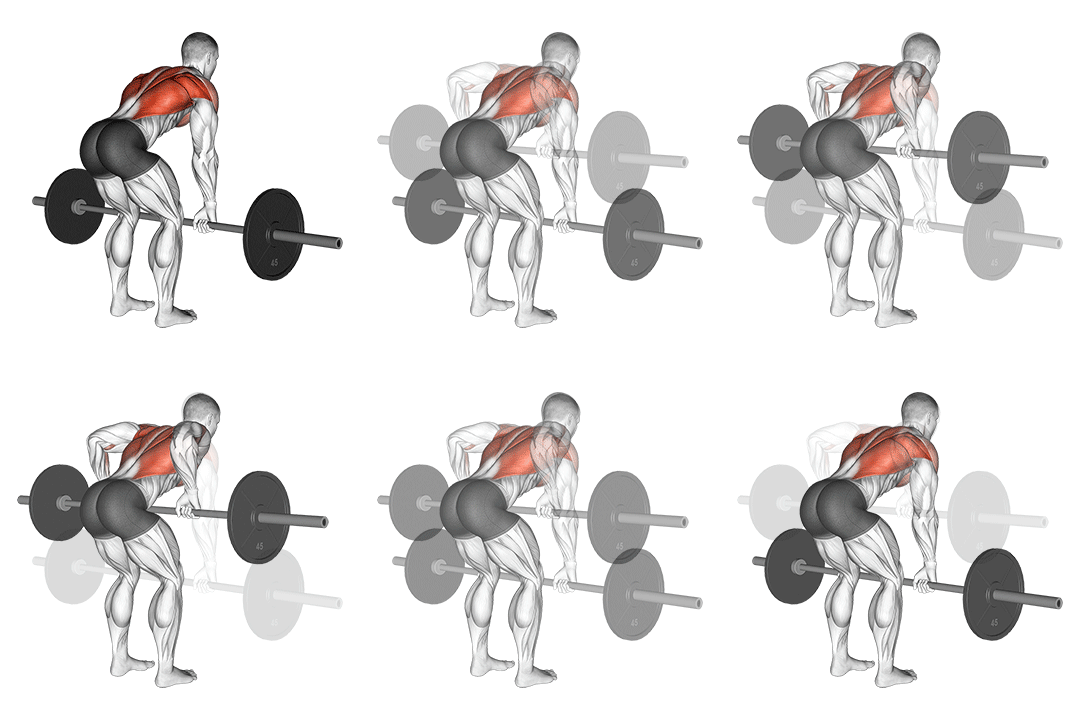
Barbell Bent Over Row
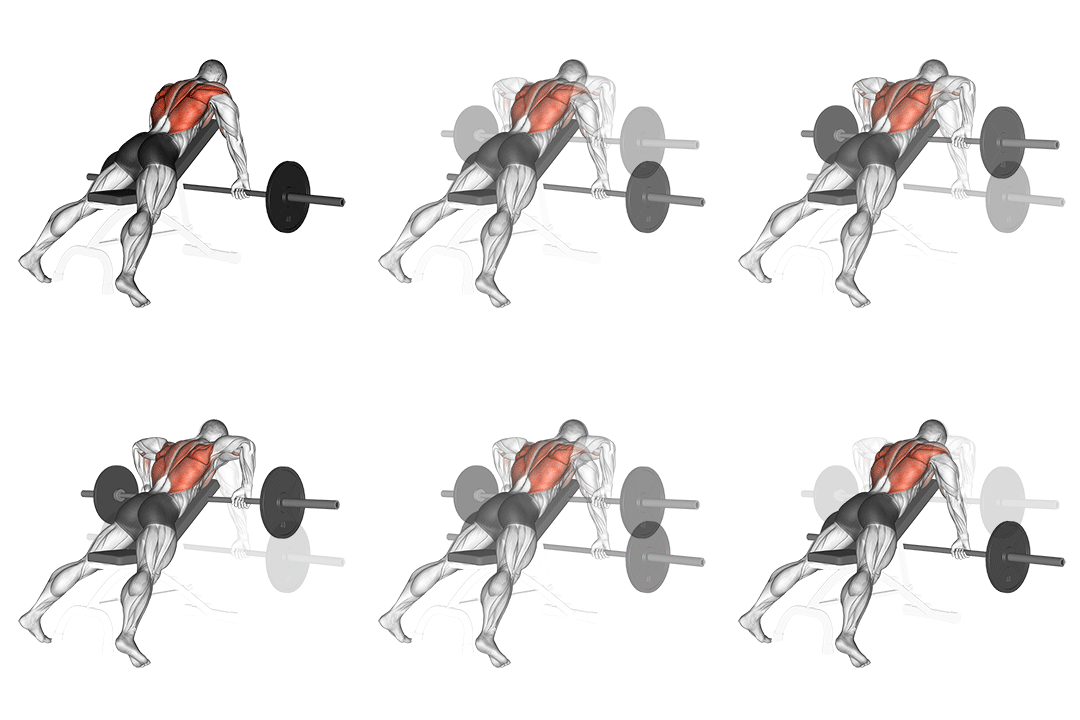
Barbell Incline Row
Head-to-Head Comparison
| Attribute | Barbell Bent Over Row | Barbell Incline Row |
|---|---|---|
| Target Muscle |
Upper-back
|
Upper-back
|
| Body Part |
Back
|
Back
|
| Equipment |
Barbell
|
Barbell
|
| Difficulty |
Intermediate
|
Intermediate
|
| Movement Type |
Compound
|
Compound
|
| Secondary Muscles |
2
|
2
|
Secondary Muscles Activated
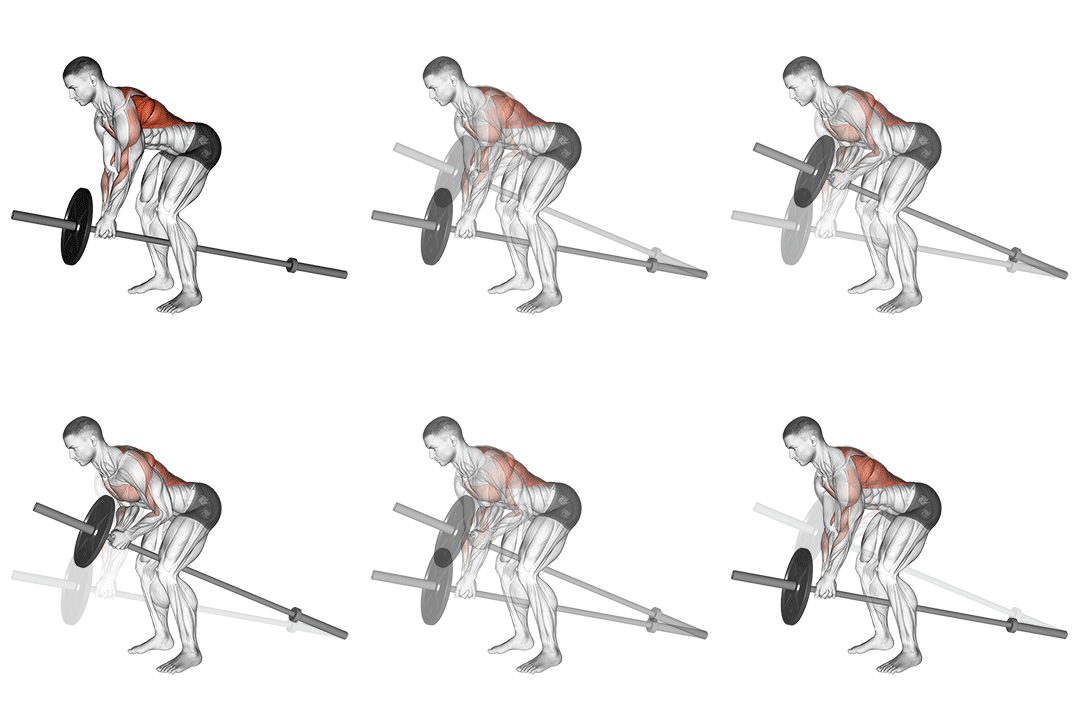
Barbell Bent Over Row
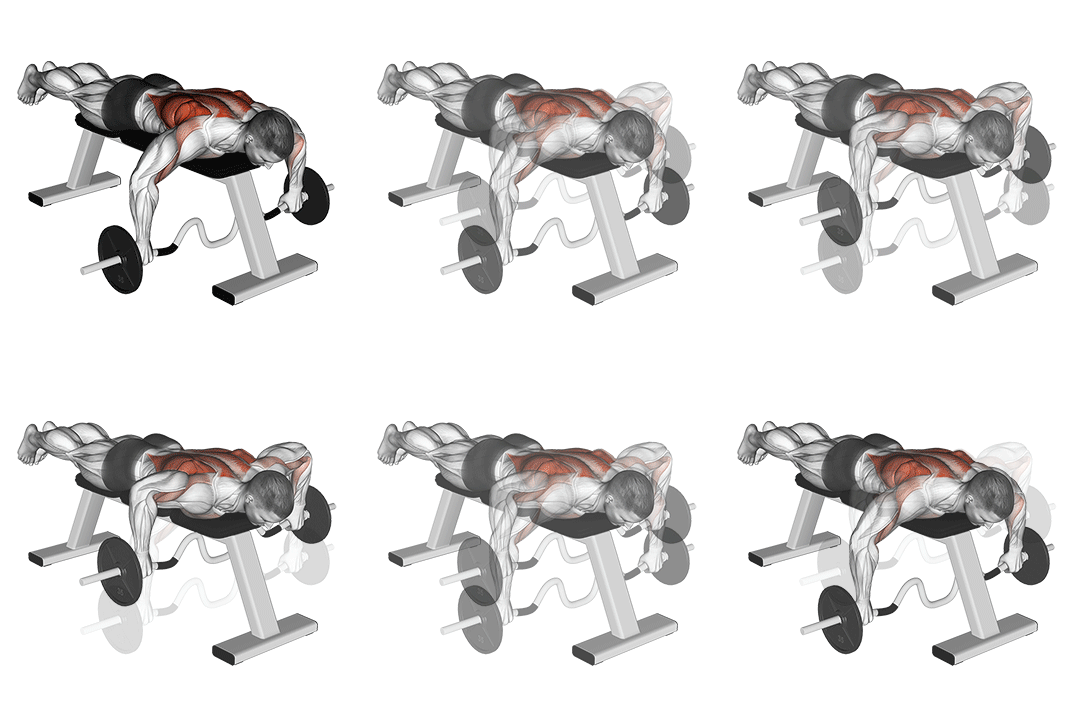
Barbell Incline Row
Visual Comparison
Overview
Barbell Bent Over Row vs Barbell Incline Row — if you want a stronger, thicker upper back you should pick the most efficient movement for your goal. I’ll compare muscle activation, setup and technique cues, equipment needs, and injury risk so you can choose or program both. You’ll learn how torso angle (30–45° for bent-over, 30° bench incline for the incline row), force vectors, and scapular mechanics change which fibers get stressed, plus practical rep ranges for strength (3–6) and hypertrophy (6–12).
Key Differences
- Both exercises target the Upper-back using Barbell. The main differences are in their movement patterns and muscle activation angles.
Pros & Cons
Barbell Bent Over Row
+ Pros
- Allows heavier loading and stronger carryover to deadlift and overall posterior chain strength
- Trains anti-flexion stability of the erectors and glutes simultaneously with the back pull
- More accessible—no bench required and adaptable to dumbbells/hex bar
- Effective for thickening the mid-back when performed at 30–45° torso angle
− Cons
- Higher lumbar stress if bracing and hip hinge are poor
- Harder to achieve strict scapular retraction and isolated upper-back peak contraction
- Form breakdown under heavy loads can transfer load to biceps and lower back
Barbell Incline Row
+ Pros
- Supports the torso so you can focus on scapular retraction and upper-back contraction
- Lower lumbar load makes it safer for athletes with back pain
- Easier to maintain consistent row path and tempo for hypertrophy work
- Better isolation of posterior deltoid and rhomboids at end range
− Cons
- Requires an adjustable bench set at 30–45°, reducing accessibility
- Typically limits absolute load compared with bent-over variations
- Less carryover to hip-hinge strength and posterior-chain bracing
When Each Exercise Wins
The bench support lets you maximize time under tension and scapular retraction without lower-back fatigue, so you can hit 6–12 rep volumes with better peak contraction. That isolation and ability to control tempo favors upper-back muscle growth.
Bent-over rows let you recruit the posterior chain and brace the spine, enabling heavier loading in 3–6 rep ranges. That higher absolute load translates better to general pulling strength.
An incline bench stabilizes the torso and simplifies learning scapular retraction and elbow path, lowering technical demand and lumbar risk while you build baseline pulling strength.
Most home setups have a barbell or dumbbells but not an adjustable incline bench, so the bent-over row is more practical and still builds thick upper-back development.
Frequently Asked Questions
Can I do both Barbell Bent Over Row and Barbell Incline Row in the same workout?
Yes. Pair them intelligently: use one as a heavy strength movement (3–6 reps) and the other as a higher-volume accessory (6–12 reps). Monitor fatigue to avoid form breakdown—place the heavier variation earlier in the session.
Which exercise is better for beginners?
Barbell Incline Row is generally better for beginners because the bench stabilizes the torso and reduces lumbar demand, making it easier to learn scapular retraction and proper arm path before introducing heavy hip-hinge loads.
How do the muscle activation patterns differ?
Bent-over rows create higher erector spinae and glute isometric activation due to anti-flexion torque, while incline rows increase peak scapular retraction and posterior-delt engagement because the torso is supported and the pull is more purely horizontal.
Can Barbell Incline Row replace Barbell Bent Over Row?
It can replace bent-over rows for upper-back hypertrophy or when lumbar loading is a concern, but it won’t fully replace the posterior-chain and anti-flexion strength benefits of bent-over rows. Use incline rows for isolation or during deloads; keep bent-over rows for heavy strength phases.
Expert Verdict
Use the barbell bent-over row when you want to build raw pulling strength and integrate posterior-chain bracing—program heavier 3–6 rep sets and focus on a strong hip hinge with a 30–45° torso. Choose the barbell incline row when your priority is upper-back hypertrophy, clean scapular retraction, or protecting the lumbar spine—use 6–12 reps, slower eccentrics (2–3 seconds), and a 30°–45° bench incline. For balanced development, cycle both: prioritize bent-over rows during strength phases and incline rows during higher-volume, hypertrophy-focused blocks.
Also Compare
More comparisons with Barbell Bent Over Row
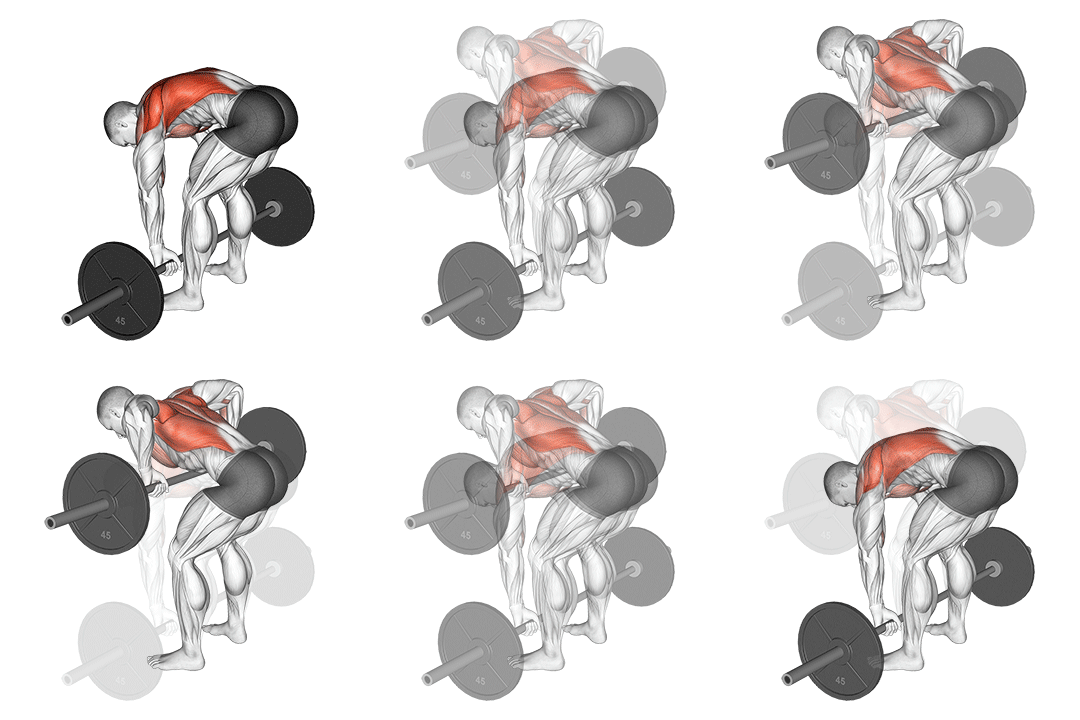
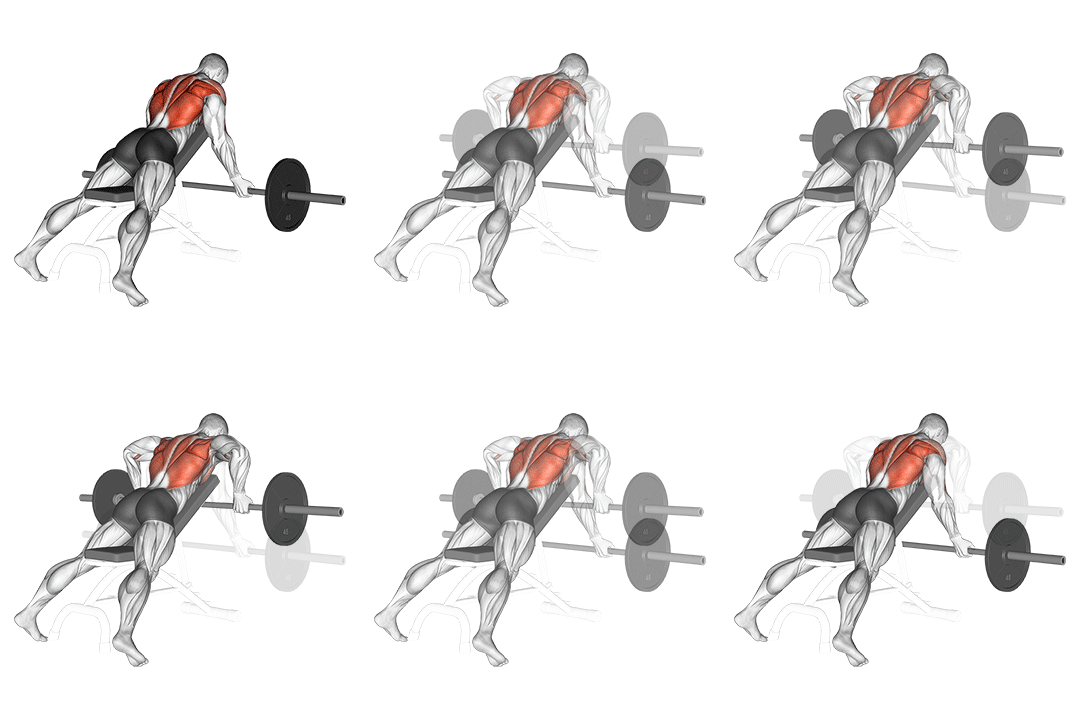
More comparisons with Barbell Incline Row
Compare More Exercises
Use our free comparison tool to analyze any two exercises head-to-head.
Compare Exercises