

Barbell Bent Over Row vs Barbell Pendlay Row: Complete Comparison Guide
Barbell Bent Over Row vs Barbell Pendlay Row — you need a clear pick for your back training. I’ll walk you through how each move loads the upper-back, how the torso angle and bar path change muscle stress, what equipment and skill each requires, and which one suits hypertrophy, strength, or beginners. You’ll get technique cues (hip hinge, torso angle, bar close to shins), rep-range recommendations (3–5 for strength, 6–12 for hypertrophy), and a final verdict so you can choose the row that matches your goals and training experience.
Exercise Comparison
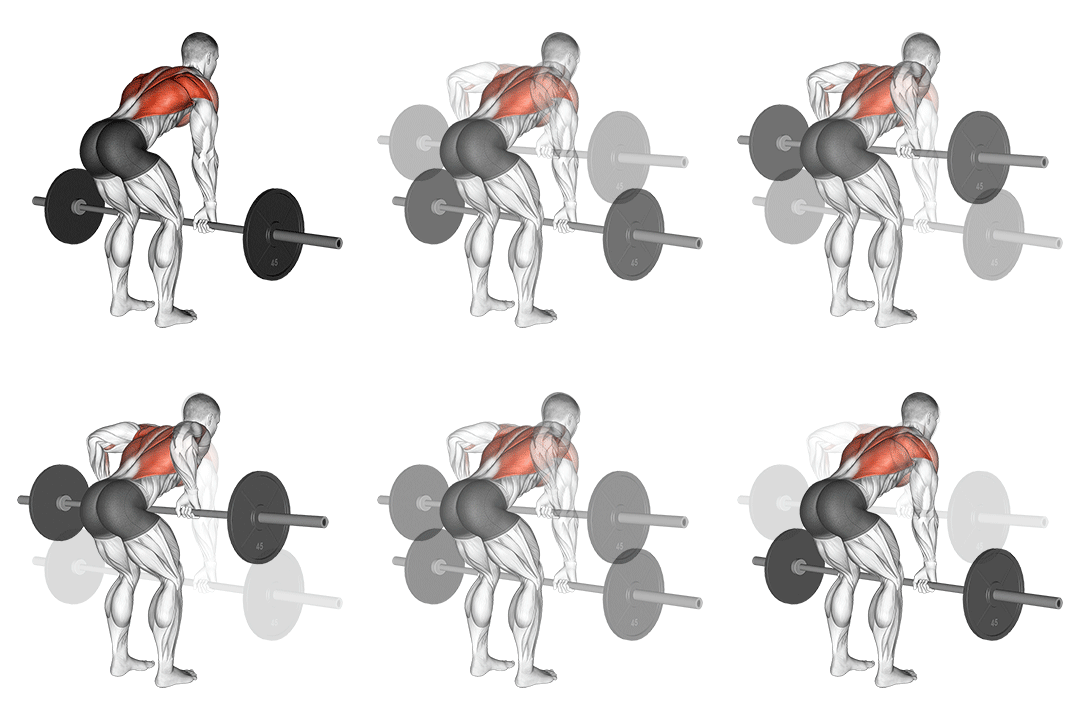
Barbell Bent Over Row
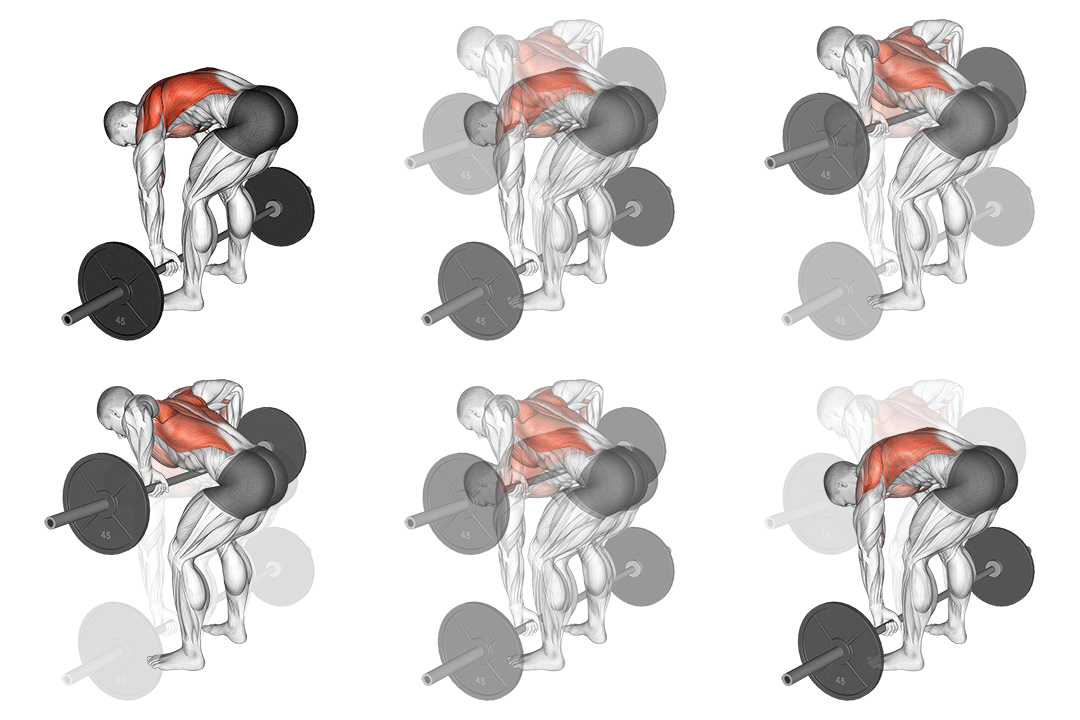
Barbell Pendlay Row
Head-to-Head Comparison
| Attribute | Barbell Bent Over Row | Barbell Pendlay Row |
|---|---|---|
| Target Muscle |
Upper-back
|
Upper-back
|
| Body Part |
Back
|
Back
|
| Equipment |
Barbell
|
Barbell
|
| Difficulty |
Intermediate
|
Advanced
|
| Movement Type |
Compound
|
Compound
|
| Secondary Muscles |
2
|
2
|
Secondary Muscles Activated
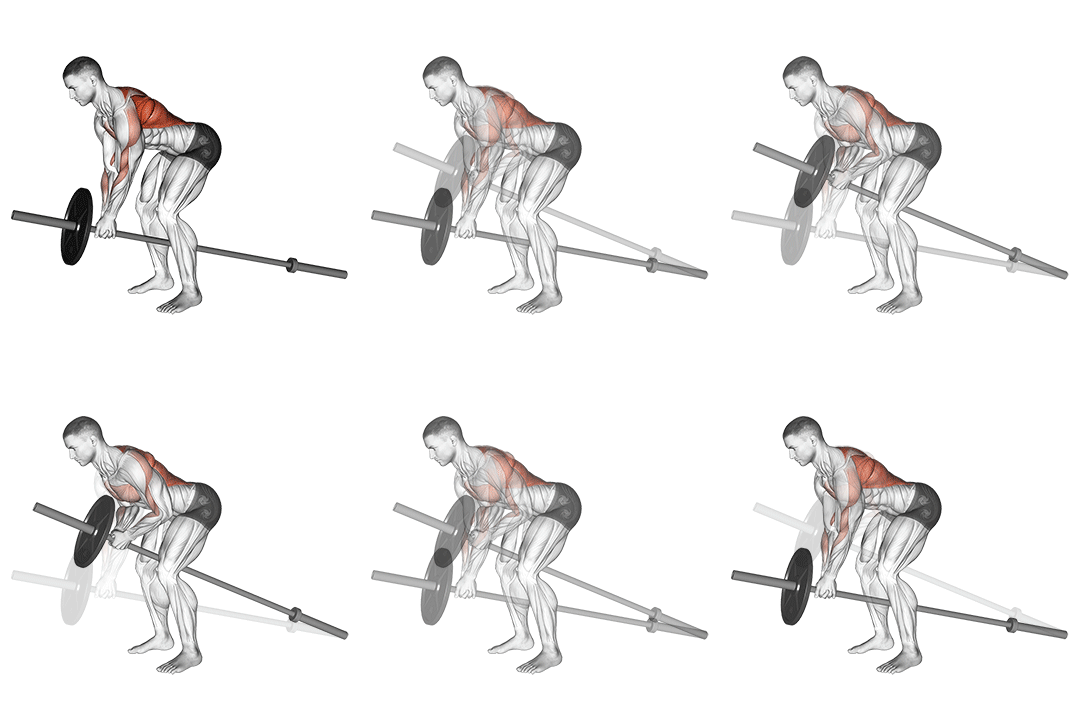
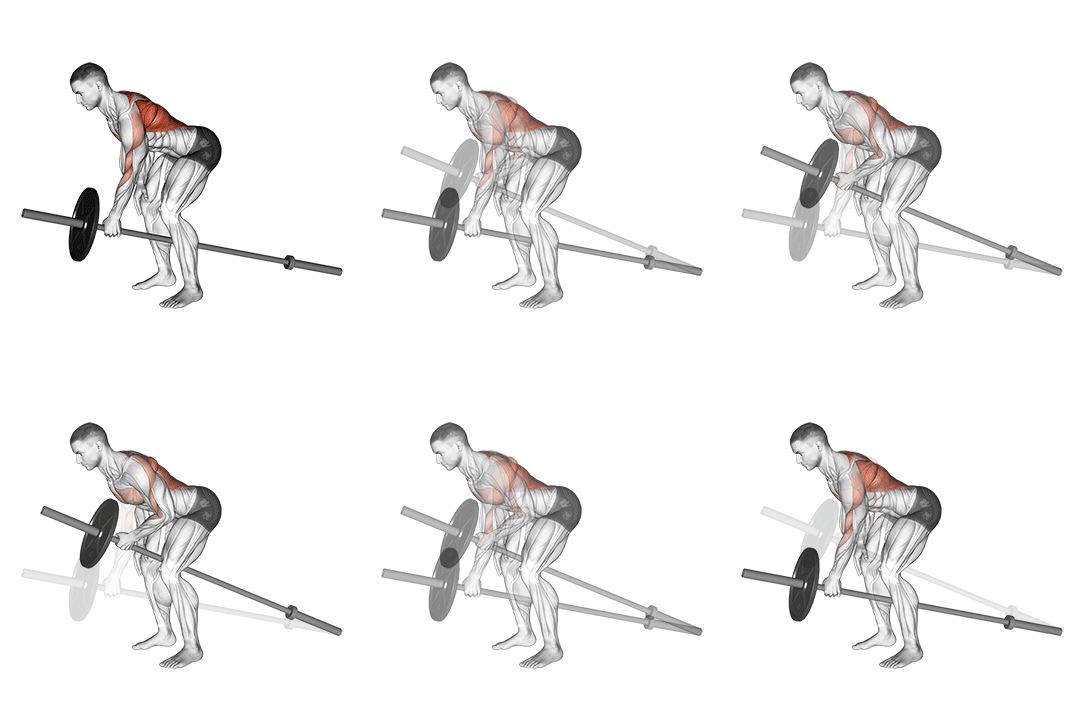
Barbell Bent Over Row
Barbell Pendlay Row
Visual Comparison
Overview
Barbell Bent Over Row vs Barbell Pendlay Row — you need a clear pick for your back training. I’ll walk you through how each move loads the upper-back, how the torso angle and bar path change muscle stress, what equipment and skill each requires, and which one suits hypertrophy, strength, or beginners. You’ll get technique cues (hip hinge, torso angle, bar close to shins), rep-range recommendations (3–5 for strength, 6–12 for hypertrophy), and a final verdict so you can choose the row that matches your goals and training experience.
Key Differences
- Difficulty levels differ: Barbell Bent Over Row is intermediate, while Barbell Pendlay Row is advanced.
- Both exercises target the Upper-back using Barbell. The main differences are in their movement patterns and muscle activation angles.
Pros & Cons
Barbell Bent Over Row
+ Pros
- Maintains continuous tension on upper-back muscles for hypertrophy
- Easier to modify torso angle (30–45°) to match mobility and goals
- Safer for lifters who need tempo control and eccentric work
- Works erector spinae and posterior chain for added stability
− Cons
- Sustained spinal loading can tax the lower back under heavy sets
- Harder to achieve maximal concentric power compared to Pendlay
- Form breakdown (rounded back) increases injury risk if rushed
Barbell Pendlay Row
+ Pros
- Generates higher peak force and rate of force development
- Dead-stop reps reduce momentum and improve strict pulling strength
- Strong transfer to deadlift and explosive pulling patterns
- Cleaner rep standard makes loading progression objective
− Cons
- Requires strict hip hinge and better mobility to perform safely
- Less continuous time under tension for hypertrophy training
- Higher technical demand increases learning time and form checks
When Each Exercise Wins
The bent-over row keeps the muscle under continuous tension with a 30–45° torso angle, which increases time under tension and eccentric control — both favorable for muscle growth in the 6–12 rep range.
Pendlay rows require you to produce high peak concentric force from a dead stop, improving rate of force development and carryover to heavy deadlifts and overall pulling strength, especially in 3–5 rep blocks.
Bent-over rows allow a more gradual learning curve with adjustable torso angle and tempo, making it easier to teach hip hinge, scapular control, and breathing before adding the technical demands of dead-stop power pulls.
Bent-over rows are more adaptable to limited space and plate types; you can reduce range or use elevated plates to avoid needing a perfectly flat platform needed for consistent Pendlay resets.
Frequently Asked Questions
Can I do both Barbell Bent Over Row and Barbell Pendlay Row in the same workout?
Yes — pairing them strategically works well: use Pendlay rows early for heavy, low-rep strength sets (3–5) to train force production, then finish with bent-over rows for higher-rep hypertrophy (6–12) and eccentric control. Monitor total lower-back volume to avoid overloading the erectors.
Which exercise is better for beginners?
Barbell Bent Over Row is better for beginners because you can start with a slightly more upright torso (30–45°) and slower tempos to learn the hip hinge and scapular mechanics before attempting the strict, parallel torso and dead-stop demands of the Pendlay row.
How do the muscle activation patterns differ?
Pendlay rows produce higher peak concentric activation and RFD because each rep starts from a dead stop, while bent-over rows create longer time-under-tension with greater eccentric control and sustained erector spinae activation due to the held torso angle.
Can Barbell Pendlay Row replace Barbell Bent Over Row?
Pendlay rows can replace bent-over rows if your goal is strength and you have the mobility and technique to perform them safely, but they offer less continuous tension for hypertrophy. Use Pendlay for strength cycles and bent-over rows for volume-focused phases.
Expert Verdict
Choose the bent-over row when your primary aim is upper-back hypertrophy, control over eccentric loading, or if you need a forgiving variation while you build hinge mechanics. Use a 30–45° torso angle, keep the bar close to your shins, hinge at the hips, and pull to your lower ribs for 6–12 reps. Choose the Pendlay row when you want to prioritize raw pulling strength and rate of force development: hinge to a near-parallel torso, reset the bar on the floor each rep, and train heavier sets of 3–5 for strength. If you’re progressing, use Pendlay rows in heavy strength blocks and bent-over rows for volume and technique work.
Also Compare
More comparisons with Barbell Bent Over Row
More comparisons with Barbell Pendlay Row
Compare More Exercises
Use our free comparison tool to analyze any two exercises head-to-head.
Compare Exercises