

Barbell Bent Over Row vs Barbell Reverse Grip Incline Bench Row: Complete Comparison Guide
Barbell Bent Over Row vs Barbell Reverse Grip Incline Bench Row — if you want a thicker, more powerful upper-back, you should know how these two compound pulls differ. This guide walks you through muscle activation, technique cues, biomechanics (force vectors, length-tension), equipment needs, rep ranges, and injury risk so you can pick the right row for your goals. I’ll show you exact setup angles, how each variation loads the lats, rhomboids, traps and biceps, and practical programming advice so you can add either move into a strength or hypertrophy plan.
Exercise Comparison
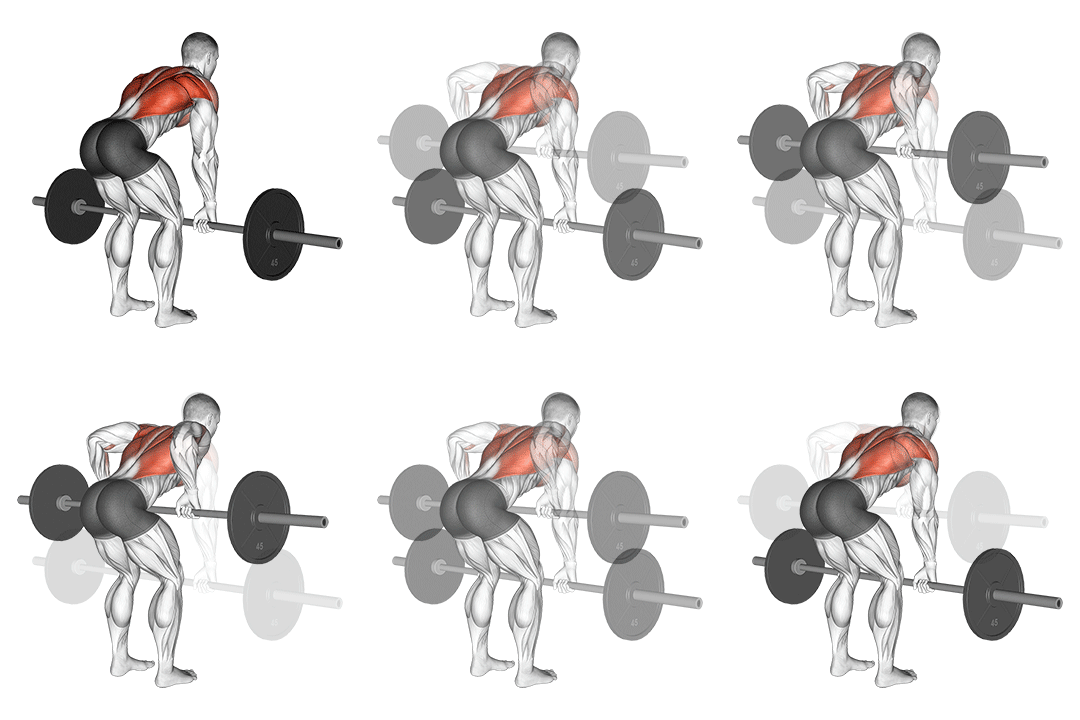
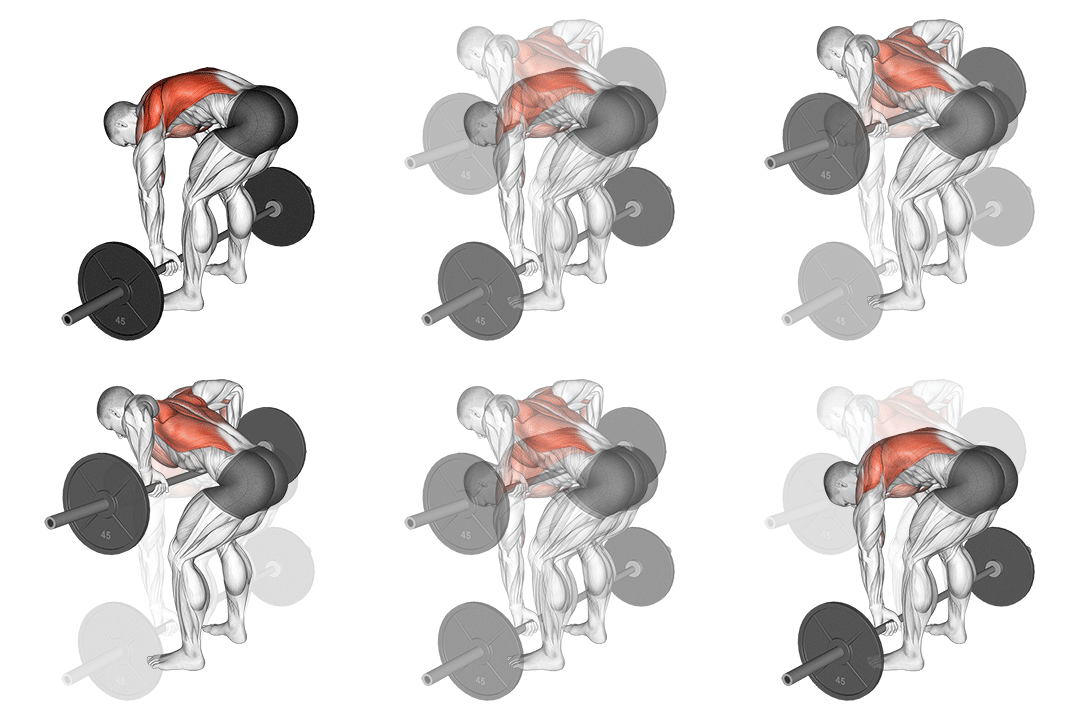
Barbell Bent Over Row
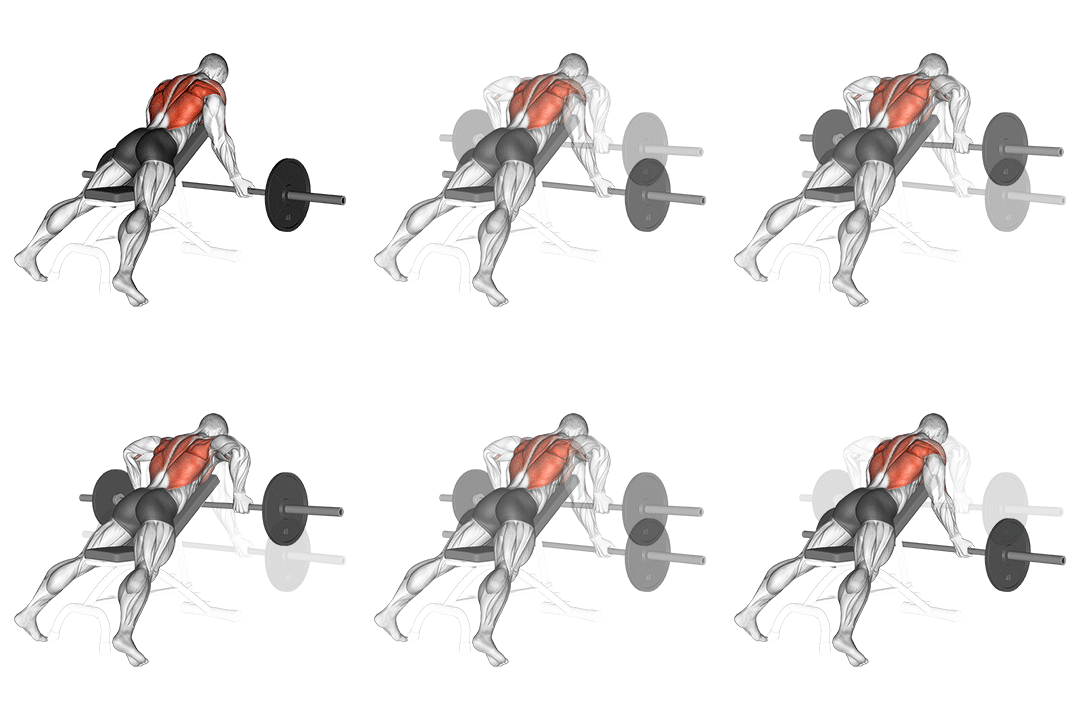
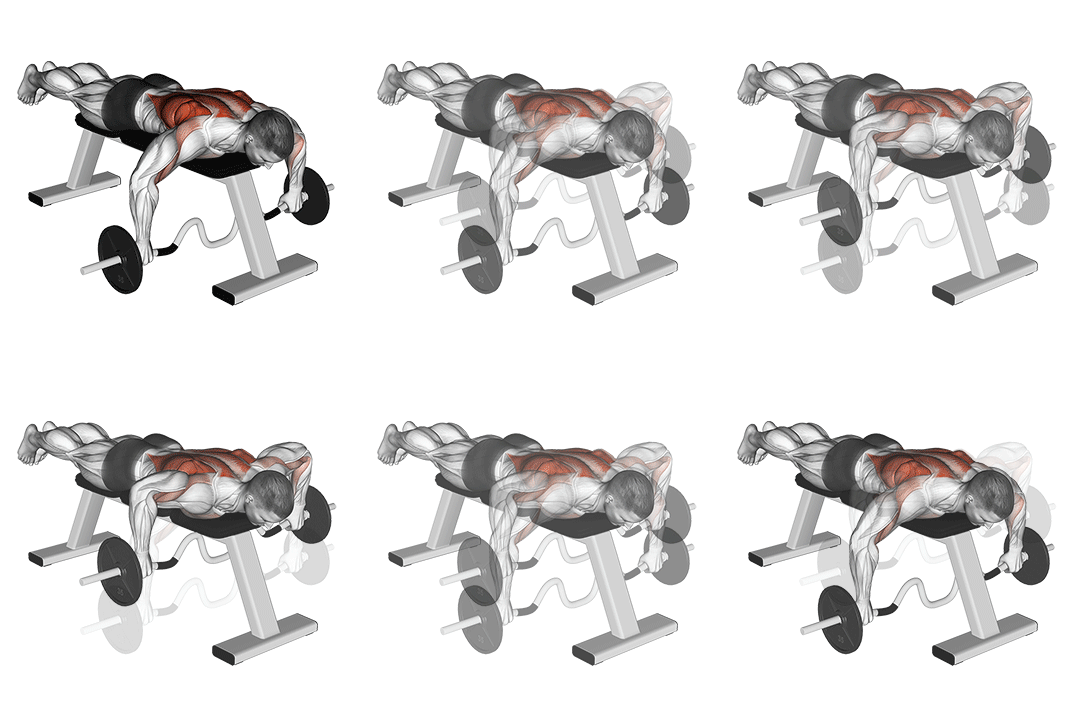
Barbell Reverse Grip Incline Bench Row
Head-to-Head Comparison
| Attribute | Barbell Bent Over Row | Barbell Reverse Grip Incline Bench Row |
|---|---|---|
| Target Muscle |
Upper-back
|
Upper-back
|
| Body Part |
Back
|
Back
|
| Equipment |
Barbell
|
Barbell
|
| Difficulty |
Intermediate
|
Intermediate
|
| Movement Type |
Compound
|
Compound
|
| Secondary Muscles |
2
|
2
|
Secondary Muscles Activated
Barbell Bent Over Row
Barbell Reverse Grip Incline Bench Row
Visual Comparison
Overview
Barbell Bent Over Row vs Barbell Reverse Grip Incline Bench Row — if you want a thicker, more powerful upper-back, you should know how these two compound pulls differ. This guide walks you through muscle activation, technique cues, biomechanics (force vectors, length-tension), equipment needs, rep ranges, and injury risk so you can pick the right row for your goals. I’ll show you exact setup angles, how each variation loads the lats, rhomboids, traps and biceps, and practical programming advice so you can add either move into a strength or hypertrophy plan.
Key Differences
- Both exercises target the Upper-back using Barbell. The main differences are in their movement patterns and muscle activation angles.
Pros & Cons
Barbell Bent Over Row
+ Pros
- Greater ability to handle heavy loads for strength (suitable for 3–6 rep work)
- Stronger posterior chain and spinal stabilizer recruitment builds functional strength
- Wide variation potential (Pendlay, chest-supported, Kroc-style single-arm)
- Powerful horizontal force vector that targets mid-trapezius and rhomboids
− Cons
- Higher lumbar loading — requires strict bracing and hip-hinge mechanics
- Technique-dependent; easier to cheat with momentum
- Less isolation of upper-back due to stabilization demand
Barbell Reverse Grip Incline Bench Row
+ Pros
- Chest support reduces lumbar shear and enforces consistent torso angle
- Supinated grip increases biceps activation and can improve lockout strength
- Cleaner range of motion for strict upper-back targeting and tempo work
- Easier to teach and maintain form for most lifters
− Cons
- Limited maximal loading compared to free bent-over rows due to bench constraints
- Requires an adjustable incline bench (less accessible at home)
- Supinated grip can strain wrist/elbow for those with mobility or tendon issues
When Each Exercise Wins
The supported chest position allows you to maintain strict form, longer time under tension, and tighter mind–muscle connection. The supinated grip increases biceps involvement and enables controlled eccentric work in the 6–12 rep range favored for hypertrophy.
Bent-over rows let you load heavier and train lower-rep ranges (3–6) with a stronger horizontal force vector and greater posterior chain involvement, which transfers better to deadlifts and overall pulling strength.
The bench supports the torso and reduces balance and spinal-bracing demands, letting beginners learn the pull pattern and scapular retraction without high lumbar risk.
It only needs a barbell and open floor space, making it easier to perform at home. If you lack an adjustable incline bench, the bent-over row is the practical choice.
Frequently Asked Questions
Can I do both Barbell Bent Over Row and Barbell Reverse Grip Incline Bench Row in the same workout?
Yes — pair them smartly: use the incline reverse-grip row as a higher-volume accessory (8–12 reps) to target upper-back and biceps, and the bent-over row as your heavier compound set (3–6 reps) earlier in the session. Monitor total fatigue and prioritize spinal recovery.
Which exercise is better for beginners?
The reverse-grip incline bench row is better for most beginners because the bench supports the torso and simplifies form. It teaches scapular retraction and shoulder extension without heavy lumbar demands.
How do the muscle activation patterns differ?
The bent-over row places more demand on spinal erectors and glutes for stabilization and emphasizes horizontal pull for mid-trap and rhomboid activation. The chest-supported reverse-grip row shifts force through the shoulder and elbow, increasing biceps activation and enabling a stricter concentric–eccentric cycle with reduced lumbar activity.
Can Barbell Reverse Grip Incline Bench Row replace Barbell Bent Over Row?
You can substitute it when lumbar stress is a concern or you need cleaner technique, but it won't fully replace the bent-over row for maximal strength transfer and posterior chain recruitment. For comprehensive development, rotate both across training phases.
Expert Verdict
Both rows build a thicker upper-back but serve different priorities. Choose the incline reverse-grip row when you want strict upper-back isolation, safer spinal loading, and higher biceps recruitment — ideal for hypertrophy work at 6–12 reps with tempos like 2–3s eccentrics. Pick the bent-over row when you want to develop raw pulling strength and posterior chain resilience; use heavier loads and lower reps (3–6) while mastering the hip hinge and bracing to protect your lumbar spine. Program both across a training block to exploit their complementary mechanics: chest-supported detail work plus heavy bent-over strength sessions.
Also Compare
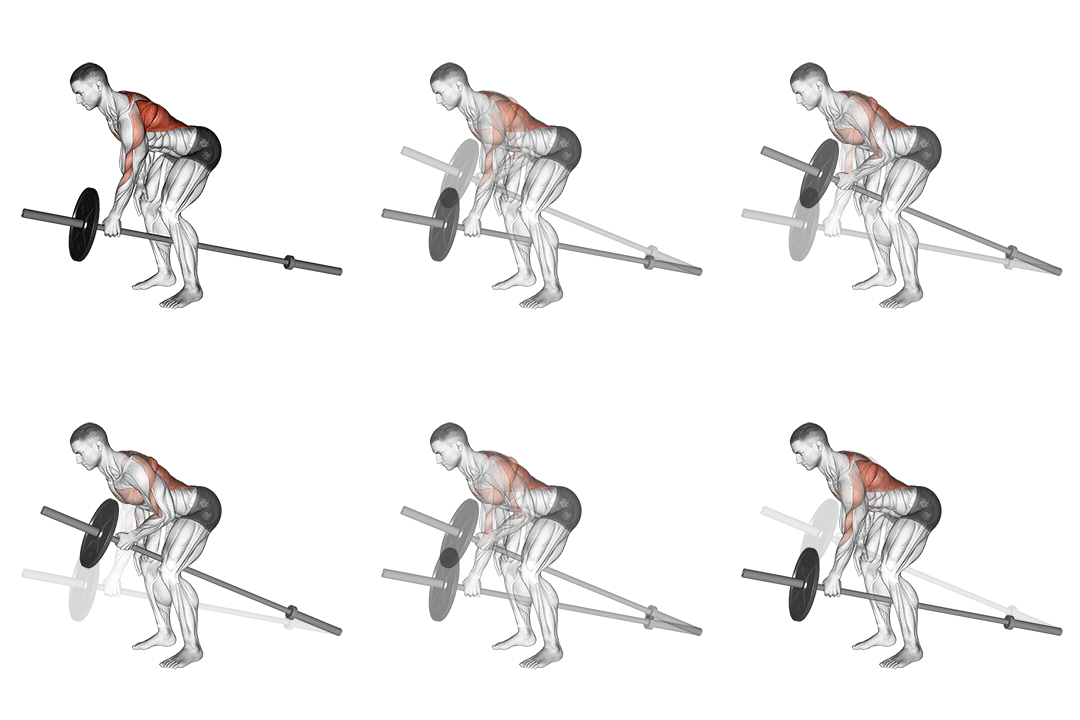
More comparisons with Barbell Bent Over Row
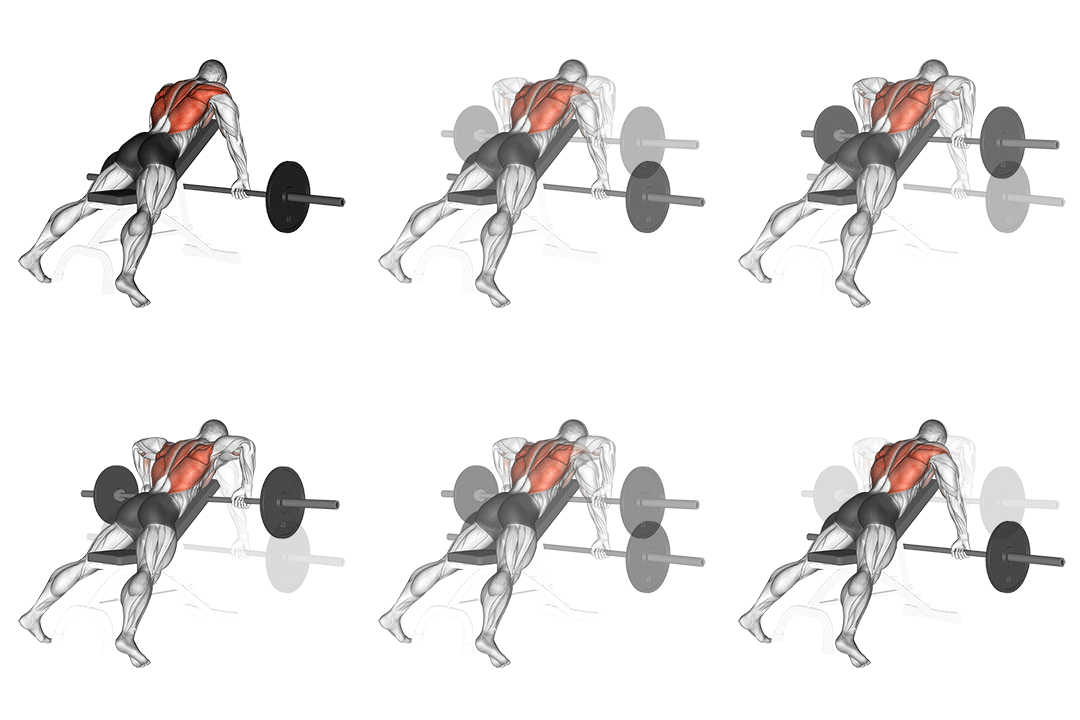
More comparisons with Barbell Reverse Grip Incline Bench Row
Compare More Exercises
Use our free comparison tool to analyze any two exercises head-to-head.
Compare Exercises