

Barbell Bent Over Row vs Cambered Bar Lying Row: Complete Comparison Guide
Barbell Bent Over Row vs Cambered Bar Lying Row — two compound upper-back builders that look similar on paper but feel very different under load. If you want clear guidance on which to pick for hypertrophy, strength, or lower-back safety, you’re in the right place. I’ll cover muscle targeting, force vectors, technique cues (hip hinge, neutral spine, full scapular retraction), equipment needs, progression strategies, rep ranges (3–6 for strength, 6–12 for mass), and practical recommendations so you can choose the right row for your program.
Exercise Comparison
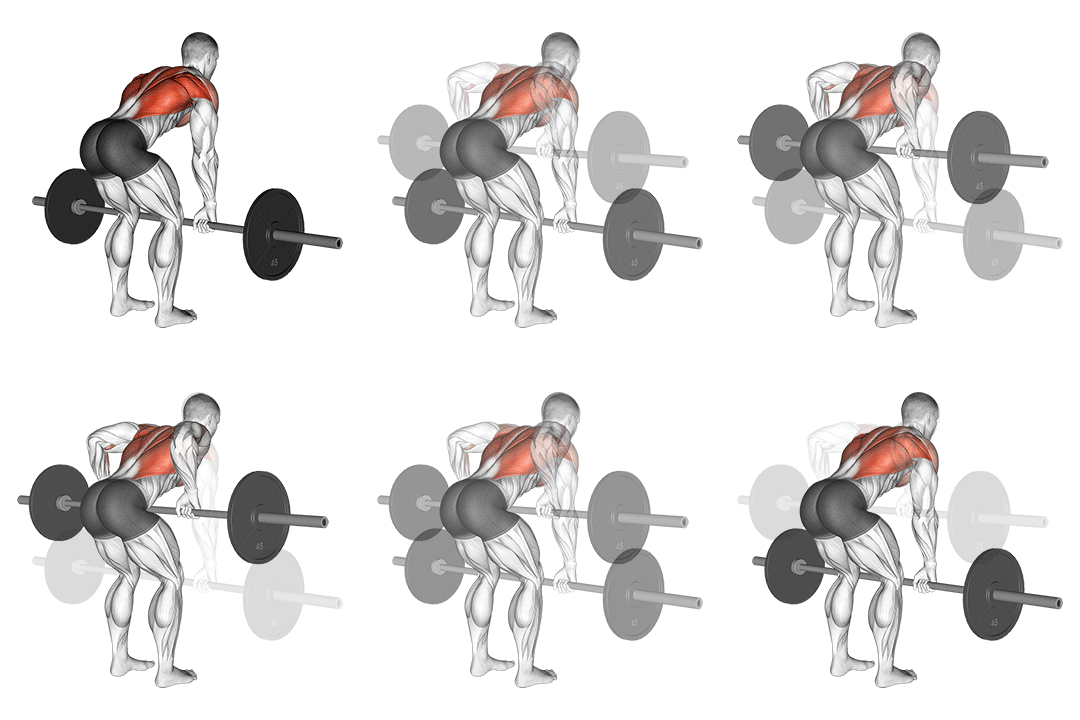
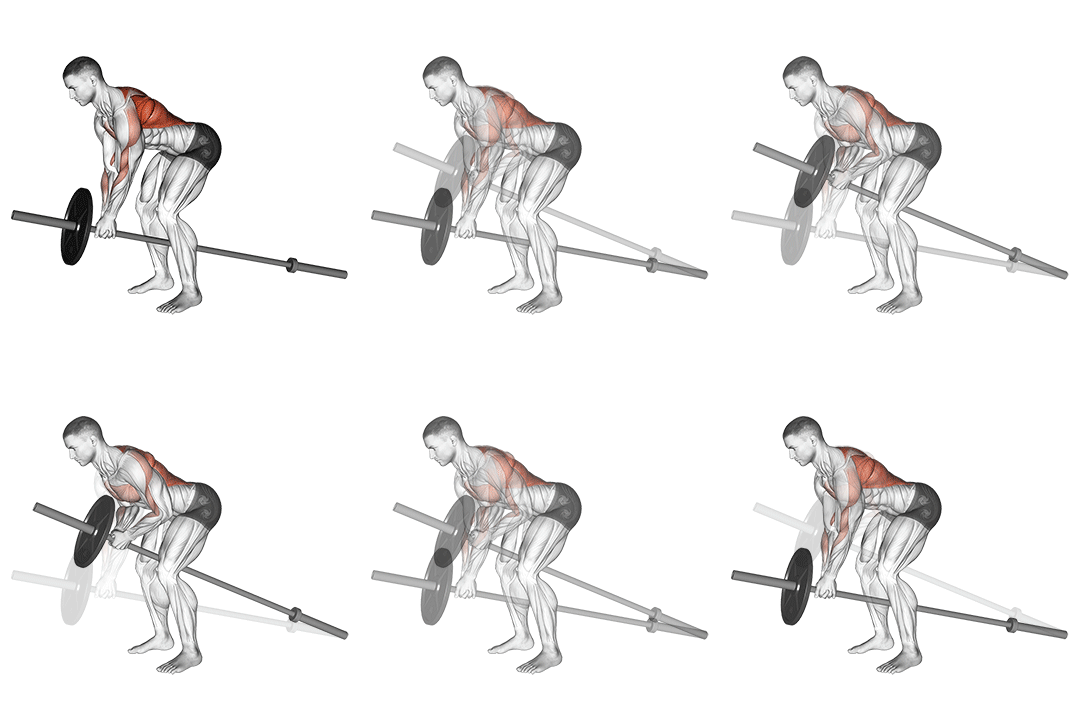
Barbell Bent Over Row
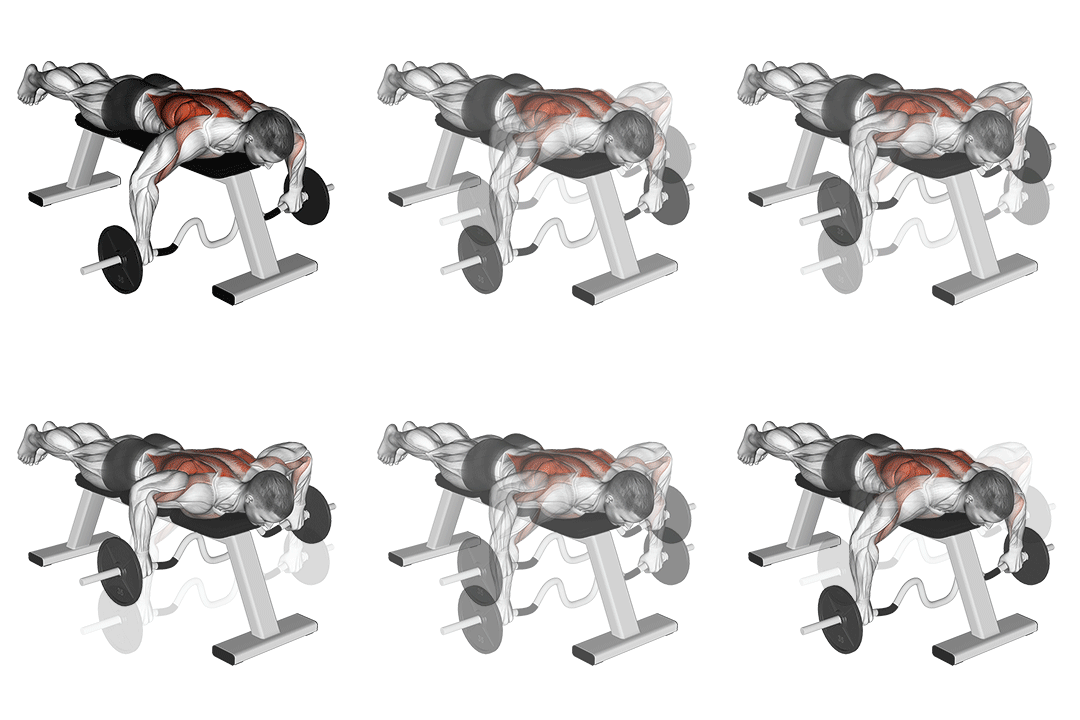
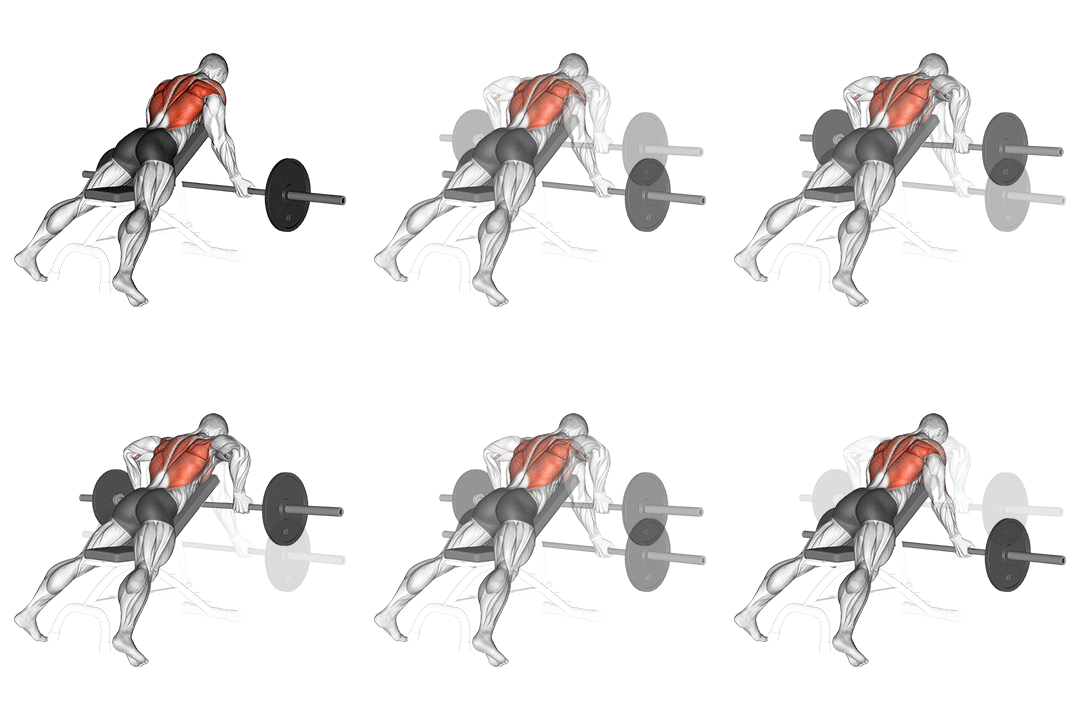
Cambered Bar Lying Row
Head-to-Head Comparison
| Attribute | Barbell Bent Over Row | Cambered Bar Lying Row |
|---|---|---|
| Target Muscle |
Upper-back
|
Upper-back
|
| Body Part |
Back
|
Back
|
| Equipment |
Barbell
|
Barbell
|
| Difficulty |
Intermediate
|
Intermediate
|
| Movement Type |
Compound
|
Compound
|
| Secondary Muscles |
2
|
2
|
Secondary Muscles Activated
Barbell Bent Over Row
Cambered Bar Lying Row
Visual Comparison
Overview
Barbell Bent Over Row vs Cambered Bar Lying Row — two compound upper-back builders that look similar on paper but feel very different under load. If you want clear guidance on which to pick for hypertrophy, strength, or lower-back safety, you’re in the right place. I’ll cover muscle targeting, force vectors, technique cues (hip hinge, neutral spine, full scapular retraction), equipment needs, progression strategies, rep ranges (3–6 for strength, 6–12 for mass), and practical recommendations so you can choose the right row for your program.
Key Differences
- Both exercises target the Upper-back using Barbell. The main differences are in their movement patterns and muscle activation angles.
Pros & Cons
Barbell Bent Over Row
+ Pros
- Allows heavier loading for strength carryover
- Builds posterior chain stability (erectors, glutes, hamstrings)
- Trains full-body tension and hip hinge mechanics
- Easily accessible with a standard barbell
− Cons
- Higher lumbar shear if form breaks
- Requires solid hip-hinge and core bracing skills
- Can be fatiguing for whole-body recovery on heavy days
Cambered Bar Lying Row
+ Pros
- Upper-back isolation with minimal lumbar loading
- Better for controlled eccentrics and TUT-focused sets
- Easier technical learning curve for beginners
- Safer to push higher reps for hypertrophy
− Cons
- Requires a cambered/offset bar and bench (less available)
- Limited carryover to posterior chain strength
- Can overwork biceps/forearms if you lose scapular control
When Each Exercise Wins
The bench support lets you load the upper-back through a long ROM with controlled eccentrics and higher time under tension (8–15 reps). That isolation and ability to accumulate volume without taxing the low back makes it the better hypertrophy tool.
Bent-over rows allow heavier absolute loads and train anti-extension strength through a 30–45° trunk hinge, which transfers better to other compound lifts like deadlifts and squats. Use lower rep ranges (3–6) to prioritize strength.
Lying rows remove the need for a perfect hip hinge and heavy core bracing, letting beginners learn scapular retraction and elbow drive in a stable position. That builds upper-back strength with lower injury risk.
Most home gyms have a standard barbell and plates but lack a cambered bar or bench setup. Bent-over rows give the most bang for your equipment and space.
Frequently Asked Questions
Can I do both Barbell Bent Over Row and Cambered Bar Lying Row in the same workout?
Yes. If you want strength plus volume, perform heavy Barbell Bent Over Rows early (3–6 reps) and follow with Cambered Bar Lying Rows for 8–15 reps to accumulate upper-back volume while sparing the low back. Reverse the order only if hypertrophy is the primary goal for that session.
Which exercise is better for beginners?
Cambered Bar Lying Row is better for most beginners because the bench stabilizes the trunk, which reduces the need to master the hip hinge and heavy bracing. That lets you build scapular control and upper-back strength safely before adding bent-over variations.
How do the muscle activation patterns differ?
Bent-over rows demand isometric activation of spinal erectors and posterior chain due to the hip hinge, creating a combined horizontal/vertical force vector. Cambered lying rows produce a near-pure horizontal pull with greater isolation of the rhomboids and lats and less lumbar activation, extending the muscle length-tension curve during the eccentric.
Can Cambered Bar Lying Row replace Barbell Bent Over Row?
For hypertrophy and lower-back safety, yes — cambered lying rows can replace bent-over rows on accessory or rehab-focused days. For maximal strength development and posterior chain carryover, the bent-over row remains the superior choice and should not be fully replaced.
Expert Verdict
Use the Barbell Bent Over Row when you want raw strength, posterior chain development, and transfer to big compound lifts — load it heavy for 3–6 reps while keeping a 30–45° torso angle, neutral spine, and tight hip hinge. Pick the Cambered Bar Lying Row when your goal is upper-back hypertrophy, rehab, or you need to limit lumbar stress; perform controlled 8–15 rep sets focusing on full scapular protraction and retraction with a 1–2 second eccentric. For balanced programming, prioritize heavy bent-over rows on strength days and add cambered lying rows as volume-focused accessory work.
Also Compare
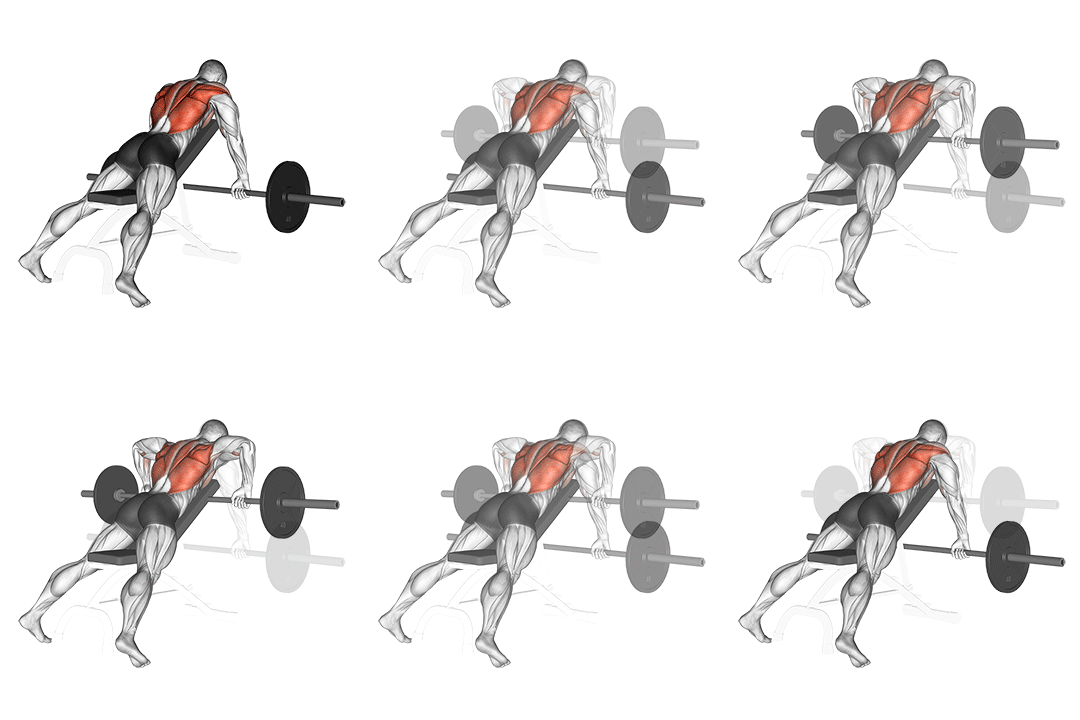
More comparisons with Barbell Bent Over Row
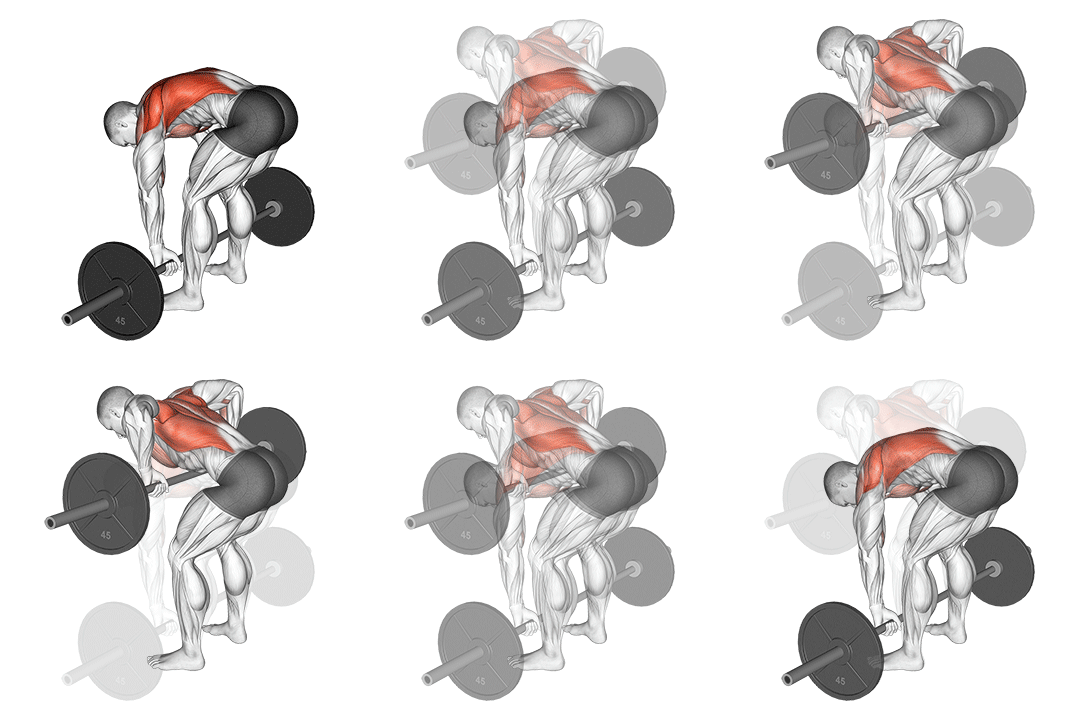
More comparisons with Cambered Bar Lying Row
Compare More Exercises
Use our free comparison tool to analyze any two exercises head-to-head.
Compare Exercises