

Barbell Bent Over Row vs Lever Bent Over Row: Complete Comparison Guide
Barbell Bent Over Row vs Lever Bent Over Row — if you want a thicker, stronger upper back you need to pick the right row. This guide walks you through muscle activation, force vectors, equipment needs, technique cues (hip hinge, 30–45° torso angle, elbow path), programming (3–6 for strength, 6–12 for hypertrophy), pros and cons, and clear winner scenarios. Read on and you’ll know which row to prioritize for strength, hypertrophy, safety, or convenience so you can program it into your routine with confidence.
Exercise Comparison
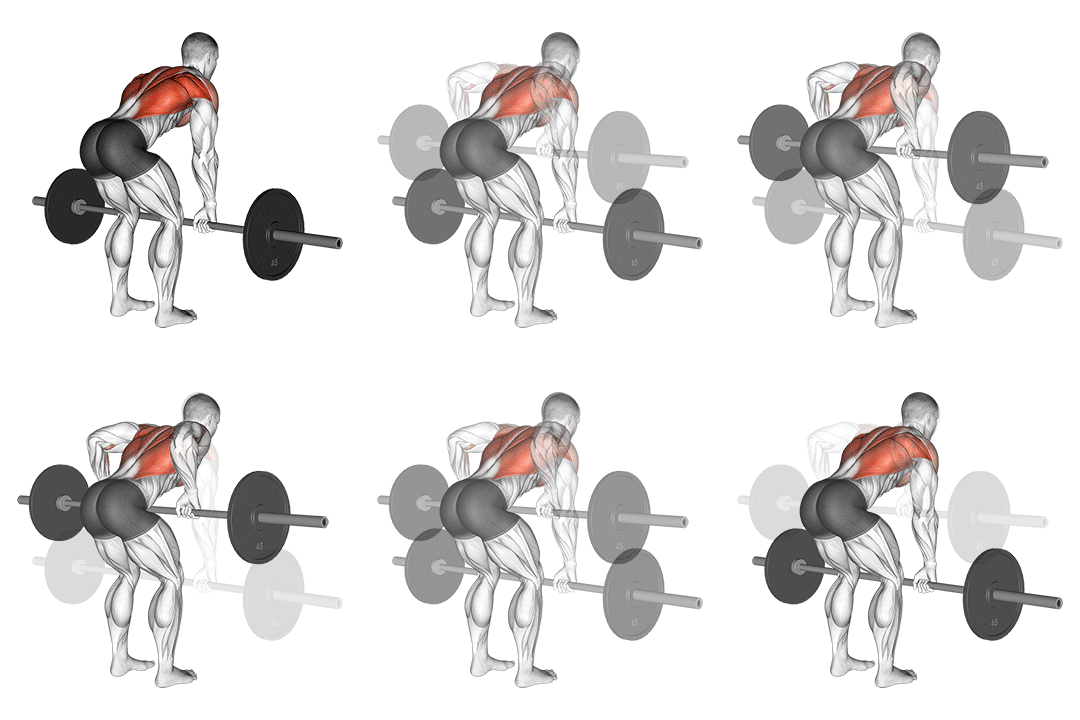
Barbell Bent Over Row
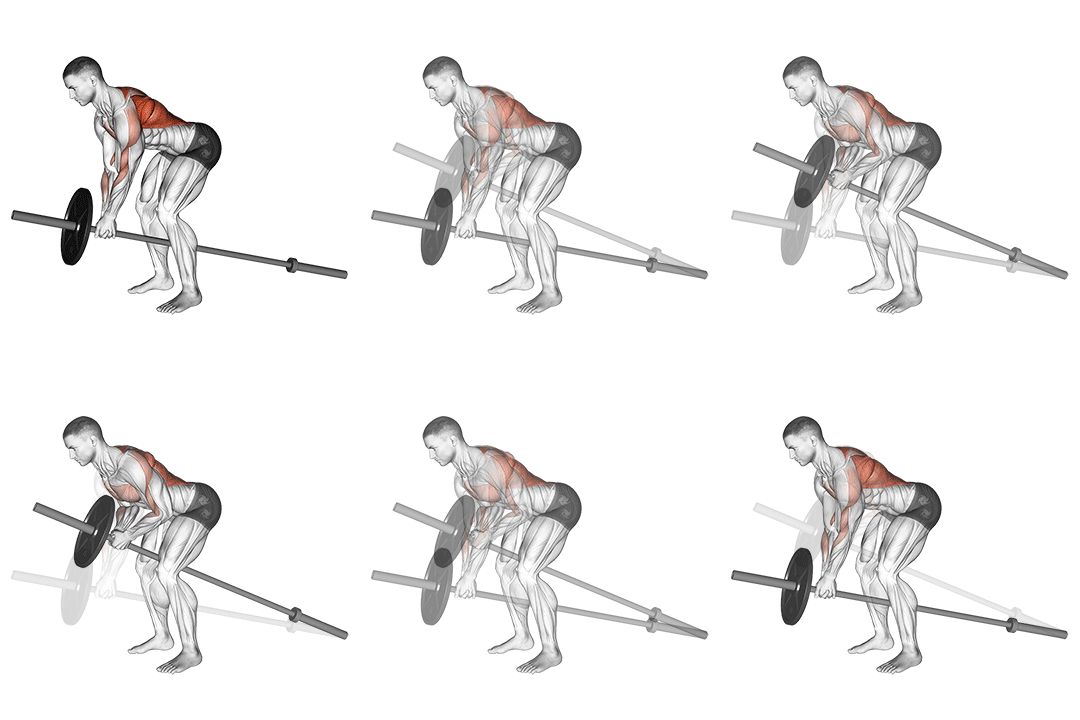
Lever Bent Over Row
Head-to-Head Comparison
| Attribute | Barbell Bent Over Row | Lever Bent Over Row |
|---|---|---|
| Target Muscle |
Upper-back
|
Upper-back
|
| Body Part |
Back
|
Back
|
| Equipment |
Barbell
|
Barbell
|
| Difficulty |
Intermediate
|
Intermediate
|
| Movement Type |
Compound
|
Compound
|
| Secondary Muscles |
2
|
2
|
Secondary Muscles Activated
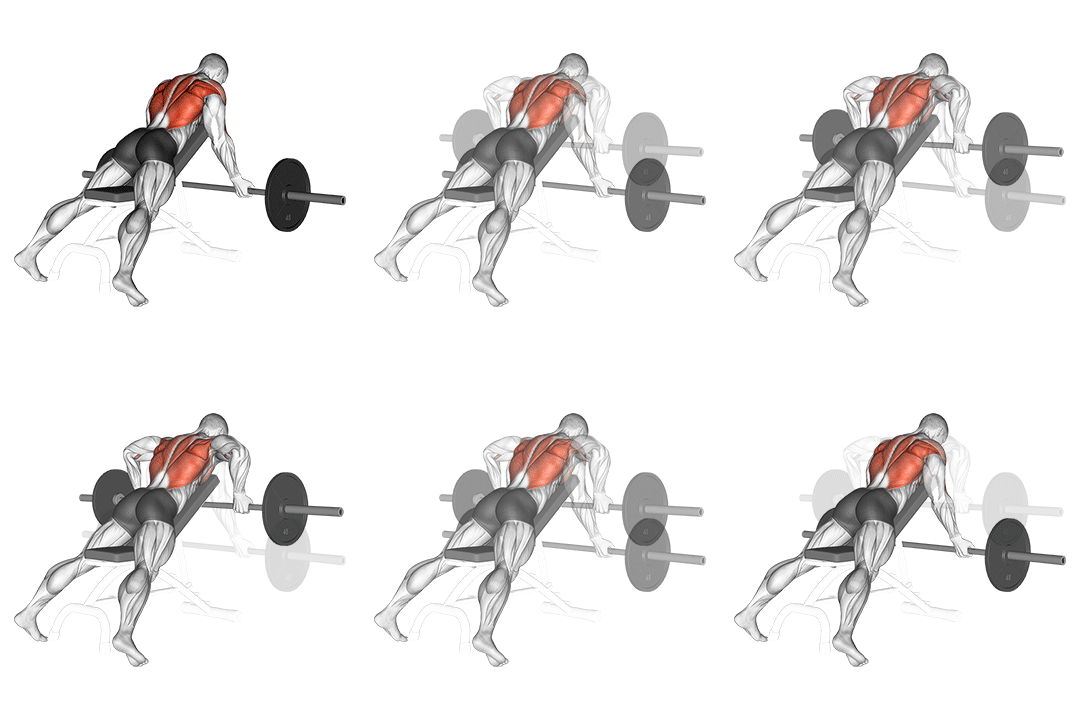
Barbell Bent Over Row
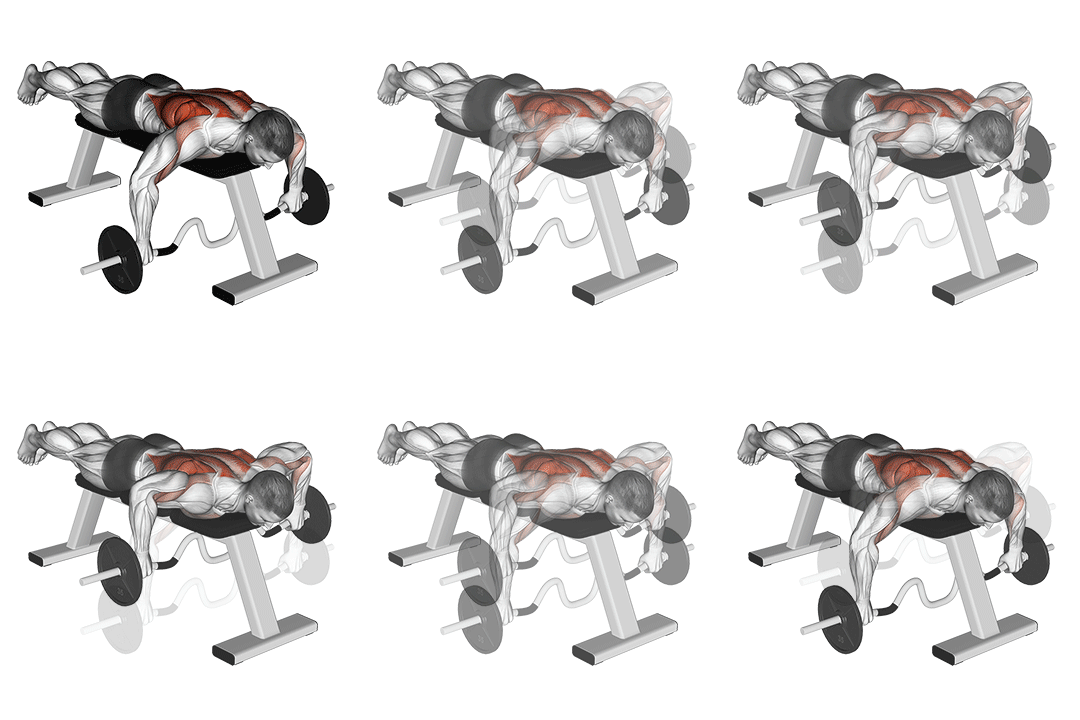
Lever Bent Over Row
Visual Comparison
Overview
Barbell Bent Over Row vs Lever Bent Over Row — if you want a thicker, stronger upper back you need to pick the right row. This guide walks you through muscle activation, force vectors, equipment needs, technique cues (hip hinge, 30–45° torso angle, elbow path), programming (3–6 for strength, 6–12 for hypertrophy), pros and cons, and clear winner scenarios. Read on and you’ll know which row to prioritize for strength, hypertrophy, safety, or convenience so you can program it into your routine with confidence.
Key Differences
- Both exercises target the Upper-back using Barbell. The main differences are in their movement patterns and muscle activation angles.
Pros & Cons
Barbell Bent Over Row
+ Pros
- Allows maximal absolute loading for strength (heavy triples and doubles)
- Develops hip-hinge stability and posterior chain integration
- Versatile: many technique variations and grip options
- Superior for transferring to deadlift and full-body strength
− Cons
- Higher demand on spinal erectors and core—more risk with poor form
- Technique is harder to learn and coach
- Grip or biceps can become limiting factors before upper-back is fully stimulated
Lever Bent Over Row
+ Pros
- More constant tension on the upper-back across the rep
- Easier to learn and set up—good for higher-volume work
- Lower lumbar load reduces back fatigue and injury risk
- Better for isolating scapular retractors and controlling path
− Cons
- Requires a machine that may not be available in all gyms
- Limited maximal loading compared to free barbell
- Less carryover to hip-hinge strength and deadlift-style pulls
When Each Exercise Wins
Lever rows keep constant tension on upper-back fibers and let you chase higher set volume (8–15 reps) without fatiguing the lower back. That makes them ideal for targeted muscle growth and accumulating quality time under tension.
Barbell rows allow heavier loads and better neural adaptation for maximal strength (3–6 rep range), plus transfer to deadlift and other compound lifts because they require integrated posterior chain bracing.
The fixed path and lower stabilization demands let beginners learn horizontal pulling mechanics, scapular retraction, and appropriate loading without sacrificing form or placing undue lumbar stress.
Most home setups or small gyms have a barbell and plates but not a lever machine, and the barbell offers more progression options and exercise variety for limited equipment environments.
Frequently Asked Questions
Can I do both Barbell Bent Over Row and Lever Bent Over Row in the same workout?
Yes. Prioritize the heavier, more technical movement first (usually barbell for strength sets), then use the lever row as a secondary, higher-volume set for isolation. Example: 3–5 heavy barbell sets (3–6 reps) followed by 2–4 lever sets at 8–12 reps.
Which exercise is better for beginners?
Lever Bent Over Row is better for most beginners because the fixed path reduces balance and core demands while teaching scapular retraction. Start with 3 sets of 8–12 reps and focus on posture and full range of motion.
How do the muscle activation patterns differ?
Barbell rows produce higher erector and core co-contraction to resist torso flexion, while lever rows maintain more consistent upper-back muscle tension across the rep. Expect roughly 15–25% greater erector demand with barbell rows and a 5–15% increase in isolated upper-back tension with lever rows.
Can Lever Bent Over Row replace Barbell Bent Over Row?
Yes for hypertrophy and when back fatigue or injury risk is a concern, because the lever keeps tension on the target muscles with less spinal load. No if your goal is maximal strength and transfer to deadlift-style lifts—barbell rows better develop absolute load and full posterior chain coordination.
Expert Verdict
Use the barbell bent-over row when your primary goal is raw strength and posterior chain integration: load heavy, hold a 30–45° torso angle, and focus on 3–6 reps for strength cycles. Choose the lever bent-over row when you need upper-back isolation, higher volume, or a lower-back-friendly option; program 6–12 (hypertrophy) or 8–15 (volume) reps and emphasize controlled scapular retraction. If you can access both, alternate priority: heavy barbell rows in strength phases and machine/lever rows for accumulation and technical work. That approach captures the strengths of each tool while managing injury risk.
Also Compare
More comparisons with Barbell Bent Over Row
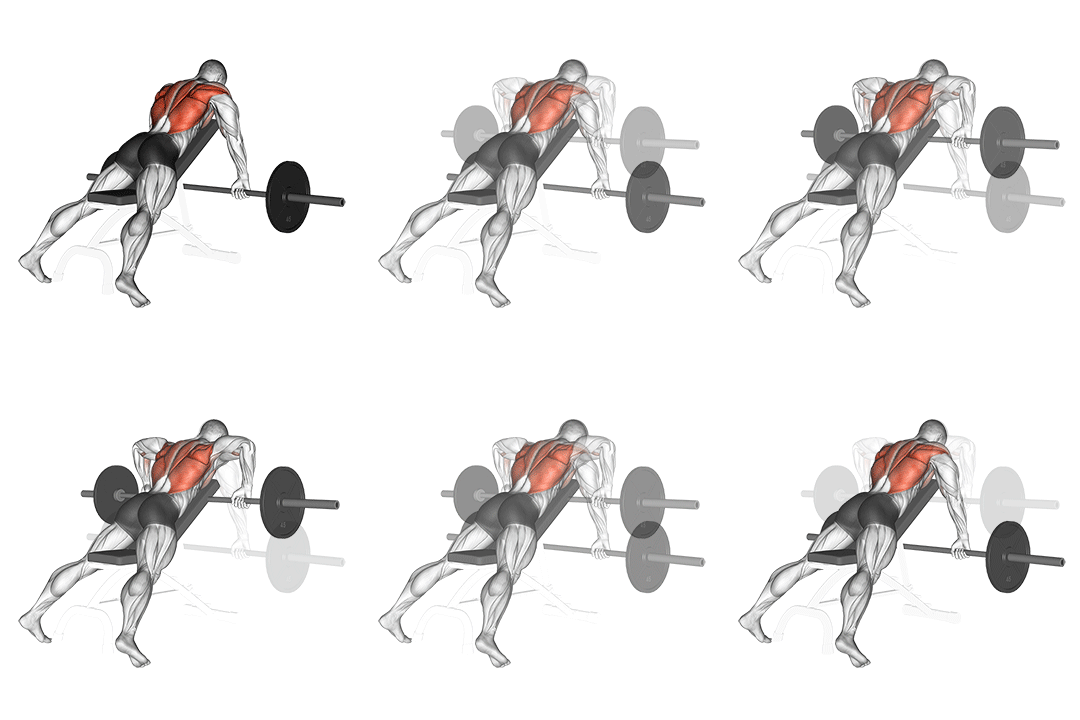
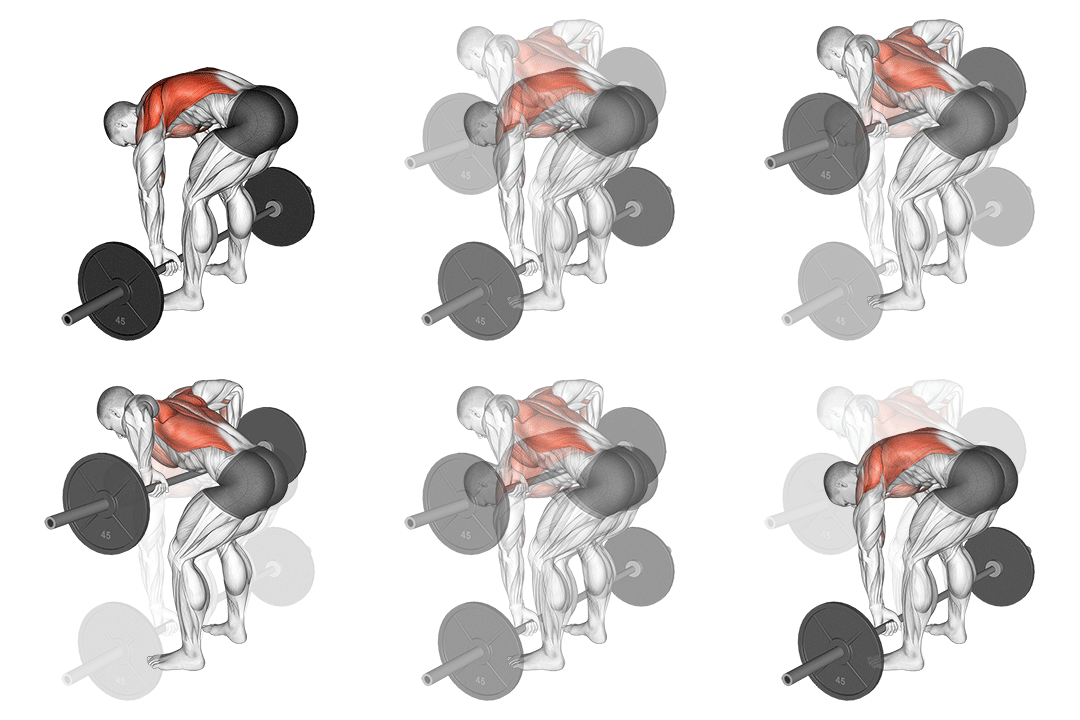
More comparisons with Lever Bent Over Row
Compare More Exercises
Use our free comparison tool to analyze any two exercises head-to-head.
Compare Exercises