

Barbell Bent Over Row vs Lever One Arm Bent Over Row: Complete Comparison Guide
Barbell Bent Over Row vs Lever One Arm Bent Over Row is a matchup between a classic bilateral compound and a unilateral variant that stresses the same upper-back targets. You’ll get clear, actionable guidance on muscle activation, technique cues, equipment needs, and programming for strength or hypertrophy. Read this if you want to know which exercise loads the lats, rhomboids, and posterior delts more effectively, how torso angle and grip change force vectors, and which option better fits your training setup and injury history.
Exercise Comparison
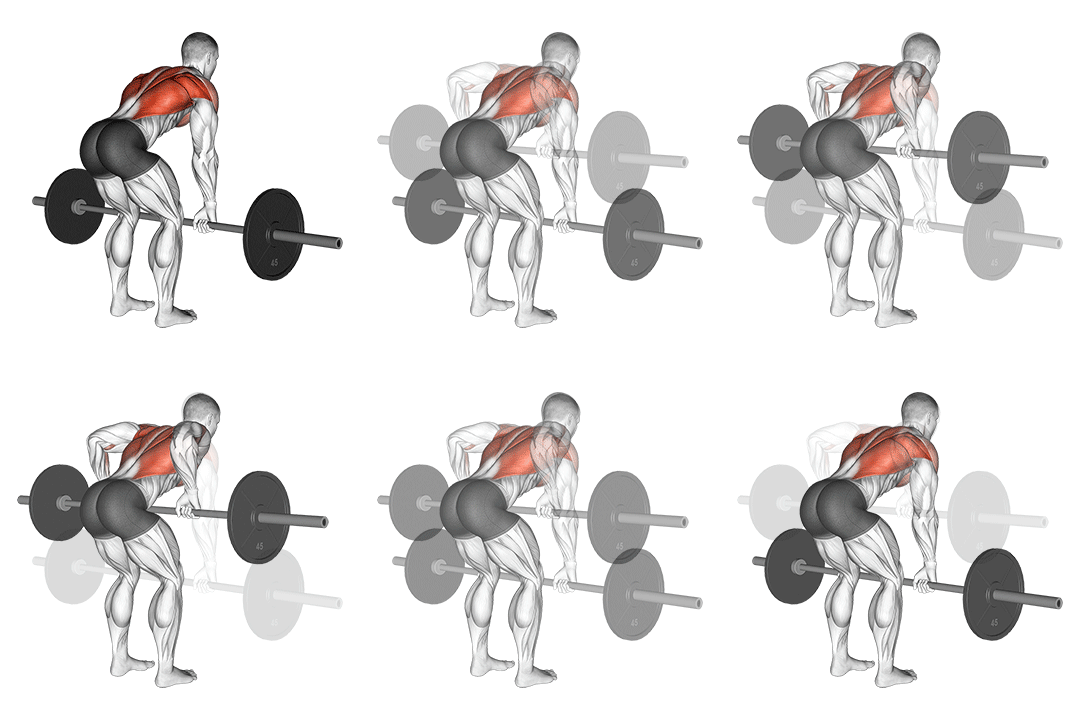
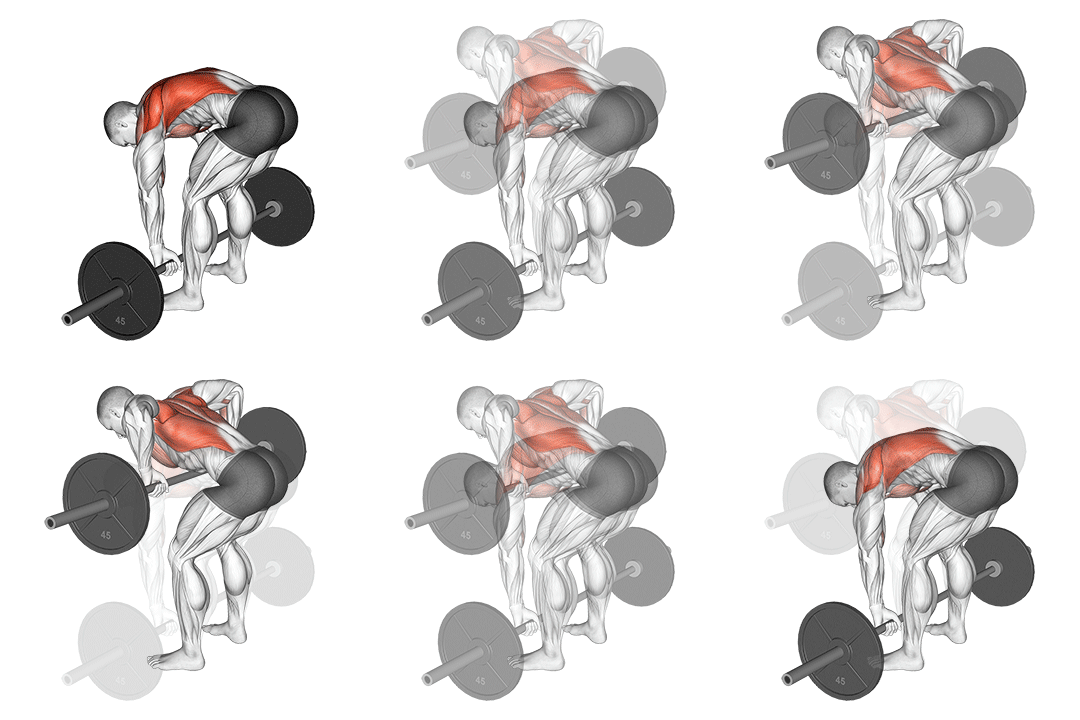
Barbell Bent Over Row
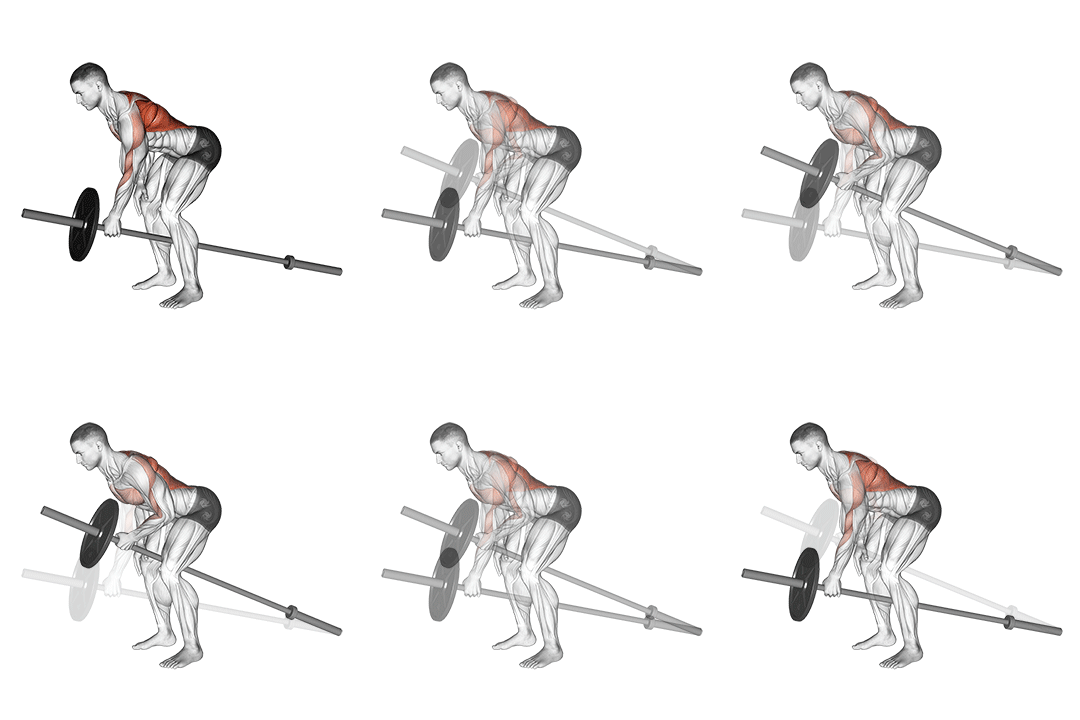
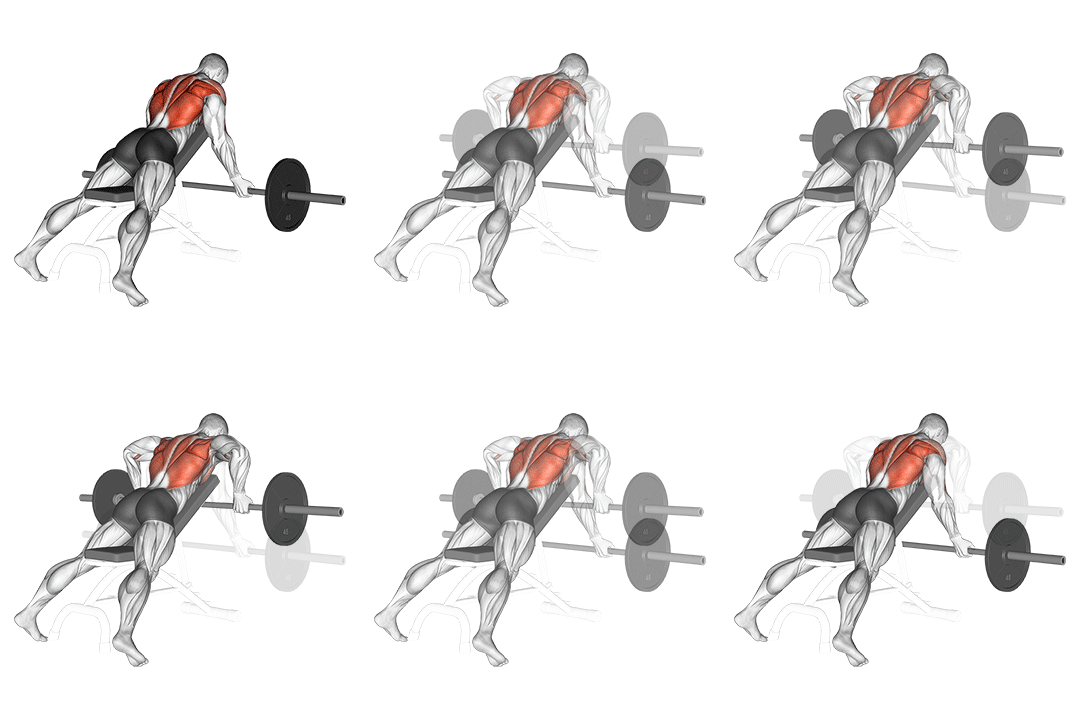
Lever One Arm Bent Over Row
Head-to-Head Comparison
| Attribute | Barbell Bent Over Row | Lever One Arm Bent Over Row |
|---|---|---|
| Target Muscle |
Upper-back
|
Upper-back
|
| Body Part |
Back
|
Back
|
| Equipment |
Barbell
|
Barbell
|
| Difficulty |
Intermediate
|
Intermediate
|
| Movement Type |
Compound
|
Compound
|
| Secondary Muscles |
2
|
2
|
Secondary Muscles Activated
Barbell Bent Over Row
Lever One Arm Bent Over Row
Visual Comparison
Overview
Barbell Bent Over Row vs Lever One Arm Bent Over Row is a matchup between a classic bilateral compound and a unilateral variant that stresses the same upper-back targets. You’ll get clear, actionable guidance on muscle activation, technique cues, equipment needs, and programming for strength or hypertrophy. Read this if you want to know which exercise loads the lats, rhomboids, and posterior delts more effectively, how torso angle and grip change force vectors, and which option better fits your training setup and injury history.
Key Differences
- Both exercises target the Upper-back using Barbell. The main differences are in their movement patterns and muscle activation angles.
Pros & Cons
Barbell Bent Over Row
+ Pros
- Allows heavier bilateral loading for strength (safely progress in 4–8 rep ranges)
- Simple setup with standard barbell and plates
- Direct horizontal pull produces strong mid-back hypertrophy stimulus
- Efficient for adding overall pulling volume in limited workout time
− Cons
- Higher compressive and shear forces on the lumbar spine at heavy loads
- Less effective for correcting left-right strength imbalances
- Requires strict hip hinge and thoracic control to avoid technique breakdown
Lever One Arm Bent Over Row
+ Pros
- Targets unilateral upper-back hypertrophy and helps correct imbalances
- Lower absolute spinal load compared to maximal barbell loads
- Increases core anti-rotation demand and scapular stability
- Easier to maintain a vertical pull path for some lifters, reducing lats' stretch-shortening abuse
− Cons
- Often needs attachments or creative setup, reducing accessibility
- Harder to progressively overload with large weight jumps
- Unilateral torque can expose weak stabilizers and require extra core work
When Each Exercise Wins
Its unilateral loading increases time under tension on the working side and lets you target weak points and mind-muscle connection. Use 6–12 reps per side with slower eccentrics to drive muscle growth.
Bilateral loading enables heavier absolute weight and progressive overload, ideal for 4–6 rep strength blocks. The straight force vector supports greater spinal and scapular loading needed to build raw pulling strength.
It’s easier to coach basic hip hinge mechanics and symmetrical pulling patterns, and progression is simpler via added plates. Start with light loads and focus on a 30–45 degree torso angle and neutral spine.
Most home setups already include a barbell and plates; no special attachments required. If you lack space for heavy loading or need unilateral work, use single-arm dumbbell or landmine variants instead.
Frequently Asked Questions
Can I do both Barbell Bent Over Row and Lever One Arm Bent Over Row in the same workout?
Yes. Use the barbell row as a primary strength or heavy volume lift, then add 2–3 sets of lever one-arm rows for unilateral hypertrophy or to address imbalances. Keep total weekly volume balanced to avoid overworking the lower back.
Which exercise is better for beginners?
Barbell Bent Over Row is generally better for beginners because it’s easier to teach a symmetrical hip hinge and progressive loading. Start light, master a 30–45 degree trunk angle and neutral spine, then add unilateral work as technique improves.
How do the muscle activation patterns differ?
Both load the lats and scapular retractors, but barbell rows produce higher bilateral peak force while one-arm rows create longer unilateral time under tension and greater anti-rotation demands. The one-arm variation increases ipsilateral scapular stabilizer activation and core engagement.
Can Lever One Arm Bent Over Row replace Barbell Bent Over Row?
It can replace barbell rows in hypertrophy or rehab-focused phases, especially if you need to limit lumbar loading or correct imbalances. For maximal strength development and efficient bilateral overload, keep the barbell row in your program.
Expert Verdict
Use the Barbell Bent Over Row when your priority is building raw pulling strength and efficient bilateral volume. It’s the go-to for heavy 4–6 rep strength phases and straightforward progressive overload. Choose the Lever One Arm Bent Over Row when you need to correct left-right asymmetries, emphasize unilateral hypertrophy (6–12 reps), or reduce absolute lumbar shear while increasing scapular control. Program both: cycle barbell rows in strength blocks and add one-arm rows as accessory work in hypertrophy or rehab phases, focusing on tempo and scapular retraction cues to maximize muscle growth and movement quality.
Also Compare
More comparisons with Barbell Bent Over Row
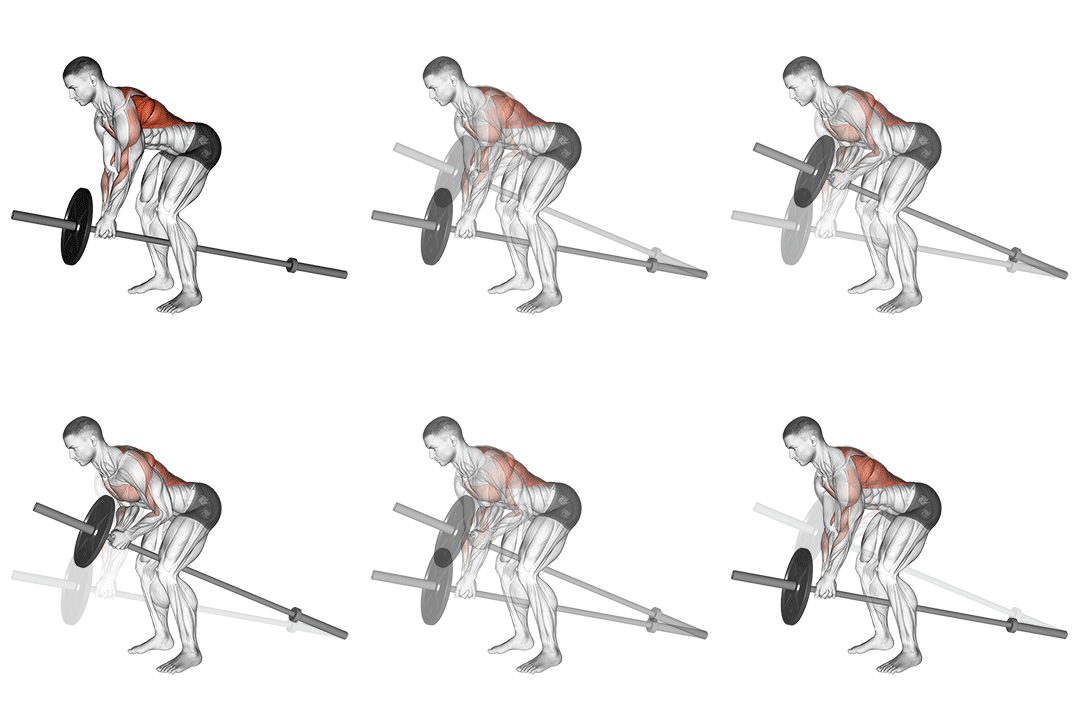
More comparisons with Lever One Arm Bent Over Row
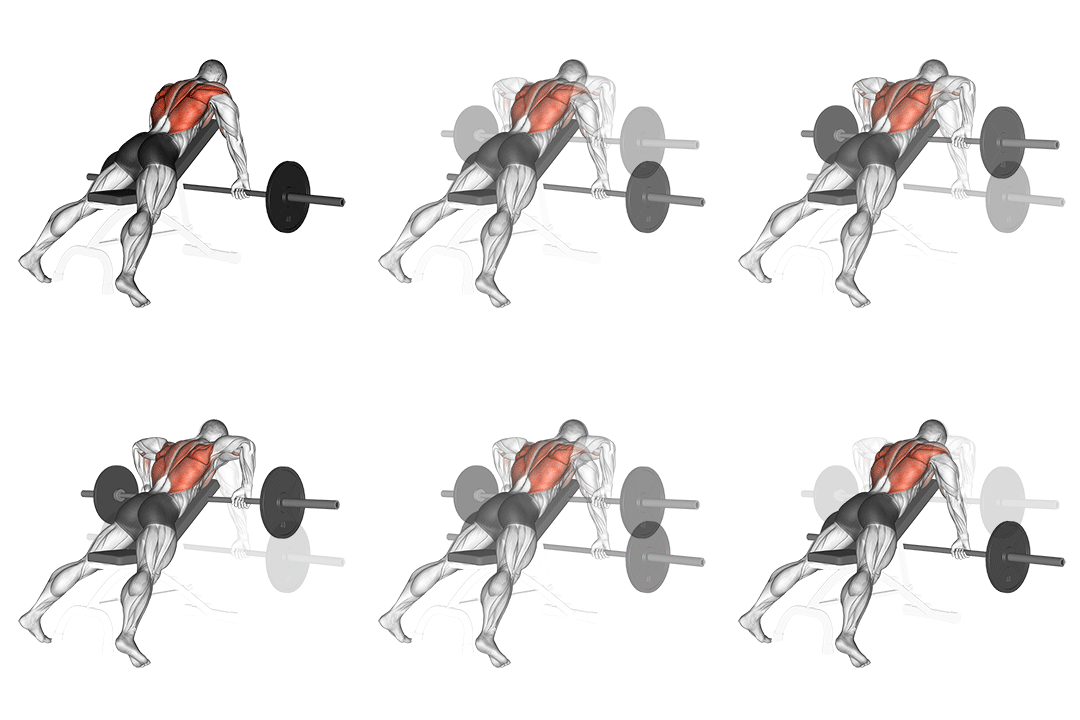
Compare More Exercises
Use our free comparison tool to analyze any two exercises head-to-head.
Compare Exercises