

Barbell Decline Bench Press vs Barbell Decline Pullover: Complete Comparison Guide
Barbell Decline Bench Press vs Barbell Decline Pullover — if you want a stronger, fuller lower chest you need to pick the right tool. You’ll get a clear breakdown of how each exercise loads the pectorals, which movement produces more mechanical tension, what equipment and angles matter (decline benches are usually set between -15° and -30°), and how to program each for hypertrophy or strength. I’ll give technique cues, rep ranges (6–12 for strength/hypertrophy presses, 8–15 for loaded pullovers), and decisive recommendations so you can choose based on your goals.
Exercise Comparison
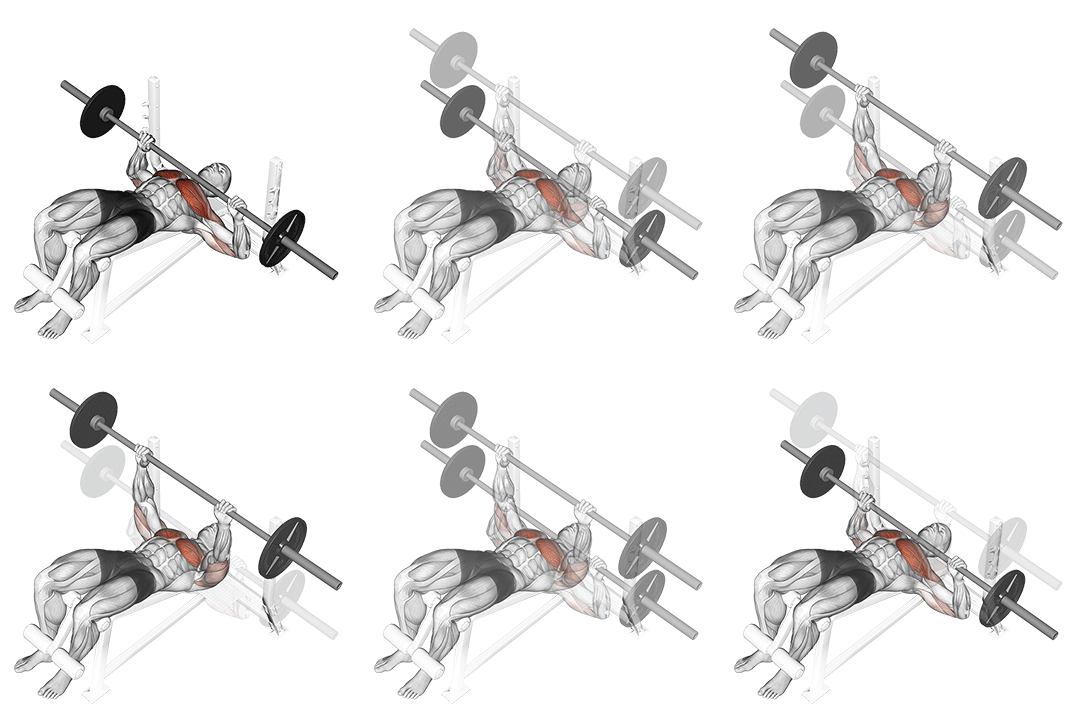
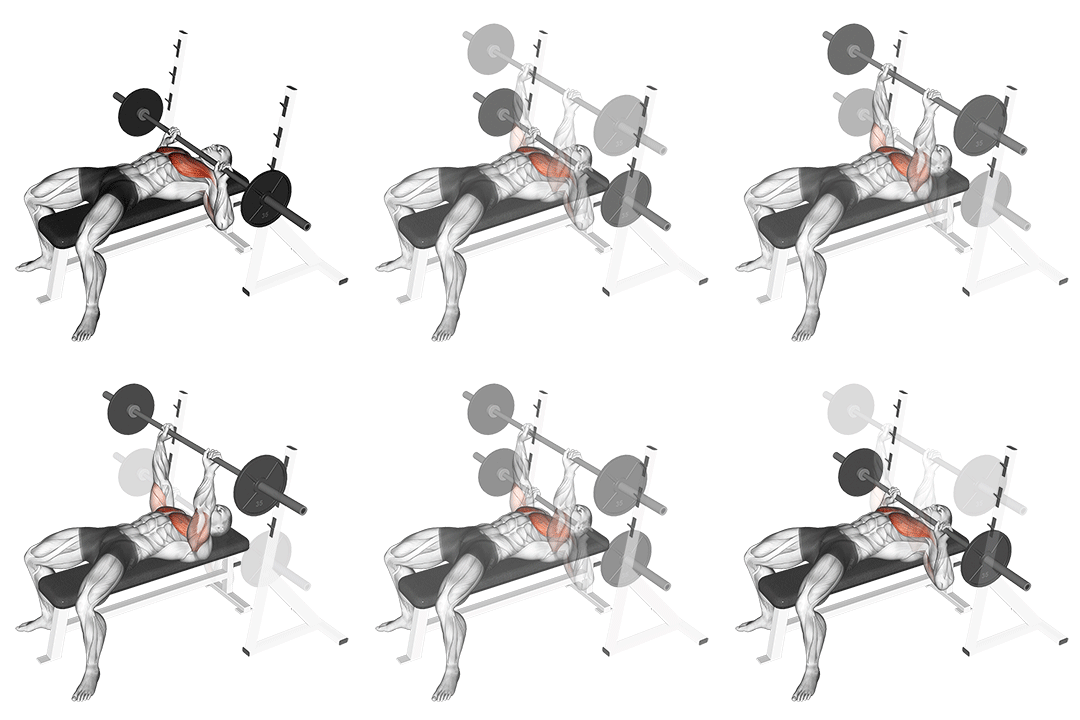
Barbell Decline Bench Press
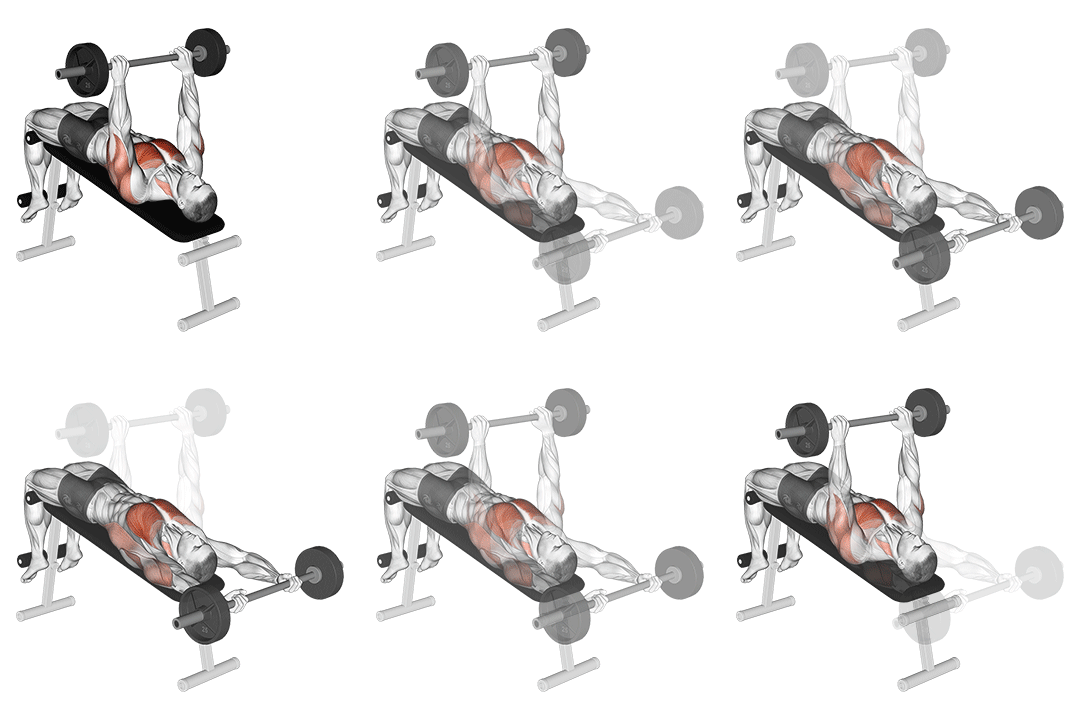
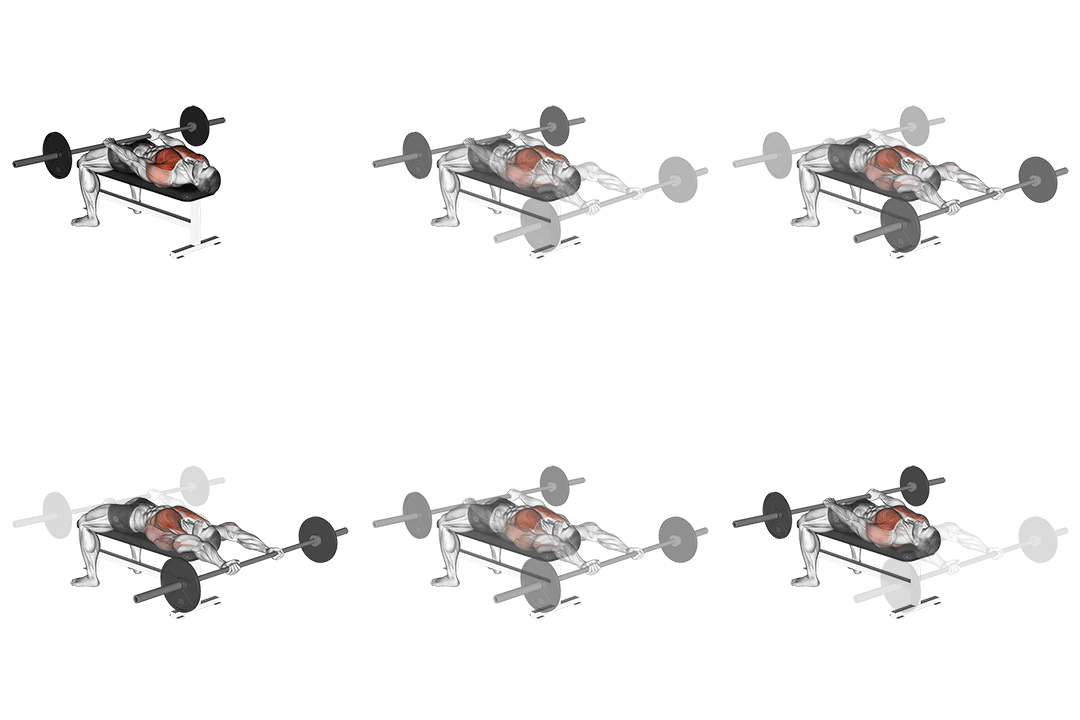
Barbell Decline Pullover
Head-to-Head Comparison
| Attribute | Barbell Decline Bench Press | Barbell Decline Pullover |
|---|---|---|
| Target Muscle |
Pectorals
|
Pectorals
|
| Body Part |
Chest
|
Chest
|
| Equipment |
Barbell
|
Barbell
|
| Difficulty |
Intermediate
|
Intermediate
|
| Movement Type |
Compound
|
Compound
|
| Secondary Muscles |
2
|
2
|
Secondary Muscles Activated
Barbell Decline Bench Press
Barbell Decline Pullover
Visual Comparison
Overview
Barbell Decline Bench Press vs Barbell Decline Pullover — if you want a stronger, fuller lower chest you need to pick the right tool. You’ll get a clear breakdown of how each exercise loads the pectorals, which movement produces more mechanical tension, what equipment and angles matter (decline benches are usually set between -15° and -30°), and how to program each for hypertrophy or strength. I’ll give technique cues, rep ranges (6–12 for strength/hypertrophy presses, 8–15 for loaded pullovers), and decisive recommendations so you can choose based on your goals.
Key Differences
- Both exercises target the Pectorals using Barbell. The main differences are in their movement patterns and muscle activation angles.
Pros & Cons
Barbell Decline Bench Press
+ Pros
- High mechanical tension on lower pecs — ideal for heavy loading
- Direct horizontal adduction stimulus for chest hypertrophy
- Easier to measure progressive overload with heavier weights
- Simple technique cues and stable movement pattern
− Cons
- Requires a decline bench and spotter for heavy sets
- Higher joint loading at heavy weights (shoulder, elbow)
- Less stretch-mediated tension throughout full ROM
Barbell Decline Pullover
+ Pros
- Loads pecs through a long stretch — good for length-tension stimulus
- More scapular and thoracic mobility stimulus (serratus/lats involved)
- Safer to use moderate loads without spotter
- Transfers well to dumbbell variations if equipment is limited
− Cons
- Technical demand on shoulder mobility and scapular control
- Less absolute load potential than the decline press
- Risk of shoulder stress if ROM is excessive or form breaks down
When Each Exercise Wins
The decline bench allows higher absolute loads and greater mechanical tension across the sternal head, which drives muscle growth when paired with 6–12 rep ranges and progressive overload. Use heavier sets and controlled eccentrics to maximize tension across fibers.
Strength improvements rely on high force production under heavy loads; the decline press lets you use higher weights and train low-rep strength ranges (3–6) with stable mechanics and clear progressions.
Beginners benefit from the simple pressing pattern and easier coaching cues of the decline bench press. It’s easier to learn safe bar path and breathing/brace techniques than to master the long ROM and thoracic control needed for safe pullovers.
If you lack a heavy setup or spotter, pullovers are easier to scale down and can be performed with a single dumbbell or lighter barbell. They provide chest stimulus and thoracic mobility without the need to load to near-maximal weights.
Frequently Asked Questions
Can I do both Barbell Decline Bench Press and Barbell Decline Pullover in the same workout?
Yes — pair them by doing the decline bench press as your main compound (heavy sets, lower reps) and the pullover as an accessory (moderate weight, higher reps 8–15) to target the pecs through different force vectors and length-tension profiles. Keep total volume in check to avoid shoulder fatigue.
Which exercise is better for beginners?
The Barbell Decline Bench Press is generally better for beginners due to its straightforward pressing pattern and easier coaching cues for bar path and bracing. Start with light loads, practice technique, and add pullover work once you have baseline shoulder stability and thoracic mobility.
How do the muscle activation patterns differ?
Decline bench press peaks pectoral activation through concentric horizontal adduction and allows higher force output at shorter muscle lengths, while the pullover emphasizes eccentric stretch and end-range loading of the pecs and recruits lats and serratus more through shoulder extension and scapular control.
Can Barbell Decline Pullover replace Barbell Decline Bench Press?
No if your primary goal is to build pressing strength or maximize lower-pec mechanical tension — the pullover won’t match heavy-load capacity. Use pullovers as a complementary exercise to add stretch and variety, not a wholesale replacement for heavy pressing.
Expert Verdict
Choose the Barbell Decline Bench Press when your priority is lower-pectoral hypertrophy or absolute pressing strength — it lets you produce higher mechanical tension, track progressive overload, and overload the triceps and anterior deltoids. Pick the Barbell Decline Pullover when you want stretch-mediated chest stimulus, better thoracic expansion, or a safer option without heavy loading; it’s especially useful for adding variety and targeting the pecs at long muscle lengths. Program both smartly: use the decline press for core pressing sessions (3–6 for strength, 6–12 for hypertrophy) and slot pullover variations as accessory work (8–15 reps) to increase time under tension and improve scapular mobility.
Also Compare
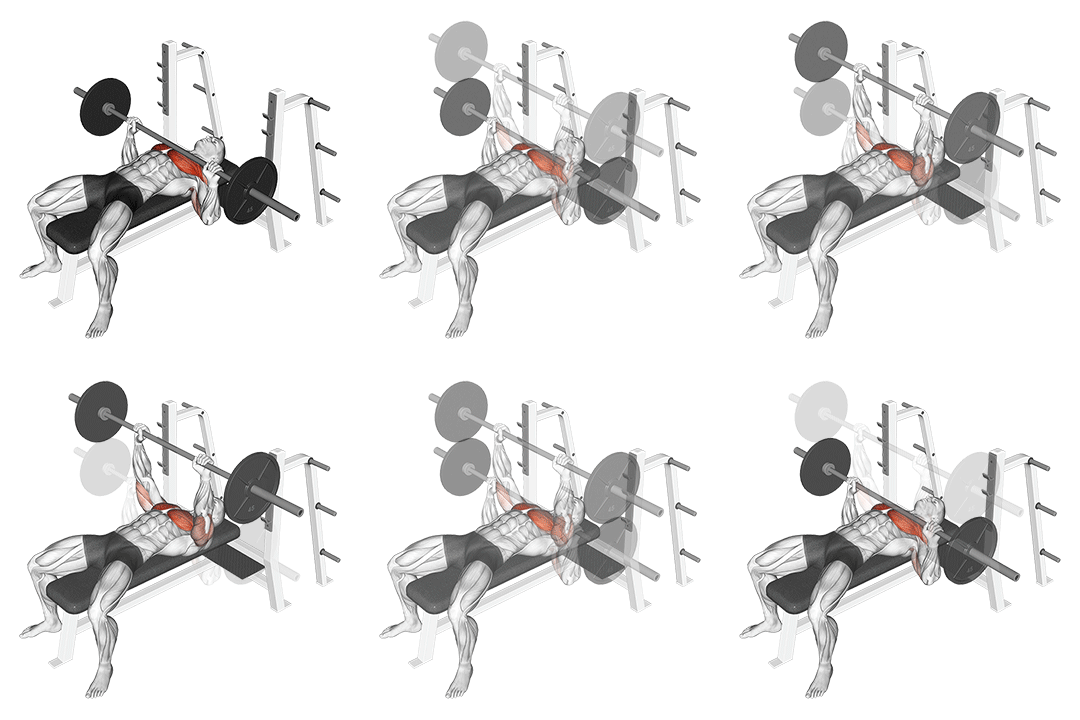
More comparisons with Barbell Decline Bench Press
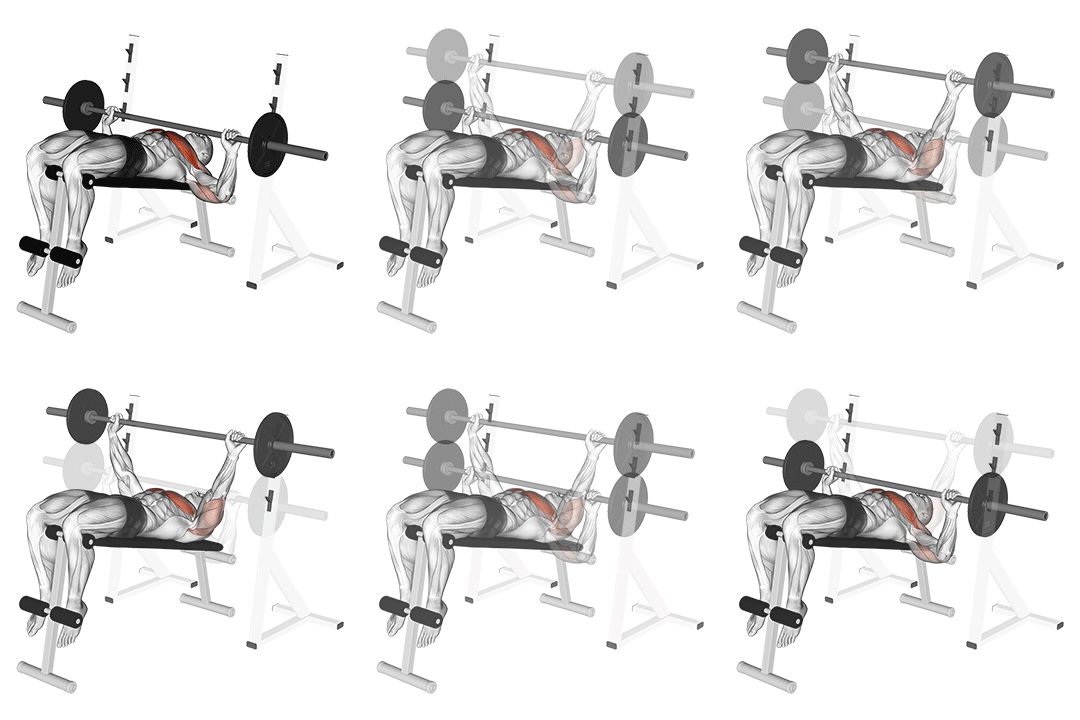
More comparisons with Barbell Decline Pullover
Compare More Exercises
Use our free comparison tool to analyze any two exercises head-to-head.
Compare Exercises