

Barbell Decline Bench Press vs Barbell Decline Wide-grip Press: Complete Comparison Guide
Barbell Decline Bench Press vs Barbell Decline Wide-grip Press — if you want a stronger, fuller lower chest, choosing the right decline press matters. You’ll get a clear, practical breakdown of how each lift loads the sternal head of the pectoralis, how hand position changes force vectors and triceps contribution, and which movement better fits hypertrophy, strength, or rehab goals. I’ll cover muscle activation, setup and technique cues, injury considerations, and specific rep ranges and progressions to help you pick the best option for your program.
Exercise Comparison
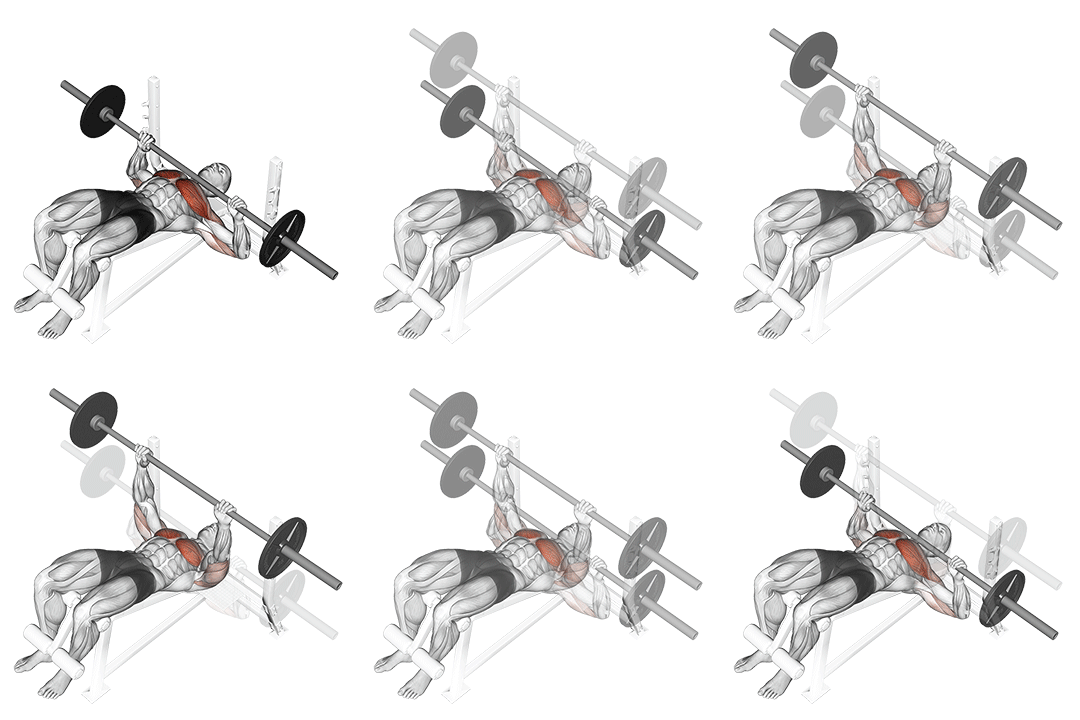
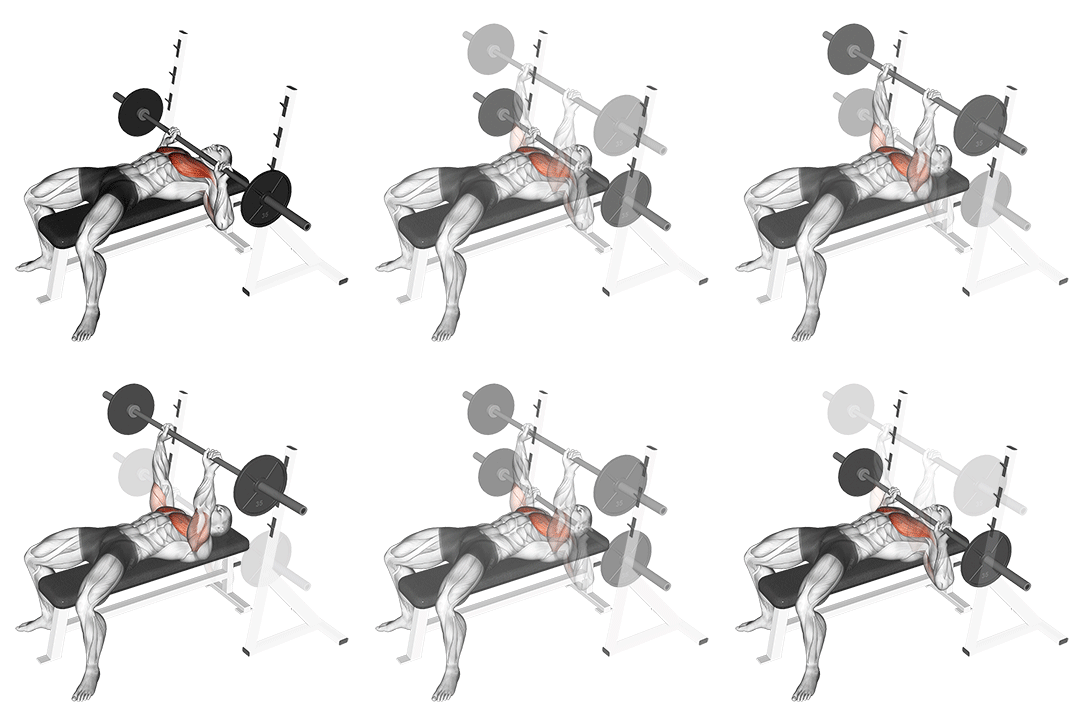
Barbell Decline Bench Press
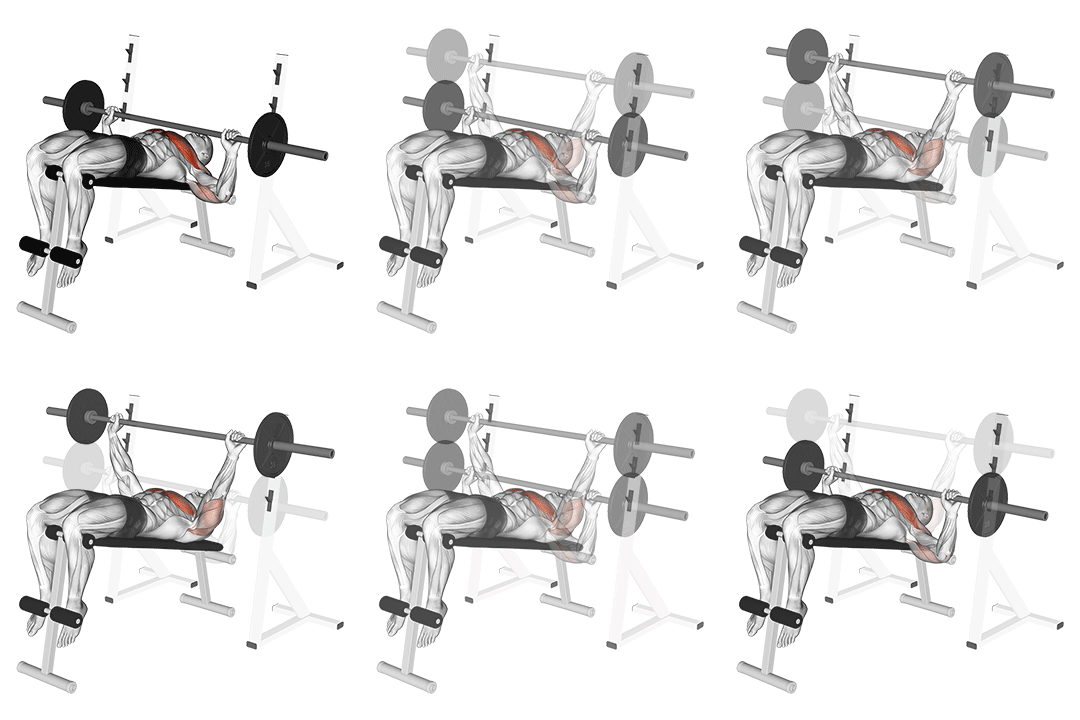
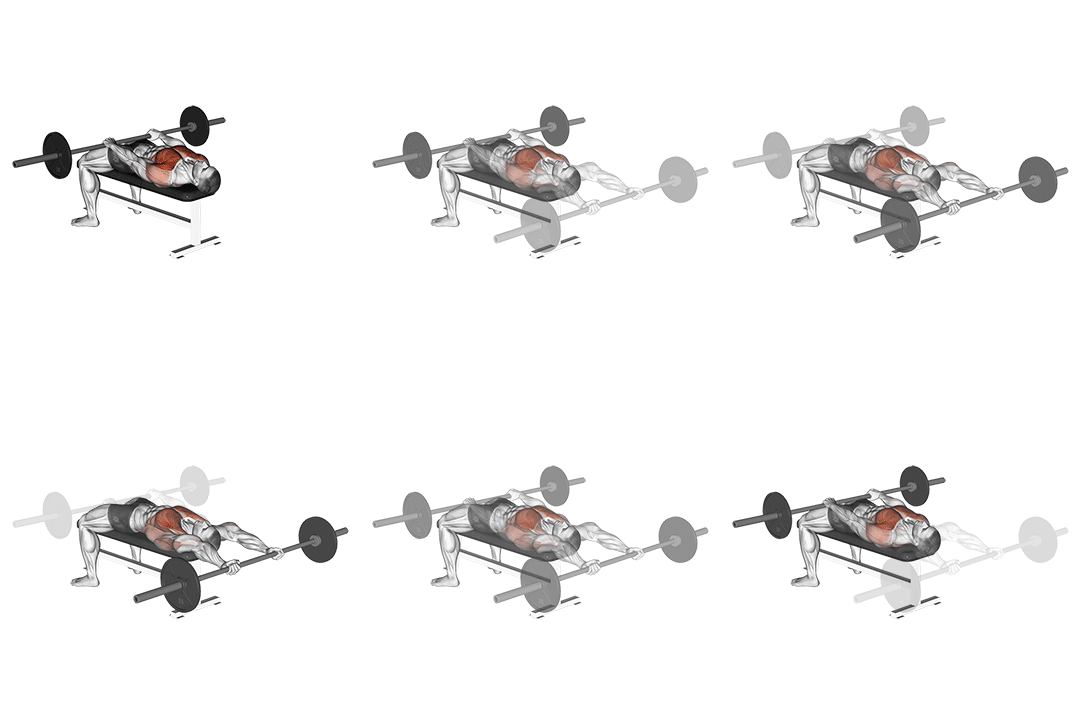
Barbell Decline Wide-grip Press
Head-to-Head Comparison
| Attribute | Barbell Decline Bench Press | Barbell Decline Wide-grip Press |
|---|---|---|
| Target Muscle |
Pectorals
|
Pectorals
|
| Body Part |
Chest
|
Chest
|
| Equipment |
Barbell
|
Barbell
|
| Difficulty |
Intermediate
|
Intermediate
|
| Movement Type |
Compound
|
Compound
|
| Secondary Muscles |
2
|
2
|
Secondary Muscles Activated
Barbell Decline Bench Press
Barbell Decline Wide-grip Press
Visual Comparison
Overview
Barbell Decline Bench Press vs Barbell Decline Wide-grip Press — if you want a stronger, fuller lower chest, choosing the right decline press matters. You’ll get a clear, practical breakdown of how each lift loads the sternal head of the pectoralis, how hand position changes force vectors and triceps contribution, and which movement better fits hypertrophy, strength, or rehab goals. I’ll cover muscle activation, setup and technique cues, injury considerations, and specific rep ranges and progressions to help you pick the best option for your program.
Key Differences
- Both exercises target the Pectorals using Barbell. The main differences are in their movement patterns and muscle activation angles.
Pros & Cons
Barbell Decline Bench Press
+ Pros
- More triceps involvement improves lockout strength and transfer to other pressing
- Easier to set up and teach, lower technical demand
- Versatile for progressions: pause reps, tempo, overload
- Safer for shoulders with moderate grip widths and controlled decline angle (15°–30°)
− Cons
- Slightly less isolated lateral pec emphasis compared to wide grip
- Requires decline bench and a spotter for heavy sets
- May underload outer pec fibers if used exclusively
Barbell Decline Wide-grip Press
+ Pros
- Greater lateral pectoral loading due to wider force vector
- Can produce stronger subjective chest activation and fullness
- Reduces triceps domination, focusing stimulus on pecs
- Effective for hypertrophy when used with controlled eccentrics and moderate reps (6–12)
− Cons
- Higher shoulder and pec strain risk with very wide grips
- Harder to learn proper bar path and elbow tuck for safety
- Less carryover to triceps-driven lockout strength
When Each Exercise Wins
The wide grip shifts the force vector to increase horizontal adduction torque on the pecs, producing stronger localized stimulation of the lower pec fibers. Use sets of 6–12 reps with controlled eccentrics and a decline of 15°–25° for best hypertrophy.
The standard decline grip recruits more triceps and allows a more vertical forearm at lockout, improving overall pressing strength. Train heavier loads in 3–6 rep ranges and include paused reps to build raw pressing power.
It’s simpler to coach and matches the flat bench press pattern more closely, making motor learning easier. Beginners should start with moderate decline (15°) and a shoulder-safe grip before experimenting with wider widths.
Both lifts require a decline bench and barbell, but the standard grip needs less shoulder mobility and setup space, making it more practical for limited home setups and safer without a spotter when using pins.
Frequently Asked Questions
Can I do both Barbell Decline Bench Press and Barbell Decline Wide-grip Press in the same workout?
Yes — pair them strategically: use the wide-grip for a chest-focused primary exercise (3–4 sets of 6–10), then follow with standard decline or narrow variations for strength or triceps work (2–3 sets of 4–6). Limit total heavy pressing volume to avoid shoulder fatigue and preserve technique.
Which exercise is better for beginners?
Barbell Decline Bench Press is better for beginners because it’s easier to learn, safer for shoulders at moderate grip widths, and transfers well from the flat bench. Start with a 15° decline and lighter loads to build stable pressing mechanics.
How do the muscle activation patterns differ?
Wide grip increases horizontal adduction torque so the pectoralis major carries a larger share of the load through the mid-range, while standard decline grip increases triceps activation at lockout by lengthening the triceps moment arm. These changes stem from altered force vectors and muscle length-tension relationships.
Can Barbell Decline Wide-grip Press replace Barbell Decline Bench Press?
It can replace it when your goal is chest hypertrophy, but not if you need triceps-driven lockout strength. Rotate wide-grip blocks for size and standard decline blocks to build overall pressing strength and joint resilience.
Expert Verdict
Use the Barbell Decline Wide-grip Press when your priority is targeted lower-pec hypertrophy: wider grips increase horizontal adduction torque and preferentially load sternal fibers, so program 3–4 sets of 6–12 reps at a decline of 15°–25°. Choose the Barbell Decline Bench Press when you want overall pressing strength and better triceps carryover—work in 3–6 rep ranges with heavier loads and paused reps. For most programs, rotate them: primary wide-grip blocks for 6–8 weeks to drive chest thickness, then switch to standard decline blocks to reinforce lockout and joint control. Always warm up shoulders, control eccentric tempo, and avoid extreme decline angles or overly wide grips to limit injury risk.
Also Compare
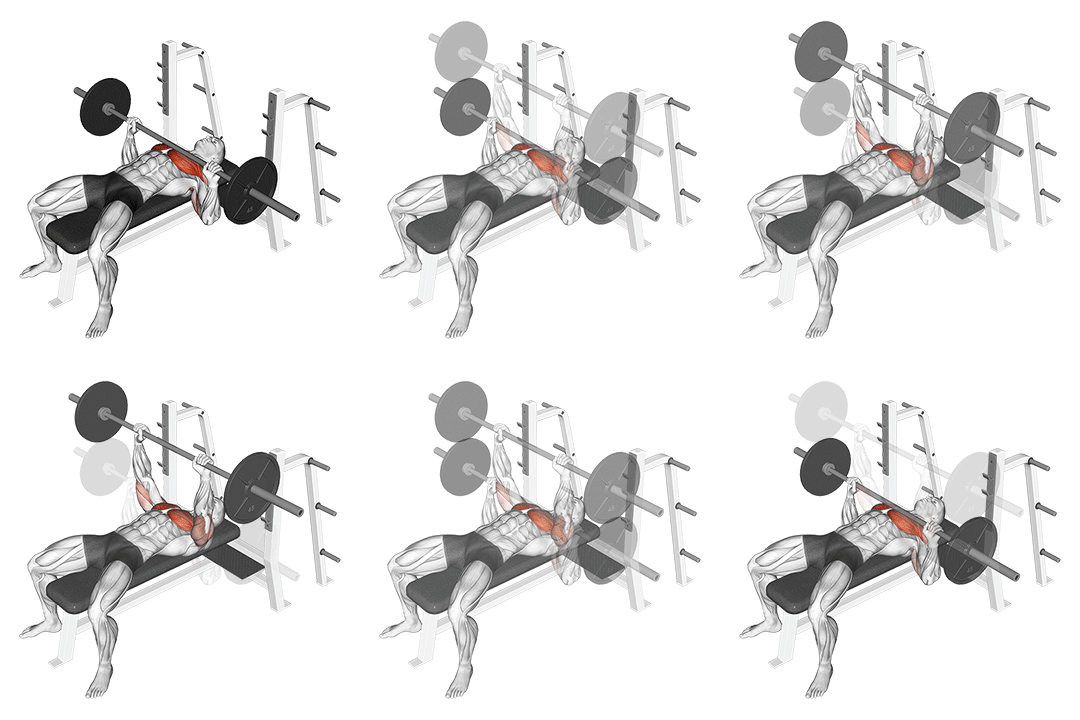
More comparisons with Barbell Decline Bench Press
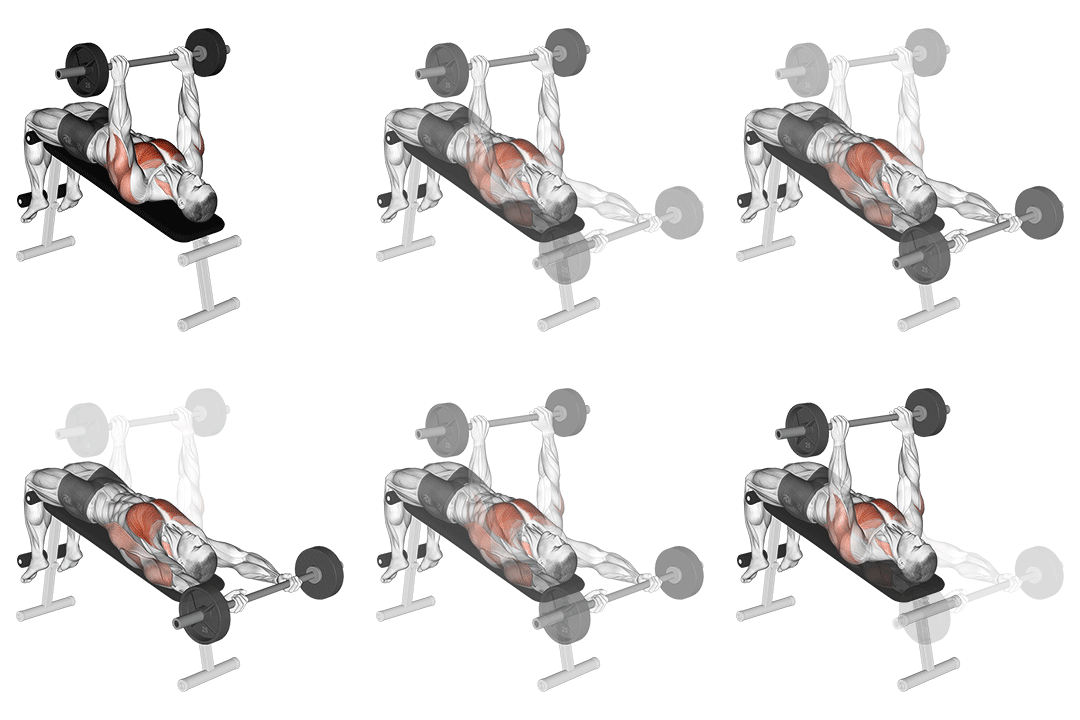
More comparisons with Barbell Decline Wide-grip Press
Compare More Exercises
Use our free comparison tool to analyze any two exercises head-to-head.
Compare Exercises