

Barbell Decline Bench Press vs Barbell Front Raise And Pullover: Complete Comparison Guide
Barbell Decline Bench Press vs Barbell Front Raise And Pullover — two compound barbell moves that both target the pectorals but load them in different ways. You’ll get clear, actionable guidance on muscle emphasis, joint mechanics, equipment needs, and programming. I’ll cover how each exercise stresses the chest (including angles and force vectors), technique cues to maximize activation and minimize risk, rep ranges for hypertrophy and strength, and which move to pick based on your goal — strength, size, or convenience.
Exercise Comparison
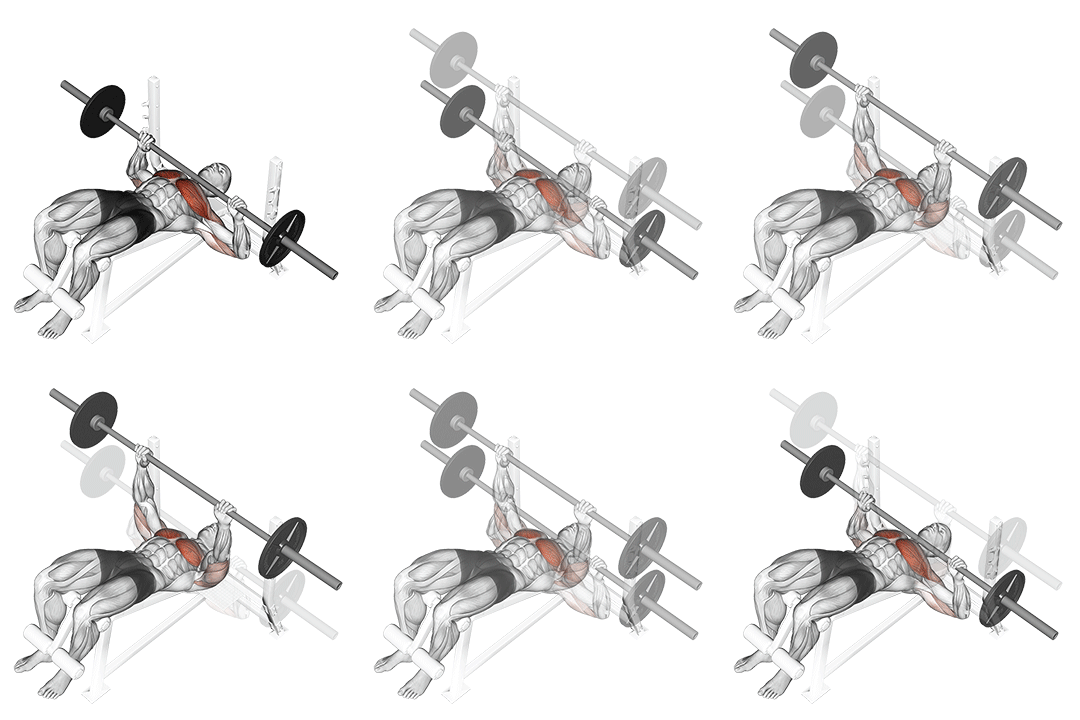
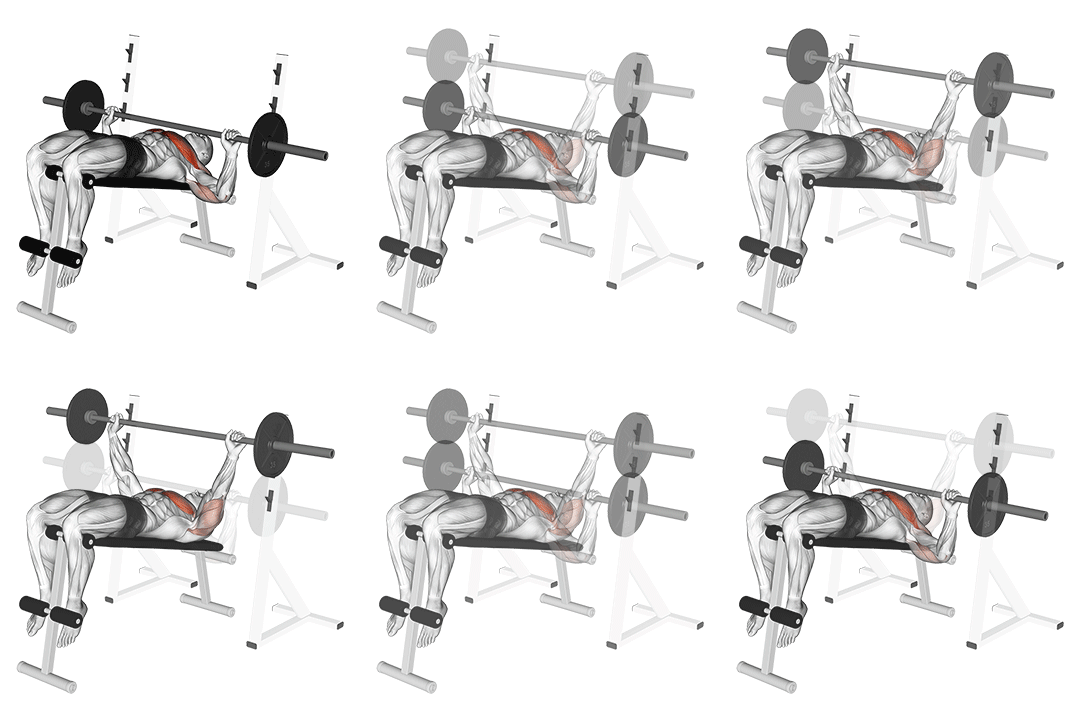
Barbell Decline Bench Press
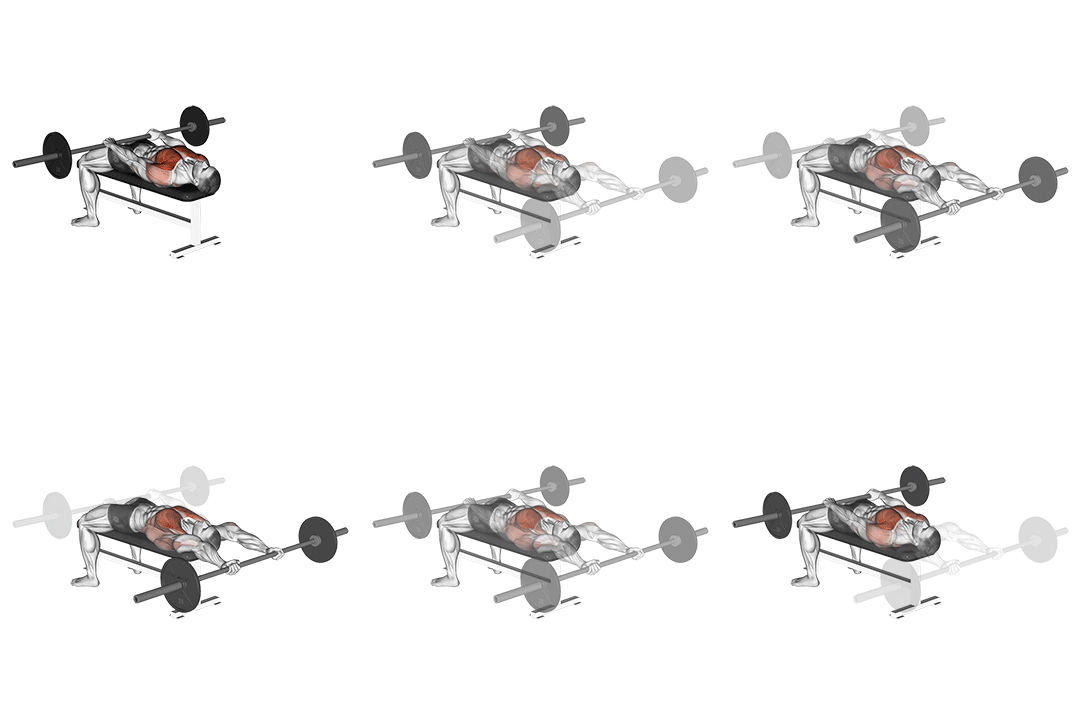
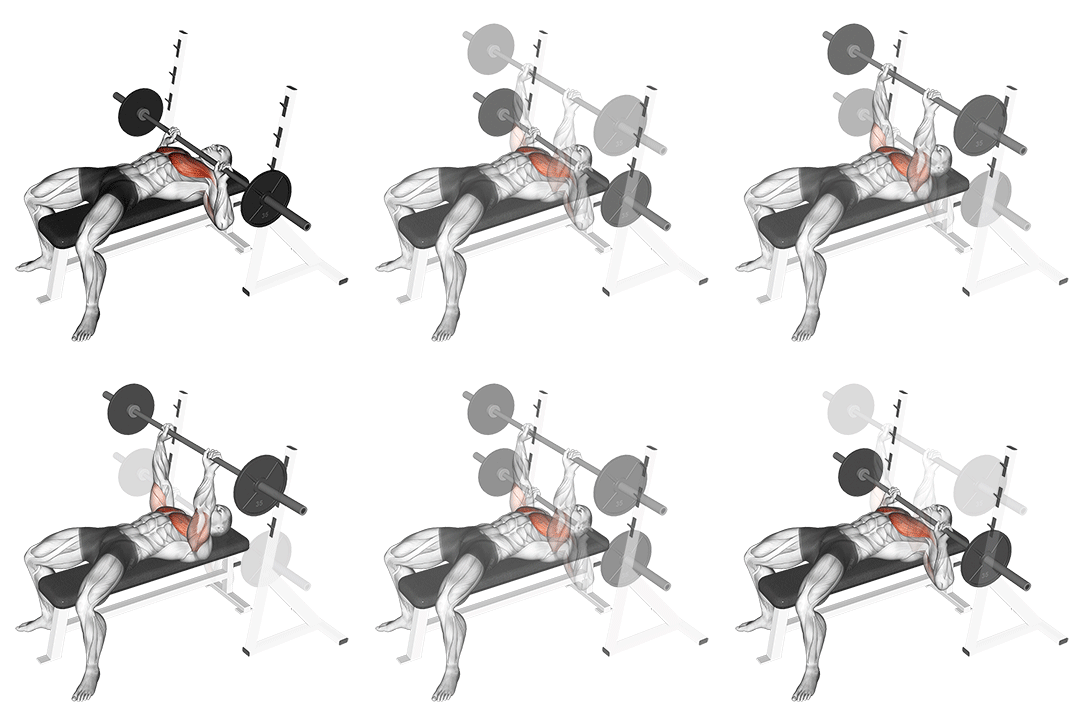
Barbell Front Raise And Pullover
Head-to-Head Comparison
| Attribute | Barbell Decline Bench Press | Barbell Front Raise And Pullover |
|---|---|---|
| Target Muscle |
Pectorals
|
Pectorals
|
| Body Part |
Chest
|
Chest
|
| Equipment |
Barbell
|
Barbell
|
| Difficulty |
Intermediate
|
Intermediate
|
| Movement Type |
Compound
|
Compound
|
| Secondary Muscles |
2
|
2
|
Secondary Muscles Activated
Barbell Decline Bench Press
Barbell Front Raise And Pullover
Visual Comparison
Overview
Barbell Decline Bench Press vs Barbell Front Raise And Pullover — two compound barbell moves that both target the pectorals but load them in different ways. You’ll get clear, actionable guidance on muscle emphasis, joint mechanics, equipment needs, and programming. I’ll cover how each exercise stresses the chest (including angles and force vectors), technique cues to maximize activation and minimize risk, rep ranges for hypertrophy and strength, and which move to pick based on your goal — strength, size, or convenience.
Key Differences
- Both exercises target the Pectorals using Barbell. The main differences are in their movement patterns and muscle activation angles.
Pros & Cons
Barbell Decline Bench Press
+ Pros
- Allows heavy axial loading for strength (suitable for 3–6 rep work)
- Directly targets lower pec fibers via 15–30° decline angle
- Strong carryover to horizontal pressing strength
- Simple force vector (horizontal adduction) for consistent progression
− Cons
- Requires a decline bench and a spotter for heavy sets
- Higher risk if unracked or if control is lost
- Less emphasis on scapular stabilizers and lats compared to pullover sequence
Barbell Front Raise And Pullover
+ Pros
- More accessible—no decline bench required
- Combines vertical and horizontal loading to hit pecs at long lengths
- Improves anterior deltoid and scapular control
- Easier to use lighter loads for technique and hypertrophy work
− Cons
- Harder to progressively overload with maximal weight compared to a press
- Sequence demands coordination; poor form can increase shoulder strain
- Less direct transfer to heavy pressing strength
When Each Exercise Wins
The front-raise-plus-pullover sequence increases time under tension and loads the pecs at long muscle lengths, which favors stretch-mediated hypertrophy. Use 8–15 reps, controlled eccentrics, and slow 2–3 second eccentrics for best effect.
Decline bench lets you handle heavier absolute loads with a stable bar path and direct horizontal adduction, ideal for 3–6 rep strength blocks and percentage-based progression.
Beginners can learn the movement patterns with lighter weights and safer ROM; the combo builds shoulder control and chest tension without the technical demands of decline racking and spotting.
This sequence requires only a bench and barbell (or even dumbbells) and adapts easily to limited space, while the decline press needs a dedicated decline bench for safe performance.
Frequently Asked Questions
Can I do both Barbell Decline Bench Press and Barbell Front Raise And Pullover in the same workout?
Yes. Pair them strategically: do the decline bench early for heavy sets (3–6 reps) to target strength, then use the front raise and pullover as a secondary hypertrophy circuit (8–15 reps) to increase time under tension and metabolic stress.
Which exercise is better for beginners?
Barbell Front Raise And Pullover is generally better for beginners because it uses lighter loads and simpler patterns to build shoulder control and chest engagement. The decline bench requires safe racking, decline positioning, and ideally a spotter, which is more advanced.
How do the muscle activation patterns differ?
Decline bench emphasizes horizontal adduction with high triceps and anterior deltoid involvement at mid-short muscle lengths, enabling heavier concentric force. The front-raise-plus-pullover sequence shifts from vertical flexion (anterior deltoid) to a long-length stretch of the pecs during the pullover, increasing eccentric tension and scapular engagement.
Can Barbell Front Raise And Pullover replace Barbell Decline Bench Press?
If your goal is hypertrophy and you lack a decline bench, the front-raise-plus-pullover combo is a valid substitute because it targets the pecs at long lengths. If you need maximal pressing strength, the decline bench cannot be fully replaced due to its superior heavy-loading capability.
Expert Verdict
Use the Barbell Decline Bench Press when your priority is adding pressing strength and handling heavier loads—position the bench at a 15–30° decline, focus on a tight shoulder blade setup, and train with lower rep ranges (3–6) for strength cycles. Choose the Barbell Front Raise And Pullover when you want targeted chest hypertrophy, improved shoulder control, and a movement that stresses the pecs at long muscle lengths; program 8–15 reps with controlled eccentrics and maintain a slight elbow bend on the pullover to emphasize the pecs and protect the shoulder. Both can be in the same program: prioritize one per mesocycle based on your goal.
Also Compare
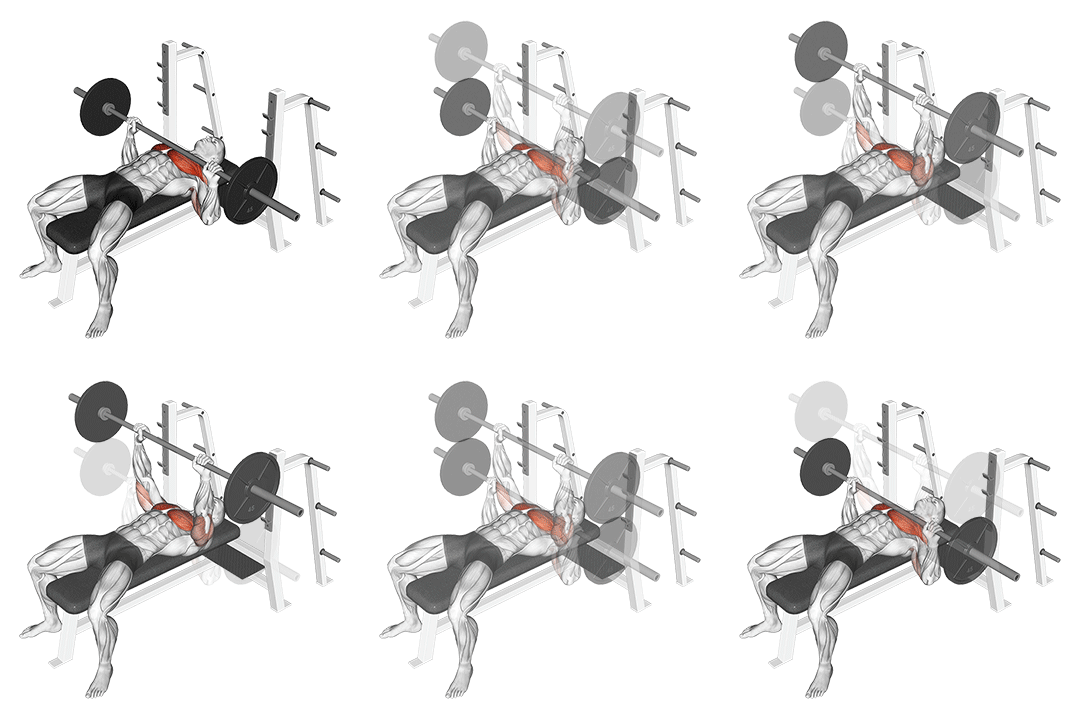
More comparisons with Barbell Decline Bench Press
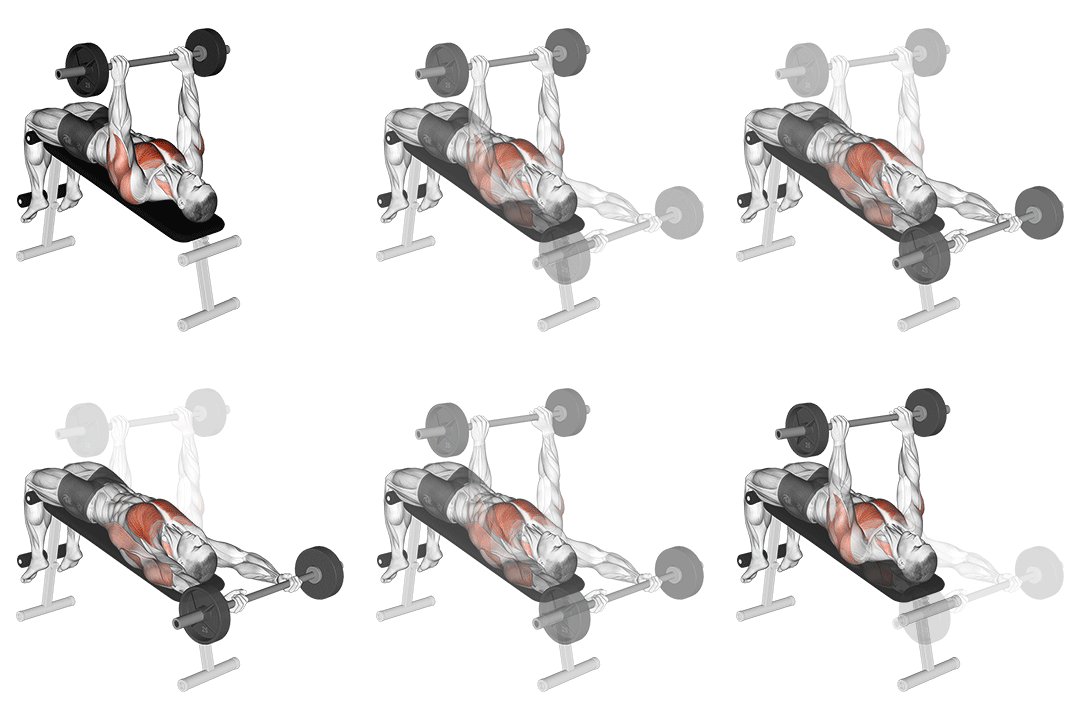
More comparisons with Barbell Front Raise And Pullover
Compare More Exercises
Use our free comparison tool to analyze any two exercises head-to-head.
Compare Exercises