

Barbell Decline Pullover vs Barbell Decline Wide-grip Press: Complete Comparison Guide
Barbell Decline Pullover vs Barbell Decline Wide-grip Press — two compound decline-barbell chest moves that look similar but load your pecs differently. You’ll get clear guidance on muscle targeting, biomechanics, equipment needs, and which to pick for hypertrophy, strength, or mobility. I’ll cover exact technique cues, joint angles (typical decline 15–30 degrees), rep-range recommendations (3–6 for strength, 6–12 for hypertrophy), and practical progressions so you can choose the exercise that matches your goals and shoulder tolerance.
Exercise Comparison
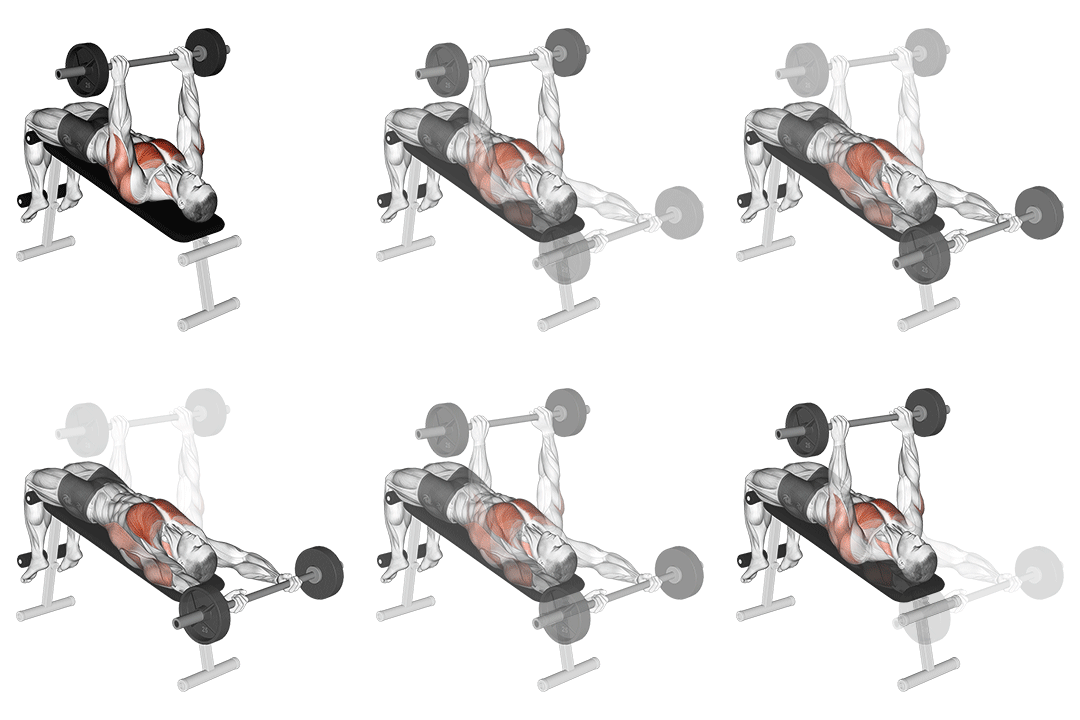
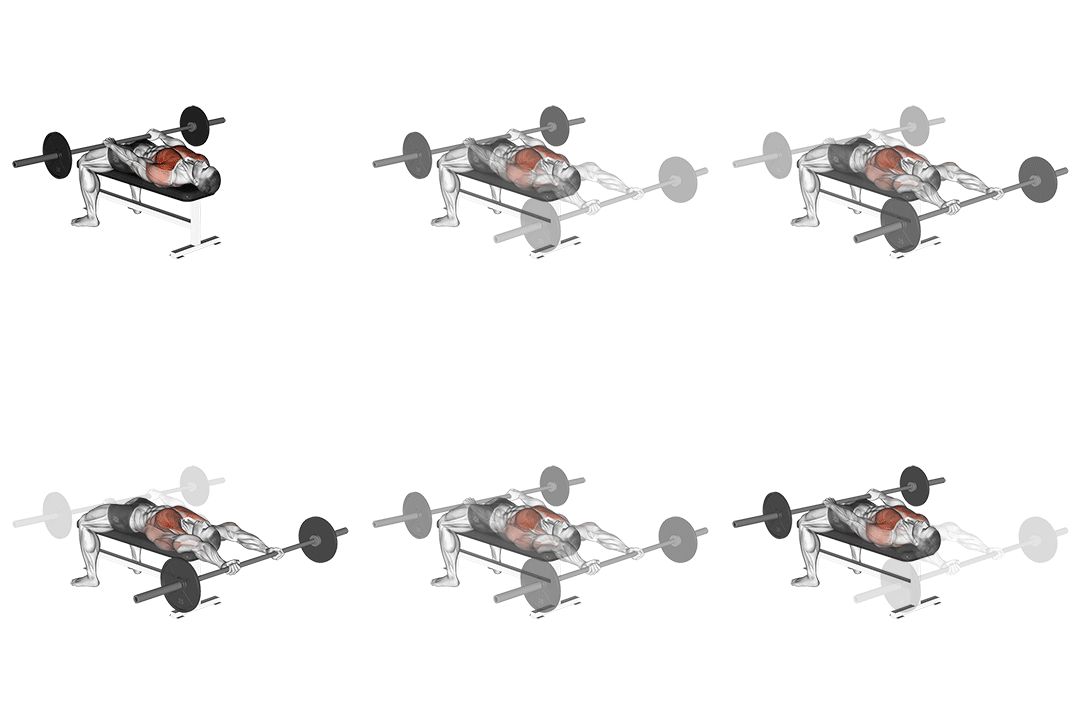
Barbell Decline Pullover
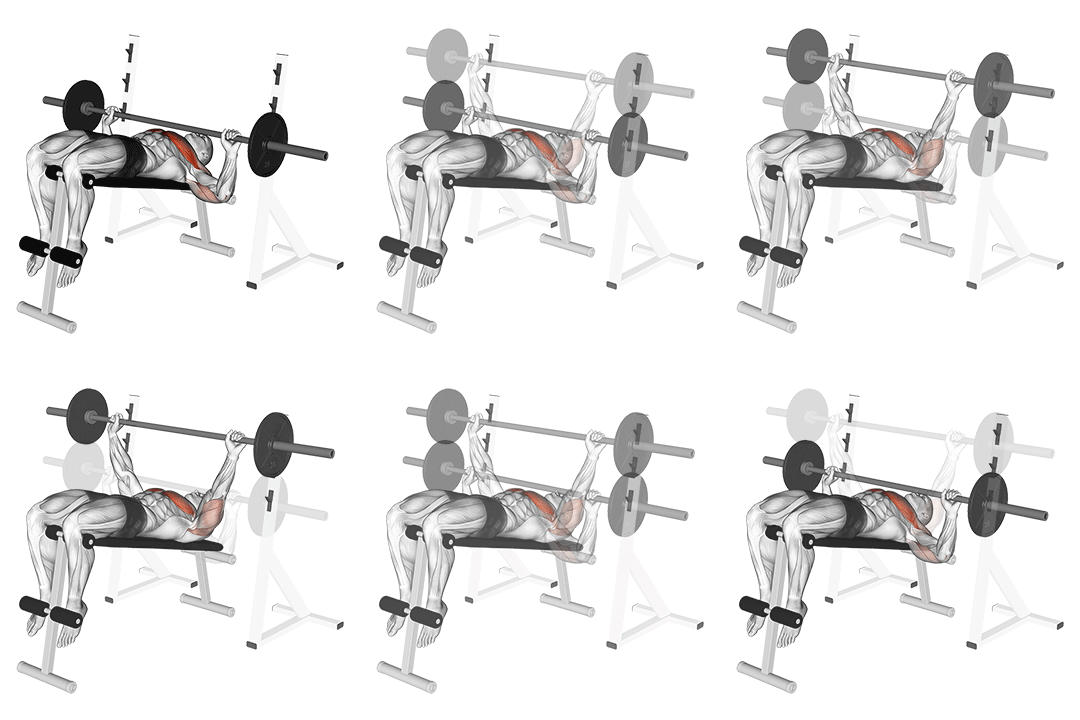
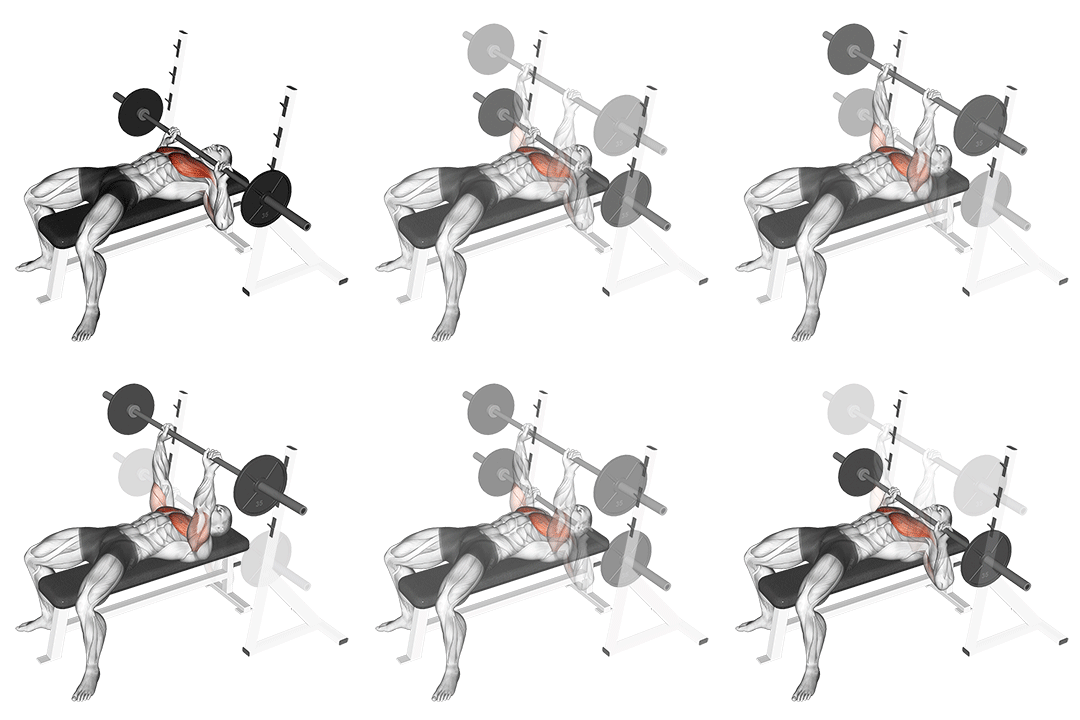
Barbell Decline Wide-grip Press
Head-to-Head Comparison
| Attribute | Barbell Decline Pullover | Barbell Decline Wide-grip Press |
|---|---|---|
| Target Muscle |
Pectorals
|
Pectorals
|
| Body Part |
Chest
|
Chest
|
| Equipment |
Barbell
|
Barbell
|
| Difficulty |
Intermediate
|
Intermediate
|
| Movement Type |
Compound
|
Compound
|
| Secondary Muscles |
2
|
2
|
Secondary Muscles Activated
Barbell Decline Pullover
Barbell Decline Wide-grip Press
Visual Comparison
Overview
Barbell Decline Pullover vs Barbell Decline Wide-grip Press — two compound decline-barbell chest moves that look similar but load your pecs differently. You’ll get clear guidance on muscle targeting, biomechanics, equipment needs, and which to pick for hypertrophy, strength, or mobility. I’ll cover exact technique cues, joint angles (typical decline 15–30 degrees), rep-range recommendations (3–6 for strength, 6–12 for hypertrophy), and practical progressions so you can choose the exercise that matches your goals and shoulder tolerance.
Key Differences
- Both exercises target the Pectorals using Barbell. The main differences are in their movement patterns and muscle activation angles.
Pros & Cons
Barbell Decline Pullover
+ Pros
- Delivers strong stretch stimulus to pectoralis major at long muscle lengths
- Improves thoracic extension and shoulder extension mobility when done controlled
- Requires less absolute load to create mechanical tension — useful for metabolic sets
- Good finisher to isolate chest arc and expand rib cage engagement
− Cons
- Higher shoulder strain risk if mobility or scapular control is poor
- Limited absolute loading compared to presses, reducing maximal strength carryover
- Bar path overhead demands precise control and increases technical complexity
Barbell Decline Wide-grip Press
+ Pros
- Allows heavier loads for strength and hypertrophy (clean linear progression)
- Directly targets horizontal adduction, maximizing pec mechanical tension
- Easier to teach and spot for safe overload sets
- Stable setup reduces compensatory lat or shoulder movement
− Cons
- Wider grip increases shear on the shoulder joint and can aggravate issues
- Less stretch at long muscle lengths compared with pullovers
- Requires a spotter or rack for maximal-effort sets to be safe
When Each Exercise Wins
The wide-grip decline press permits higher absolute loads and sustained mechanical tension across sets (6–12 reps), which drives greater hypertrophy. Its horizontal force vector maximizes pectoral torque and makes progressive overload straightforward.
Strength development requires moving heavy loads (3–6 reps) under stable conditions; the wide-grip press supports larger plates, safer spotting, and clearer force production compared with the pullover.
Beginners learn a stable, repeatable bar path and can safely progress with small weight increments, while the pullover's overhead arc and mobility demands increase injury risk early on.
If you lack a squat/rack or spotter, the pullover lets you work chest depth and range of motion with moderate loads and single-bar control. It scales down better when heavy plates and spotting aren't available.
Frequently Asked Questions
Can I do both Barbell Decline Pullover and Barbell Decline Wide-grip Press in the same workout?
Yes. Start with the wide-grip decline press for heavy compound work (3–6 or 6–12 reps), then use the pullover as an accessory finisher (8–15 reps) to emphasize stretch and range. Keep total volume and shoulder fatigue in check to avoid compromising pressing form.
Which exercise is better for beginners?
The Barbell Decline Wide-grip Press is better for beginners due to a simpler bar path, easier spotting, and superior scaling with load. Beginners should build pressing technique and shoulder stability before introducing overhead-arc movements like the pullover.
How do the muscle activation patterns differ?
Pullover activation peaks when the pectoralis is at a longer length earlier in the concentric phase, increasing passive tension and stretch stimulus. The wide-grip decline press peaks mid-range and at lockout where horizontal adduction torque and active force production are highest.
Can Barbell Decline Wide-grip Press replace Barbell Decline Pullover?
For most lifters focused on size and strength, the wide-grip decline press can replace the pullover because it delivers superior overload potential. Keep the pullover in your toolbox when you need additional stretch stimulus or mobility-focused chest work.
Expert Verdict
Use the Barbell Decline Wide-grip Press as your primary decline chest mover when your goal is hypertrophy or strength. Its horizontal force vector, greater load capacity, and clear progression make it the decisive choice for building chest mass and maximal pressing strength. Choose the Barbell Decline Pullover when you want a stretch-dominant accessory that increases pec length-tension stimulus and thoracic mobility; program it as a 2–4 set finisher in the 8–15 rep range. For athletes with limited shoulder mobility, prioritize the press and solve mobility with targeted drills before introducing heavy pullovers.
Also Compare
More comparisons with Barbell Decline Pullover
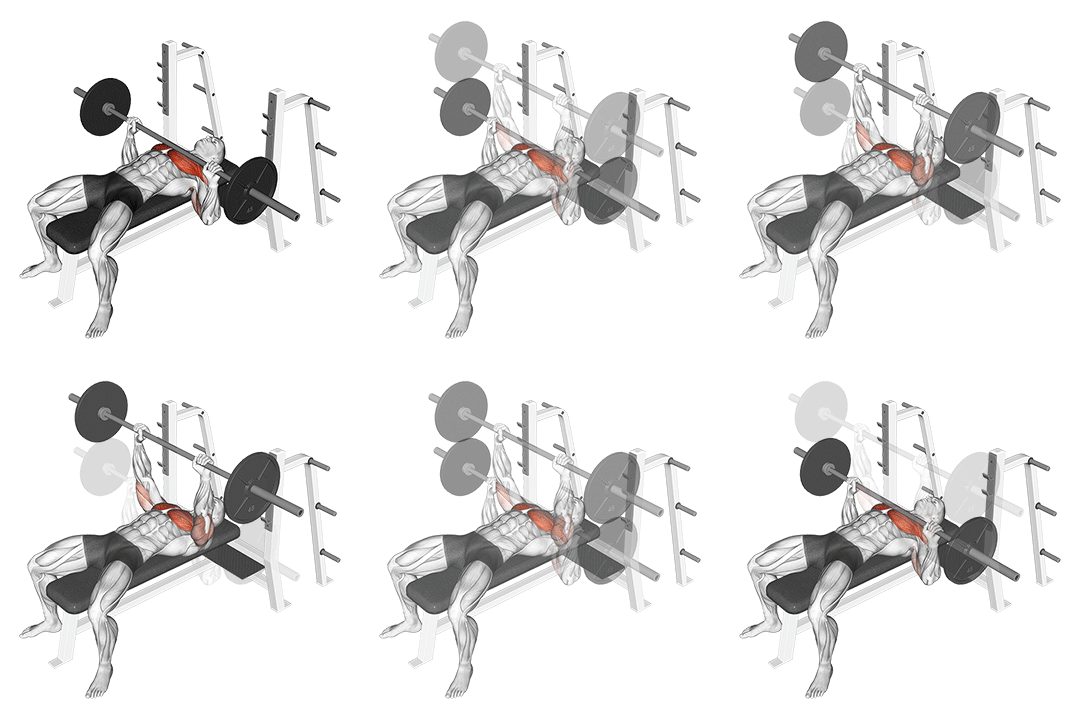
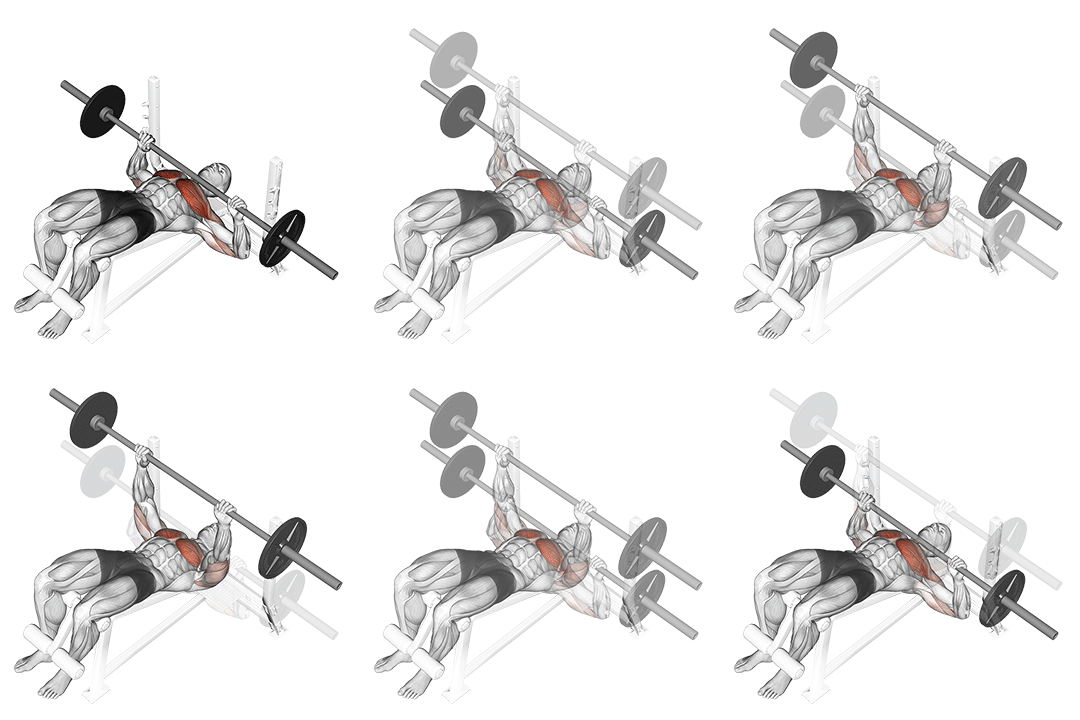
More comparisons with Barbell Decline Wide-grip Press
Compare More Exercises
Use our free comparison tool to analyze any two exercises head-to-head.
Compare Exercises