

Barbell Decline Wide-grip Press vs Barbell Front Raise And Pullover: Complete Comparison Guide
Barbell Decline Wide-grip Press vs Barbell Front Raise And Pullover — if you want a stronger, fuller chest you need to choose exercises that match your goal. I’ll walk you through how each movement loads the pectoralis major, the key biomechanics (angle, force vectors, length-tension), equipment needs, injury considerations, and recommended rep ranges. You’ll get clear technique cues, which secondary muscles light up, and practical programming tips so you can pick the right exercise for hypertrophy, strength, beginners, or home training.
Exercise Comparison
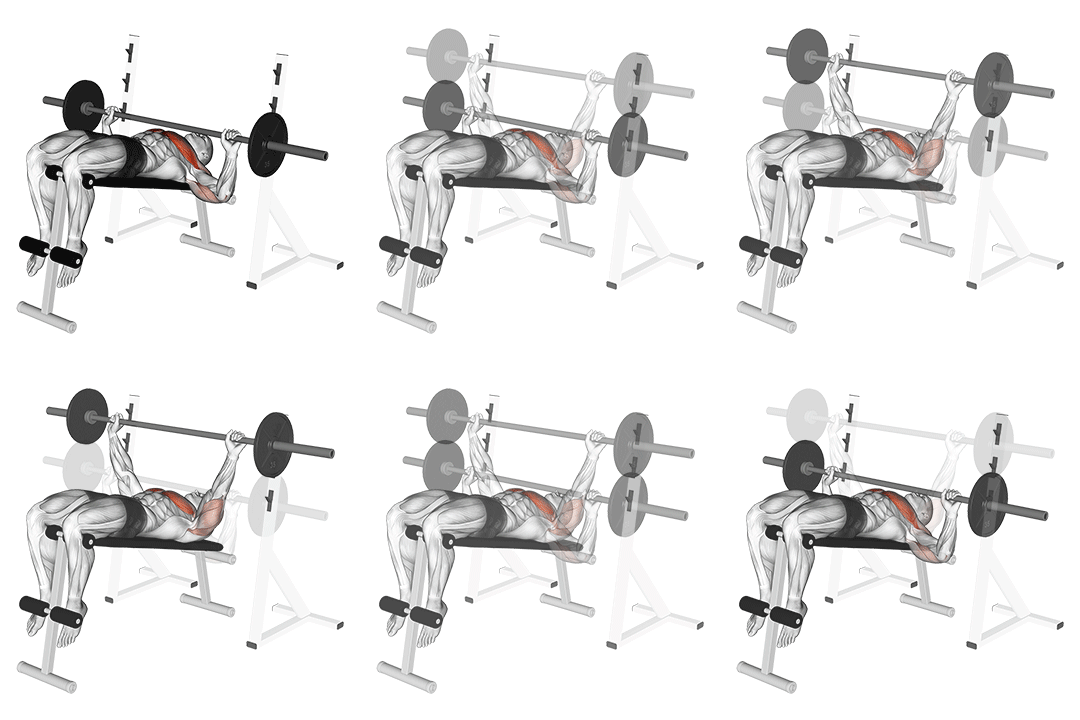
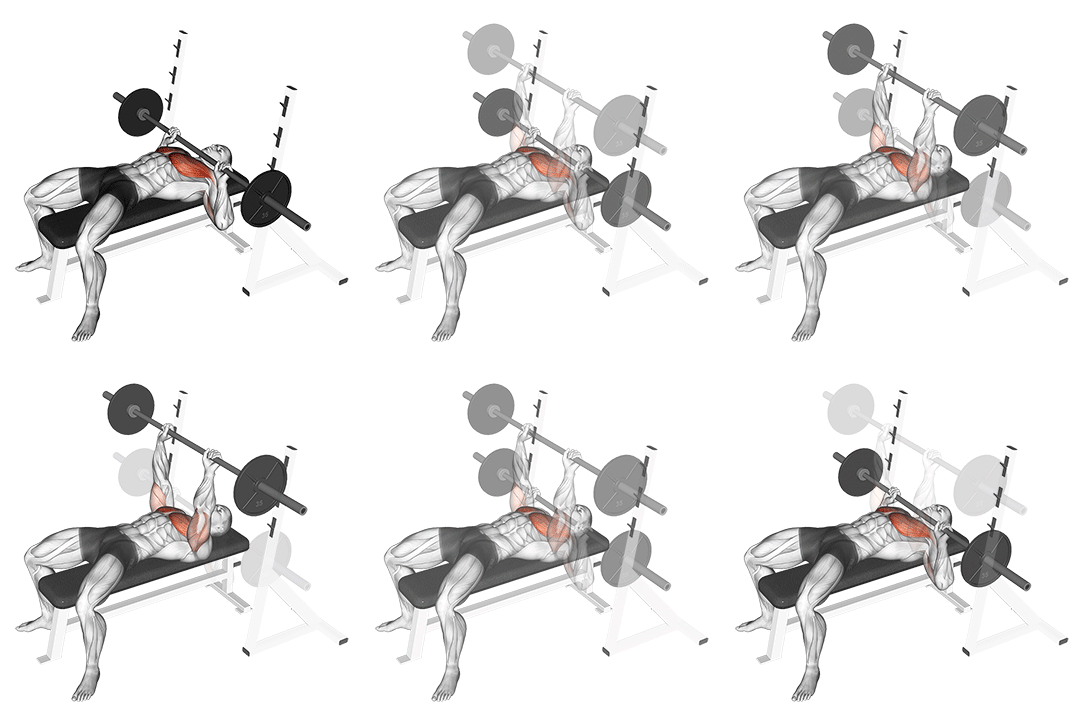
Barbell Decline Wide-grip Press
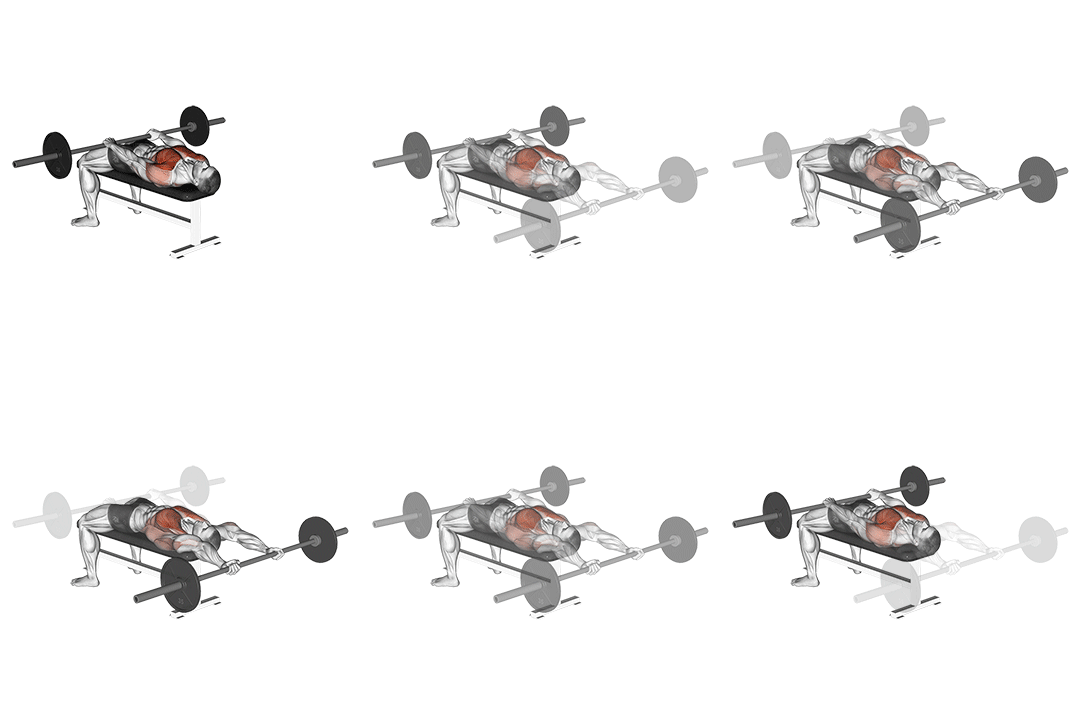
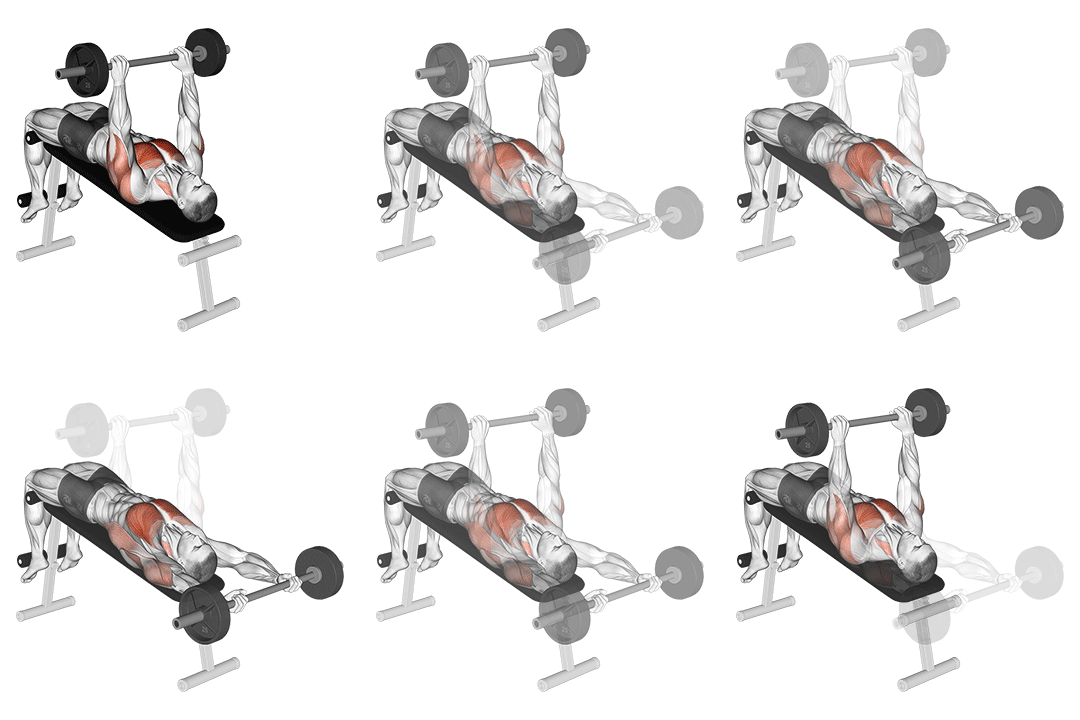
Barbell Front Raise And Pullover
Head-to-Head Comparison
| Attribute | Barbell Decline Wide-grip Press | Barbell Front Raise And Pullover |
|---|---|---|
| Target Muscle |
Pectorals
|
Pectorals
|
| Body Part |
Chest
|
Chest
|
| Equipment |
Barbell
|
Barbell
|
| Difficulty |
Intermediate
|
Intermediate
|
| Movement Type |
Compound
|
Compound
|
| Secondary Muscles |
2
|
2
|
Secondary Muscles Activated
Barbell Decline Wide-grip Press
Barbell Front Raise And Pullover
Visual Comparison
Overview
Barbell Decline Wide-grip Press vs Barbell Front Raise And Pullover — if you want a stronger, fuller chest you need to choose exercises that match your goal. I’ll walk you through how each movement loads the pectoralis major, the key biomechanics (angle, force vectors, length-tension), equipment needs, injury considerations, and recommended rep ranges. You’ll get clear technique cues, which secondary muscles light up, and practical programming tips so you can pick the right exercise for hypertrophy, strength, beginners, or home training.
Key Differences
- Both exercises target the Pectorals using Barbell. The main differences are in their movement patterns and muscle activation angles.
Pros & Cons
Barbell Decline Wide-grip Press
+ Pros
- Loads the lower pectoralis major effectively via horizontal adduction at a 15–30° decline
- Allows heavier absolute weights for strength-focused sets (3–8 reps)
- Shorter range of motion reduces sternoclavicular strain compared to some pullovers
- Clear progression with micro-loading for strength gains
− Cons
- Requires a decline bench or spotter, limiting accessibility
- Wide grip increases shoulder torque and potential joint stress
- Heavier loads raise injury risk if technique or scapular control is poor
Barbell Front Raise And Pullover
+ Pros
- Needs only a flat bench and barbell — more accessible for home gyms
- Combines shoulder flexion and pullover stretch to emphasize length-tension for hypertrophy
- Easier to scale with lighter loads and higher reps (8–15+)
- Improves scapular control and anterior chain muscular endurance
− Cons
- Lower absolute loading limits maximal strength development
- Sequence requires coordination and tempo control to be effective
- Pullover phase can stress shoulder capsule if range is excessive
When Each Exercise Wins
The decline press lets you use heavier loads and strong horizontal adduction, driving mechanical tension on lower pec fibers. Use 6–12 rep sets and slow eccentrics (2–3 s) to maximize fiber recruitment and muscle growth.
You can progressively overload the decline press with 3–6 rep sets and micro-weights, giving clearer strength carryover because the force vector favors horizontal pressing under heavy load.
It’s easier to control with lighter loads, requires less equipment, and teaches scapular stability and tempo. Beginners can build muscle-endurance and motor patterning before loading heavier presses.
You only need a flat bench and barbell, and the movements can be scaled with minimal weight. The lack of a decline bench makes this the practical choice for most home setups.
Frequently Asked Questions
Can I do both Barbell Decline Wide-grip Press and Barbell Front Raise And Pullover in the same workout?
Yes — pair them by performing the decline press as your main heavy lift (3–6 sets of 3–6 or 6–10 reps) and use the front raise/pullover as an accessory (2–4 sets of 8–15) for added hypertrophy and scapular work. Do the heavy press first to avoid fatigue that would compromise safe bar control.
Which exercise is better for beginners?
Barbell Front Raise And Pullover is generally better for beginners because it uses lighter loads and builds motor control and scapular stability. Once you have consistent technique and shoulder strength, introduce decline presses with a spotter and conservative loading.
How do the muscle activation patterns differ?
Decline wide-grip press emphasizes horizontal adduction and shortens the lower pecs under high load, creating peak activation around mid-range to lockout. The front raise then pullover sequence first activates anterior deltoids, then shifts to a long-axis stretch of the pecs during the pullover, increasing length-tension exposure and time under tension.
Can Barbell Front Raise And Pullover replace Barbell Decline Wide-grip Press?
Not if your goal is maximal strength of the lower pecs — the front raise/pullover can complement but won’t match the decline press’s absolute loading potential. For hypertrophy or limited equipment scenarios, it’s a solid substitute that emphasizes stretch and tempo rather than heavy mechanical loading.
Expert Verdict
Use the Barbell Decline Wide-grip Press when your priority is lower-chest hypertrophy or raw pressing strength — its decline angle and wide grip give a strong horizontal adduction vector and allow heavier loading for progressive strength work. Choose the Barbell Front Raise And Pullover when you want to emphasize chest shaping, scapular control, or you have limited equipment; its pullover phase lengthens the pec under tension and the front raise preloads the deltoids. Program them together across a cycle: heavy decline presses (3–6 weeks of 4–6 reps) and follow with front-raise/pullover complexes for higher-rep accessory work (8–15+ reps) to maximize both strength and muscle growth.
Also Compare
More comparisons with Barbell Decline Wide-grip Press
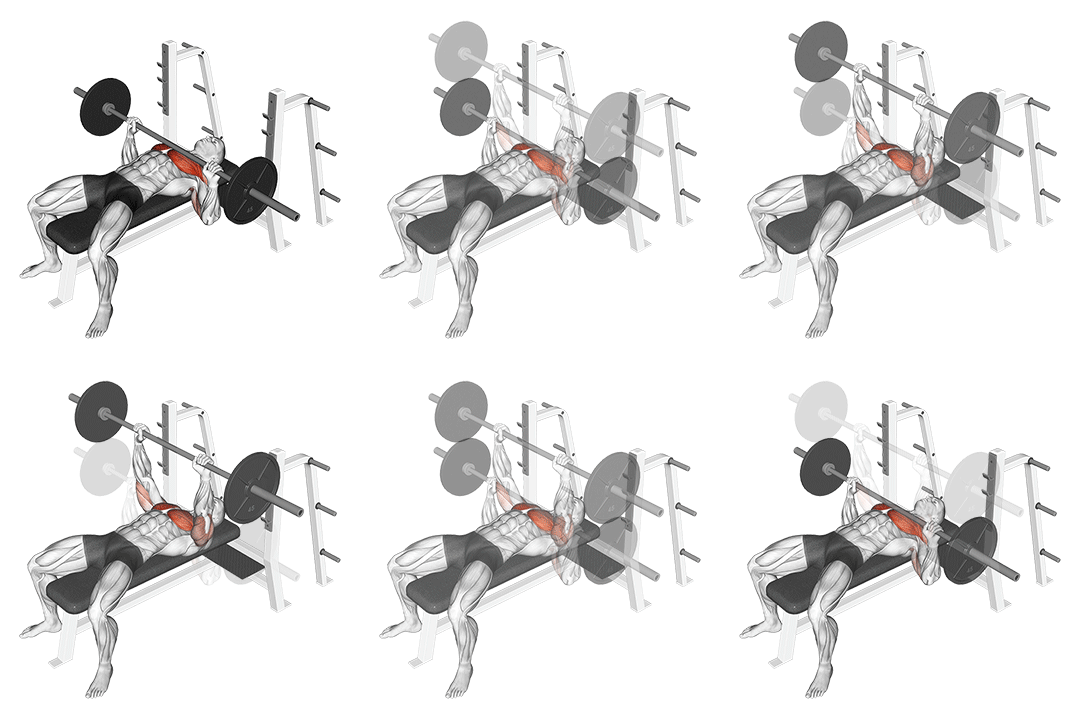
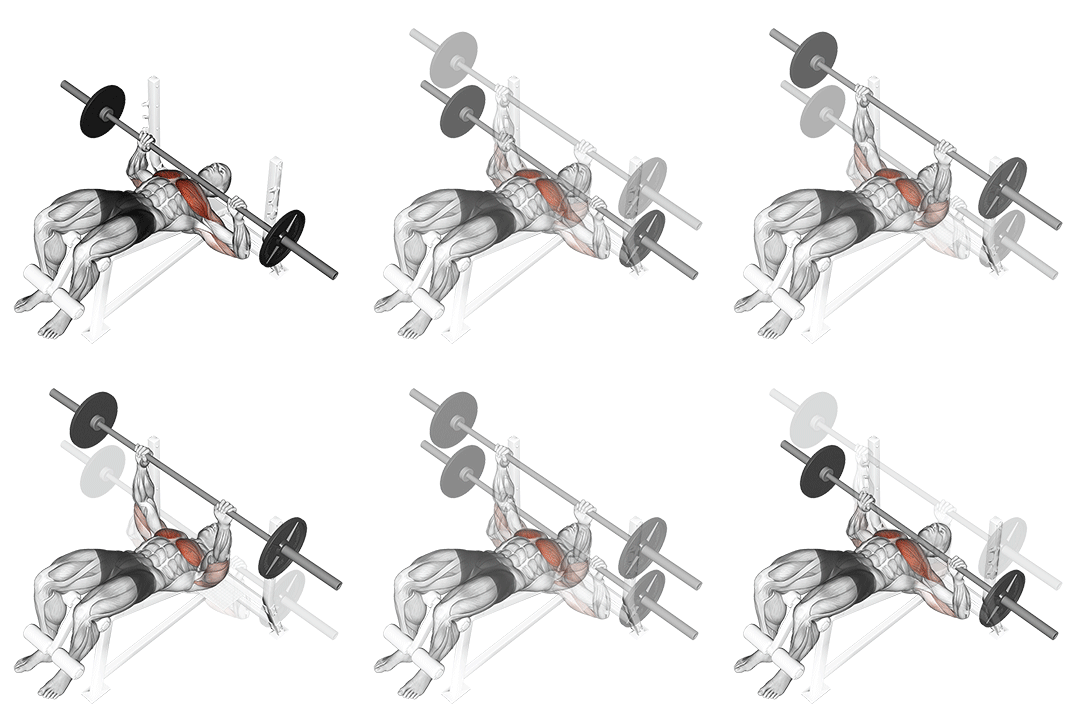
More comparisons with Barbell Front Raise And Pullover
Compare More Exercises
Use our free comparison tool to analyze any two exercises head-to-head.
Compare Exercises