

Barbell Front Chest Squat vs Barbell Full Squat: Complete Comparison Guide
Barbell Front Chest Squat vs Barbell Full Squat — you’re choosing between two compound staples that both target the glutes and the entire upper-leg chain. If you want to know which exercise produces more glute muscle growth, which stresses the knees or low back differently, and which fits your mobility and equipment setup, this guide walks you through biomechanics, muscle activation, technique cues, programming ranges, and injury considerations so you can pick the right move for your goals.
Exercise Comparison
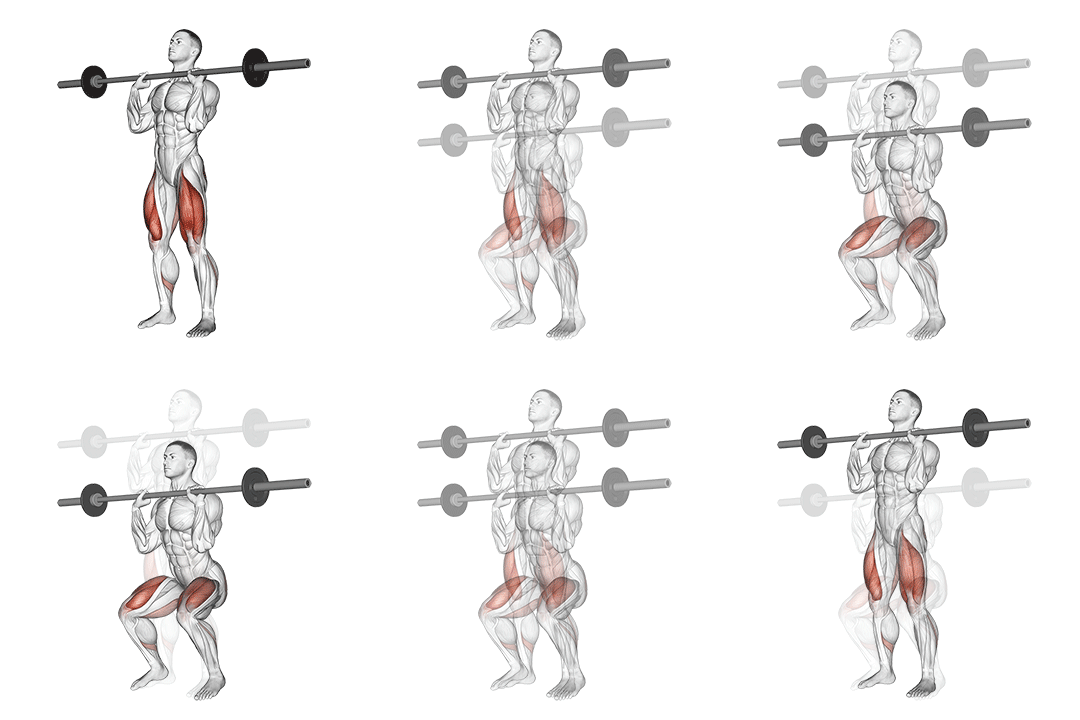
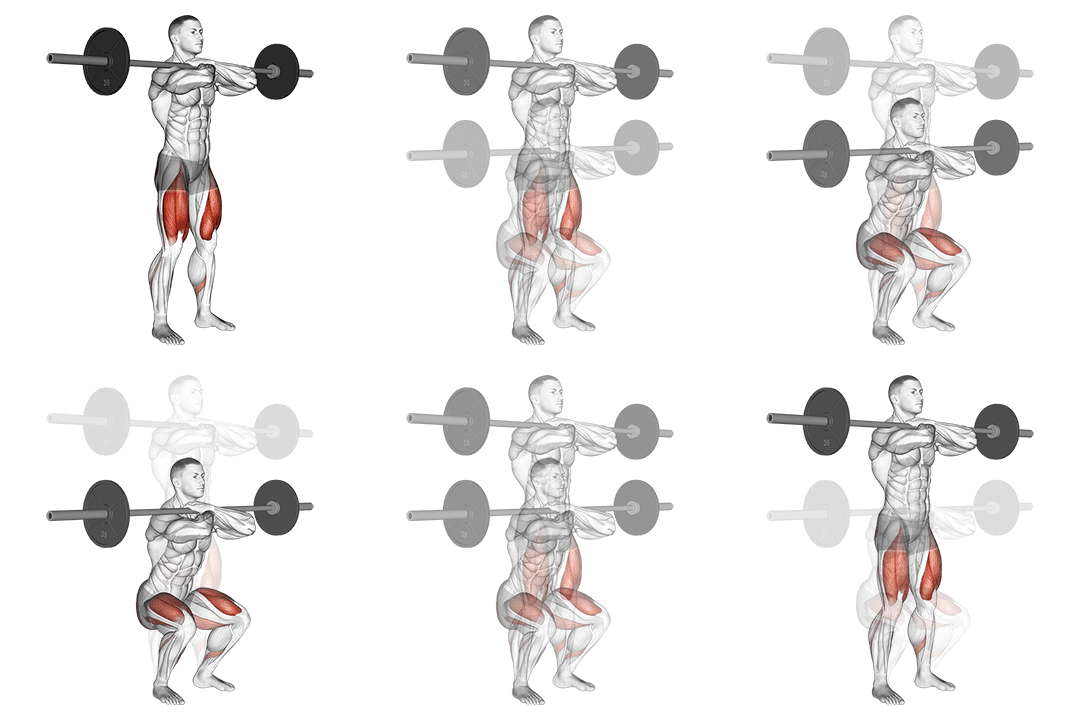
Barbell Front Chest Squat
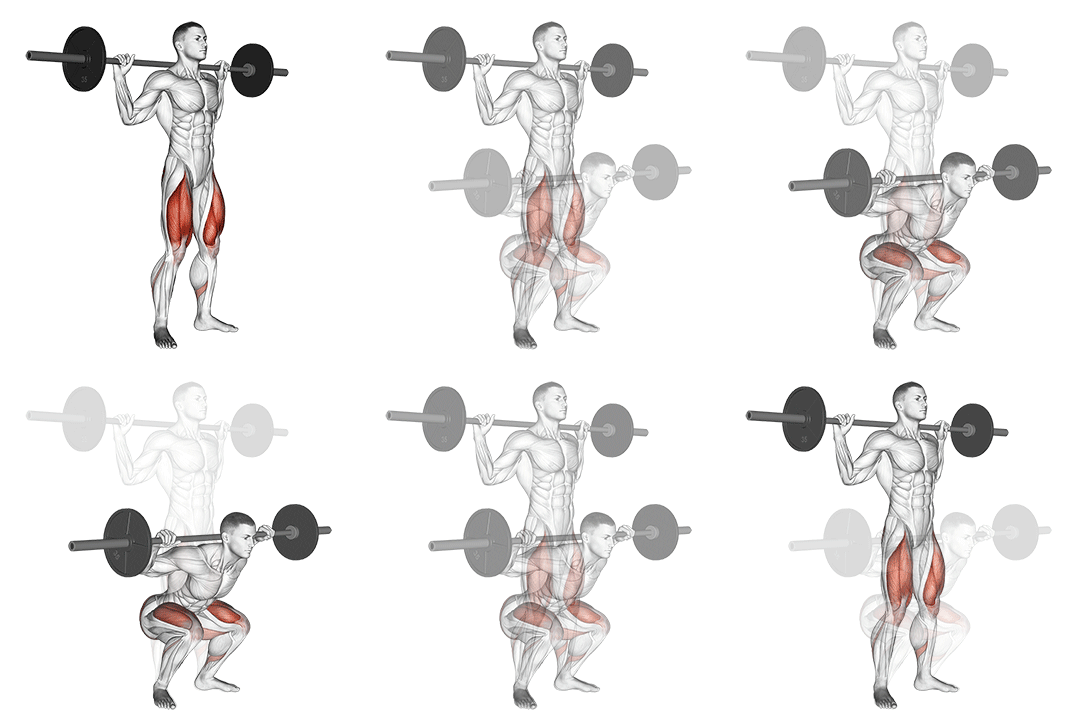
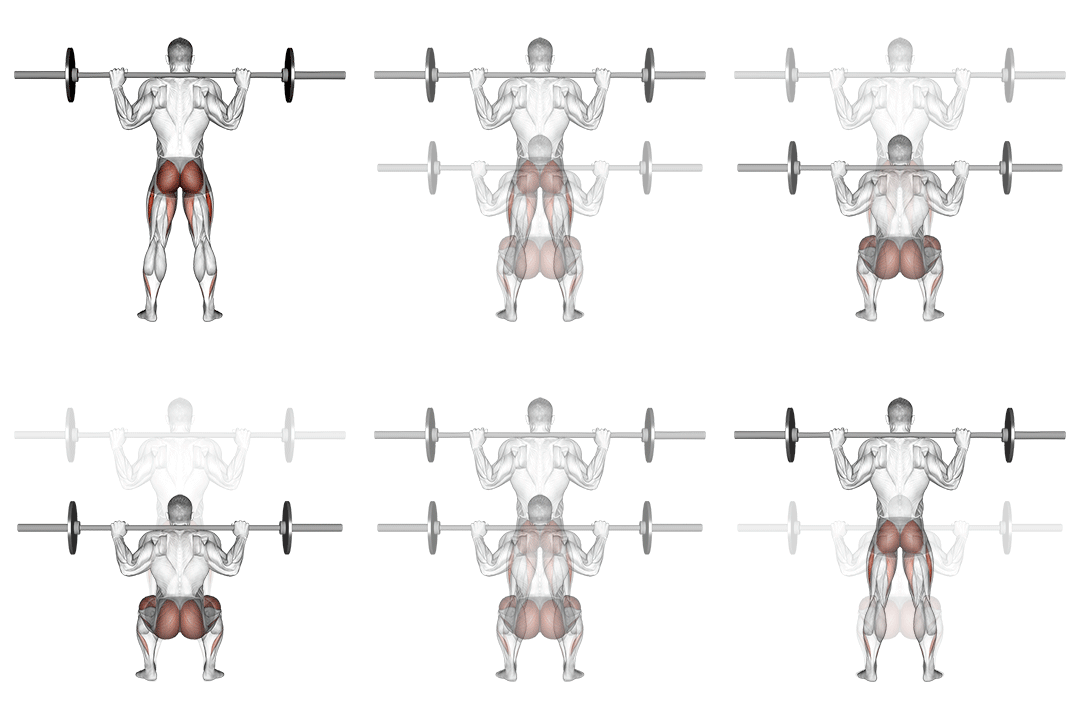
Barbell Full Squat
Head-to-Head Comparison
| Attribute | Barbell Front Chest Squat | Barbell Full Squat |
|---|---|---|
| Target Muscle |
Glutes
|
Glutes
|
| Body Part |
Upper-legs
|
Upper-legs
|
| Equipment |
Barbell
|
Barbell
|
| Difficulty |
Intermediate
|
Intermediate
|
| Movement Type |
Compound
|
Compound
|
| Secondary Muscles |
4
|
4
|
Secondary Muscles Activated
Barbell Front Chest Squat
Barbell Full Squat
Visual Comparison
Overview
Barbell Front Chest Squat vs Barbell Full Squat — you’re choosing between two compound staples that both target the glutes and the entire upper-leg chain. If you want to know which exercise produces more glute muscle growth, which stresses the knees or low back differently, and which fits your mobility and equipment setup, this guide walks you through biomechanics, muscle activation, technique cues, programming ranges, and injury considerations so you can pick the right move for your goals.
Key Differences
- Both exercises target the Glutes using Barbell. The main differences are in their movement patterns and muscle activation angles.
Pros & Cons
Barbell Front Chest Squat
+ Pros
- Stronger quad emphasis due to upright torso and larger knee-extensor moment
- Lower lumbar shear — torso stays more vertical, reducing forward flexion
- Improves core anti-flexion strength because the bar sits anterior to the spine
- Clean or unrack without full squat rack makes it practical for some home setups
− Cons
- Requires good front-rack mobility or a clean technique that some lifters lack
- Wrist and shoulder stress from the front rack can be painful for some
- Normally loaded with lighter absolute weight compared to the full squat
Barbell Full Squat
+ Pros
- Greater absolute loading potential for strength and heavy sets
- Better at loading glutes through deep hip flexion for muscle growth
- Easier to teach basic pattern for most beginners
- Less demand on wrist/shoulder mobility compared to front rack
− Cons
- More compressive spinal load when using maximal loads
- Requires a rack or spotter for safe heavy training
- Tendency to lean forward with poor mobility, increasing low-back shear
When Each Exercise Wins
The full squat allows deeper hip flexion and creates larger hip-extensor moment arms at the bottom of the movement, placing the gluteus maximus under greater length-tension and time under load — ideal for hypertrophy in the posterior chain when programmed with 6–12 rep sets.
You can typically load the full squat heavier and train at low rep ranges (1–5 reps) with safer unracking via a rack, producing better neural adaptations and absolute strength increases in the lower body.
The back-positioned bar is easier to balance and requires less thoracic and wrist mobility, so novices can learn hip- and knee-coordination sooner and progress load with simpler cues like ‘chest up’ and ‘knees out’.
If you lack a squat rack, the front chest squat can be cleaned into place and trained safely at moderate loads; it also reduces the need for a spotter and still provides strong quad and core stimulus in limited-space setups.
Frequently Asked Questions
Can I do both Barbell Front Chest Squat and Barbell Full Squat in the same workout?
Yes. Pair a heavy Barbell Full Squat as your main strength movement (1–5 reps) and follow with Barbell Front Chest Squat for 3–4 sets of 6–12 reps to target quad hypertrophy and core work. Place the front squat later when fatigue is higher so you maintain technique on the max-effort lift.
Which exercise is better for beginners?
Barbell Full Squat is generally better for beginners because it requires less upper-body mobility and is easier to learn the hip- and knee-flexion pattern. Start with light loads, focus on depth and torso position, and then introduce front rack work as mobility improves.
How do the muscle activation patterns differ?
Front chest squats increase knee-extension moments and quad activation due to a more vertical torso and anterior load; full squats increase hip-extension moments and glute activation at depth. The difference stems from center-of-mass placement and moment-arm changes across the hip and knee joints.
Can Barbell Full Squat replace Barbell Front Chest Squat?
It can, but you’ll shift emphasis away from the quads and core anti-flexion demand. If your goal is quad-specific development or reducing lumbar shear, keep front chest squats in your program; otherwise, full squats cover broad strength and glute-building needs.
Expert Verdict
Use the Barbell Full Squat when your priority is maximal glute development and absolute strength — it allows deeper hip loading and heavier progressions (work in 1–5RM for strength, 6–12RM for hypertrophy). Choose the Barbell Front Chest Squat when you want a quad-biased option that protects the low back, trains core anti-flexion, or you need to train without a rack. If you lack wrist mobility, favor the full squat while you build thoracic extension and wrist flexibility. Program both across a training block — e.g., heavy full squats twice weekly and front chest squats as accessory work — to exploit unique force vectors and improve overall lower-body development.
Also Compare
More comparisons with Barbell Front Chest Squat
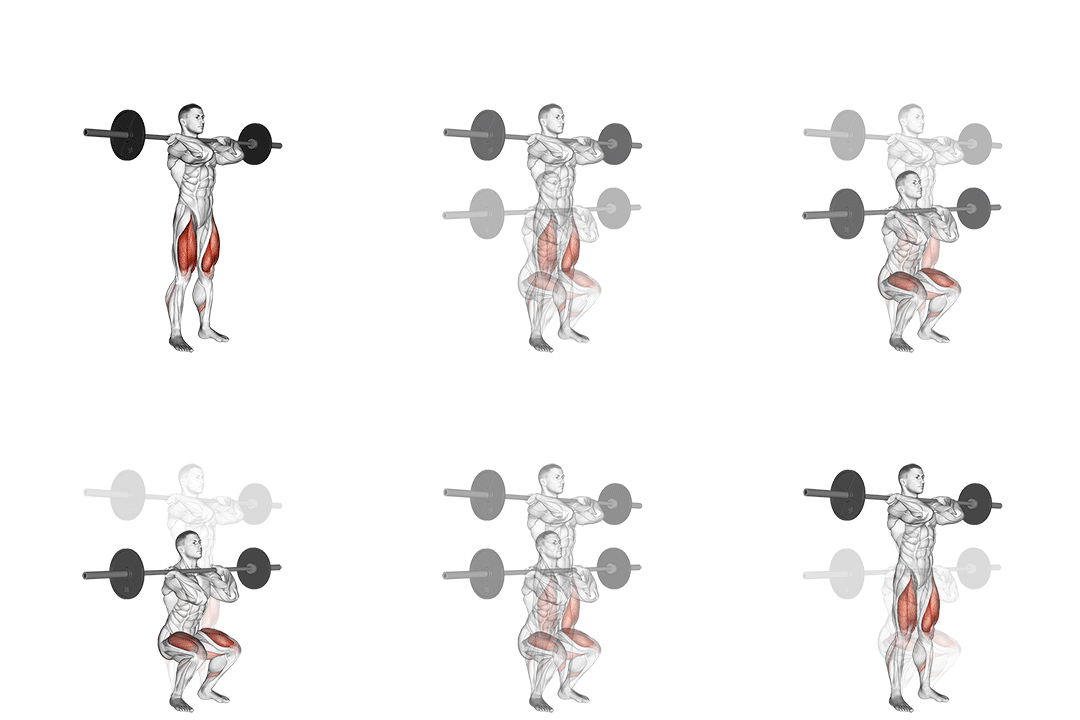
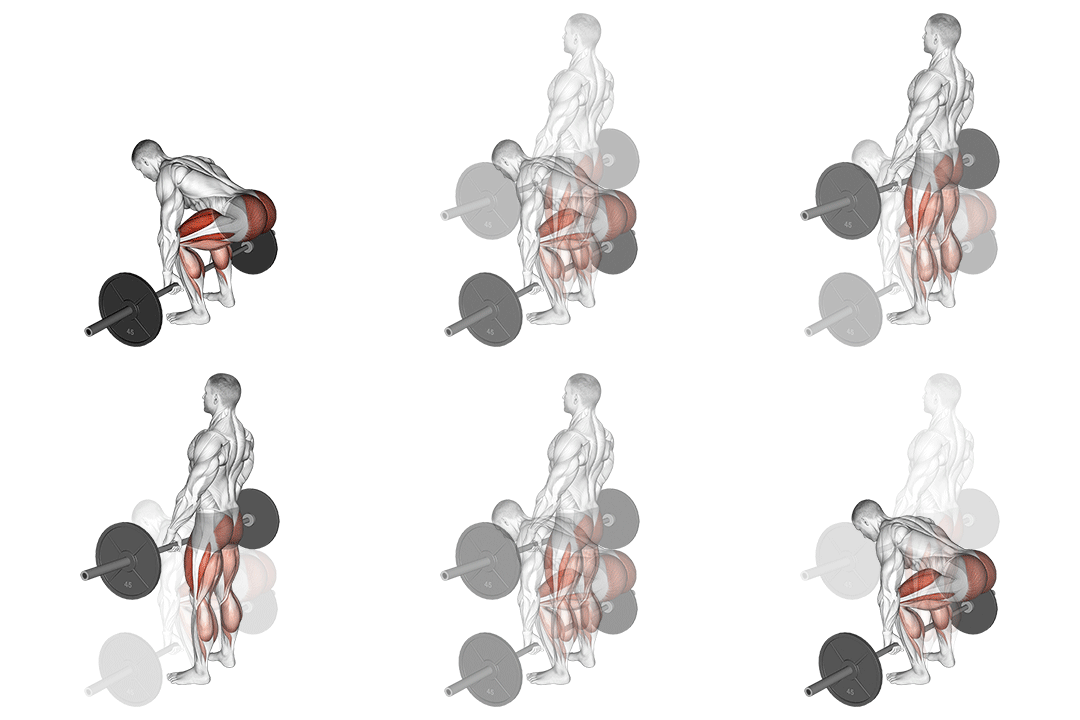
Compare More Exercises
Use our free comparison tool to analyze any two exercises head-to-head.
Compare Exercises