

Barbell Front Chest Squat vs Barbell Full Squat (back Pov): Complete Comparison Guide
Barbell Front Chest Squat vs Barbell Full Squat (back Pov) — you want to know which movement best taxes your glutes, quads, and overall leg strength. I’ll walk you through mechanics, muscle activation, equipment needs, learning curve, and how each movement fits specific goals like hypertrophy, strength, or mobility. You’ll get practical technique cues (bar placement, torso angle, knee tracking), rep-range recommendations (strength vs hypertrophy), and clear scenarios that pick a winner so you can choose the right squat for your program.
Exercise Comparison
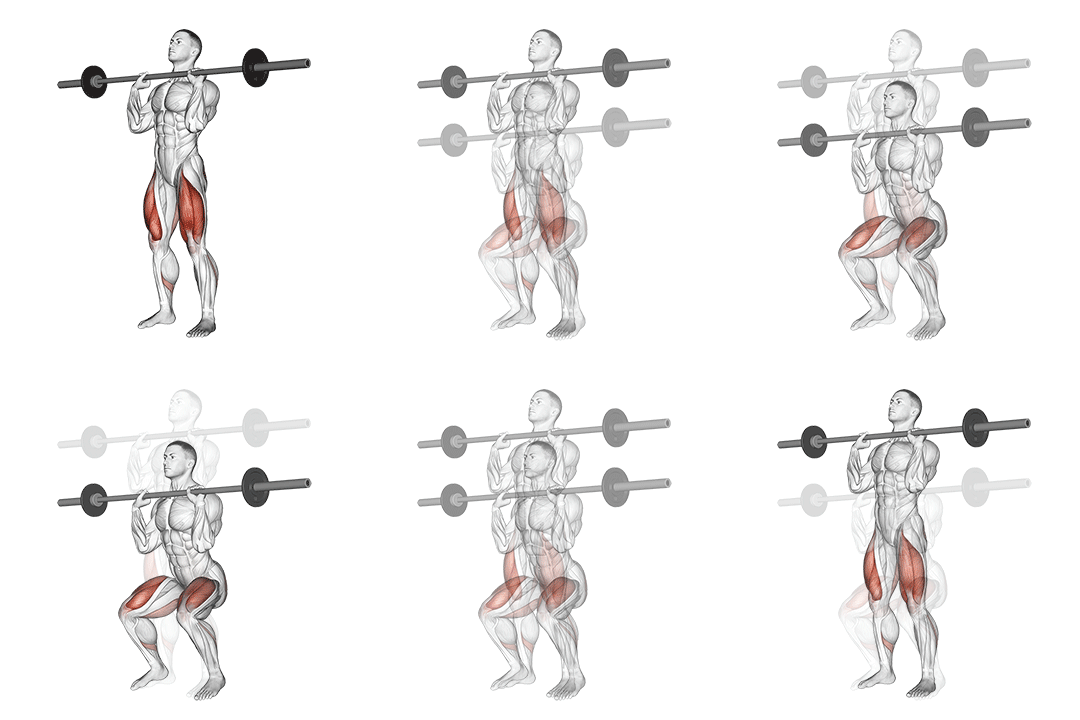
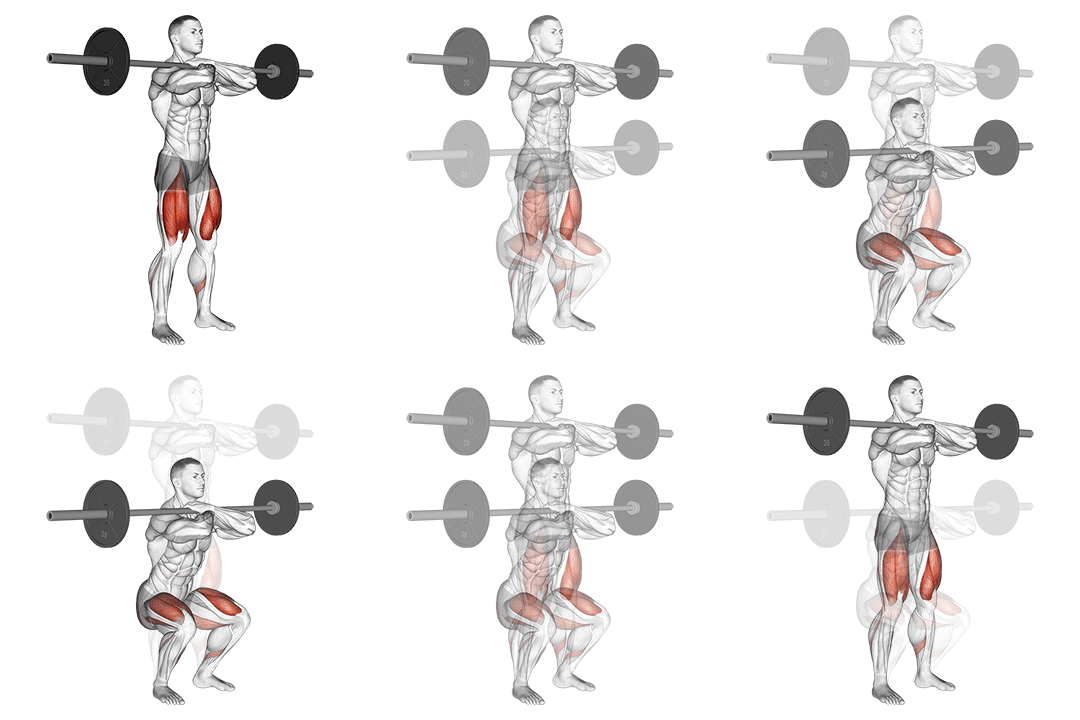
Barbell Front Chest Squat
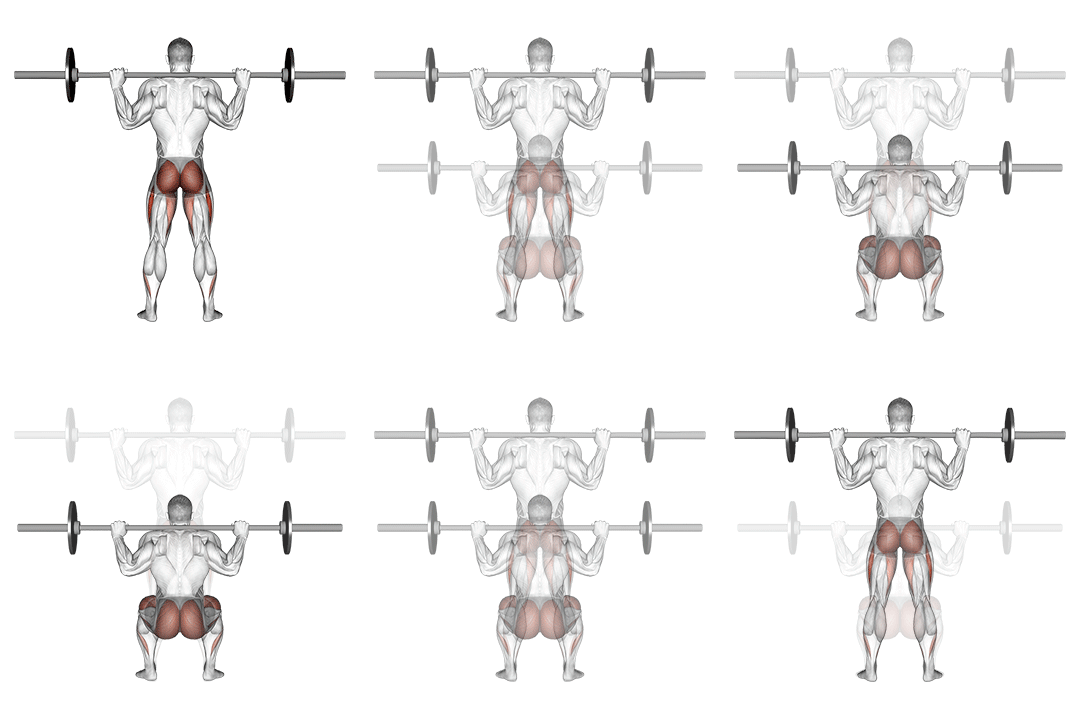
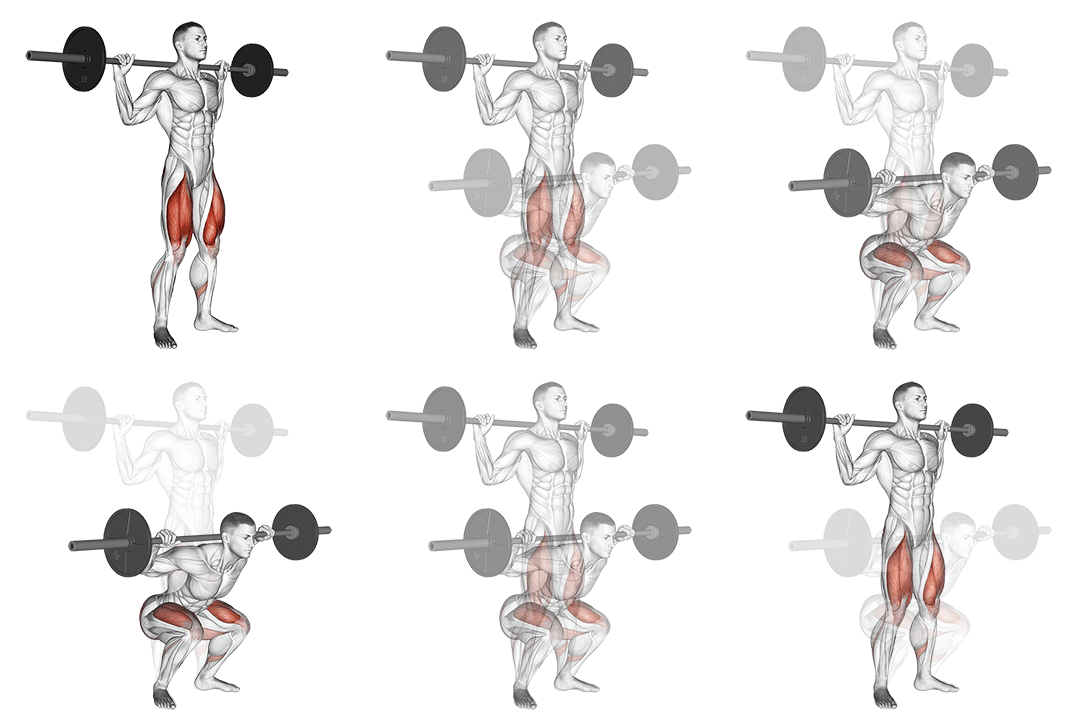
Barbell Full Squat (back Pov)
Head-to-Head Comparison
| Attribute | Barbell Front Chest Squat | Barbell Full Squat (back Pov) |
|---|---|---|
| Target Muscle |
Glutes
|
Glutes
|
| Body Part |
Upper-legs
|
Upper-legs
|
| Equipment |
Barbell
|
Barbell
|
| Difficulty |
Intermediate
|
Intermediate
|
| Movement Type |
Compound
|
Compound
|
| Secondary Muscles |
4
|
4
|
Secondary Muscles Activated
Barbell Front Chest Squat
Barbell Full Squat (back Pov)
Visual Comparison
Overview
Barbell Front Chest Squat vs Barbell Full Squat (back Pov) — you want to know which movement best taxes your glutes, quads, and overall leg strength. I’ll walk you through mechanics, muscle activation, equipment needs, learning curve, and how each movement fits specific goals like hypertrophy, strength, or mobility. You’ll get practical technique cues (bar placement, torso angle, knee tracking), rep-range recommendations (strength vs hypertrophy), and clear scenarios that pick a winner so you can choose the right squat for your program.
Key Differences
- Both exercises target the Glutes using Barbell. The main differences are in their movement patterns and muscle activation angles.
Pros & Cons
Barbell Front Chest Squat
+ Pros
- Larger quadriceps activation due to upright torso and longer knee extensor moment
- Higher demand on anterior core and upper back for posture control
- Cleaner transfer to Olympic lifts and athletic positions requiring upright torso
- Safer spinal compressive profile for some lifters because torso stays more vertical
− Cons
- Requires significant wrist and thoracic mobility for a secure front rack
- Typically lower absolute loads than back squats (often 10–30% less)
- Greater anterior knee shear at deep flexion angles
Barbell Full Squat (back Pov)
+ Pros
- Allows heavier loads and higher maximal strength development
- Greater hip extensor and posterior chain recruitment (glutes, hamstrings)
- Easier to set up for most gym-goers with standard bar placement
- More options for low-bar or high-bar variations to tailor force vectors
− Cons
- Can increase lumbar loading if technique and bracing fail
- May encourage excessive forward lean in some lifters, reducing quad focus
- Requires good hip mobility to hit full depth safely
When Each Exercise Wins
Front chest squats place greater emphasis on the quadriceps and keep the glutes working at a shorter, high-tension range ideal for hypertrophy. Use sets of 6–12 reps with 60–80% of your 1RM and controlled 2–3 second eccentrics to maximize muscle growth.
Back full squats allow higher absolute loads and better leverage for increasing maximal hip and knee extension strength. Train heavy triples to singles (3–5 reps, 80–95% 1RM) and prioritize bracing and bar path consistency.
The back squat is more straightforward to learn because the bar is stable and the torso can adopt a natural hinge. Start with bodyweight and goblet progressions, then move to a light back bar to build confidence and mobility.
If you have limited rack space or no spotter, front chest squats are safer for solo training since the bar is easier to bail forward and front-loaded variations demand less external equipment for a secure setup.
Frequently Asked Questions
Can I do both Barbell Front Chest Squat and Barbell Full Squat (back Pov) in the same workout?
Yes — sequencing matters. Do the heavier, neural-demanding back squats first if your goal is strength, then use front squats as a secondary movement for 3–4 sets of 6–10 reps to target quads and posture. Keep total volume in check to avoid CNS and joint fatigue.
Which exercise is better for beginners?
Barbell Full Squat (back Pov) is generally better for beginners because it feels more stable and allows easier loading progression. Start with bodyweight and goblet squats, then progress to back squats once hip mobility and bracing are reliable.
How do the muscle activation patterns differ?
Front squats shift the force vector anteriorly, increasing knee extensor torque and quadriceps EMG while reducing hip moment; back squats increase hip flexion and posterior chain activation, placing glutes and hamstrings at longer muscle lengths and higher hip extension torque on ascent.
Can Barbell Full Squat (back Pov) replace Barbell Front Chest Squat?
It can replace front squats for general strength and glute development, but not for the same quad emphasis or the anterior core and thoracic demands. If your program needs upright posture training or quad-specific hypertrophy, keep front squats in rotation.
Expert Verdict
Choose the Barbell Front Chest Squat when your goal is targeted quad hypertrophy, improved upright posture, or transfer to Olympic-style lifts; emphasize sets of 6–12 reps, strict torso control, and thoracic mobility work. Choose the Barbell Full Squat (back Pov) when you want maximal strength, higher absolute loading, and greater posterior chain development; prioritize triples to singles at 80–95% 1RM and strict bracing. If you train for both strength and balanced leg development, program both: cycle phases of heavy back squats for strength and front squats for 4–8 week hypertrophy or mobility blocks to address weaknesses.
Also Compare
More comparisons with Barbell Front Chest Squat
More comparisons with Barbell Full Squat (back Pov)
Compare More Exercises
Use our free comparison tool to analyze any two exercises head-to-head.
Compare Exercises