

Barbell Front Squat vs Barbell Full Squat: Complete Comparison Guide
Barbell Front Squat vs Barbell Full Squat is a common debate when you want stronger legs and fuller glutes. If you train regularly, you need clear guidance on which variation best matches your goals, mobility, and programming. In this guide you'll get a side-by-side look at muscle activation, movement mechanics, equipment needs, difficulty, programming tips (rep ranges and progressions), and technique cues so you can pick the lift that produces consistent muscle growth and strength for your plan.
Exercise Comparison
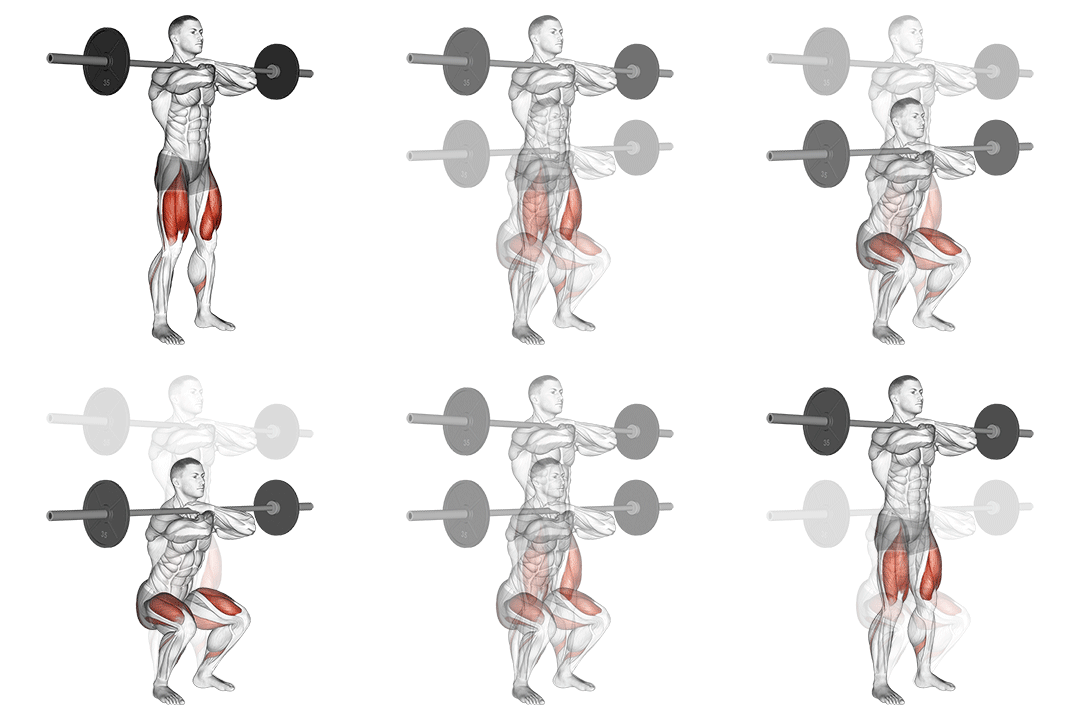
Barbell Front Squat
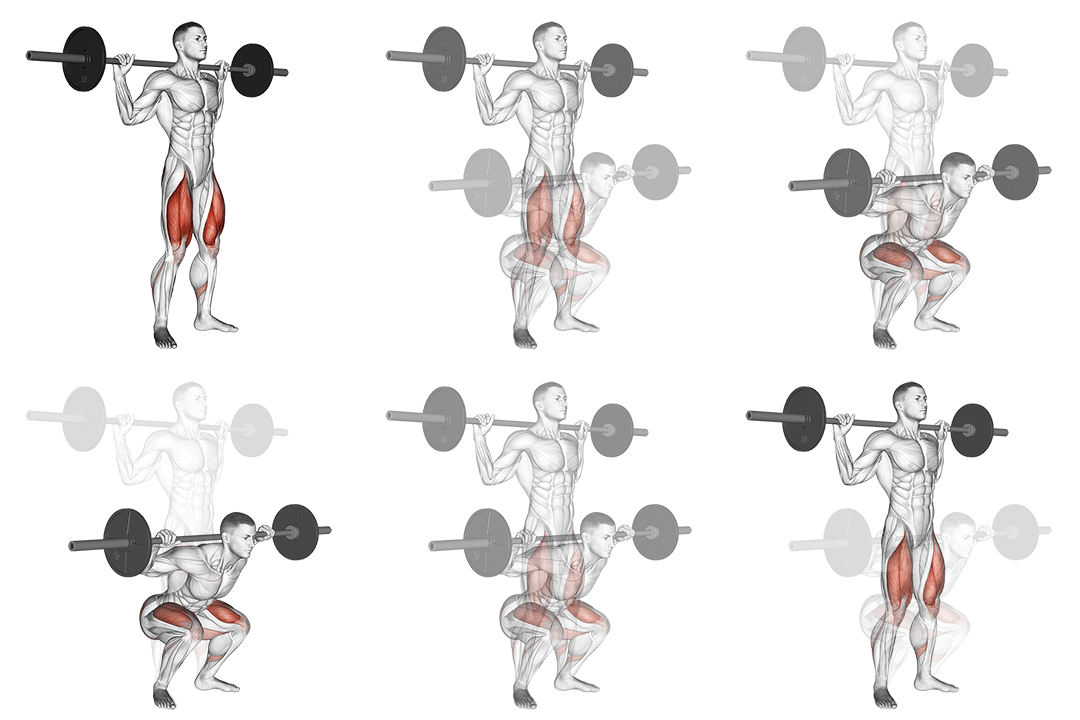
Barbell Full Squat
Head-to-Head Comparison
| Attribute | Barbell Front Squat | Barbell Full Squat |
|---|---|---|
| Target Muscle |
Glutes
|
Glutes
|
| Body Part |
Upper-legs
|
Upper-legs
|
| Equipment |
Barbell
|
Barbell
|
| Difficulty |
Intermediate
|
Intermediate
|
| Movement Type |
Compound
|
Compound
|
| Secondary Muscles |
4
|
4
|
Secondary Muscles Activated
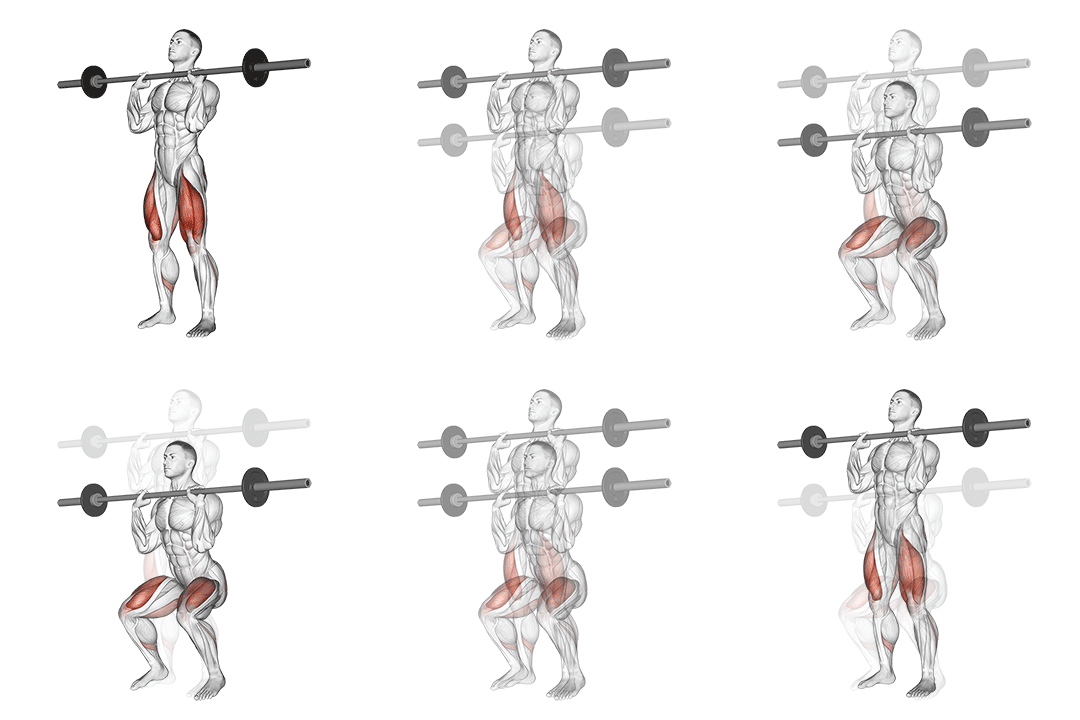
Barbell Front Squat
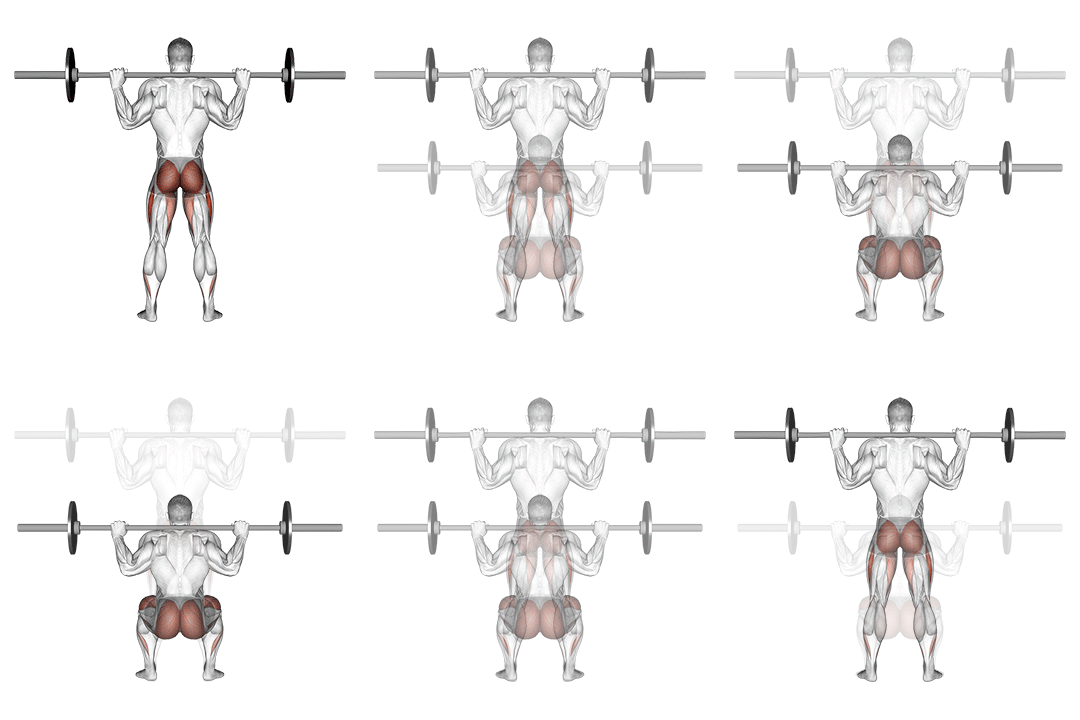
Barbell Full Squat
Visual Comparison
Overview
Barbell Front Squat vs Barbell Full Squat is a common debate when you want stronger legs and fuller glutes. If you train regularly, you need clear guidance on which variation best matches your goals, mobility, and programming. In this guide you'll get a side-by-side look at muscle activation, movement mechanics, equipment needs, difficulty, programming tips (rep ranges and progressions), and technique cues so you can pick the lift that produces consistent muscle growth and strength for your plan.
Key Differences
- Both exercises target the Glutes using Barbell. The main differences are in their movement patterns and muscle activation angles.
Pros & Cons
Barbell Front Squat
+ Pros
- Greater quadriceps emphasis due to larger knee extensor moment
- More upright torso reduces lumbar shear and improves posture
- High core demand builds anterior chain stability and anti-flexion strength
- Easier to integrate as an accessory with lighter loads and higher rep ranges
− Cons
- Requires wrist and thoracic mobility for a comfortable front rack
- Typically you must lift lighter loads than the full squat (≈70–85% of back-squat 1RM)
- Bar placement can be uncomfortable; cross-arm grip may limit load
Barbell Full Squat
+ Pros
- Greater ability to handle heavy loads, improving absolute strength
- Larger hip extensor moment increases glute and hamstring recruitment
- Simpler bar placement for most lifters with standard rack setup
- Better transfer to maximal strength and compound posterior-chain work
− Cons
- More forward trunk lean can increase lumbar shear if bracing fails
- Requires good hip, ankle, and thoracic mobility to reach full depth safely
- Greater potential to substitute hip drive over knee drive, reducing quad isolation
When Each Exercise Wins
Full squats allow deeper hip flexion and larger hip-extension torque, which increases glute and hamstring loading. Pairing full squats with 6–12 reps and 60–80% 1RM emphasizes time under tension and mechanical stress for muscle growth.
You can typically load the full squat heavier (often 10–30% more than a front squat 1RM), so it better promotes maximal force adaptations. Use low-rep schemes (3–6 reps at 85–95% 1RM) and long rests to drive neural strength improvements.
The movement pattern is simpler to teach (sit back, drive through the hips) and requires less wrist/thoracic mobility than a front rack. Start with bodyweight or goblet squats, then progress to a back-loaded full squat once form and mobility are sufficient.
Front squat mechanics scale well to dumbbells or a single kettlebell (goblet/front-racked variations), allowing quad-focused training without heavy racks. If you lack a full squat rack or can't safely load a back squat, front-loaded variations give a safe, effective alternative.
Frequently Asked Questions
Can I do both Barbell Front Squat and Barbell Full Squat in the same workout?
Yes. Put the heavier or more technical lift first — usually the full squat if your goal is maximal strength, or the front squat if you prioritize quad overload. Structure sets so total volume and fatigue don't compromise technique: heavy sets first, then lighter accessory sets for 6–12 reps.
Which exercise is better for beginners?
Barbell Full Squat is better for most beginners because it maps to natural hip-hinge and sit-back patterns and has fewer mobility barriers. Start with bodyweight or goblet variations, then add the bar once you can maintain upright knees-over-toes tracking and stable bracing.
How do the muscle activation patterns differ?
Front squats increase knee extensor torque and anterior chain activation because the bar sits forward, keeping the torso more vertical; quads and anterior core work harder. Full squats allow greater hip hinge and longer glute length-tension loading, so glutes and hamstrings contribute more, especially through lockout.
Can Barbell Full Squat replace Barbell Front Squat?
Only partially. A full squat can replace front squats for general lower-body strength and glute work, but it won’t provide the same quad-dominant stimulus or front-rack core demand. If you need the quad-specific carryover or upright posture work, keep front squats or a goblet variant in your program.
Expert Verdict
Choose the Barbell Full Squat when your goal is maximal lower-body strength and glute-focused hypertrophy — it lets you load heavier, increase hip-extension torque, and use lower-rep strength cycles (3–6 reps at 85–95% 1RM). Choose the Barbell Front Squat when you need targeted quadriceps development, reduced lumbar shear, or a front-loaded accessory that improves upright posture and core anti-extension. Program both: rotate front squats for 6–10 reps to build quad strength and trunk control, and program full squats for 4–8 heavy sets to drive glute and posterior-chain progress. Use explicit cues (chest up, knees tracking toes, drive through heels) and monitor trunk angle and depth to match effort to your goal.
Also Compare
More comparisons with Barbell Front Squat
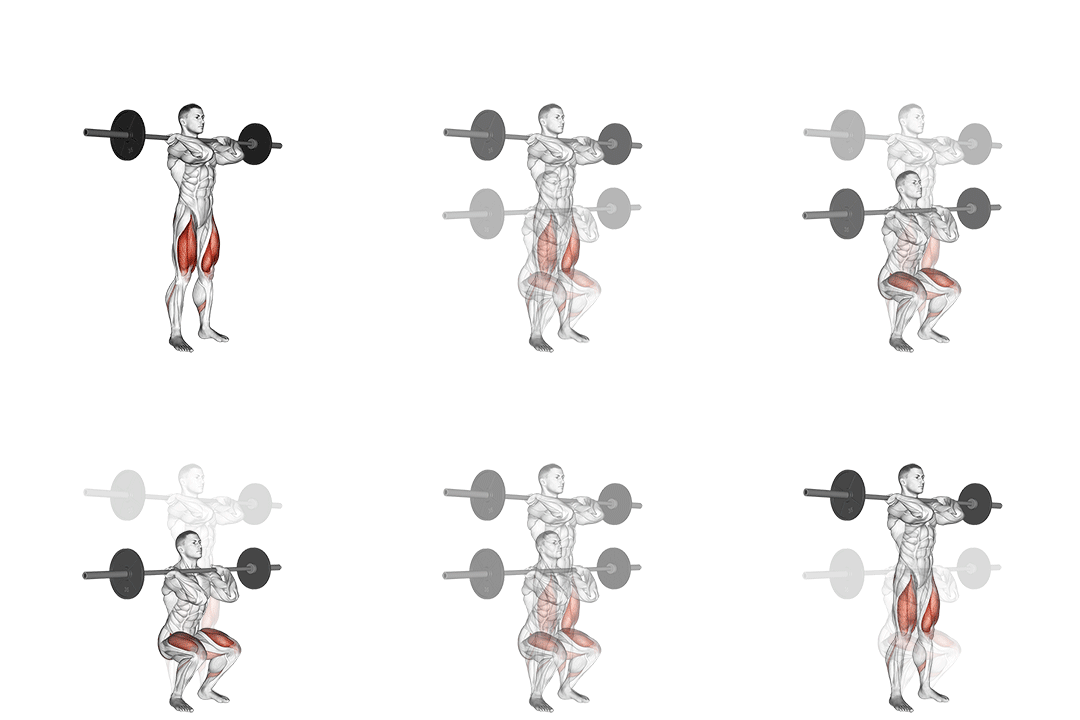
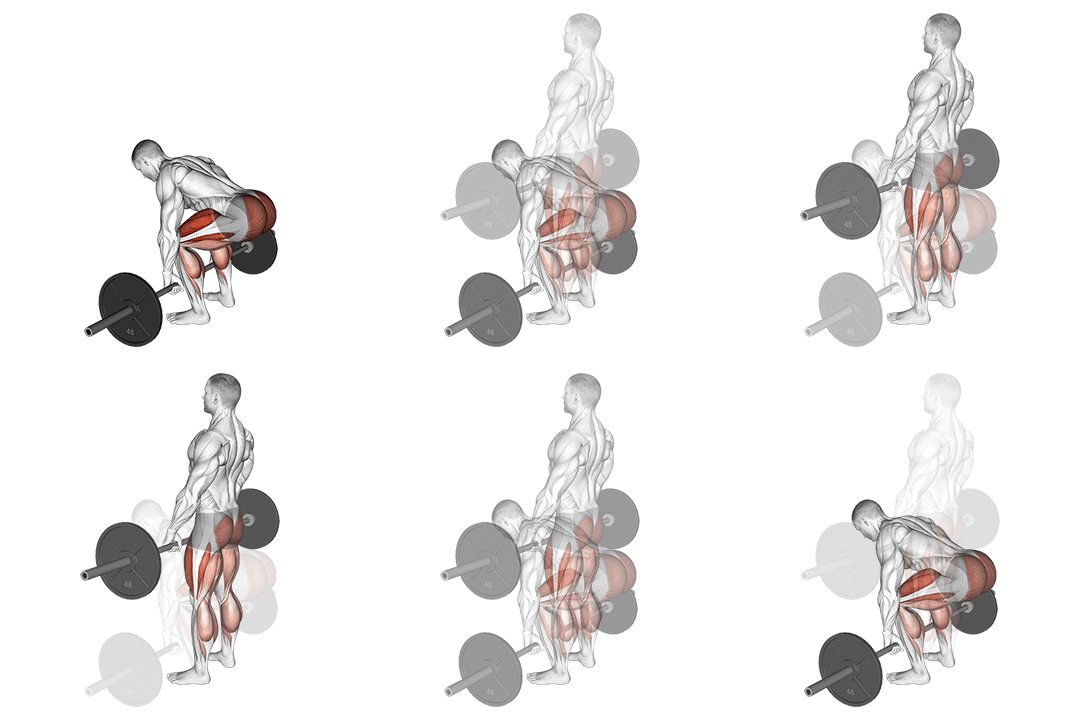
Compare More Exercises
Use our free comparison tool to analyze any two exercises head-to-head.
Compare Exercises