

Barbell Incline Row vs Barbell Pendlay Row: Complete Comparison Guide
Barbell Incline Row vs Barbell Pendlay Row — two heavy hitters for upper-back development. If you want clearer guidance on which to use, you’re in the right place. I’ll show you how they load the lats, traps, and rhomboids differently, outline equipment and setup (incline bench at 30–45° vs flat floor, barbell dead-stop), give technique cues so you can execute safely, and recommend rep ranges and progressions for hypertrophy and strength. By the end you’ll know which exercise to prioritize for your goal and how to program each into your training week.
Exercise Comparison
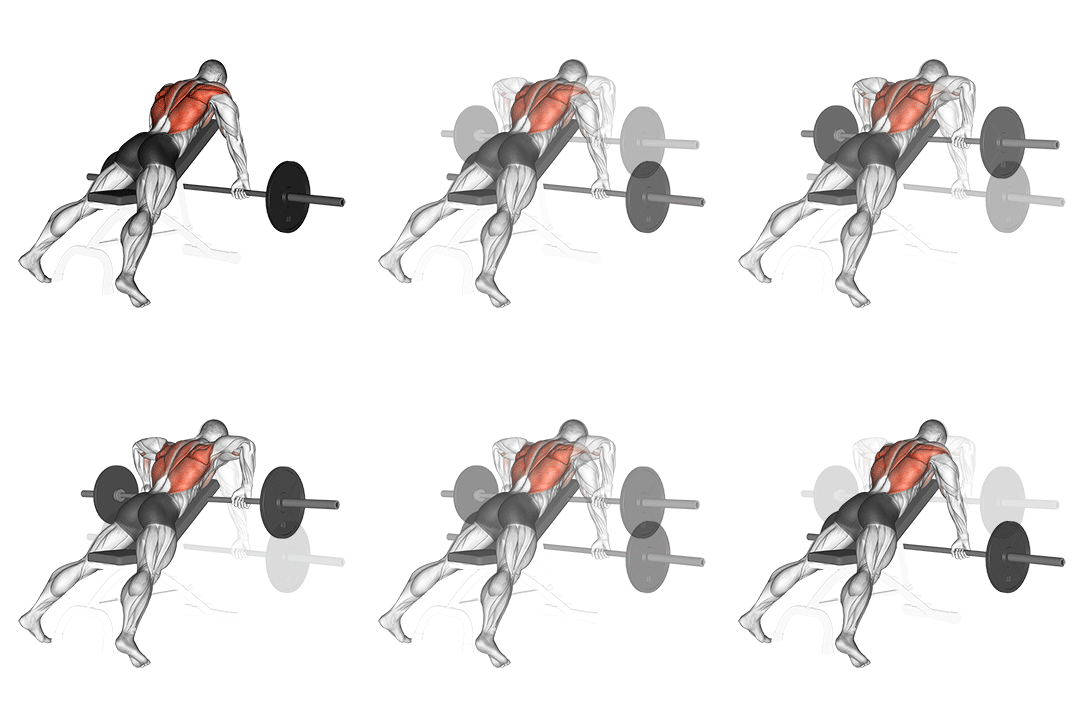
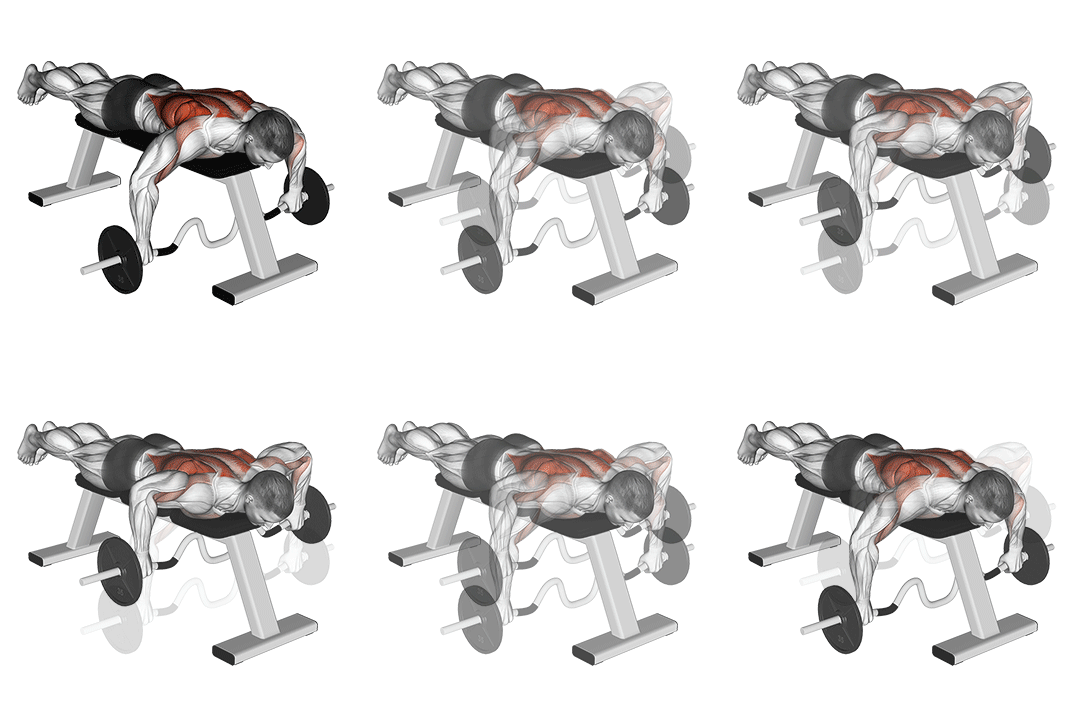
Barbell Incline Row
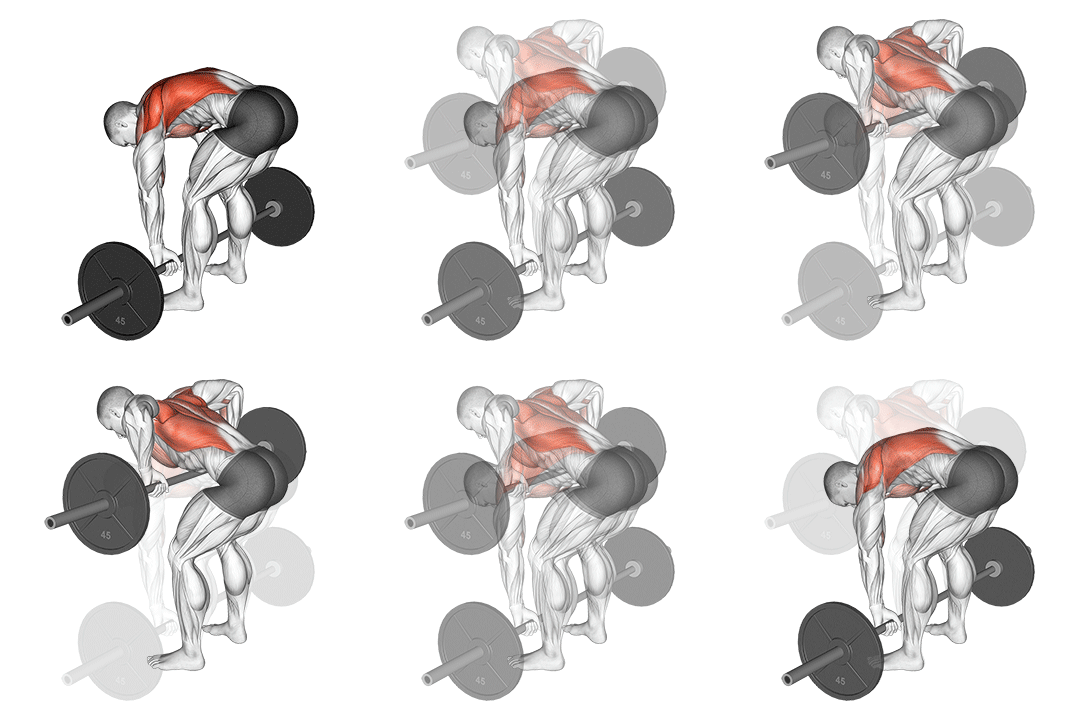
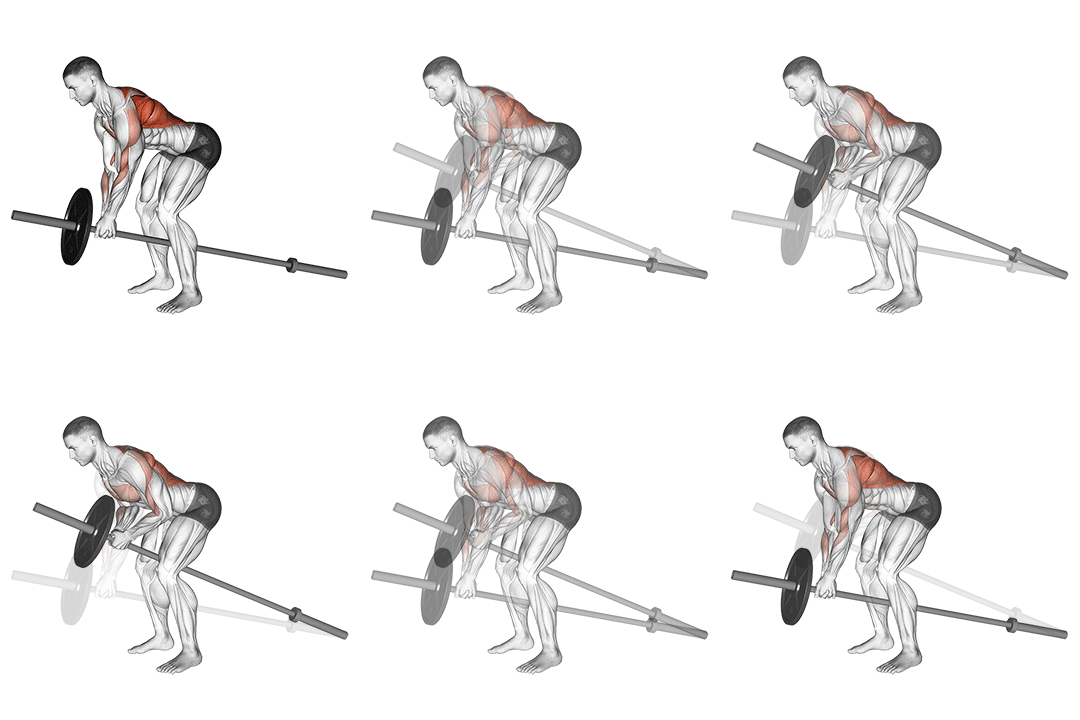
Barbell Pendlay Row
Head-to-Head Comparison
| Attribute | Barbell Incline Row | Barbell Pendlay Row |
|---|---|---|
| Target Muscle |
Upper-back
|
Upper-back
|
| Body Part |
Back
|
Back
|
| Equipment |
Barbell
|
Barbell
|
| Difficulty |
Intermediate
|
Advanced
|
| Movement Type |
Compound
|
Compound
|
| Secondary Muscles |
2
|
2
|
Secondary Muscles Activated
Barbell Incline Row
Barbell Pendlay Row
Visual Comparison
Overview
Barbell Incline Row vs Barbell Pendlay Row — two heavy hitters for upper-back development. If you want clearer guidance on which to use, you’re in the right place. I’ll show you how they load the lats, traps, and rhomboids differently, outline equipment and setup (incline bench at 30–45° vs flat floor, barbell dead-stop), give technique cues so you can execute safely, and recommend rep ranges and progressions for hypertrophy and strength. By the end you’ll know which exercise to prioritize for your goal and how to program each into your training week.
Key Differences
- Difficulty levels differ: Barbell Incline Row is intermediate, while Barbell Pendlay Row is advanced.
- Both exercises target the Upper-back using Barbell. The main differences are in their movement patterns and muscle activation angles.
Pros & Cons
Barbell Incline Row
+ Pros
- Chest support reduces lumbar stress and simplifies setup
- Consistent tension through 30–45° torso angle favors hypertrophy
- Easier to teach and dial in scapular retraction and elbow path
- Great for high-volume upper-back work with controlled eccentrics
− Cons
- Requires an adjustable incline bench, reducing accessibility
- Slightly less carryover to maximal horizontal pulling strength
- Can limit loading compared with dead-stop barbell rows
Barbell Pendlay Row
+ Pros
- Dead-stop reps allow higher peak force and heavier loading
- Excellent carryover to barbell pulling strength and deadlift work
- Simple equipment needs—only a barbell and plates
- Trains explosive concentric power and grip strength
− Cons
- Higher technical demand—requires strict hip hinge and bracing
- Greater lumbar shear risk if form breaks down under heavy loads
- Less continuous tension, which can reduce time-under-tension for hypertrophy
When Each Exercise Wins
The incline row keeps the upper-back under tension longer (30–45° torso), letting you use 6–12 rep ranges, controlled eccentrics, and tempo work to maximize sarcomere loading and length-tension stimulus for rhomboids and traps.
Pendlay rows start from a dead stop and let you train heavier loads with low reps (3–5), producing higher peak forces and better neural adaptations for horizontal pulling strength and deadlift carryover.
Chest-supported incline rows remove the need to manage lower-back stability and teach proper scapular retraction and elbow tracking, allowing you to build a technical foundation safely.
Pendlay rows only require a barbell and floor space, making them more practical for home setups where adjustable benches are often unavailable.
Frequently Asked Questions
Can I do both Barbell Incline Row and Barbell Pendlay Row in the same workout?
Yes — but sequence them wisely. Do Pendlay rows early if you want to prioritize strength (when you’re freshest), and use incline rows later for hypertrophy and extra volume; keep total weekly frequency and fatigue in check.
Which exercise is better for beginners?
Barbell Incline Row is better for most beginners because chest support reduces lumbar demand and lets you learn scapular control and elbow tracking without complex bracing or hip-hinge mechanics.
How do the muscle activation patterns differ?
Pendlay rows produce higher peak forces and fast-twitch recruitment due to dead-stop, high-acceleration reps, while incline rows produce longer time under tension and sustained mid-range activation, favoring sustained motor-unit recruitment for hypertrophy.
Can Barbell Pendlay Row replace Barbell Incline Row?
Pendlay rows can replace incline rows if your goal is raw strength and you have solid technique, but they won’t provide the same continuous tension or spinal support that benefits hypertrophy and recovery; swap them based on your training phase.
Expert Verdict
Use the Barbell Incline Row when your priority is upper-back hypertrophy, joint-friendly isolation, and higher-volume work. Set the bench to 30–45°, focus on scapular retraction, a vertical elbow path, and 6–12 reps with controlled eccentrics. Choose the Barbell Pendlay Row when you want maximal horizontal-pull strength, heavier single-effort loading, and explosive concentric power—program 3–5 reps and emphasize a strict hip hinge and dead-stop starts. If you train for both strength and size, alternate phases: 4–6 weeks of Pendlay-focused low-rep strength work followed by 6–8 weeks of incline rows for volume and muscle growth.
Also Compare
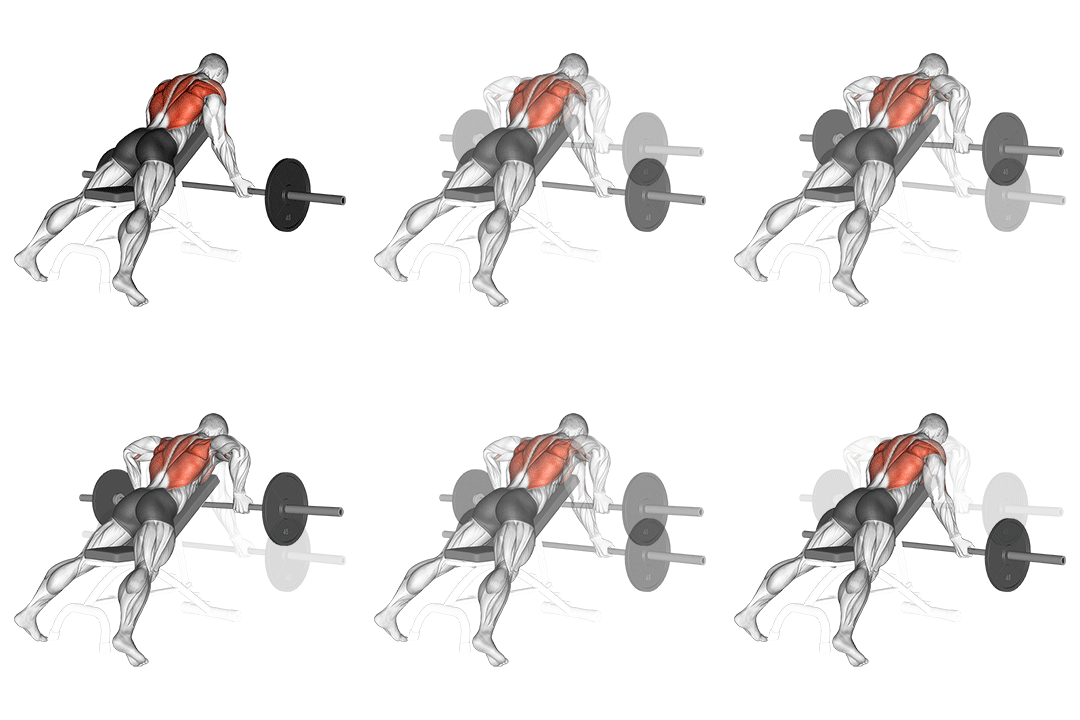
More comparisons with Barbell Incline Row
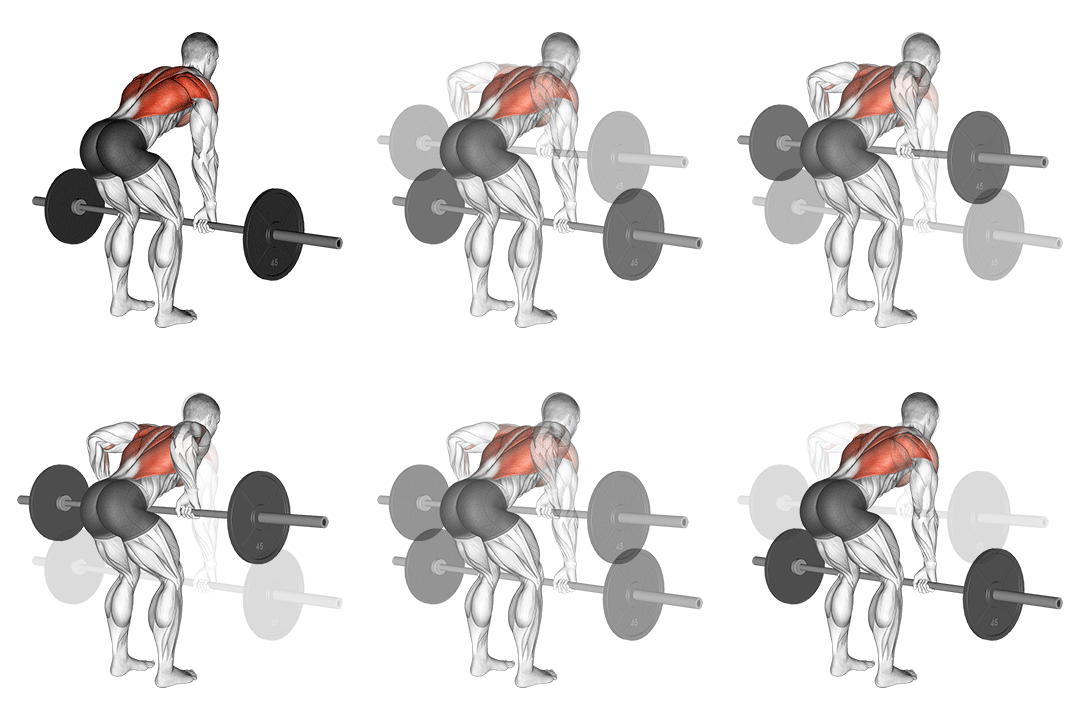
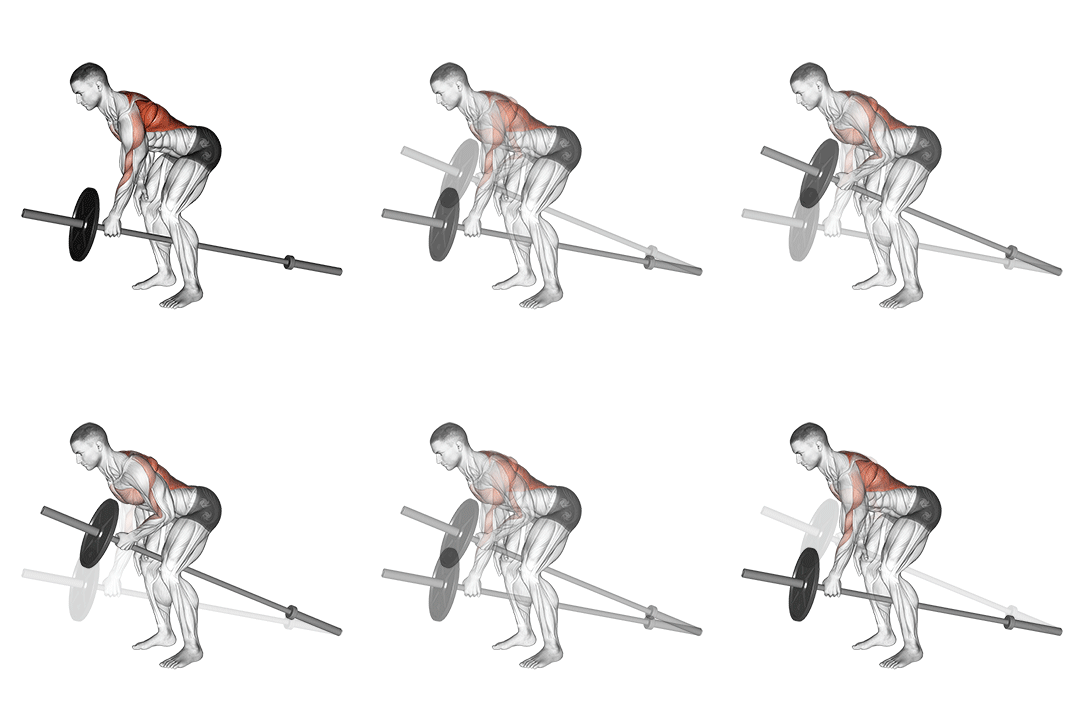
More comparisons with Barbell Pendlay Row
Compare More Exercises
Use our free comparison tool to analyze any two exercises head-to-head.
Compare Exercises