

Barbell Incline Row vs Barbell Reverse Grip Incline Bench Row: Complete Comparison Guide
Barbell Incline Row vs Barbell Reverse Grip Incline Bench Row — both hit the upper-back hard while keeping your lower back protected. You’ll get a side-by-side look at muscle activation, grip effects, bench angles (30–45°), technique cues, and programming suggestions (rep ranges and progressions). Read on and you’ll know which row to pick for hypertrophy, strength, or easy implementation in a home gym, plus clear cues to maximize scapular retraction, elbow path, and time under tension.
Exercise Comparison
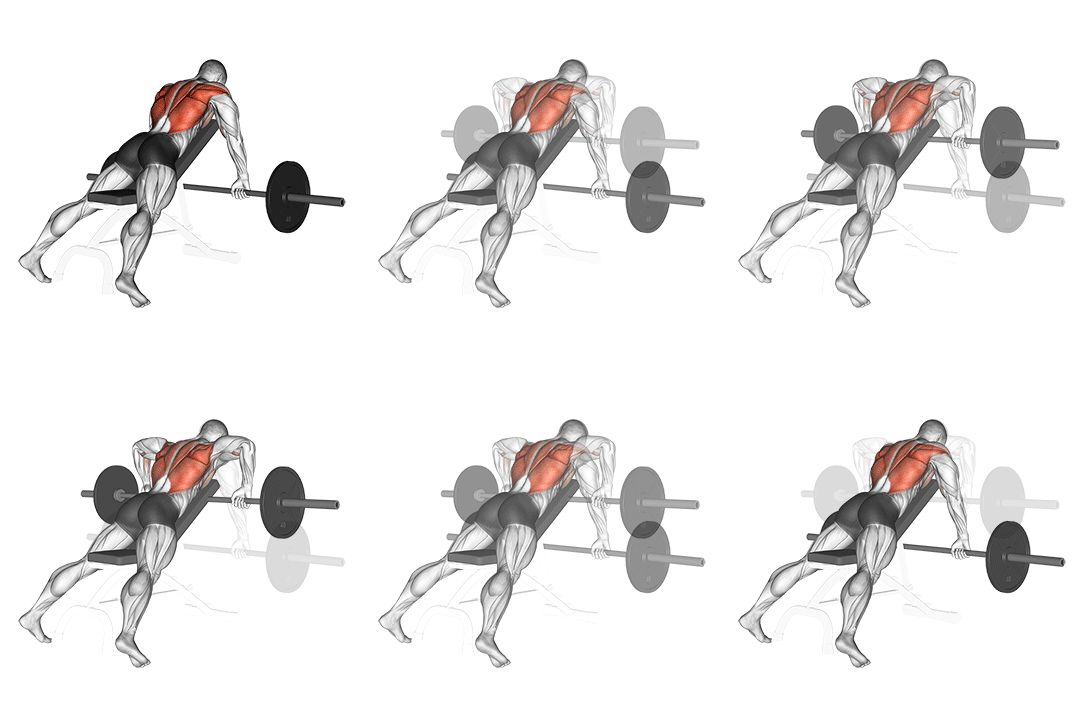
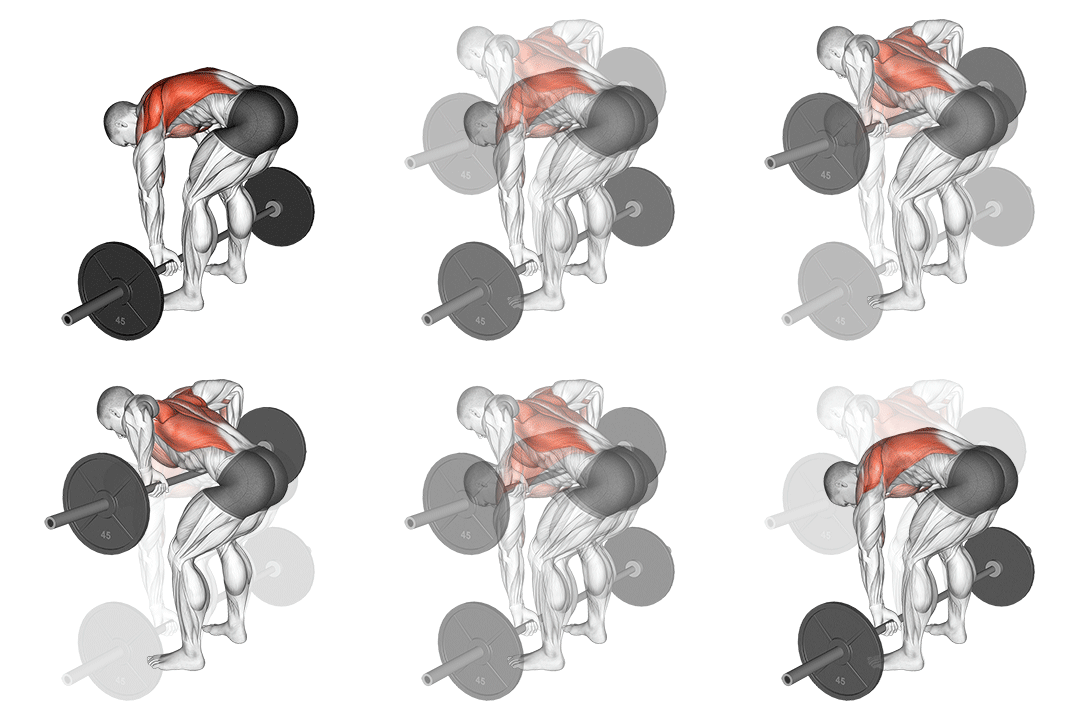
Barbell Incline Row
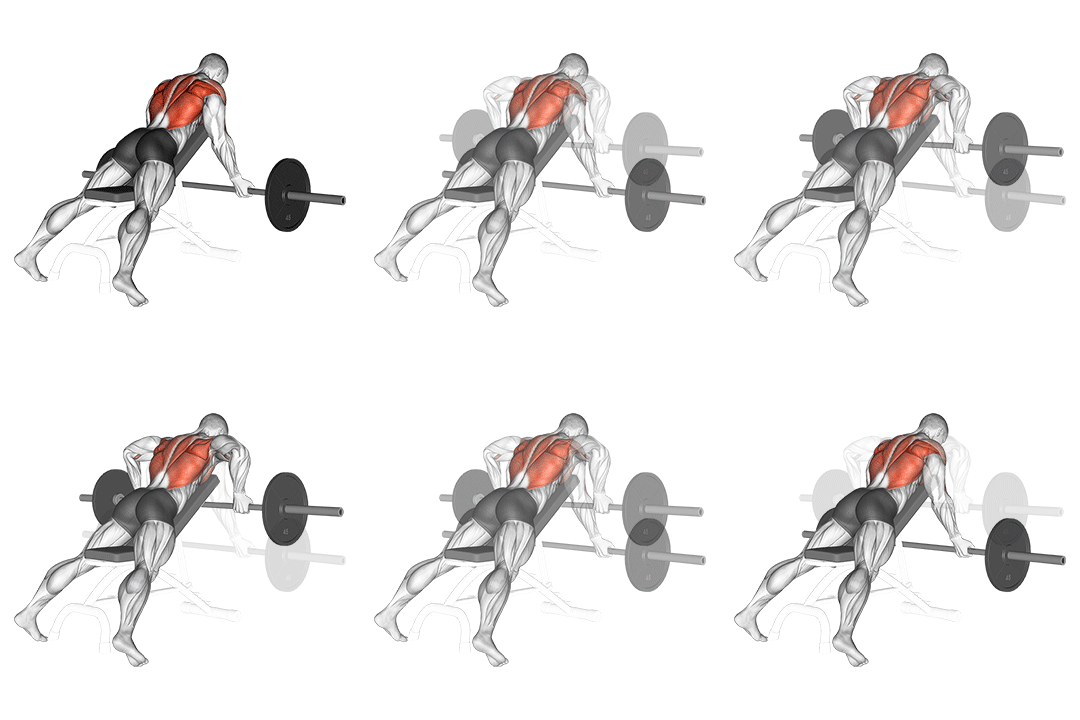
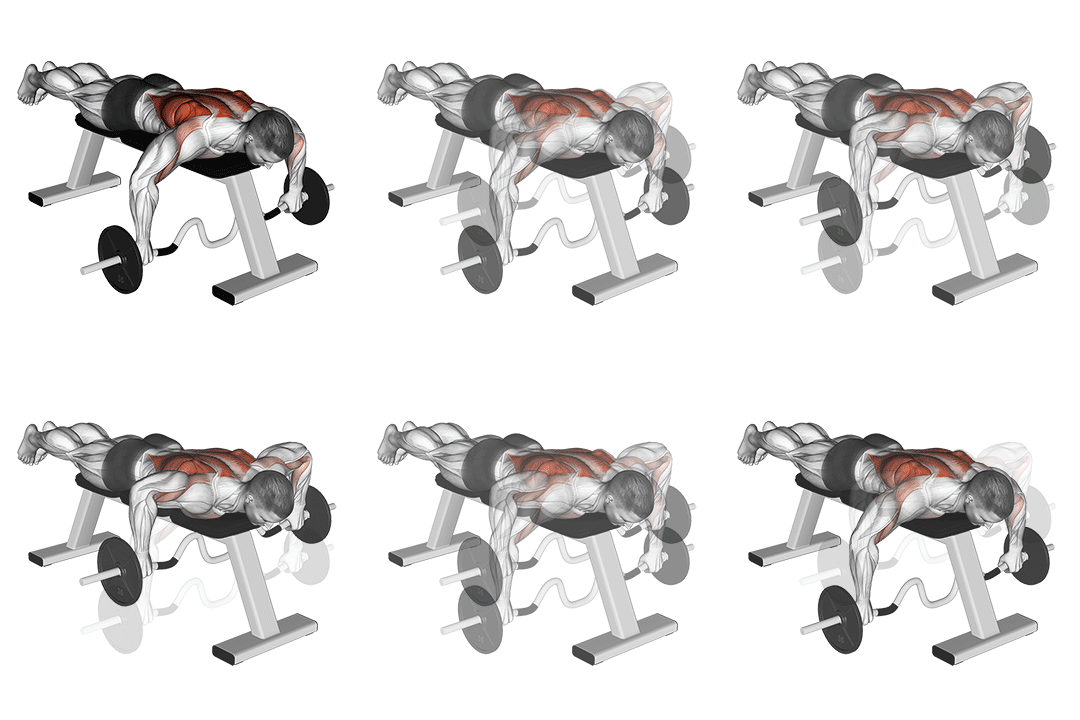
Barbell Reverse Grip Incline Bench Row
Head-to-Head Comparison
| Attribute | Barbell Incline Row | Barbell Reverse Grip Incline Bench Row |
|---|---|---|
| Target Muscle |
Upper-back
|
Upper-back
|
| Body Part |
Back
|
Back
|
| Equipment |
Barbell
|
Barbell
|
| Difficulty |
Intermediate
|
Intermediate
|
| Movement Type |
Compound
|
Compound
|
| Secondary Muscles |
2
|
2
|
Secondary Muscles Activated
Barbell Incline Row
Barbell Reverse Grip Incline Bench Row
Visual Comparison
Overview
Barbell Incline Row vs Barbell Reverse Grip Incline Bench Row — both hit the upper-back hard while keeping your lower back protected. You’ll get a side-by-side look at muscle activation, grip effects, bench angles (30–45°), technique cues, and programming suggestions (rep ranges and progressions). Read on and you’ll know which row to pick for hypertrophy, strength, or easy implementation in a home gym, plus clear cues to maximize scapular retraction, elbow path, and time under tension.
Key Differences
- Both exercises target the Upper-back using Barbell. The main differences are in their movement patterns and muscle activation angles.
Pros & Cons
Barbell Incline Row
+ Pros
- Solid mid-trap and posterior deltoid emphasis with a horizontal force vector
- More wrist-friendly for most lifters; easier setup
- Allows heavier loading for strength-focused sets
- Bench support eliminates lumbar strain and isolates scapular motion
− Cons
- Less biceps recruitment than supinated variations
- May limit peak elbow flexion torque for some lifters
- Requires an incline bench and barbell — not fully equipment-free
Barbell Reverse Grip Incline Bench Row
+ Pros
- Higher biceps involvement increases overall pulling force and pump
- Can improve arm-back connection for better curling carryover
- Same bench support reduces lumbar load while shifting effort to elbow flexors
- Often feels stronger for lifters with strong biceps and wrist mobility
− Cons
- Greater demand on wrist supination and elbow comfort
- Biceps fatigue can become the limiting factor in back-focused sets
- Slightly higher risk of wrist strain or awkward grip slips
When Each Exercise Wins
The supinated grip increases biceps assistance and can raise overall time under tension, letting you overload the upper-back with longer sets (6–12 reps) and better mind-muscle connection. That extra elbow flexor involvement helps push volume without sacrificing back fiber stress.
Pronated grip offers a more stable wrist and shoulder position that transfers better to other heavy horizontal pulls. You can load heavier for low-rep sets (3–6 reps) since the biceps aren't the primary limiter.
Easier wrist setup and clearer elbow-driven cueing make the pronated incline row simpler to learn. The supported torso reduces technique variance and keeps focus on scapular retraction and concentric/ eccentric control.
Both need a bench and barbell, but the pronated version is more forgiving if your bench angle or knurling is suboptimal. Less wrist mobility requirement means fewer accessory tools or grip adjustments at home.
Frequently Asked Questions
Can I do both Barbell Incline Row and Barbell Reverse Grip Incline Bench Row in the same workout?
Yes — pair them smartly: start with heavy pronated sets for strength (3–6 reps) and finish with reverse-grip sets for hypertrophy (8–12 reps, higher tempo). Keep total volume manageable to avoid biceps or forearm pre-fatigue that would limit back work.
Which exercise is better for beginners?
Barbell Incline Row is better for beginners because it has a simpler wrist position and a clearer elbow-driven pulling pattern. The supported torso reduces form compensation and makes learning scapular retraction and full range of motion easier.
How do the muscle activation patterns differ?
Pronated incline rows emphasize horizontal retraction and posterior deltoid/mid-trapezius fibers, whereas the supinated reverse-grip shifts some load to elbow flexors (biceps, brachioradialis). This changes the force vector and increases elbow torque, so biceps EMG is higher with the reverse grip.
Can Barbell Reverse Grip Incline Bench Row replace Barbell Incline Row?
It can as a variation, but it won’t perfectly replace pronated mechanics: reverse grip increases biceps involvement and may limit loading due to forearm fatigue. Use it to diversify stimulus or emphasize hypertrophy, but keep pronated rows for raw strength and mid-back emphasis.
Expert Verdict
Use the Barbell Incline Row as your default upper-back builder when you want heavy loading, a stable setup, and minimal wrist fuss — it’s the safer bet for strength phases (3–6 reps) and foundational hypertrophy (6–12 reps). Choose the Barbell Reverse Grip Incline Bench Row when your goal is to add biceps assistance and increase time under tension for upper-back hypertrophy; program it for 6–12 reps with controlled eccentrics and shorter rest. Alternate both across cycles: emphasize pronated rows during strength blocks and introduce reverse-grip sets during higher-volume hypertrophy blocks for targeted arm-back synergy.
Also Compare
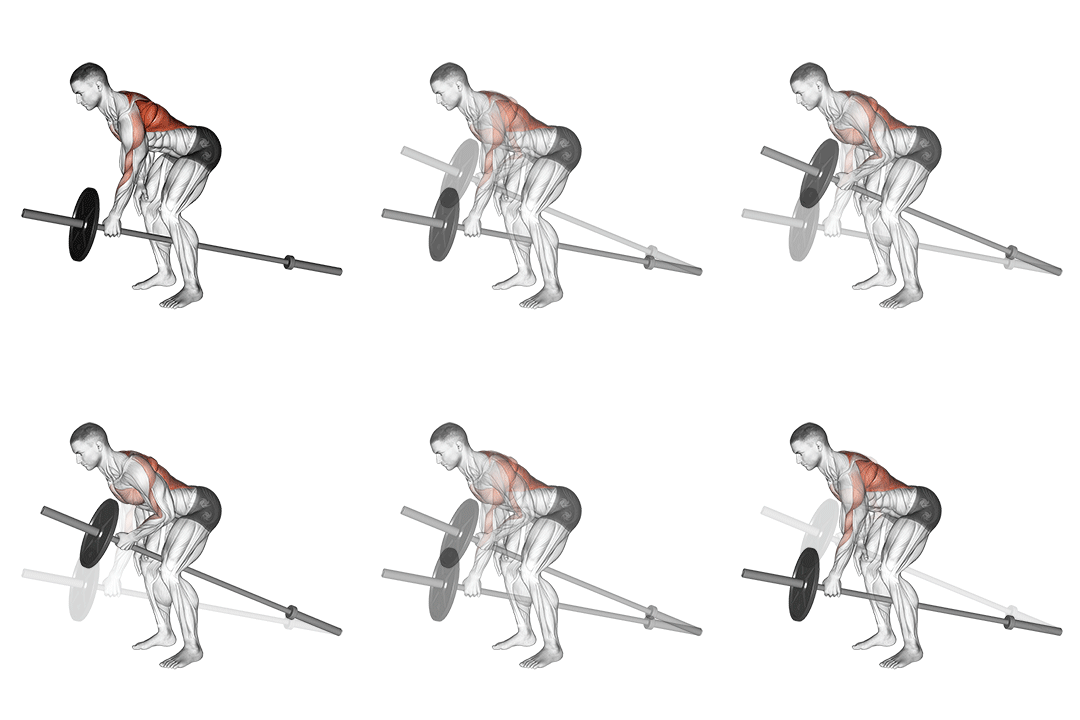
More comparisons with Barbell Incline Row
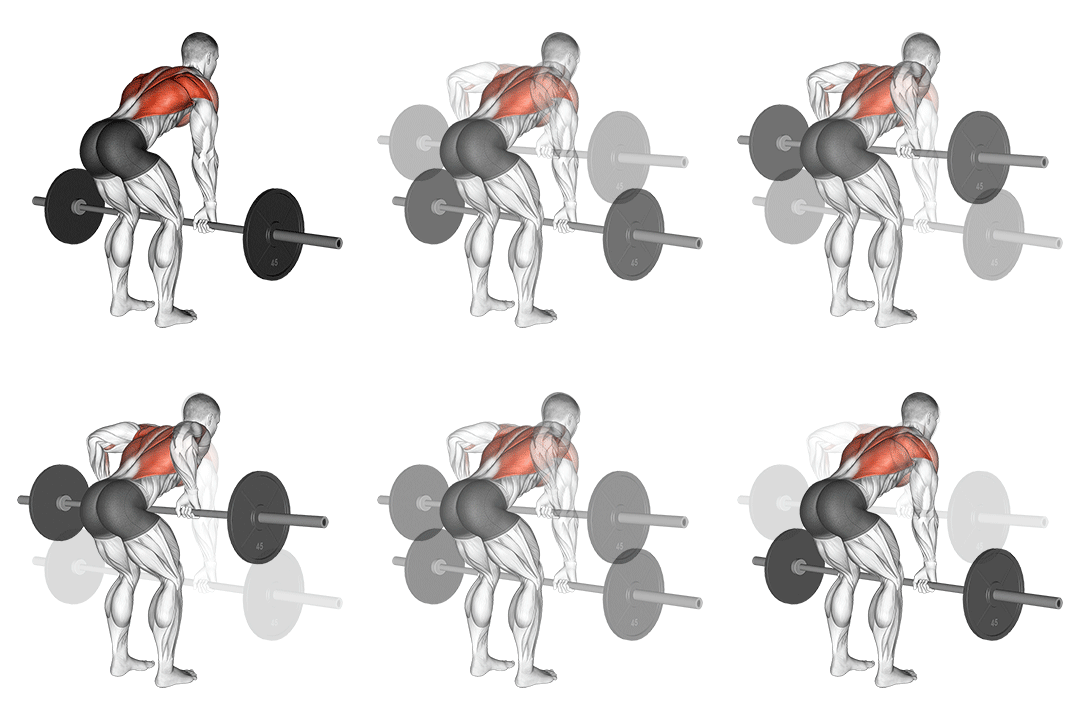
More comparisons with Barbell Reverse Grip Incline Bench Row
Compare More Exercises
Use our free comparison tool to analyze any two exercises head-to-head.
Compare Exercises