

Barbell Incline Row vs Cambered Bar Lying Row: Complete Comparison Guide
Barbell Incline Row vs Cambered Bar Lying Row are two solid compound back moves that target the upper-back while recruiting the biceps and forearms. You’ll get a clear breakdown of how each exercise loads the traps, rhomboids, and rear delts, plus exact technique cues, optimal bench angles (30–45° for incline), rep ranges (4–12), and progression tips. Read on to learn which one fits your goal—hypertrophy, raw strength, or a simple, low-back-friendly option for heavier sets.
Exercise Comparison
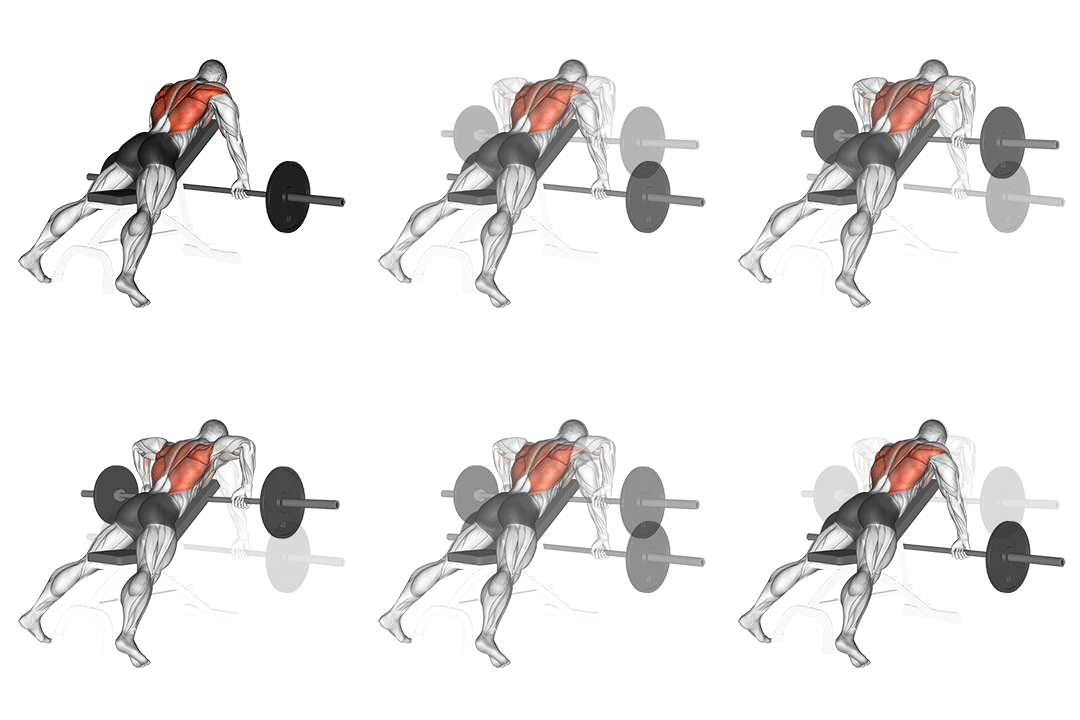
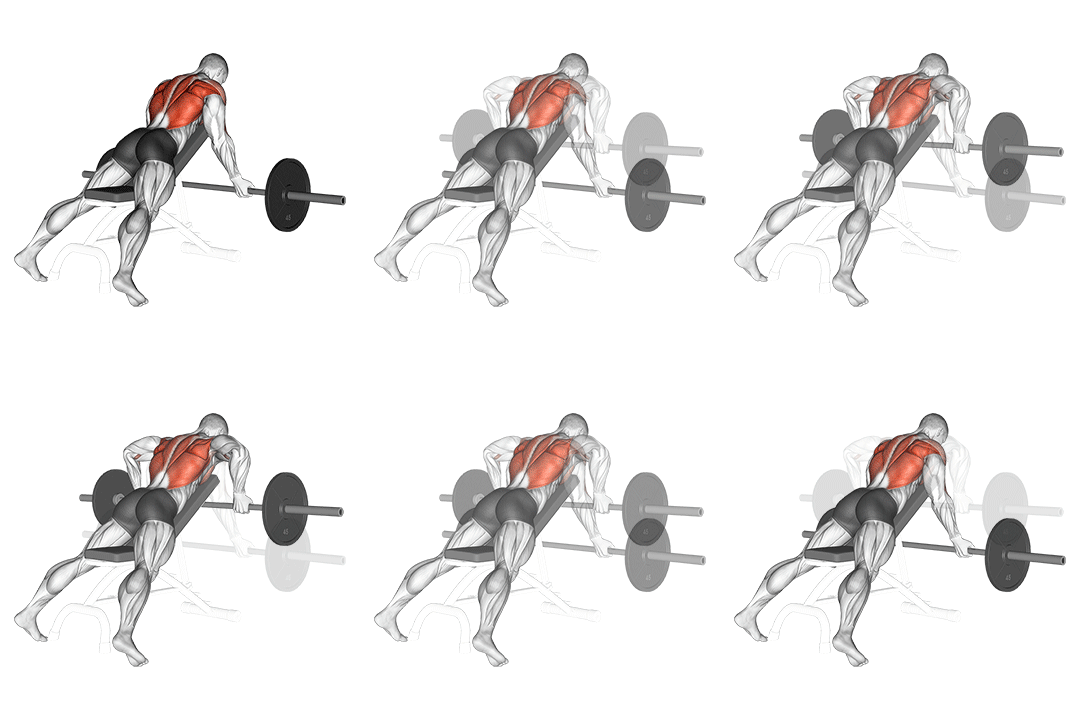
Barbell Incline Row
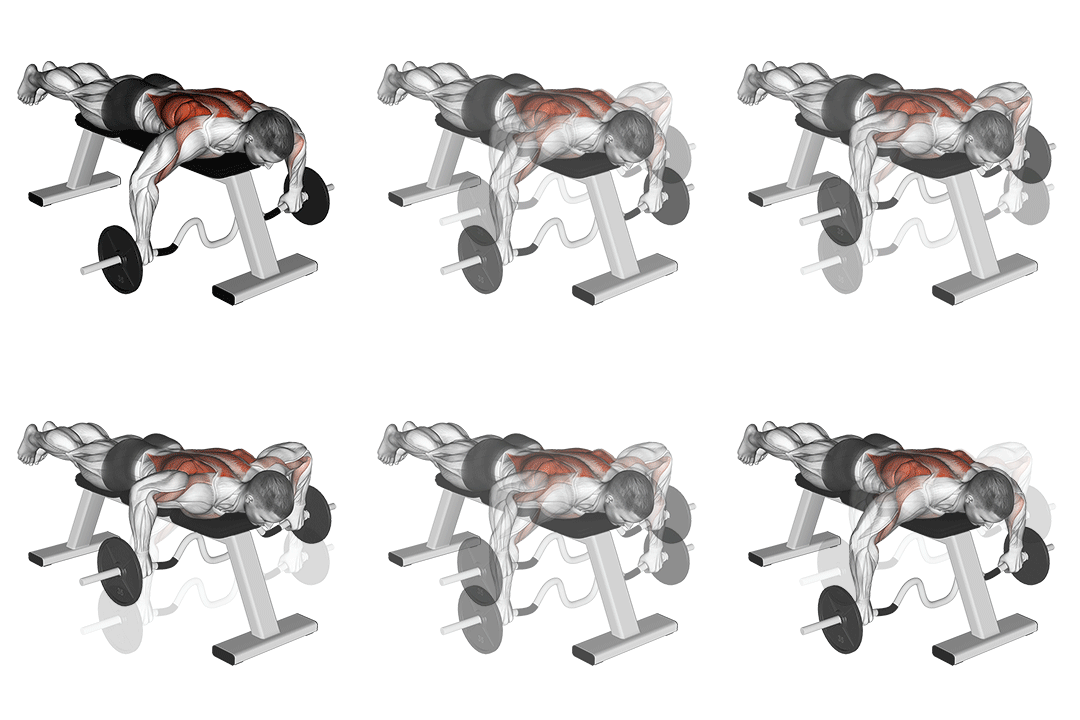
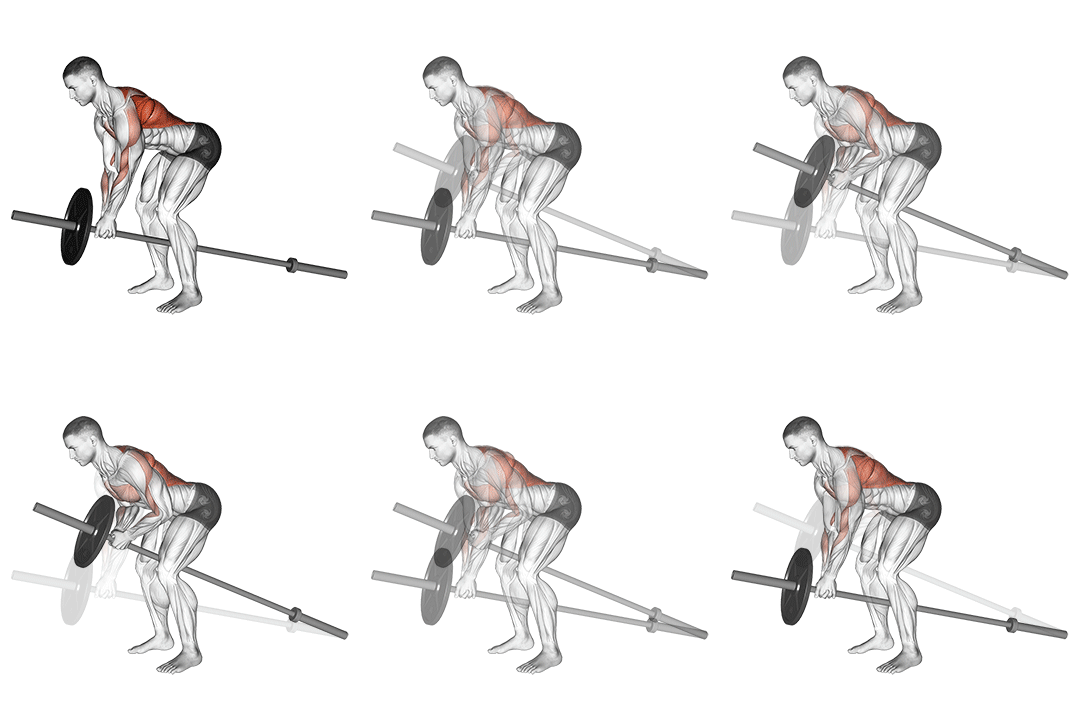
Cambered Bar Lying Row
Head-to-Head Comparison
| Attribute | Barbell Incline Row | Cambered Bar Lying Row |
|---|---|---|
| Target Muscle |
Upper-back
|
Upper-back
|
| Body Part |
Back
|
Back
|
| Equipment |
Barbell
|
Barbell
|
| Difficulty |
Intermediate
|
Intermediate
|
| Movement Type |
Compound
|
Compound
|
| Secondary Muscles |
2
|
2
|
Secondary Muscles Activated
Barbell Incline Row
Cambered Bar Lying Row
Visual Comparison
Overview
Barbell Incline Row vs Cambered Bar Lying Row are two solid compound back moves that target the upper-back while recruiting the biceps and forearms. You’ll get a clear breakdown of how each exercise loads the traps, rhomboids, and rear delts, plus exact technique cues, optimal bench angles (30–45° for incline), rep ranges (4–12), and progression tips. Read on to learn which one fits your goal—hypertrophy, raw strength, or a simple, low-back-friendly option for heavier sets.
Key Differences
- Both exercises target the Upper-back using Barbell. The main differences are in their movement patterns and muscle activation angles.
Pros & Cons
Barbell Incline Row
+ Pros
- Strong upper-trap and posterior-delt bias thanks to 30–45° pull vector
- Easy to vary bench angle to shift emphasis (30–60°)
- Common equipment—incline bench and standard barbell
- Greater loading potential for progressive overload and heavy sets
− Cons
- Requires solid torso control to prevent lower-back or hip drive
- Can stress shoulders if elbows flare above 60°
- Slightly less ROM in the mid-trap/rhomboid end-range compared with cambered bar
Cambered Bar Lying Row
+ Pros
- Superior mid-trap and rhomboid stretch and ROM due to cambered shape
- Lying position reduces lumbar involvement and stabilizer demand
- Simpler movement pattern—easier to maintain scapular retraction
- Cleaner horizontal pull vector that isolates upper-back muscles
− Cons
- Cambered bars are uncommon in many gyms and at home
- Overstretching can place the shoulder in a vulnerable position if technique breaks down
- Fewer angle and loading variations compared with incline setups
When Each Exercise Wins
The incline row allows heavier loading and angle variation (30–60°) to target posterior delts and upper traps while still hitting rhomboids. Use 6–12 reps with controlled 2–3s eccentrics to exploit time under tension for muscle growth.
Its loading potential and ability to progressively add weight make it better for building raw pulling strength. Train in 3–6 rep ranges with 2–4 minute rests to maximize neural adaptation.
Body support reduces technical demands and lumbar stress, letting beginners focus on clean scapular retraction and elbow path. Start with light loads and 8–12 reps to ingrain the pattern.
Most home setups include an adjustable bench and standard barbell, so incline rows are easier to program at home. If you lack a cambered bar, incline rows still offer meaningful upper-back stimulus.
Frequently Asked Questions
Can I do both Barbell Incline Row and Cambered Bar Lying Row in the same workout?
Yes. Pair them by priority—do the heavier, compound-focused Barbell Incline Row first for strength or heavy hypertrophy sets, then use the Cambered Bar Lying Row as a volume finisher to exploit extra ROM and mid-trap stretch for 8–15 reps.
Which exercise is better for beginners?
Cambered Bar Lying Row is generally better for beginners because the bench supports the torso and simplifies scapular control, reducing lower-back compensation while you learn a clean horizontal pull pattern.
How do the muscle activation patterns differ?
The incline row shifts the pull vector upward, increasing posterior-delt and upper-trap activation early in the pull, while the cambered lying row provides a longer rhomboid/mid-trap stretch and greater peak tension late in the concentric due to increased ROM and horizontal force vectors.
Can Cambered Bar Lying Row replace Barbell Incline Row?
It can replace the incline row for isolation-oriented sessions or when you want to reduce lumbar loading, but it’s a weaker substitute for heavy progressive strength work because cambered bars are harder to load and vary in angle.
Expert Verdict
Use the Barbell Incline Row when you want heavy progressive loading, angle variation, and a stronger posterior-delt/upper-trap emphasis—ideal for hypertrophy and strength blocks. Choose the Cambered Bar Lying Row when you want a low-back-friendly option that maximizes mid-trap and rhomboid stretch and makes learning scapular retraction simpler. If gym access is limited, prioritize incline rows; if you have a cambered bar and want cleaner isolation of the mid-back, program cambered lying rows for 3–4 sets of 6–12 reps with strict form.
Also Compare
More comparisons with Barbell Incline Row
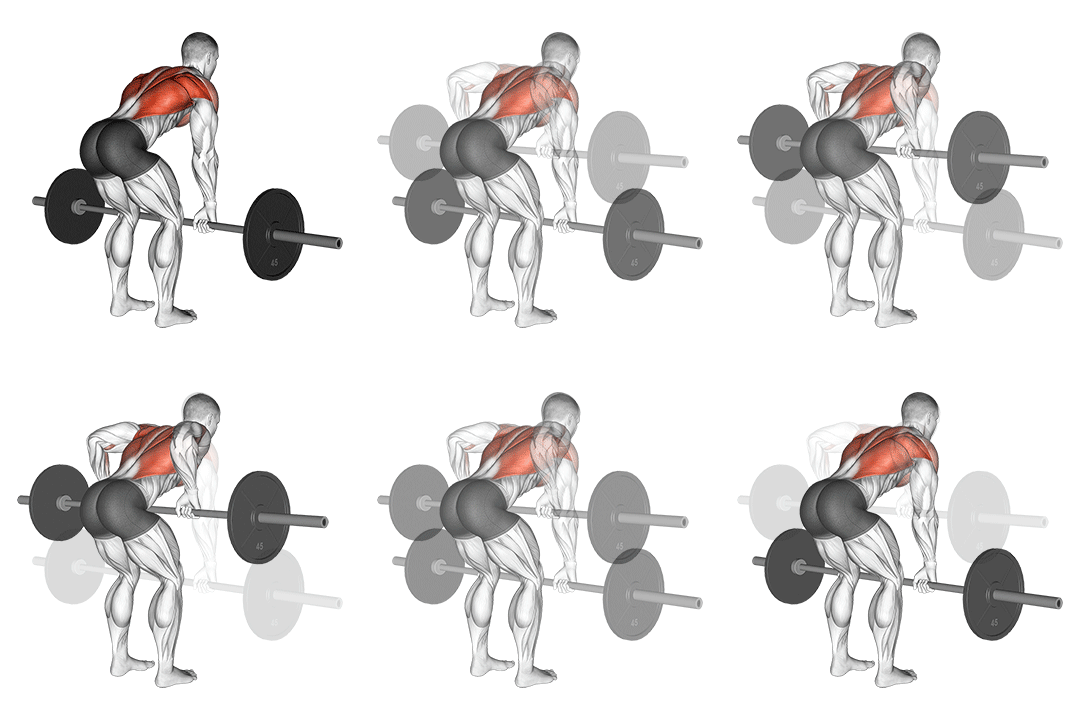
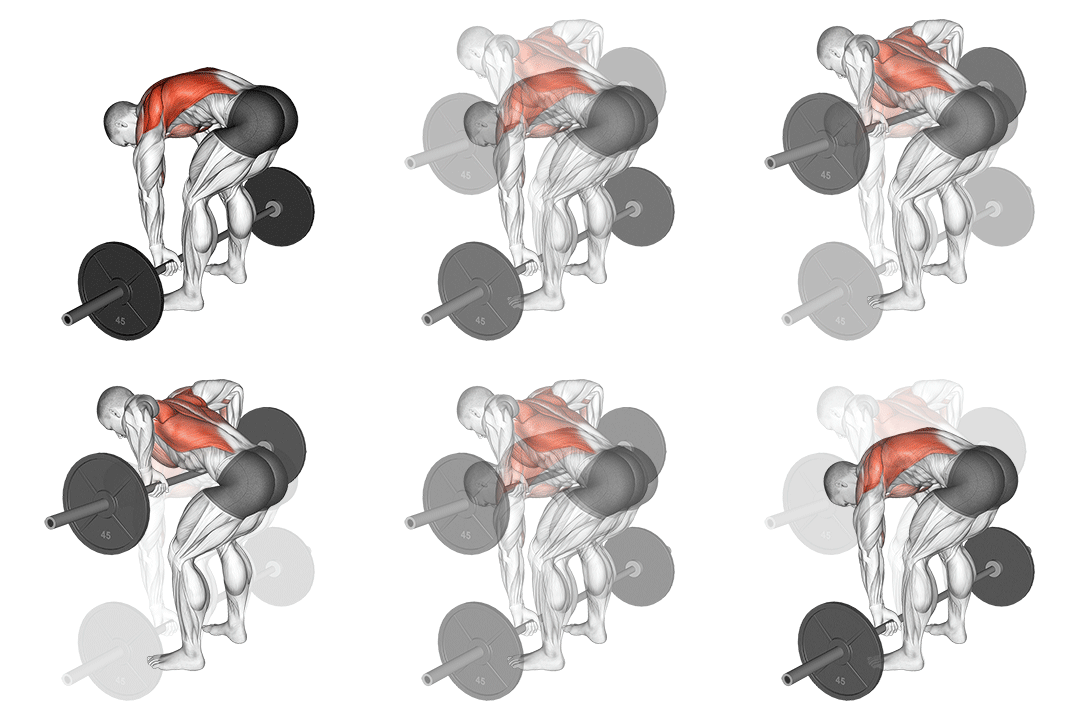
More comparisons with Cambered Bar Lying Row
Compare More Exercises
Use our free comparison tool to analyze any two exercises head-to-head.
Compare Exercises