

Barbell Incline Row vs Lever Bent Over Row: Complete Comparison Guide
Barbell Incline Row vs Lever Bent Over Row — two solid upper-back builders, but they load your body and muscles differently. If you want clear guidance on which to pick, this comparison walks you through muscle activation, equipment needs, injury risk, technique cues, and program recommendations. You’ll get specific angles, rep ranges (3–6 for strength, 6–12 for muscle growth), and coaching cues to make each rep count. Read on and you’ll know when to prioritize the supported, chest‑supported incline row versus the more hip-hinge dominant lever/bent-over variation.
Exercise Comparison
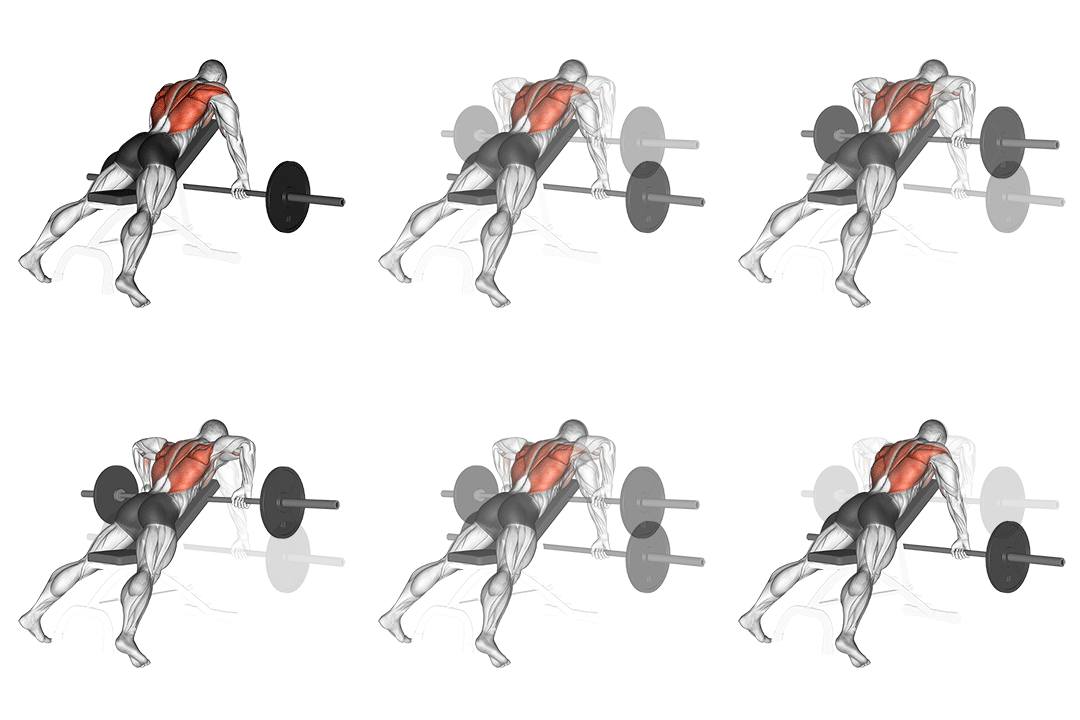
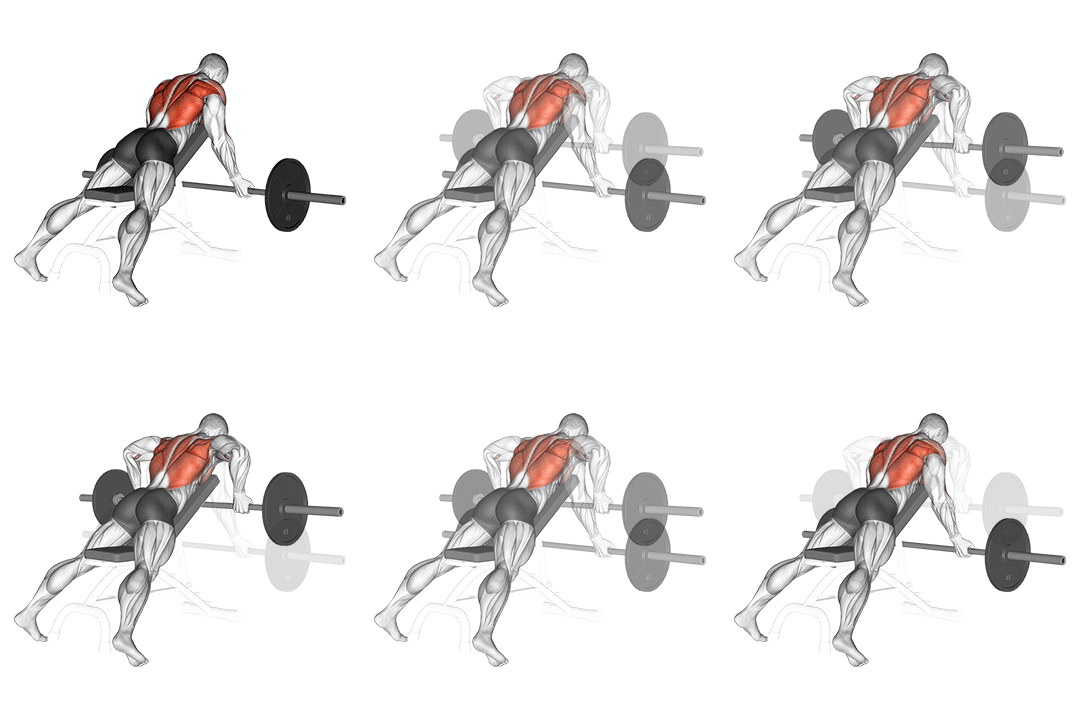
Barbell Incline Row
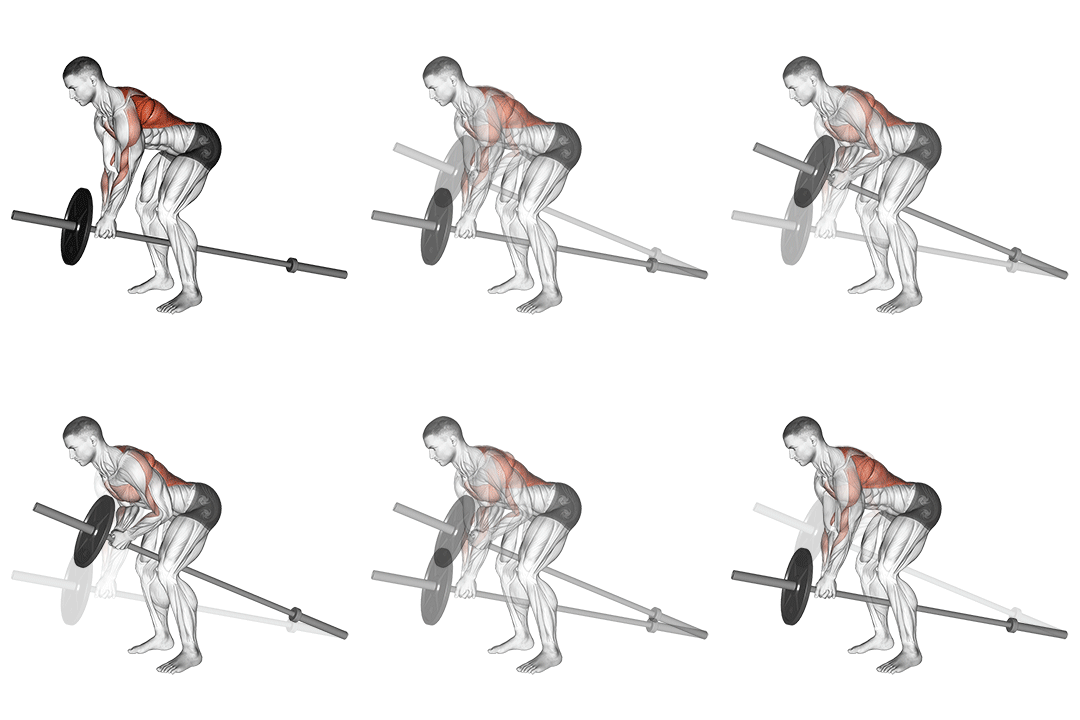
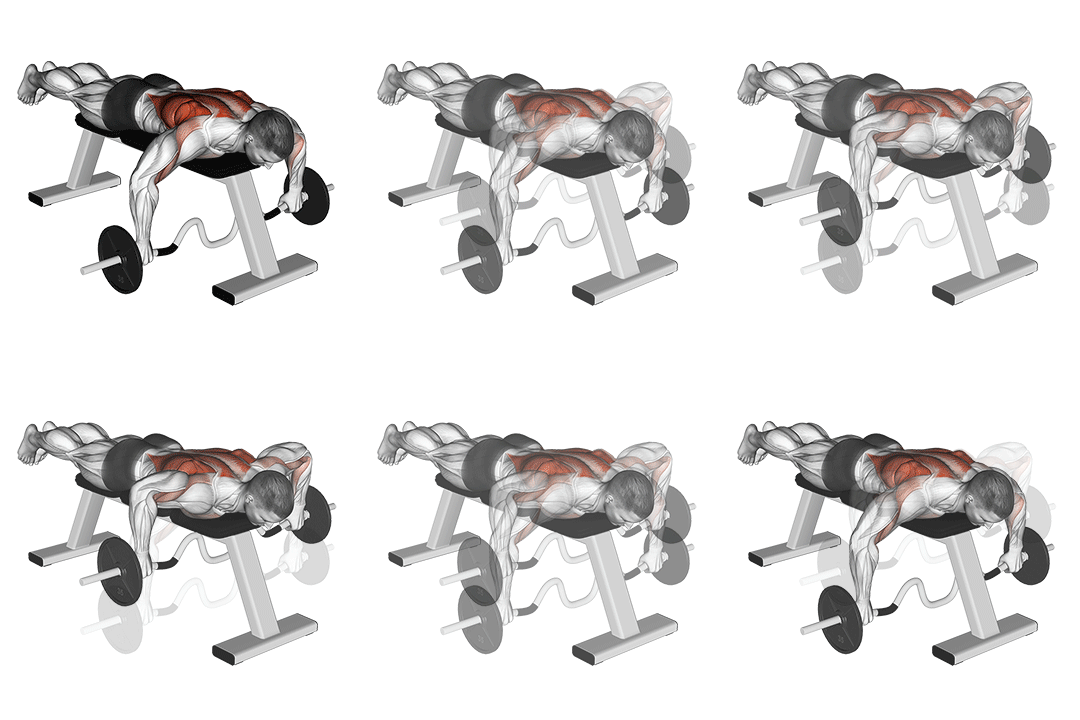
Lever Bent Over Row
Head-to-Head Comparison
| Attribute | Barbell Incline Row | Lever Bent Over Row |
|---|---|---|
| Target Muscle |
Upper-back
|
Upper-back
|
| Body Part |
Back
|
Back
|
| Equipment |
Barbell
|
Barbell
|
| Difficulty |
Intermediate
|
Intermediate
|
| Movement Type |
Compound
|
Compound
|
| Secondary Muscles |
2
|
2
|
Secondary Muscles Activated
Barbell Incline Row
Lever Bent Over Row
Visual Comparison
Overview
Barbell Incline Row vs Lever Bent Over Row — two solid upper-back builders, but they load your body and muscles differently. If you want clear guidance on which to pick, this comparison walks you through muscle activation, equipment needs, injury risk, technique cues, and program recommendations. You’ll get specific angles, rep ranges (3–6 for strength, 6–12 for muscle growth), and coaching cues to make each rep count. Read on and you’ll know when to prioritize the supported, chest‑supported incline row versus the more hip-hinge dominant lever/bent-over variation.
Key Differences
- Both exercises target the Upper-back using Barbell. The main differences are in their movement patterns and muscle activation angles.
Pros & Cons
Barbell Incline Row
+ Pros
- Chest support reduces lumbar loading and technique breakdown
- Stronger mid‑trap and rhomboid focus via fixed torso angle
- Easy to cue scapular retraction and elbow path for clean reps
- Accessible in most gyms and home setups with an incline bench
− Cons
- Limited carryover to full hip‑hinge pulling strength
- Less total-body stabilization demand, so lower posterior-chain recruitment
- Bar path can be awkward for very tall lifters on standard benches
Lever Bent Over Row
+ Pros
- Allows higher external loads and greater strength expression
- Greater lat and spinal erector co-activation for whole‑body tension
- Machine lever variants give consistent pivot and safer heavy sets
- Better carryover to deadlift-style posterior-chain work
− Cons
- Higher lumbar stress if hip hinge or bracing is poor
- Harder to master technical hip-hinge and neutral spine under load
- Lever machines are less common in home gyms
When Each Exercise Wins
The chest-supported position increases mid-back time under tension and isolates rhomboids and mid-traps effectively. Use 6–12 reps, 3–4 sets, and controlled 2–1–2 tempo to maximize sarcomere loading and muscle fiber recruitment.
Lever and bent-over variations allow heavier loading and greater whole-body tension, supporting 3–6 rep strength phases. The bent-over position also transfers better to hip-hinge heavy lifts like deadlifts due to increased erector and posterior chain demand.
The supported torso simplifies technique and lowers lumbar risk, letting beginners learn scapular retraction and elbow mechanics first. Start with light loads, focus on a solid scapular pull and 8–12 reps before introducing bent-over variations.
Most home setups include a bench and barbell while lever machines do not. The incline row provides a controlled, effective upper-back stimulus without the need for specialized commercial equipment.
Frequently Asked Questions
Can I do both Barbell Incline Row and Lever Bent Over Row in the same workout?
Yes — pairing them works well: start with the heavier lever/bent‑over sets for strength (3–6 reps) and finish with chest‑supported incline rows for hypertrophy (6–12 reps). Keep total volume managed to avoid excessive low‑back fatigue and prioritize technique on both.
Which exercise is better for beginners?
Barbell Incline Row is better for beginners because bench support removes much of the spinal stabilization demand, allowing you to learn scapular retraction and elbow mechanics safely. Begin with light weight and 8–12 controlled reps to build motor control before progressing to bent‑over variations.
How do the muscle activation patterns differ?
Incline rows produce a more isolated scapular retraction pattern that biases mid‑traps and rhomboids due to a horizontal pull with torso support. Bent‑over/lever rows increase lumbar, erector, and lat involvement because the hip hinge lengthens the lats and requires isometric spinal stabilization, shifting the force vector slightly more vertical.
Can Lever Bent Over Row replace Barbell Incline Row?
Yes, but only if your goal is strength transfer and you can maintain a neutral spine under load; lever/bent‑over rows replicate a fuller posterior‑chain demand. If your priority is isolation, reduced lumbar stress, or hypertrophy-specific mid‑back work, keep the incline row in your program.
Expert Verdict
Use the Barbell Incline Row when your goal is targeted upper‑back hypertrophy, reduced lumbar stress, or when you need a technique‑forgiving exercise for beginners. Its 30–45° chest support places the mid‑traps and rhomboids in a favorable length‑tension window for repeated, controlled contractions. Choose the Lever Bent Over Row when you want to express raw pulling strength, load the posterior chain more, and train in lower rep ranges (3–6) with heavy loads—especially if you have a machine that stabilizes the path. Program both across a training block: prioritize incline rows during hypertrophy phases and lever/bent‑over rows during strength phases.
Also Compare
More comparisons with Barbell Incline Row
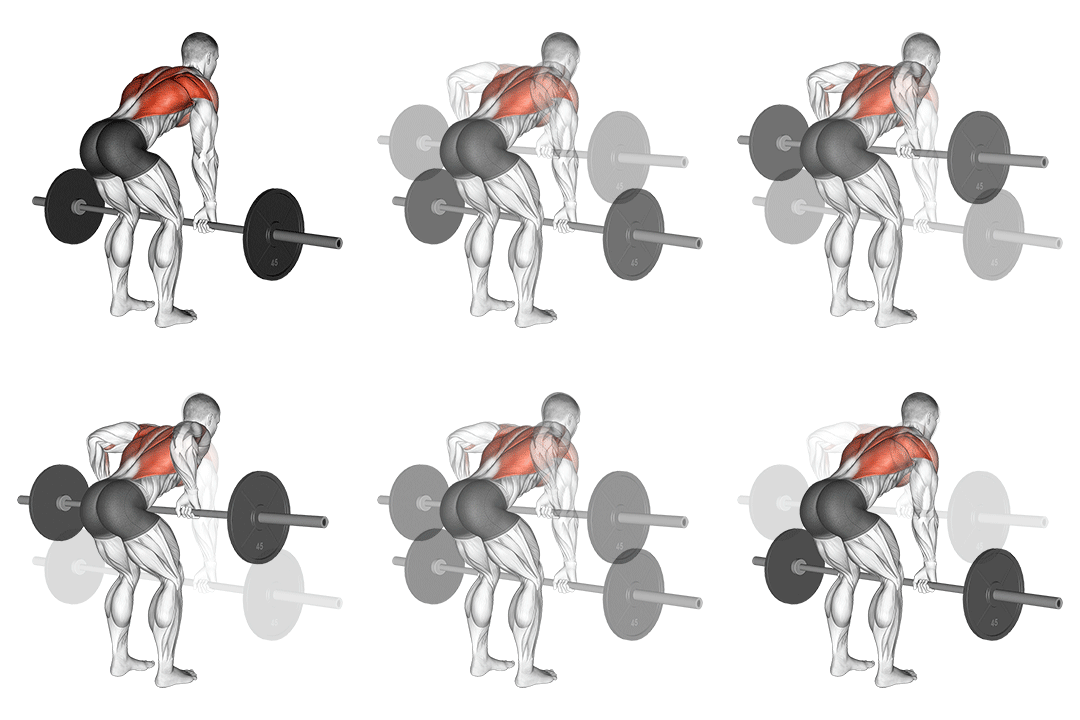
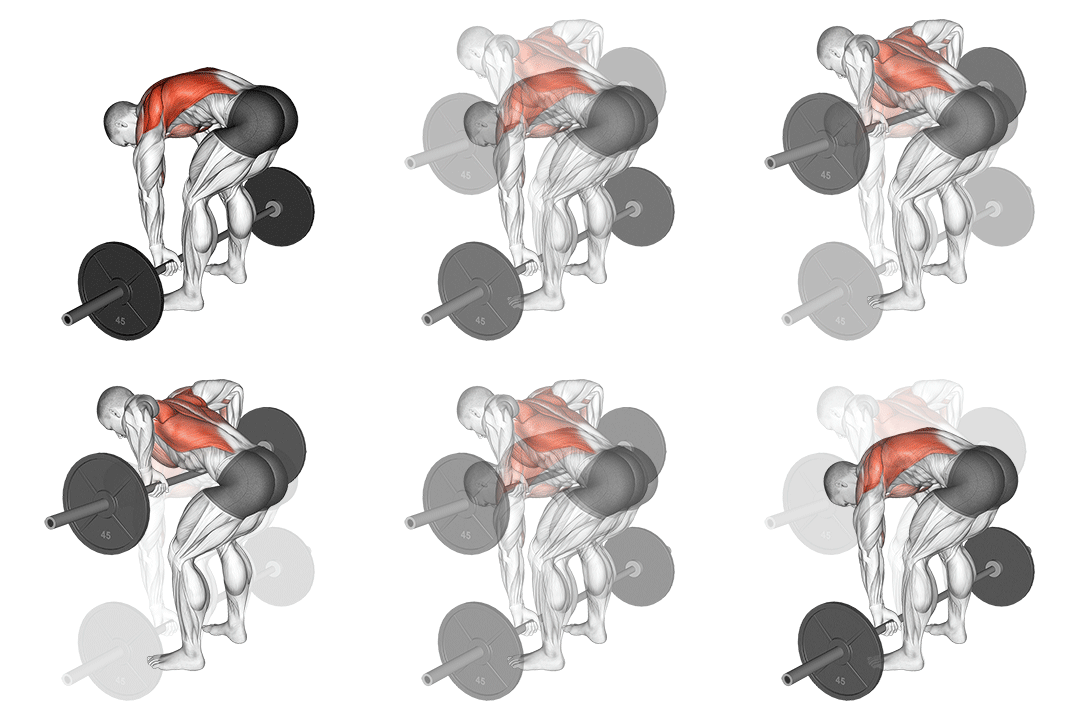
More comparisons with Lever Bent Over Row
Compare More Exercises
Use our free comparison tool to analyze any two exercises head-to-head.
Compare Exercises