

Barbell One Leg Squat vs Barbell Squat: Complete Comparison Guide
Barbell One Leg Squat vs Barbell Squat — both load your quads hard, but they do it in very different ways. You’ll get a clear read on muscle activation, equipment and mobility demands, technique cues, and programming recommendations so you can pick the right move for your goals. I’ll show how each exercise stresses the knee and hip joints, when to use unilateral work to correct imbalances, and exact rep ranges (6-12 for hypertrophy, 3-6 for strength, 8-15 for single-leg work) so you can plan your sessions effectively.
Exercise Comparison
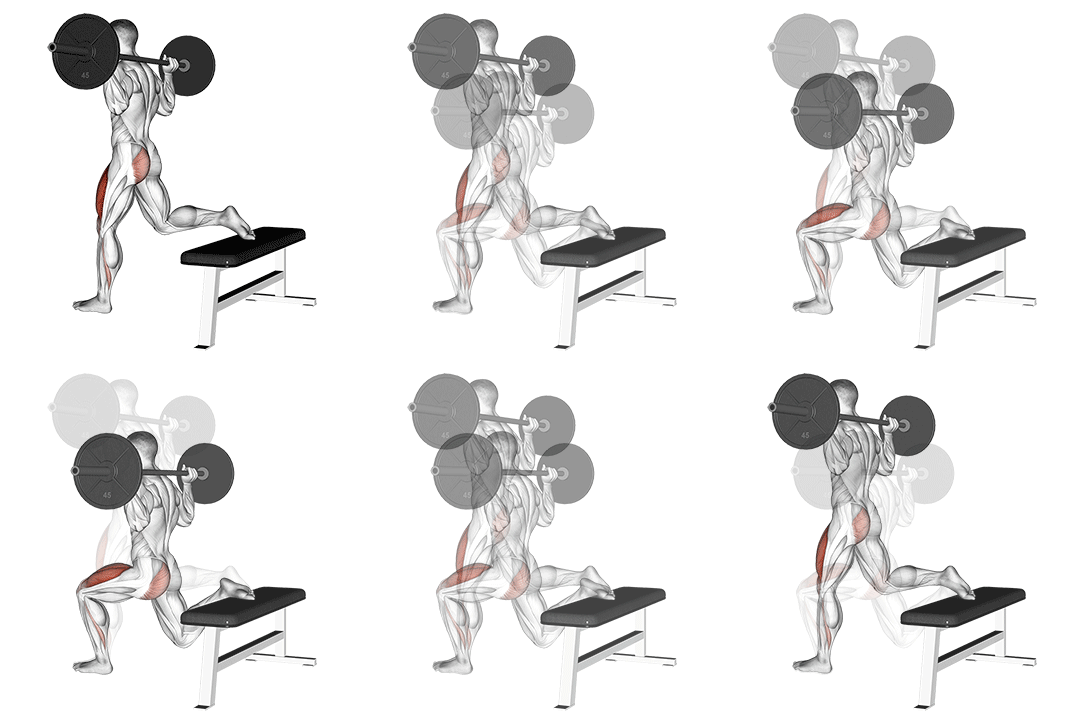
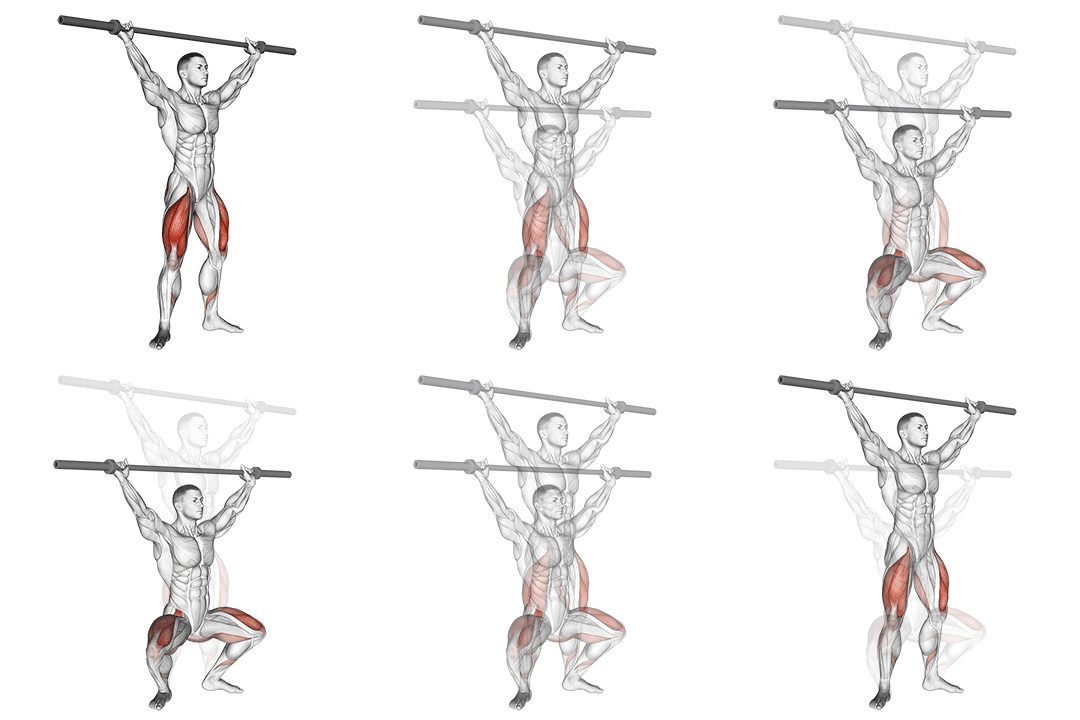
Barbell One Leg Squat
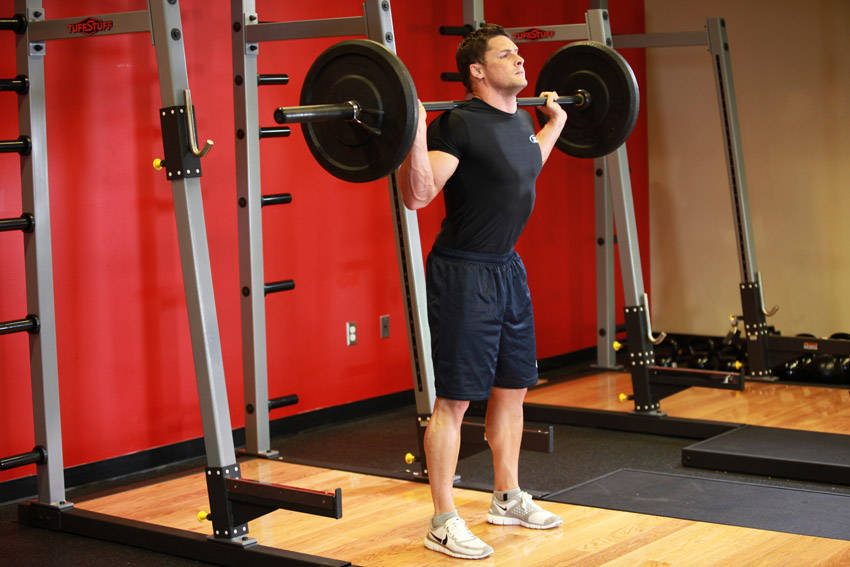
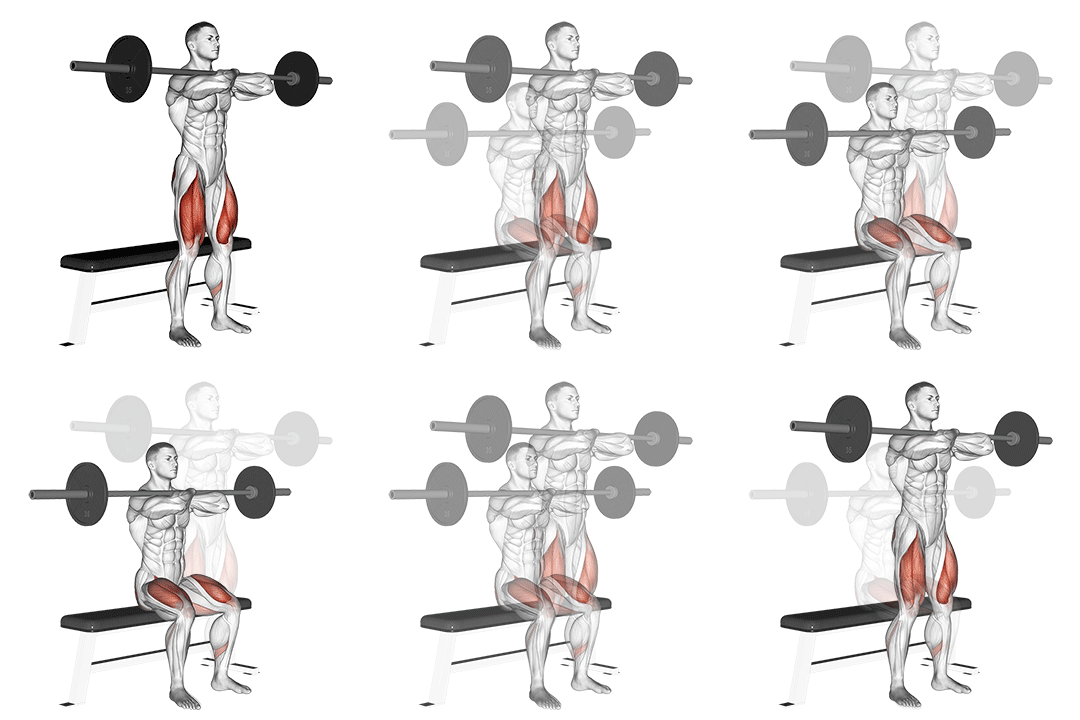
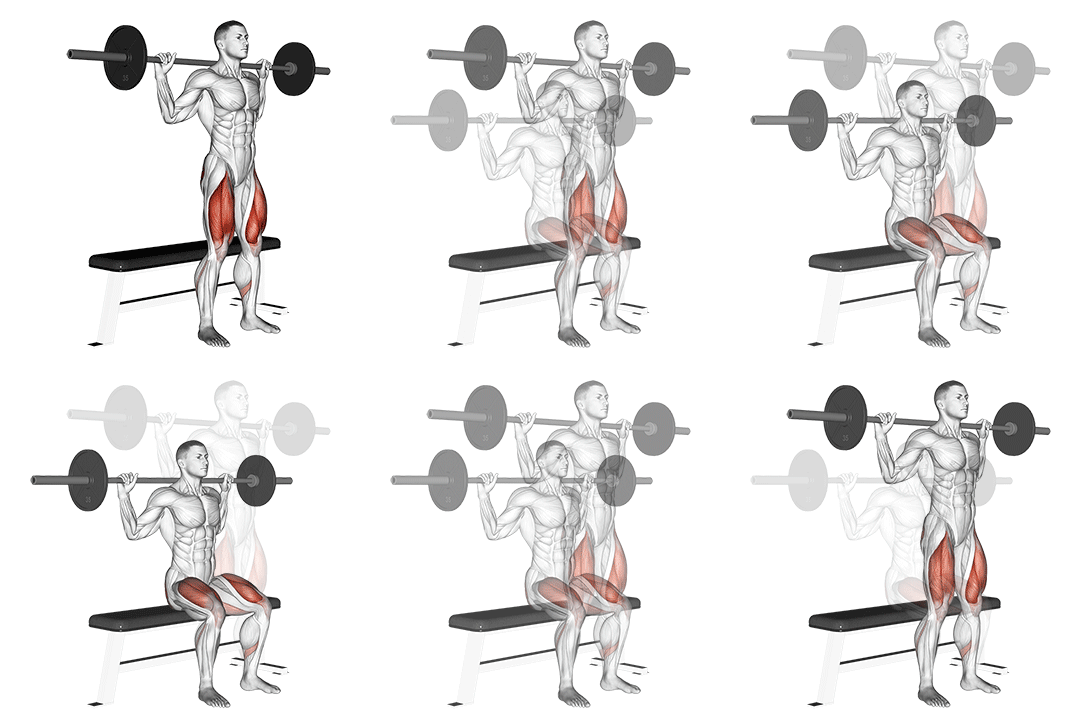
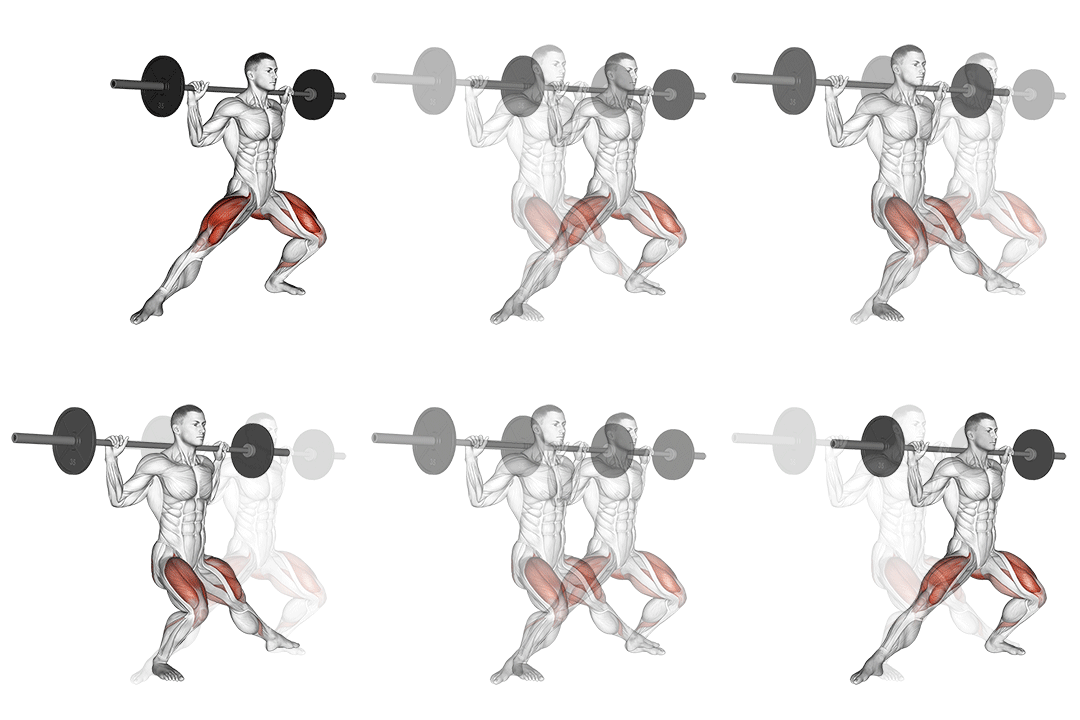
Barbell Squat
Head-to-Head Comparison
| Attribute | Barbell One Leg Squat | Barbell Squat |
|---|---|---|
| Target Muscle |
Quads
|
Quads
|
| Body Part |
Upper-legs
|
Upper-legs
|
| Equipment |
Barbell
|
Barbell
|
| Difficulty |
Advanced
|
Intermediate
|
| Movement Type |
Compound
|
Compound
|
| Secondary Muscles |
3
|
4
|
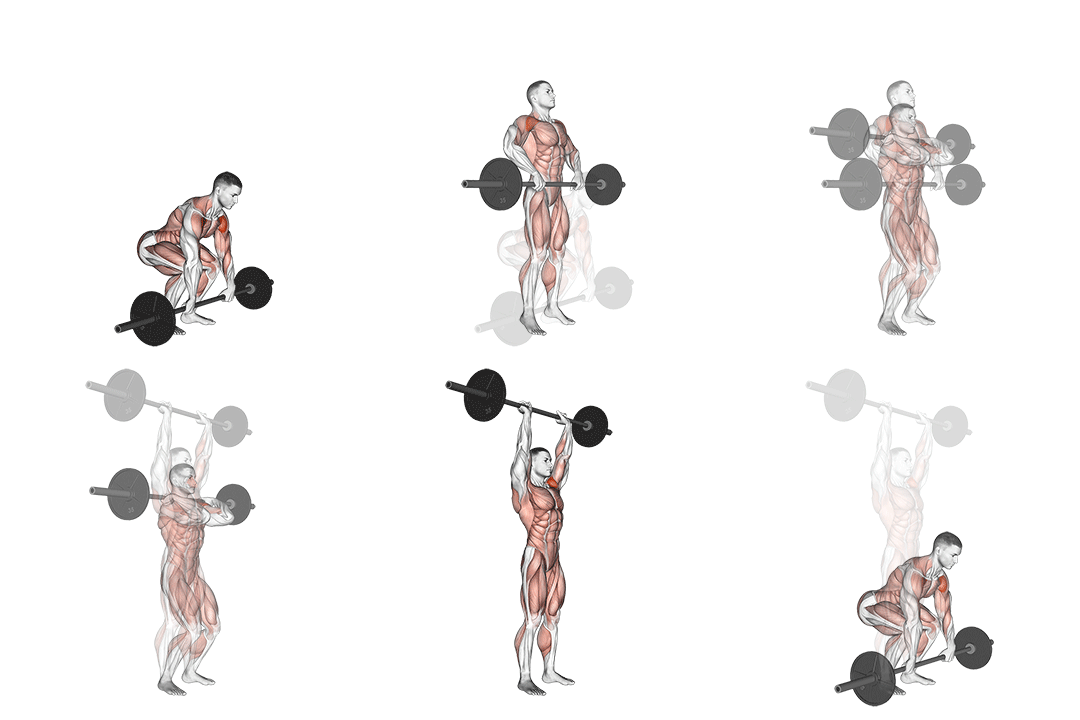
Secondary Muscles Activated
Barbell One Leg Squat
Barbell Squat
Visual Comparison
Overview
Barbell One Leg Squat vs Barbell Squat — both load your quads hard, but they do it in very different ways. You’ll get a clear read on muscle activation, equipment and mobility demands, technique cues, and programming recommendations so you can pick the right move for your goals. I’ll show how each exercise stresses the knee and hip joints, when to use unilateral work to correct imbalances, and exact rep ranges (6-12 for hypertrophy, 3-6 for strength, 8-15 for single-leg work) so you can plan your sessions effectively.
Key Differences
- Difficulty levels differ: Barbell One Leg Squat is advanced, while Barbell Squat is intermediate.
- Both exercises target the Quads using Barbell. The main differences are in their movement patterns and muscle activation angles.
Pros & Cons
Barbell One Leg Squat
+ Pros
- High unilateral quad stimulus with controlled eccentric tension
- Fixes left-right imbalances and improves single-leg stability
- Requires less absolute load — fewer plates needed for stimulus
- Elevates hip abductor and calf activation for functional stability
− Cons
- Advanced technical demand and long learning curve
- Harder to rack and unrack safely without a spotter or rack
- Less total load capacity limits maximal bilateral strength development
Barbell Squat
+ Pros
- Allows heavy loading for maximal strength and systemic overload
- Efficient total-body compound lift recruiting posterior chain and low back
- Straightforward progressive overload and testing (1RM, % schemes)
- Widely taught — easier to find programming and coaching
− Cons
- Higher axial spinal compression under heavy loads
- Can mask left-right imbalances if used exclusively
- Requires a squat rack or power cage for safe heavy work
When Each Exercise Wins
Barbell Squat lets you apply higher absolute loads and longer total volume across both quads and posterior chain, producing greater overall mechanical tension. Use 6–12 reps and 3–5 sets with controlled 2–3 second eccentrics for maximal muscle growth.
For increasing 1RM and absolute strength the bilateral squat is superior because it supports heavier loading and specific neural adaptations. Program 3–6 reps at 85–95% 1RM with low volume and long rest to prioritize strength.
Beginners gain more consistent progress from learning bilateral patterns and building general strength via goblet-to-barbell progressions. Start with bodyweight and goblet squat, then move to sets of 8–12 with technique focus before heavy loading.
If you lack heavy plates or a full rack, the one-leg variation gives high quad stimulus with lighter loads and small space. Use 8–15 reps per leg, tempo variations, and unilateral accessories to progress safely at home.
Frequently Asked Questions
Can I do both Barbell One Leg Squat and Barbell Squat in the same workout?
Yes — perform the Barbell Squat first when you need maximum force and neural freshness, then use the Barbell One Leg Squat as an accessory for unilateral volume. Example: heavy squats 3–5 sets of 3–6 reps, then 3 sets of 8–12 reps per leg for single-leg work.
Which exercise is better for beginners?
Beginners should start with bilateral patterns: bodyweight, goblet, and box squats build stability and movement grooves before loading a barbell. Only add Barbell One Leg Squats after mastering single-leg balance and adequate hip/ankle mobility.
How do the muscle activation patterns differ?
Bilateral squats load both limbs and the posterior chain simultaneously, producing higher spinal compression and larger hip extension moments. Unilateral squats increase hip abductor and stabilizer activation and raise relative quadriceps eccentric demand per leg due to lateral center-of-mass shifts and longer time under tension.
Can Barbell Squat replace Barbell One Leg Squat?
For general strength and mass the Barbell Squat can replace most needs, but it won’t correct side-to-side imbalances or train frontal-plane hip stability as effectively. Keep at least one unilateral exercise (e.g., one-leg squat, split squat) in your program to address asymmetries and stability.
Expert Verdict
The Barbell Squat is your go-to when the goal is maximal strength and total-leg hypertrophy because it supports heavy bilateral loading and clear progressive overload schemes. Use it for 3–6 rep strength blocks and 6–12 rep hypertrophy cycles while maintaining neutral spine and knee tracking over toes. Use the Barbell One Leg Squat when you need to fix imbalances, prioritize single-leg stability, or target quad endurance and control with lighter absolute loads. Program one-leg work as an accessory (8–15 reps per leg) after heavy bilateral sessions, or as a primary lift if rack space or plate availability is limited.
Also Compare
More comparisons with Barbell One Leg Squat
Compare More Exercises
Use our free comparison tool to analyze any two exercises head-to-head.
Compare Exercises