

Barbell Pendlay Row vs Barbell Reverse Grip Incline Bench Row: Complete Comparison Guide
Barbell Pendlay Row vs Barbell Reverse Grip Incline Bench Row — both target the upper-back, but they do it with different mechanics. If you want clear guidance on which to program for muscle growth, strength, or rehab-friendly volume, this comparison has your back. You’ll get technique cues, biomechanics (force vectors, length-tension), equipment needs, learning curves, and programming suggestions including rep ranges. Read on to decide which row to prioritize based on your goals, experience, and gym setup.
Exercise Comparison
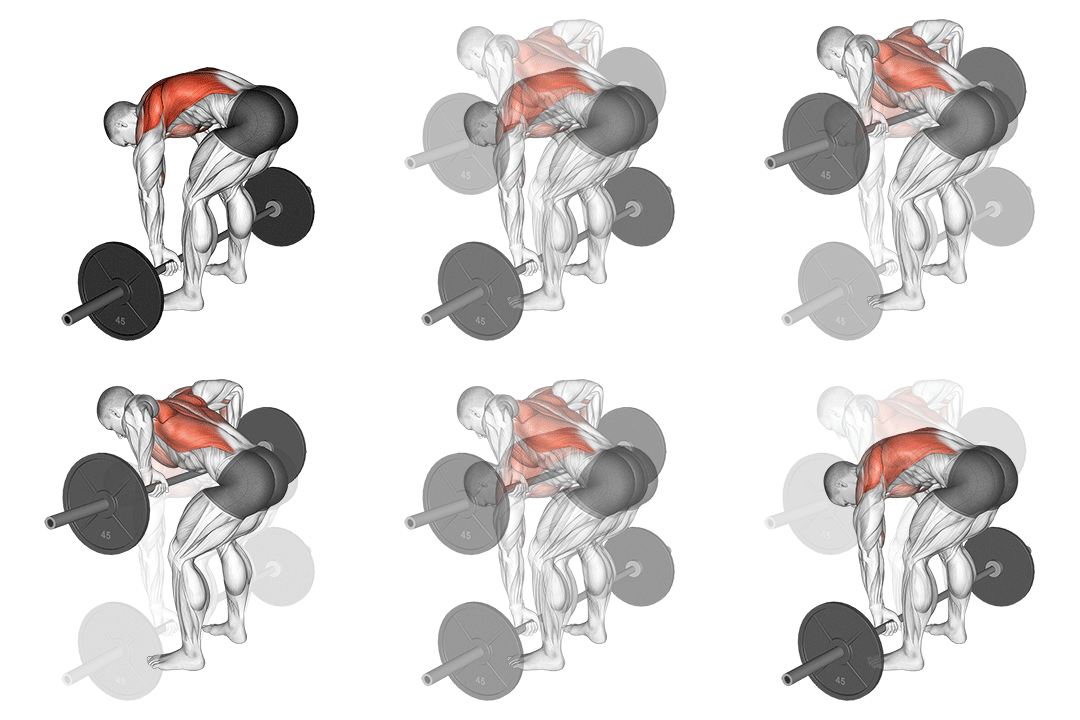
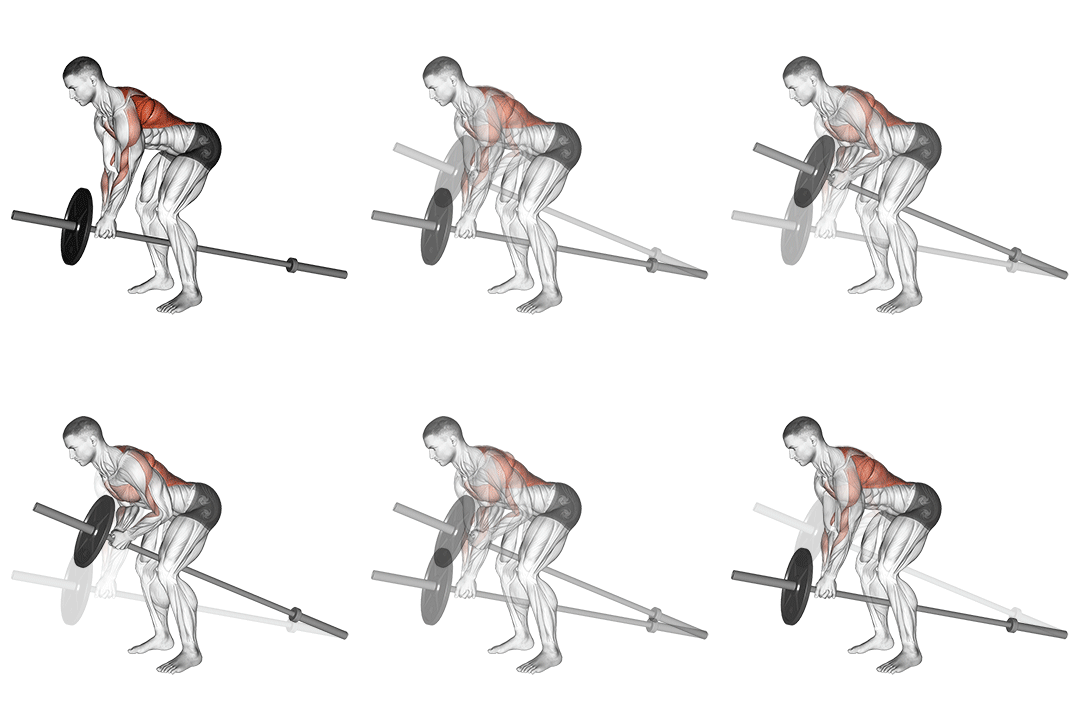
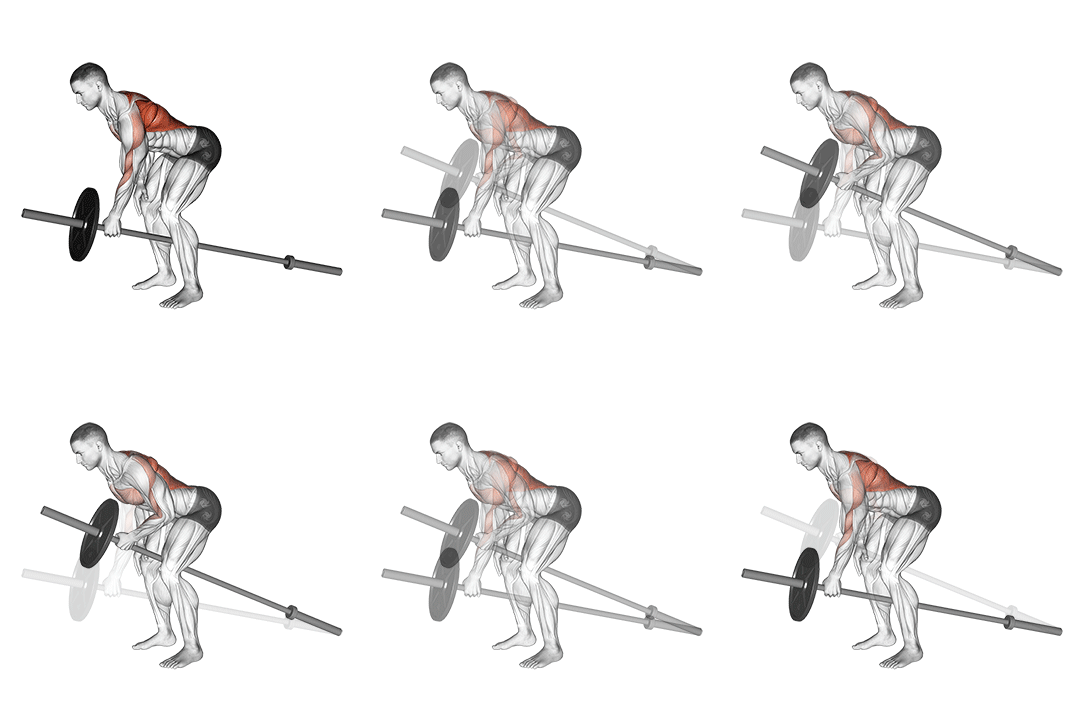
Barbell Pendlay Row
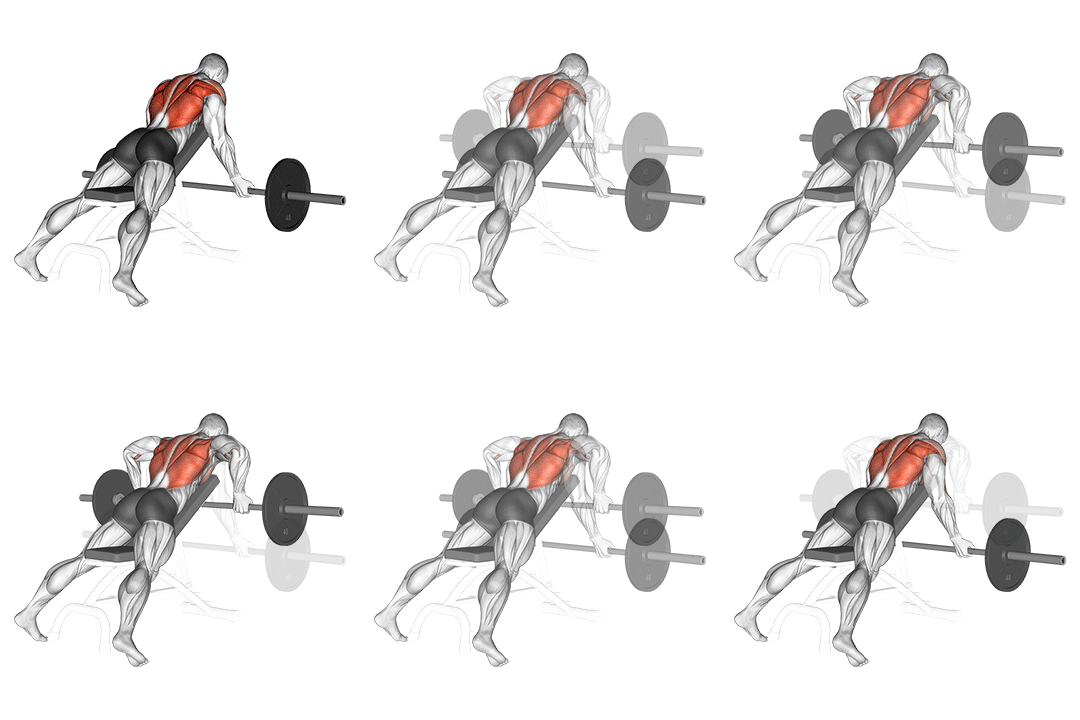
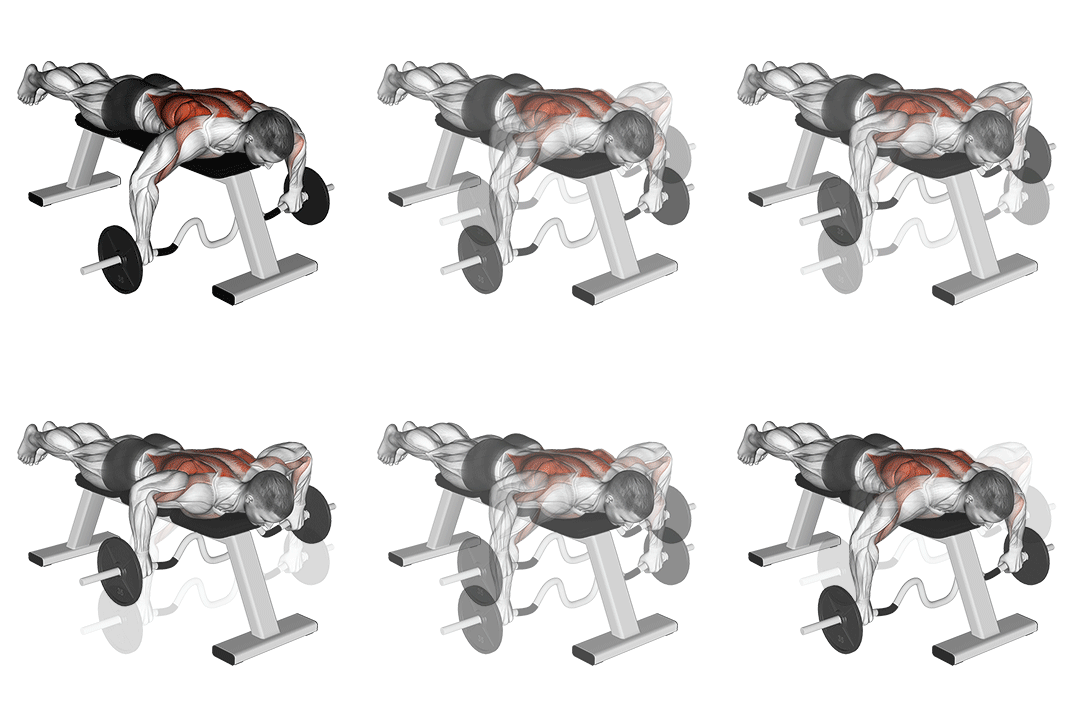
Barbell Reverse Grip Incline Bench Row
Head-to-Head Comparison
| Attribute | Barbell Pendlay Row | Barbell Reverse Grip Incline Bench Row |
|---|---|---|
| Target Muscle |
Upper-back
|
Upper-back
|
| Body Part |
Back
|
Back
|
| Equipment |
Barbell
|
Barbell
|
| Difficulty |
Advanced
|
Intermediate
|
| Movement Type |
Compound
|
Compound
|
| Secondary Muscles |
2
|
2
|
Secondary Muscles Activated
Barbell Pendlay Row
Barbell Reverse Grip Incline Bench Row
Visual Comparison
Overview
Barbell Pendlay Row vs Barbell Reverse Grip Incline Bench Row — both target the upper-back, but they do it with different mechanics. If you want clear guidance on which to program for muscle growth, strength, or rehab-friendly volume, this comparison has your back. You’ll get technique cues, biomechanics (force vectors, length-tension), equipment needs, learning curves, and programming suggestions including rep ranges. Read on to decide which row to prioritize based on your goals, experience, and gym setup.
Key Differences
- Difficulty levels differ: Barbell Pendlay Row is advanced, while Barbell Reverse Grip Incline Bench Row is intermediate.
- Both exercises target the Upper-back using Barbell. The main differences are in their movement patterns and muscle activation angles.
Pros & Cons
Barbell Pendlay Row
+ Pros
- Maximizes explosive upper-back force production and rate-of-force development
- Allows heavy loading for lower-rep strength work (1–5 reps)
- Minimal equipment: only a barbell and floor needed
- Trains full-body tension and posterior chain coordination
− Cons
- Higher technical demand; requires perfect hip hinge and bracing
- Greater lumbar shear if performed poorly
- Less continuous time-under-tension for hypertrophy
Barbell Reverse Grip Incline Bench Row
+ Pros
- Better isolation of upper-back with torso support
- Safer for lifters with lower-back limitations
- Promotes higher time-under-tension for hypertrophy (6–12+ reps)
- Reverse grip increases biceps engagement and elbow flexion
− Cons
- Requires an incline bench and space beneath it
- Less carryover to explosive horizontal pulling strength
- Potential extra stress on biceps tendon and wrists from supinated grip
When Each Exercise Wins
The incline variation holds the upper-back under continuous tension and allows controlled eccentric tempos and higher rep ranges (6–12+), which increase metabolic stress and sarcomere strain—two drivers of muscle growth.
Pendlay rows let you train heavy with dead-stop reps and develop rate-of-force production. Their horizontal force vector transfers well to maximal horizontal pulling strength and low-rep strength cycles (1–5 reps).
The bench stabilizes the torso, simplifies technique, and reduces lumbar load, making it easier to learn a clean pulling path and progress volume safely.
Pendlay rows need only a barbell and floor, making them practical at home. They allow meaningful overload without an adjustable bench and still train the upper-back effectively.
Frequently Asked Questions
Can I do both Barbell Pendlay Row and Barbell Reverse Grip Incline Bench Row in the same workout?
Yes. Pair them in a strength-to-hypertrophy sequence: start with Pendlay rows for heavy 3–5 rep sets, then follow with reverse-grip incline rows for 3–4 sets of 8–12 reps to extend time-under-tension without overloading the lower back.
Which exercise is better for beginners?
Barbell Reverse Grip Incline Bench Row is better for beginners because the bench stabilizes the torso and reduces lumbar demand, letting you learn the pulling pattern and accumulate volume safely.
How do the muscle activation patterns differ?
Pendlay rows create high peak activation during the concentric burst due to the dead-stop and horizontal force vector, favoring rate-of-force development. Reverse-grip incline rows maintain steadier activation across the range, increasing time-under-tension and emphasizing scapular retraction with less lumbar involvement.
Can Barbell Reverse Grip Incline Bench Row replace Barbell Pendlay Row?
It can replace Pendlay rows when you need to reduce spinal loading or focus on hypertrophy, but it won’t fully replace Pendlay rows for low-rep strength or explosive horizontal pulling—use it to complement rather than completely substitute.
Expert Verdict
Choose the Pendlay row when your priority is raw horizontal pulling strength, explosive upper-back force, or when equipment is limited to a barbell and plates. Use low-rep blocks (1–5) and focus on a rigid hip hinge, neutral spine, and a controlled dead-stop. Opt for the reverse-grip incline bench row when your goal is hypertrophy, safer lumbar loading, or easier technique—program 6–12 reps with slow eccentrics (2–4s) and a 30–45 degree bench angle. Both should appear in well-rounded programs: Pendlays for strength phases, incline reverse-grip rows for accumulation and detail work.
Also Compare
More comparisons with Barbell Pendlay Row
More comparisons with Barbell Reverse Grip Incline Bench Row
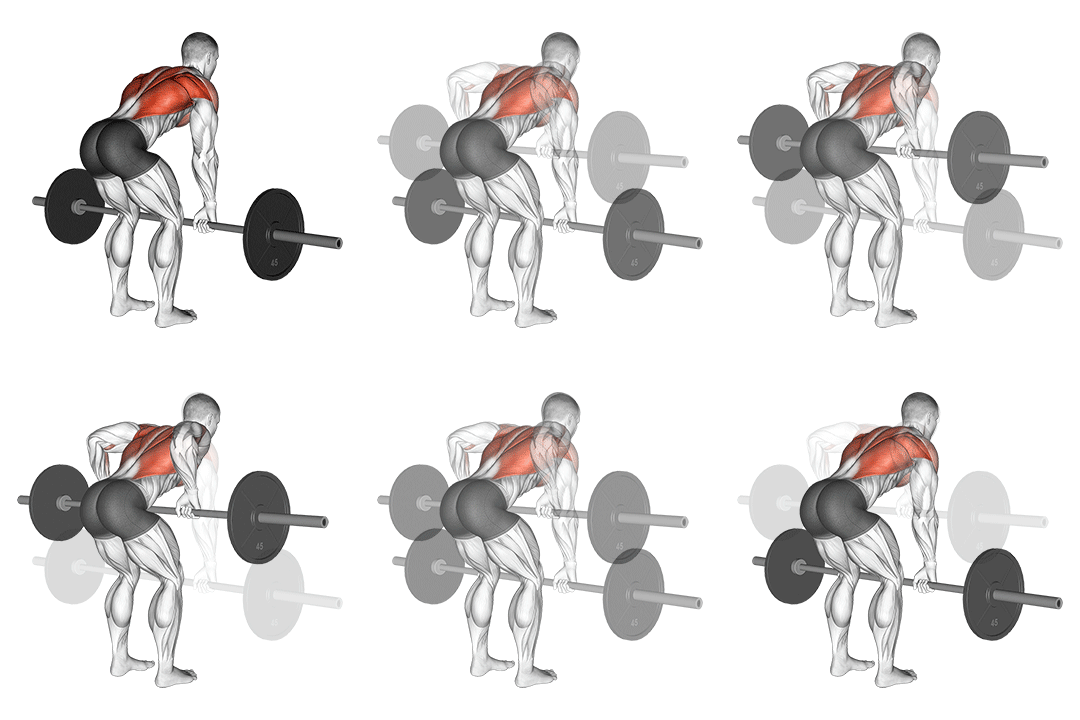
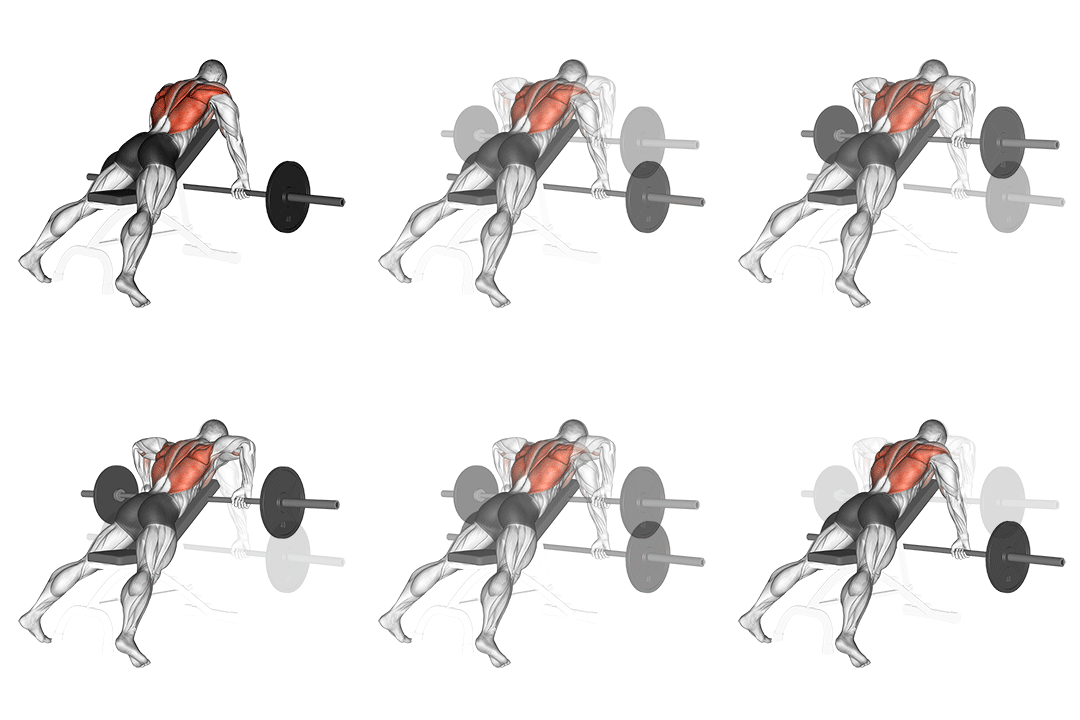
Compare More Exercises
Use our free comparison tool to analyze any two exercises head-to-head.
Compare Exercises