

Barbell Pendlay Row vs Cambered Bar Lying Row: Complete Comparison Guide
Barbell Pendlay Row vs Cambered Bar Lying Row — both target the upper-back, but they load the muscles very differently. In this guide you’ll get clear technique cues, a biomechanics-backed breakdown of muscle activation, equipment needs, and which lift suits strength, hypertrophy, or beginner programming. I’ll compare torso angles, line-of-pull, and length-tension effects, give rep-range recommendations (4–6 for strength; 6–12 for muscle growth), and show practical progressions so you can pick the exercise that matches your goals and training environment.
Exercise Comparison
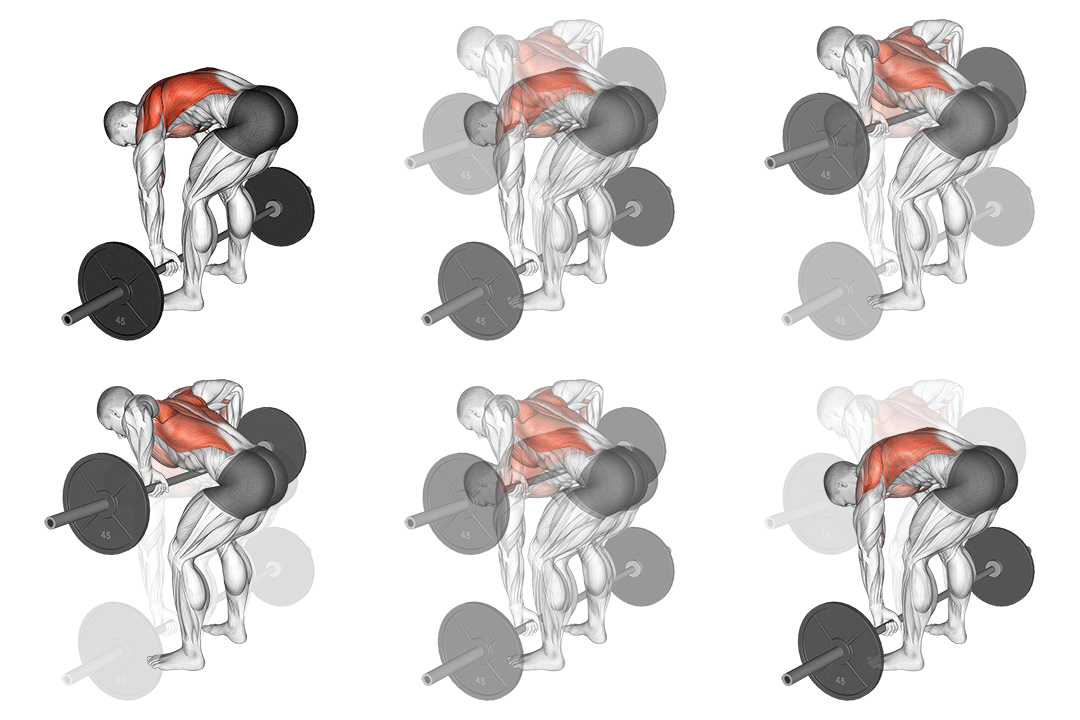
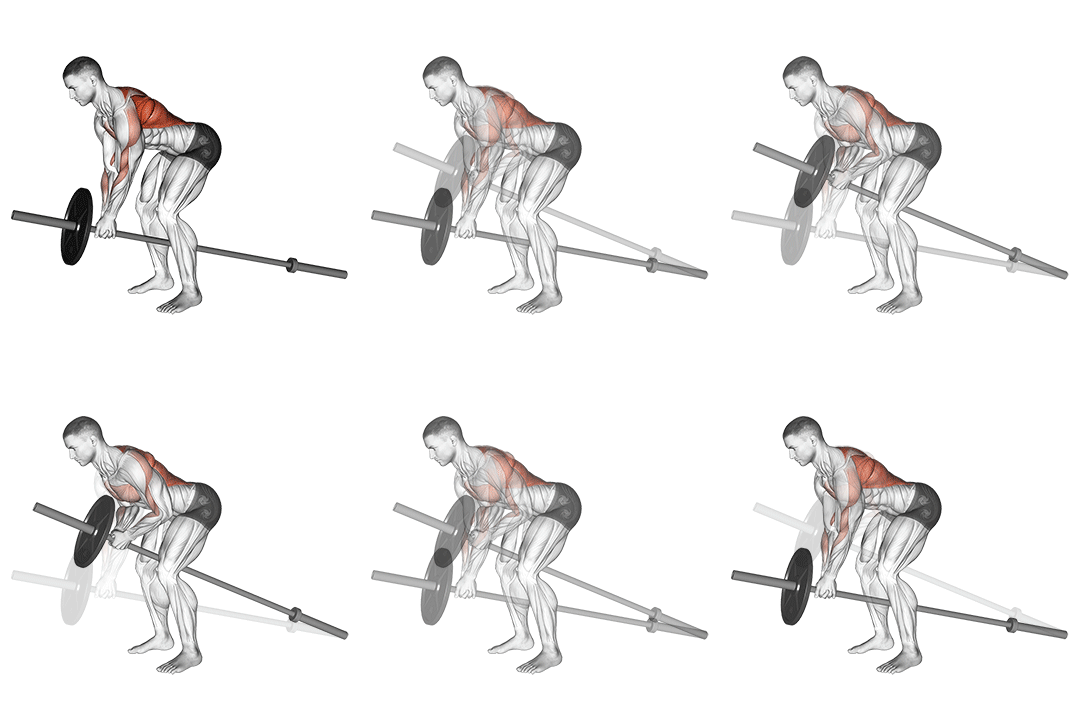
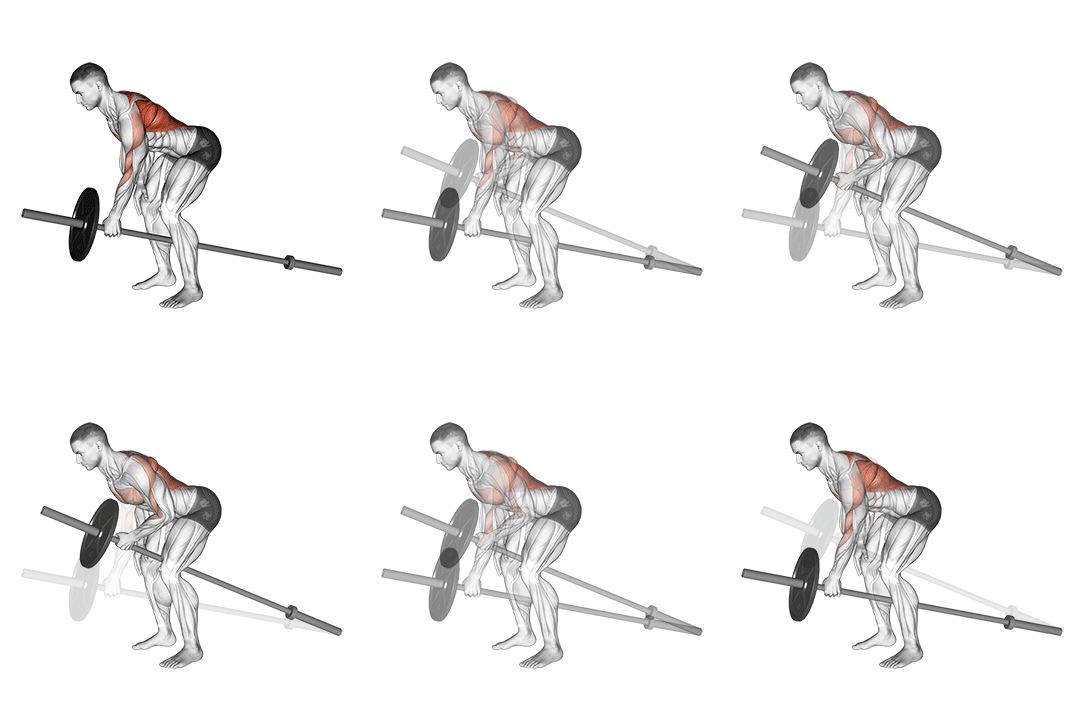
Barbell Pendlay Row
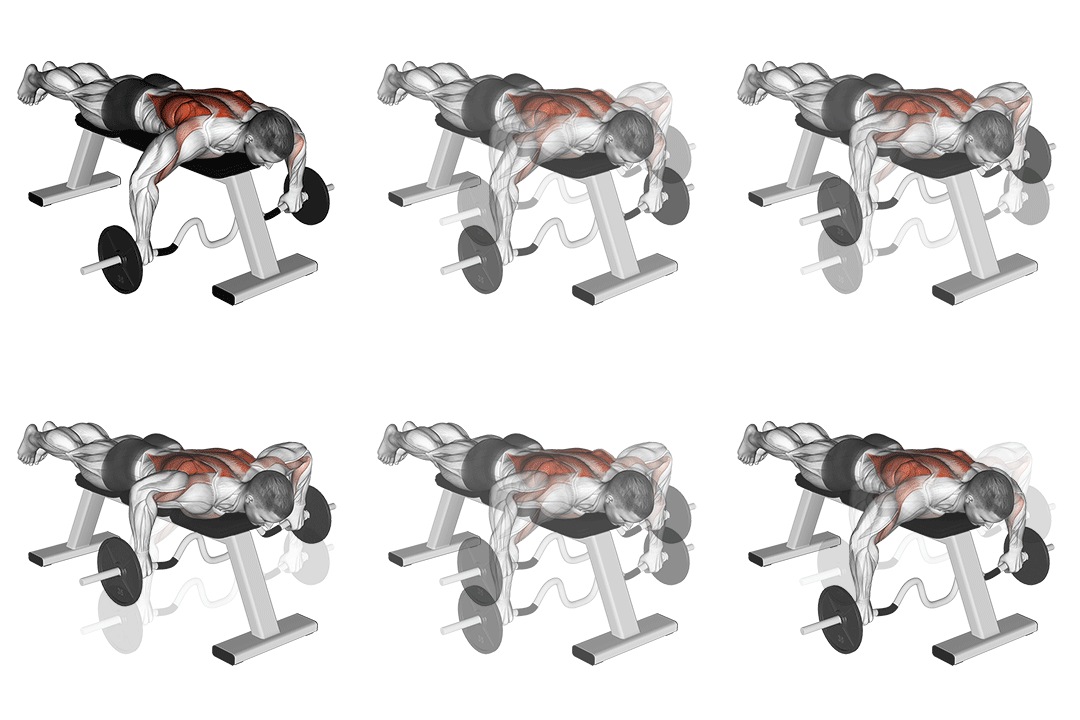
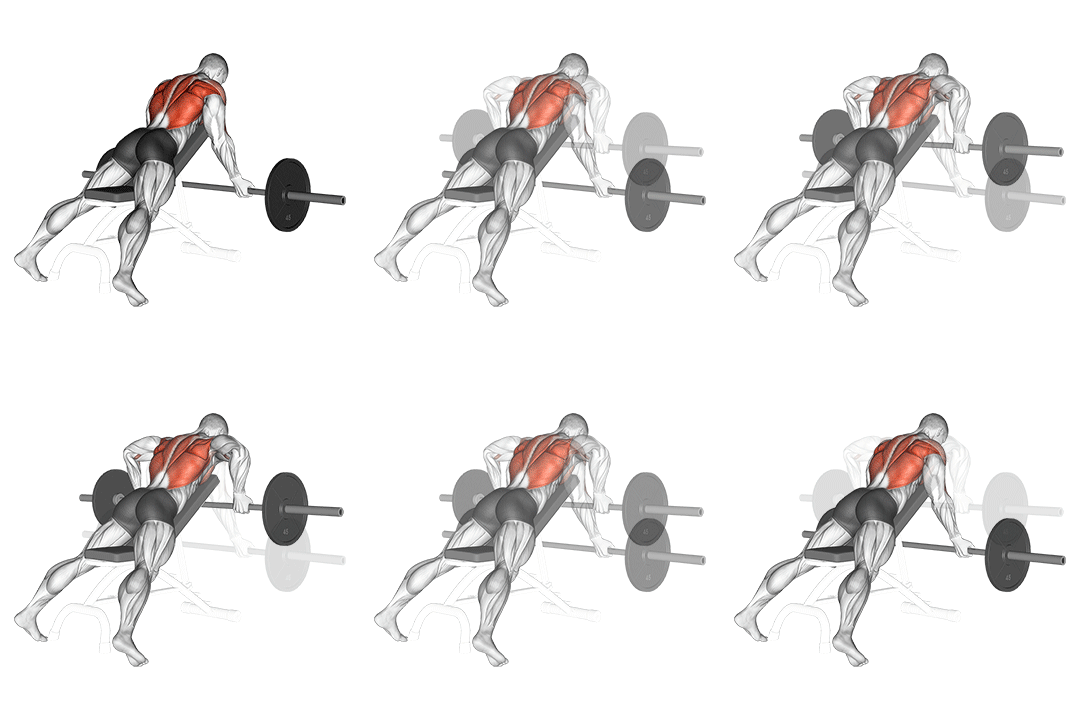
Cambered Bar Lying Row
Head-to-Head Comparison
| Attribute | Barbell Pendlay Row | Cambered Bar Lying Row |
|---|---|---|
| Target Muscle |
Upper-back
|
Upper-back
|
| Body Part |
Back
|
Back
|
| Equipment |
Barbell
|
Barbell
|
| Difficulty |
Advanced
|
Intermediate
|
| Movement Type |
Compound
|
Compound
|
| Secondary Muscles |
2
|
2
|
Secondary Muscles Activated
Barbell Pendlay Row
Cambered Bar Lying Row
Visual Comparison
Overview
Barbell Pendlay Row vs Cambered Bar Lying Row — both target the upper-back, but they load the muscles very differently. In this guide you’ll get clear technique cues, a biomechanics-backed breakdown of muscle activation, equipment needs, and which lift suits strength, hypertrophy, or beginner programming. I’ll compare torso angles, line-of-pull, and length-tension effects, give rep-range recommendations (4–6 for strength; 6–12 for muscle growth), and show practical progressions so you can pick the exercise that matches your goals and training environment.
Key Differences
- Difficulty levels differ: Barbell Pendlay Row is advanced, while Cambered Bar Lying Row is intermediate.
- Both exercises target the Upper-back using Barbell. The main differences are in their movement patterns and muscle activation angles.
Pros & Cons
Barbell Pendlay Row
+ Pros
- Allows heavier loading and raw strength carryover due to dead-stop starts
- Greater posterior chain and erector spinae recruitment through the hip hinge
- Trains powerful concentric drive from a static position, improving neural output
- Easy to progressively overload with standard plates
− Cons
- Higher lumbar and lower-back stress if you lose bracing
- Requires precise hip-hinge mechanics and good thoracic mobility
- Harder to maintain strict scapular retraction across high-rep sets
Cambered Bar Lying Row
+ Pros
- Bench support reduces lumbar loading and simplifies setup
- Maintains continuous tension for better time under tension and peak contraction
- Easier to learn and maintain consistent form for moderate reps
- Better for higher-rep hypertrophy work and rehabilitation-style training
− Cons
- Cambered bar is less common in many gyms and home gyms
- Limited ability to handle maximal loads compared with a heavy Pendlay row
- Reduced posterior chain recruitment compared with a hip-hinge row
When Each Exercise Wins
The cambered lying row keeps continuous tension and lets you maximize time under tension and peak scapular contraction. Use 3–5 sets of 8–15 reps with 1–2 second eccentrics to exploit length-tension and metabolic stress for muscle growth.
Pendlay rows allow heavier loads and demand a powerful concentric from a dead start, which builds maximal force. Program 3–6 sets of 3–6 reps, focusing on explosive drive while keeping the torso near parallel to the floor.
Bench support simplifies posture and reduces lumbar load, making it easier to learn scapular retraction and elbow path. Beginners can build biceps and upper-back strength with controlled reps before advancing to hip-hinge rows.
Most home setups include a straight barbell and plates, making Pendlay rows practical. The cambered bar is uncommon at home, so Pendlay offers more consistent access for training strength and upper-back development.
Frequently Asked Questions
Can I do both Barbell Pendlay Row and Cambered Bar Lying Row in the same workout?
Yes — pair them with intent: do Pendlay rows first for heavy, low-rep sets (3–5 sets of 3–6) to prioritize strength, then follow with cambered lying rows for 2–4 sets of 8–12 to add volume and finish with high time under tension.
Which exercise is better for beginners?
The cambered bar lying row is better for most beginners because the bench stabilizes the torso and lowers lumbar demand. It teaches scapular retraction and elbow path without the complexity of a strict hip hinge.
How do the muscle activation patterns differ?
Pendlay rows create a larger eccentric stretch and require explosive concentric force from a dead stop, increasing erector spinae co-activation and posterior chain involvement. Cambered lying rows maintain continuous tension with greater peak contraction of the scapular retractors and more sustained biceps activation across the set.
Can Cambered Bar Lying Row replace Barbell Pendlay Row?
It can replace Pendlay rows for hypertrophy and lower-back-friendly training, but it won’t fully replace Pendlay rows for maximal strength development. If your goal is heavy pulling and rate-of-force improvement, keep Pendlay rows in your program.
Expert Verdict
Choose the Barbell Pendlay Row if your priority is raw pulling strength and developing a powerful posterior chain — it favors heavy loading and builds force from a dead-stop. Pick the Cambered Bar Lying Row when you want safer lumbar mechanics, more continuous tension, and superior peak contraction for hypertrophy or higher-rep work. If you train for both, periodize: use Pendlay rows in low-rep strength blocks (3–6 reps) and cambered lying rows in higher-rep hypertrophy blocks (8–15 reps). Prioritize technique: maintain a neutral spine on Pendlay and full scapular retraction on cambered rows to get the most from each lift.
Also Compare
More comparisons with Barbell Pendlay Row
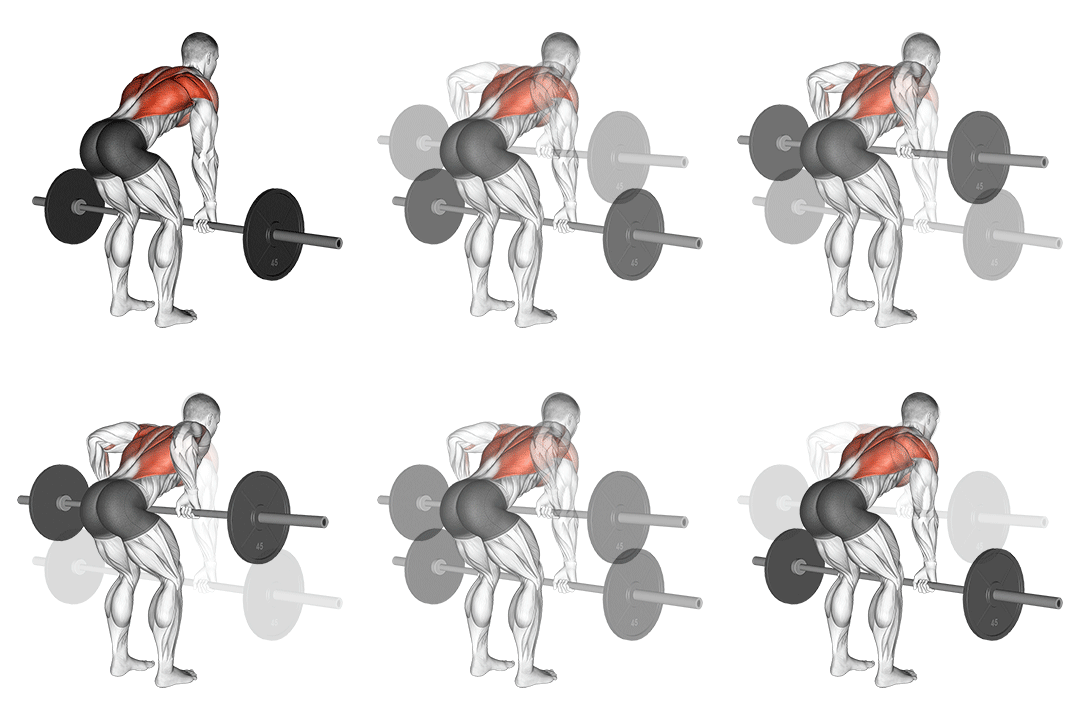
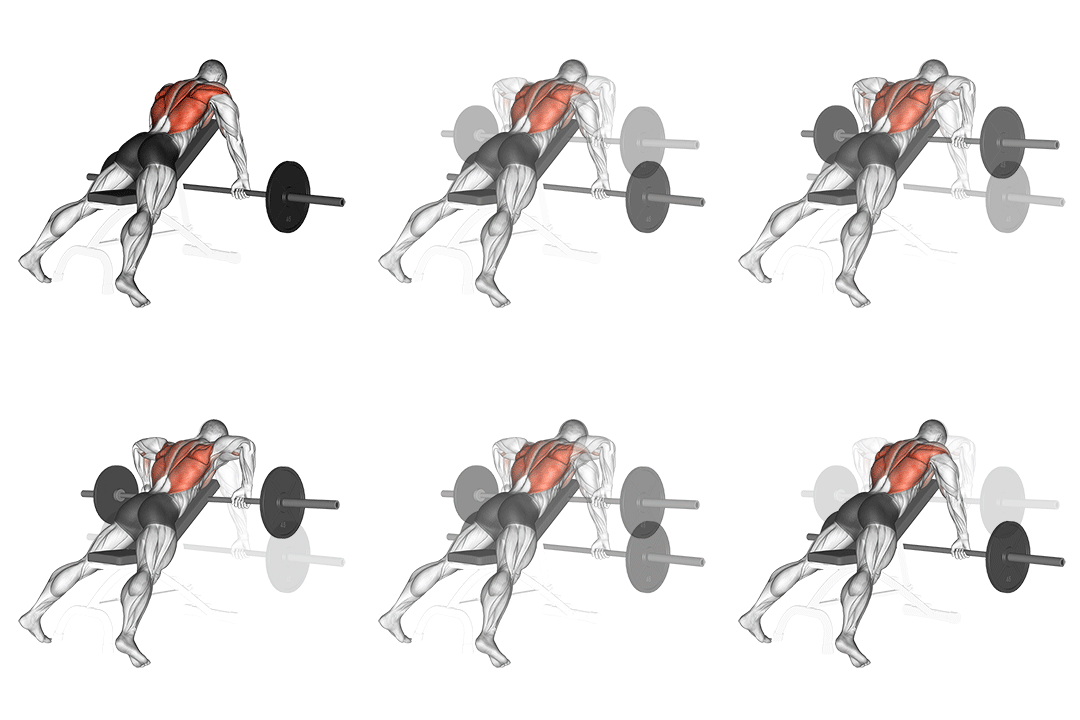
More comparisons with Cambered Bar Lying Row
Compare More Exercises
Use our free comparison tool to analyze any two exercises head-to-head.
Compare Exercises