

Barbell Pendlay Row vs Lever Bent Over Row: Complete Comparison Guide
Barbell Pendlay Row vs Lever Bent Over Row — if you want a stronger, thicker upper back you need to pick the right row for your goals. I'll show you how each exercise loads the lats, rhomboids, and traps, the technique cues to protect your spine, and where each one wins: strength, hypertrophy, ease of learning, and home use. Read on for specific torso angles, rep ranges, and programming tips so you can choose the row that fits your training plan.
Exercise Comparison
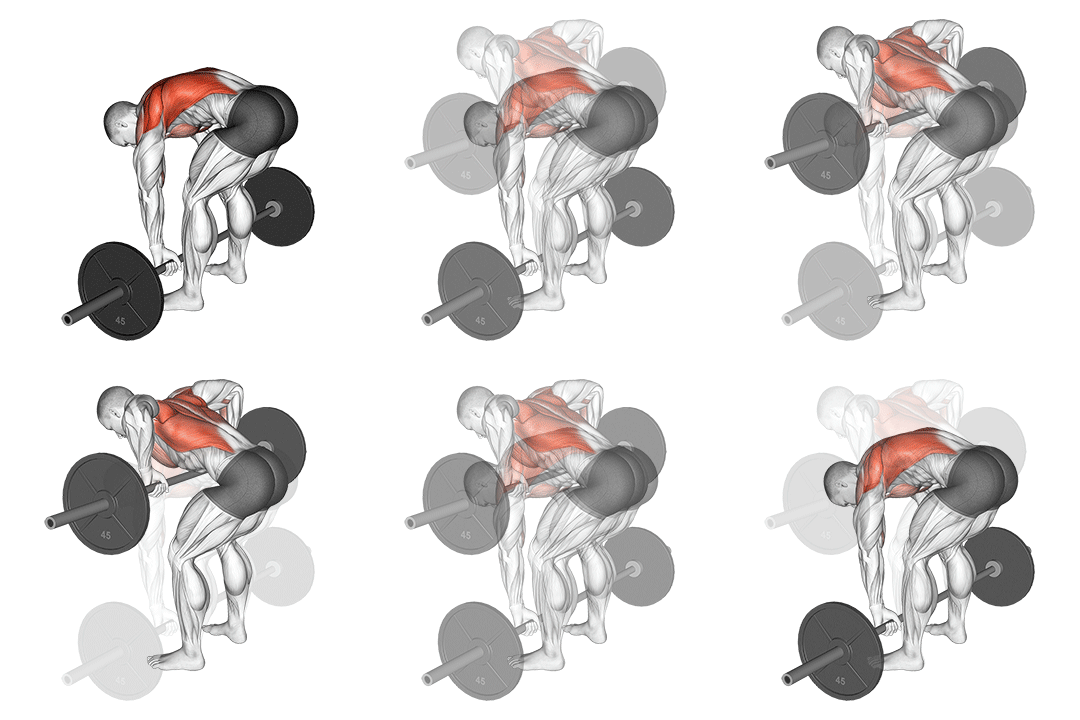
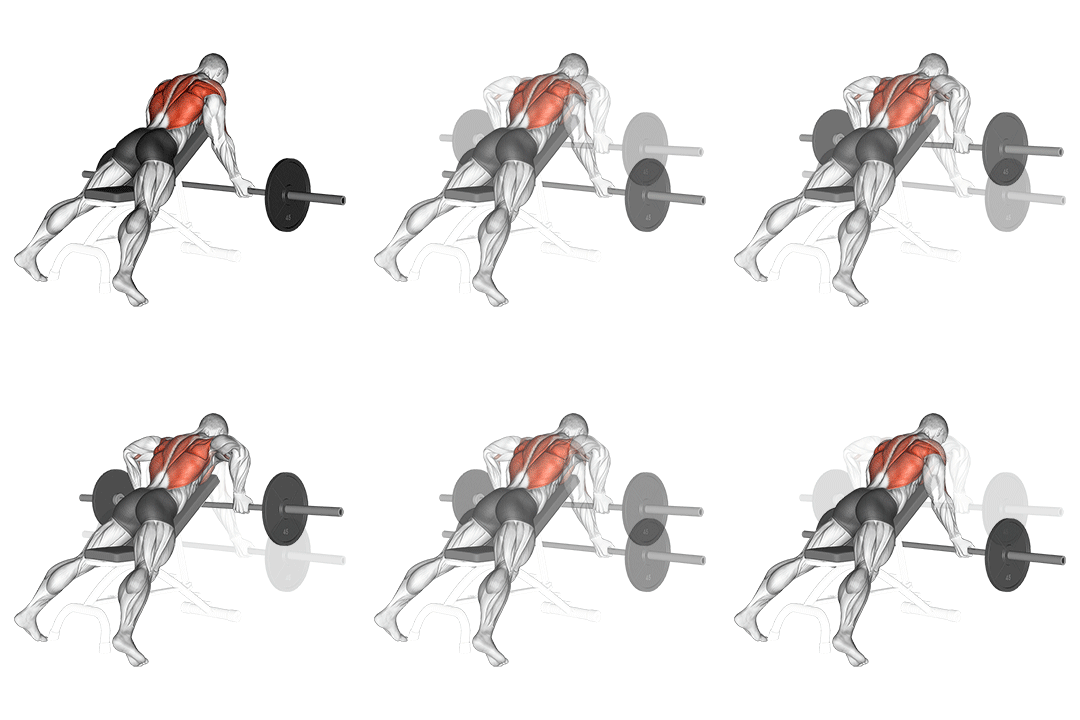
Barbell Pendlay Row
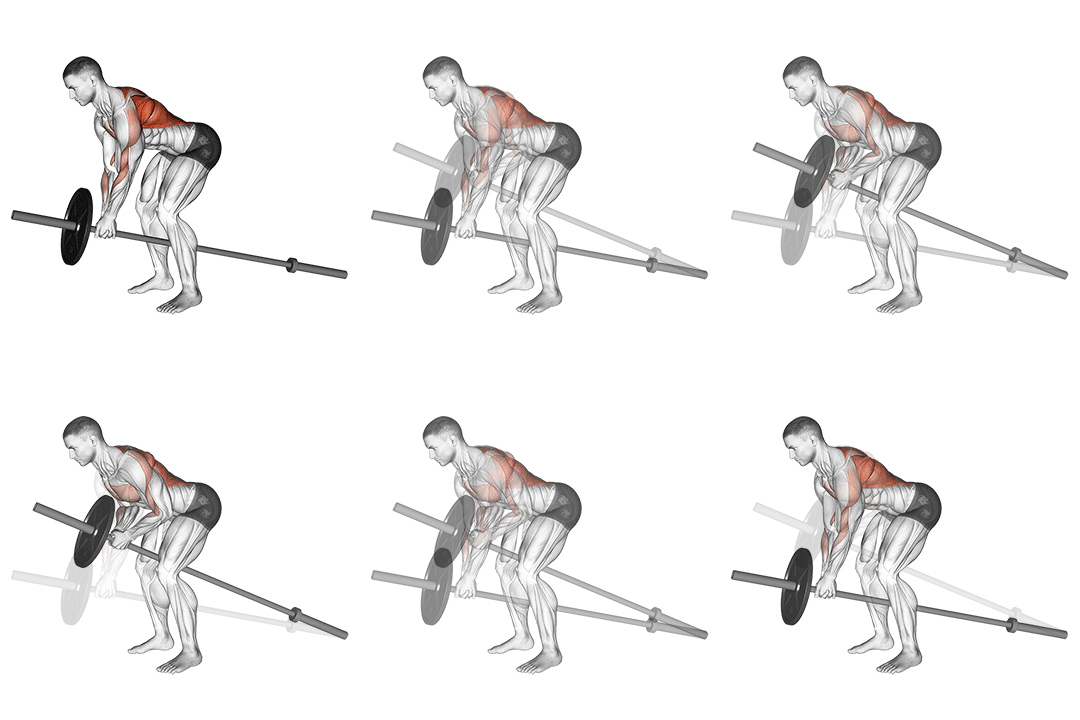
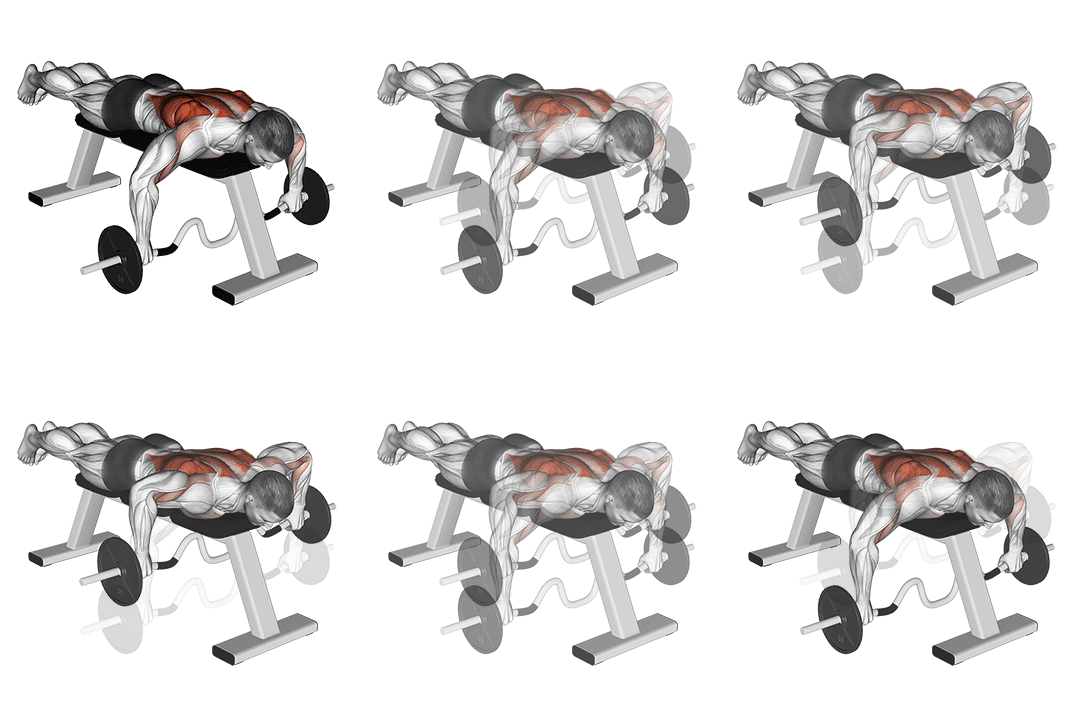
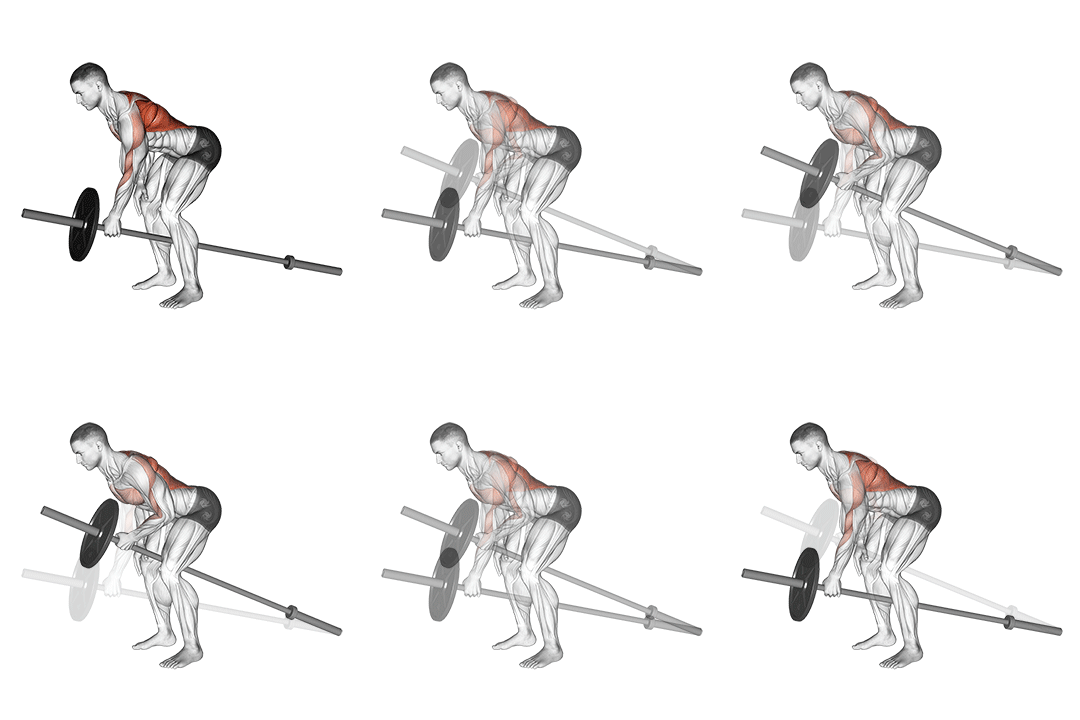
Lever Bent Over Row
Head-to-Head Comparison
| Attribute | Barbell Pendlay Row | Lever Bent Over Row |
|---|---|---|
| Target Muscle |
Upper-back
|
Upper-back
|
| Body Part |
Back
|
Back
|
| Equipment |
Barbell
|
Barbell
|
| Difficulty |
Advanced
|
Intermediate
|
| Movement Type |
Compound
|
Compound
|
| Secondary Muscles |
2
|
2
|
Secondary Muscles Activated
Barbell Pendlay Row
Lever Bent Over Row
Visual Comparison
Overview
Barbell Pendlay Row vs Lever Bent Over Row — if you want a stronger, thicker upper back you need to pick the right row for your goals. I'll show you how each exercise loads the lats, rhomboids, and traps, the technique cues to protect your spine, and where each one wins: strength, hypertrophy, ease of learning, and home use. Read on for specific torso angles, rep ranges, and programming tips so you can choose the row that fits your training plan.
Key Differences
- Difficulty levels differ: Barbell Pendlay Row is advanced, while Lever Bent Over Row is intermediate.
- Both exercises target the Upper-back using Barbell. The main differences are in their movement patterns and muscle activation angles.
Pros & Cons
Barbell Pendlay Row
+ Pros
- Maximal starting strength and power development from the dead-stop setup
- Stronger emphasis on mid-traps and rhomboids via a near-horizontal pull vector
- Easier to measure and program (clear reps/sets with floor reset)
- Good transfer to Olympic-style explosive pulling and posterior chain coordination
− Cons
- Higher technical demand — strict hip hinge and explosive timing required
- Greater lumbar shear risk if form breaks under heavy loads
- Requires floor clearance/bumper plates to avoid equipment damage and noise
Lever Bent Over Row
+ Pros
- Easier to learn and coach with a more upright torso (30–45°)
- Better continuous tension for hypertrophy in 6–12 rep ranges
- Lower peak spinal shear compared with near-parallel rows
- More forgiving on equipment — standard plates and small lifting spaces work
− Cons
- Slightly less emphasis on explosive concentric power
- Can encourage excessive torso rise if not cued (reduces upper-back loading)
- May permit cheating with hip drive unless strictly monitored
When Each Exercise Wins
The Lever Bent Over Row keeps constant tension through a longer range of motion and fits 6–12 rep schemes better, which boosts time under tension and mechanical stimulus for muscle growth. Its more upright torso reduces spine fatigue so you can accumulate volume safely.
The Pendlay Row’s dead-stop start builds concentric explosiveness and off-floor strength, making it superior for low-rep (3–6) strength blocks and improving the first pull force. It translates well to heavier single/double progressions and power development.
With a 30–45° torso and continuous tempo, the Lever Bent Over Row is easier to teach and less likely to produce lumbar loading errors. Novices can learn the hip hinge and scapular retraction under lighter loads before advancing to stricter variations.
The Lever Bent Over Row requires less specialized equipment (no bumper plates or floor dead-stop clearance) and is more forgiving in tight spaces. It allows safer volume and hypertrophy work in modest home setups.
Frequently Asked Questions
Can I do both Barbell Pendlay Row and Lever Bent Over Row in the same workout?
Yes — pairing them works well across a session: do Pendlay rows early for heavy, low-rep strength work (3–5 reps) and use Lever Bent Over rows later for volume (8–12 reps) to maximize both force production and time under tension without excessive overlap.
Which exercise is better for beginners?
The Lever Bent Over Row is better for beginners because the 30–45° torso angle is easier to control and places less shear on the lumbar spine. Start light, master the hip hinge and scapular retraction, and then progress to stricter variations like the Pendlay row.
How do the muscle activation patterns differ?
The Pendlay row emphasizes a horizontal pull that stresses mid-traps and rhomboids via a shorter concentric burst and a full reset on the floor, while the Lever Bent Over Row shifts the force vector upward (about a 30% change in horizontal component going to 45°), increasing lat moment arm and time under tension — which raises lat and biceps recruitment during the lift.
Can Lever Bent Over Row replace Barbell Pendlay Row?
Yes for hypertrophy-focused programs — the Lever Bent Over Row can substitute when you need volume and lower technical demand. If your goal is maximal strength or explosive off-floor power, keep the Pendlay row in your plan rather than replacing it.
Expert Verdict
Choose the Barbell Pendlay Row when your priority is raw pulling strength and explosive posterior-chain power: use 3–6 reps, focus on a near-parallel torso (0–15°), strict hip hinge, and a full dead-stop on the floor each rep. Pick the Lever Bent Over Row when your goal is upper-back thickness and safer volume: use 6–12 reps, keep a 30–45° torso, maintain continuous tension, and emphasize controlled eccentric tempo. If you train for both strength and muscle growth, program Pendlay rows during low‑rep, strength-focused blocks and leverage Lever Bent Over Rows during hypertrophy phases to manage fatigue and joint stress.
Also Compare
More comparisons with Barbell Pendlay Row
More comparisons with Lever Bent Over Row
Compare More Exercises
Use our free comparison tool to analyze any two exercises head-to-head.
Compare Exercises