

Barbell Pendlay Row vs Lever One Arm Bent Over Row: Complete Comparison Guide
Barbell Pendlay Row vs Lever One Arm Bent Over Row — two horizontal-pull staples for the upper-back. If you want clearer choices for muscle growth, strength, and practical training, this guide has your back. You'll get side-by-side technique cues, the biomechanics behind each lift (force vectors, length-tension, torso angle), rep-range recommendations, and when to pick one over the other based on goals, equipment, and injury risk. Read on and use the actionable cues to pick and program the row that moves you toward measurable progress.
Exercise Comparison
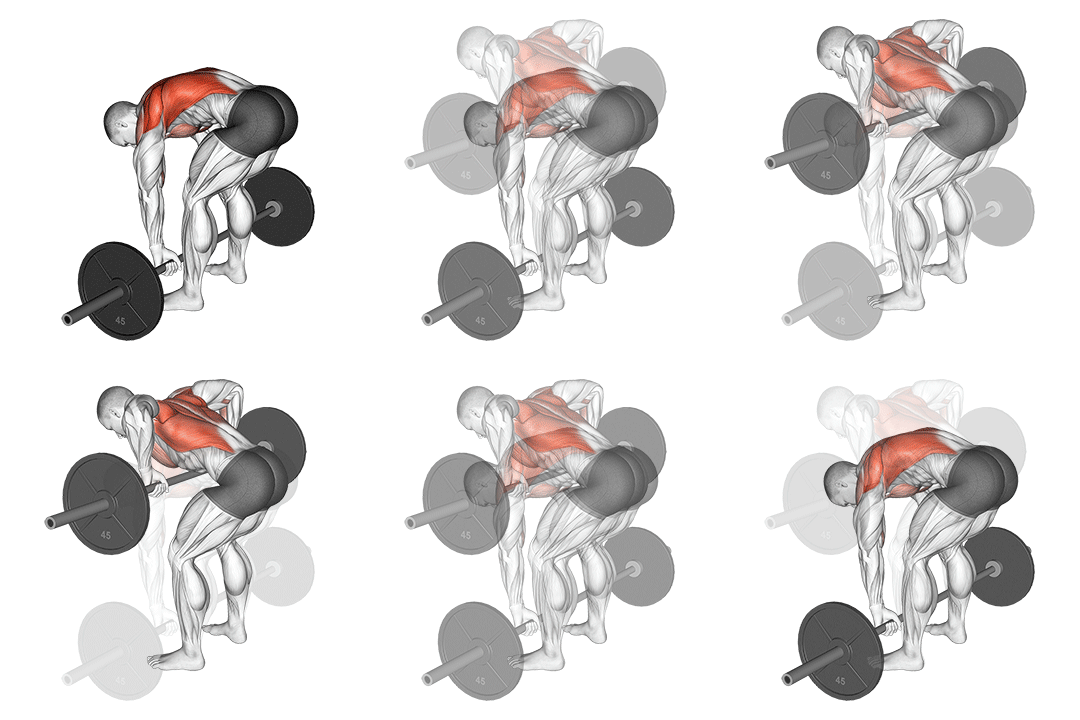
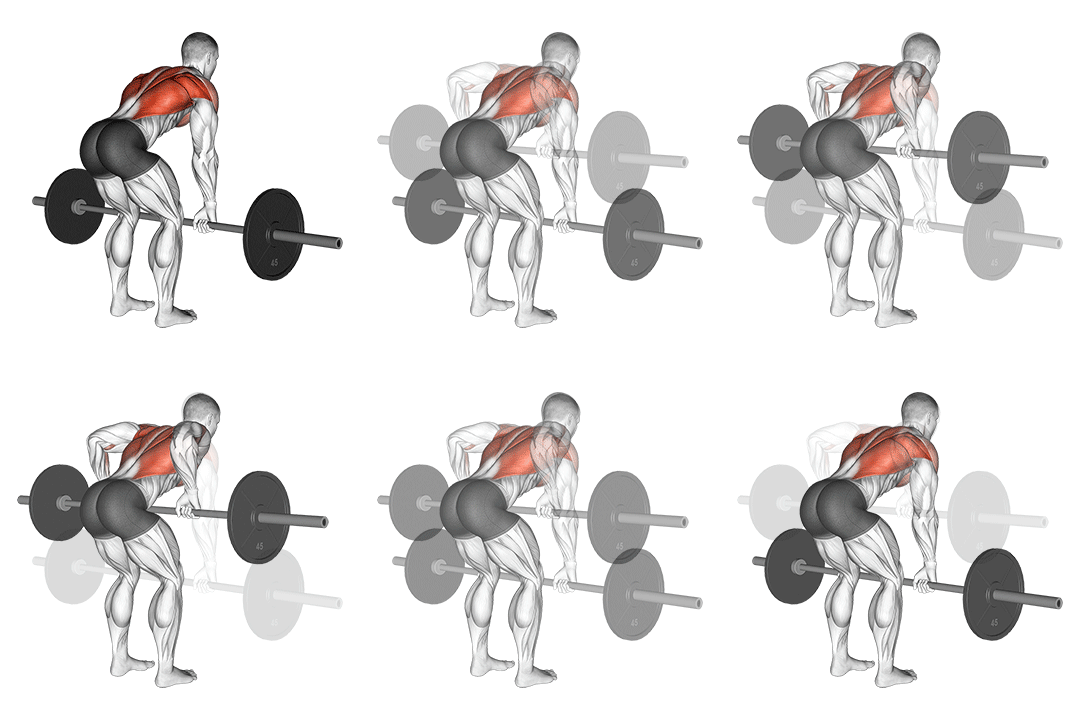
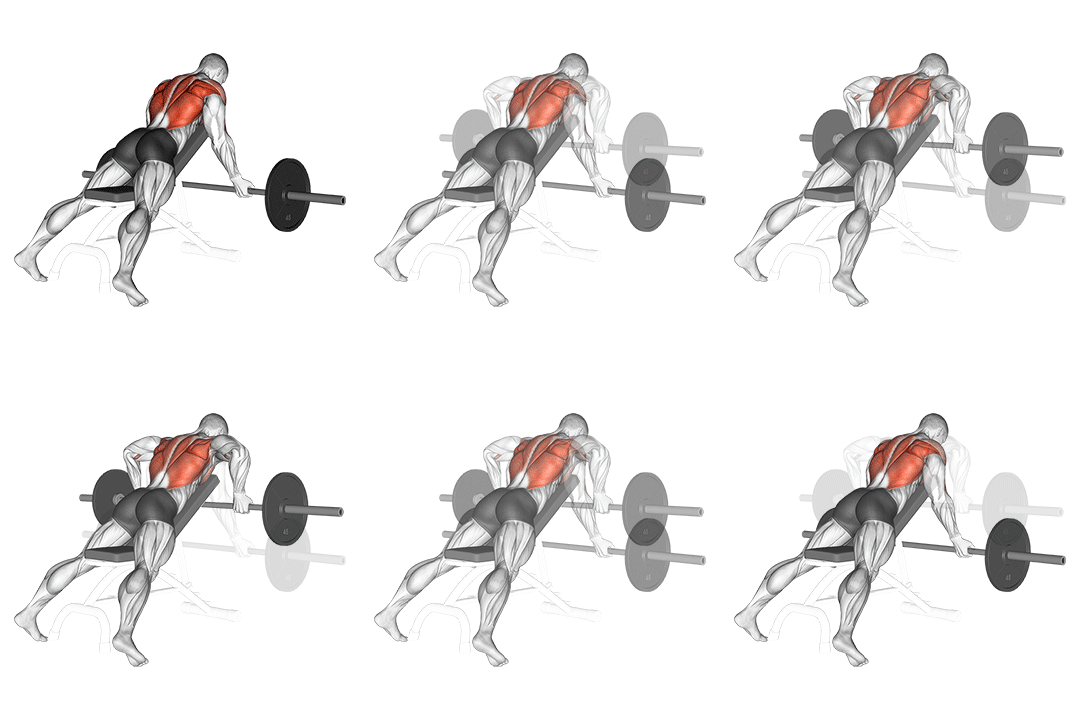
Barbell Pendlay Row
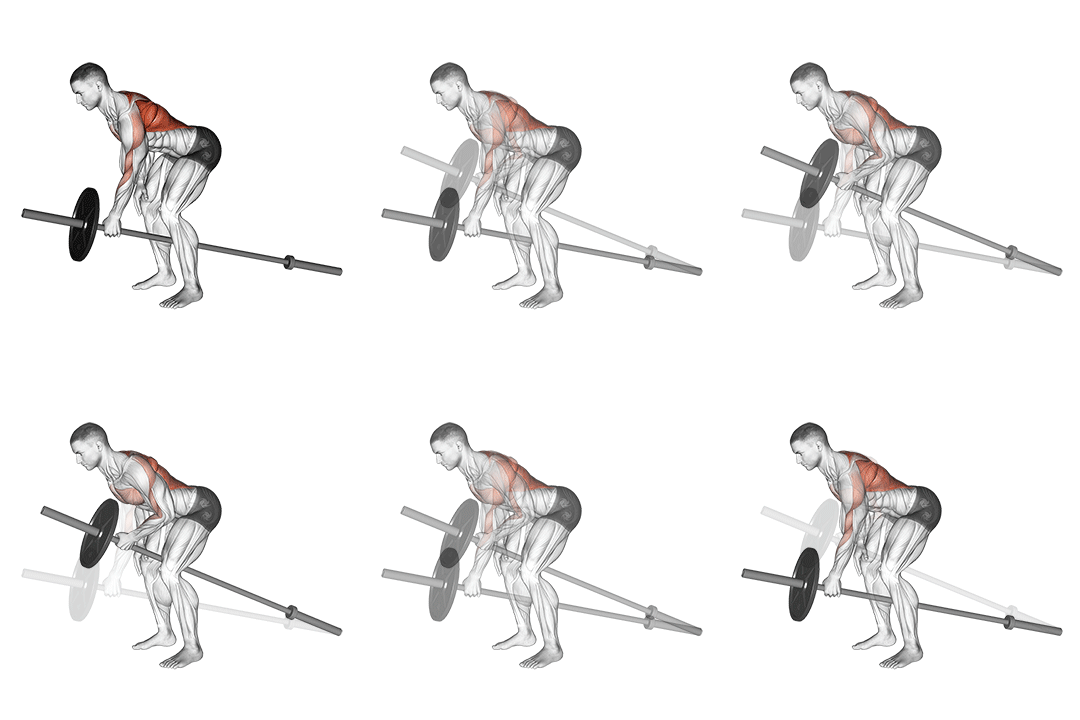
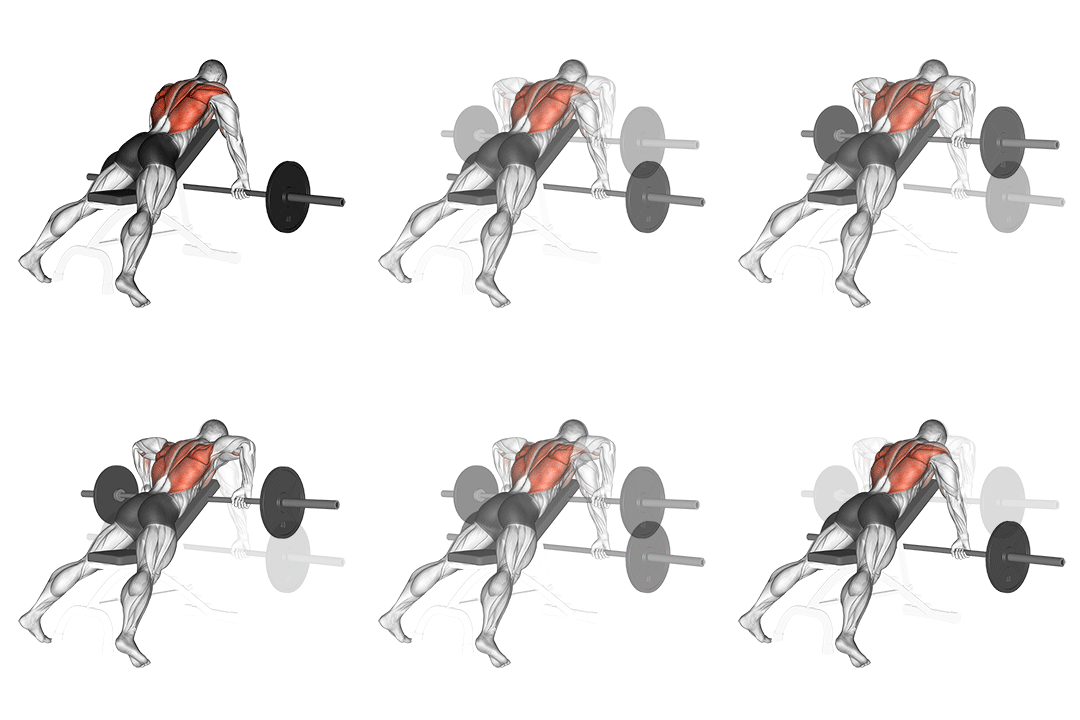
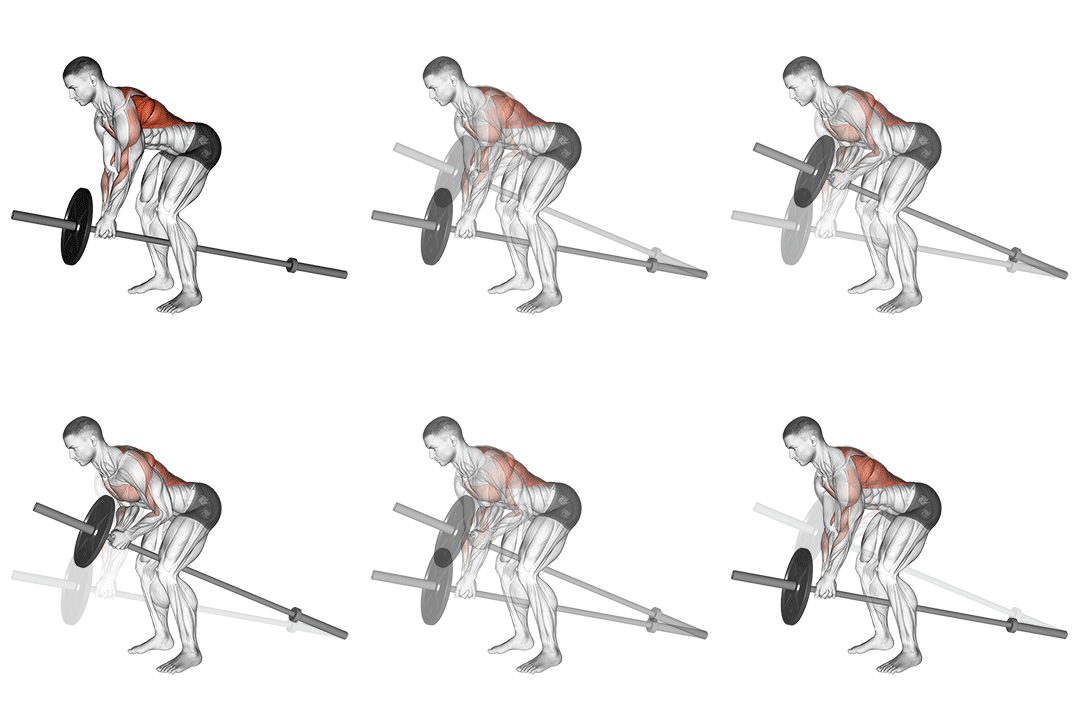
Lever One Arm Bent Over Row
Head-to-Head Comparison
| Attribute | Barbell Pendlay Row | Lever One Arm Bent Over Row |
|---|---|---|
| Target Muscle |
Upper-back
|
Upper-back
|
| Body Part |
Back
|
Back
|
| Equipment |
Barbell
|
Barbell
|
| Difficulty |
Advanced
|
Intermediate
|
| Movement Type |
Compound
|
Compound
|
| Secondary Muscles |
2
|
2
|
Secondary Muscles Activated
Barbell Pendlay Row
Lever One Arm Bent Over Row
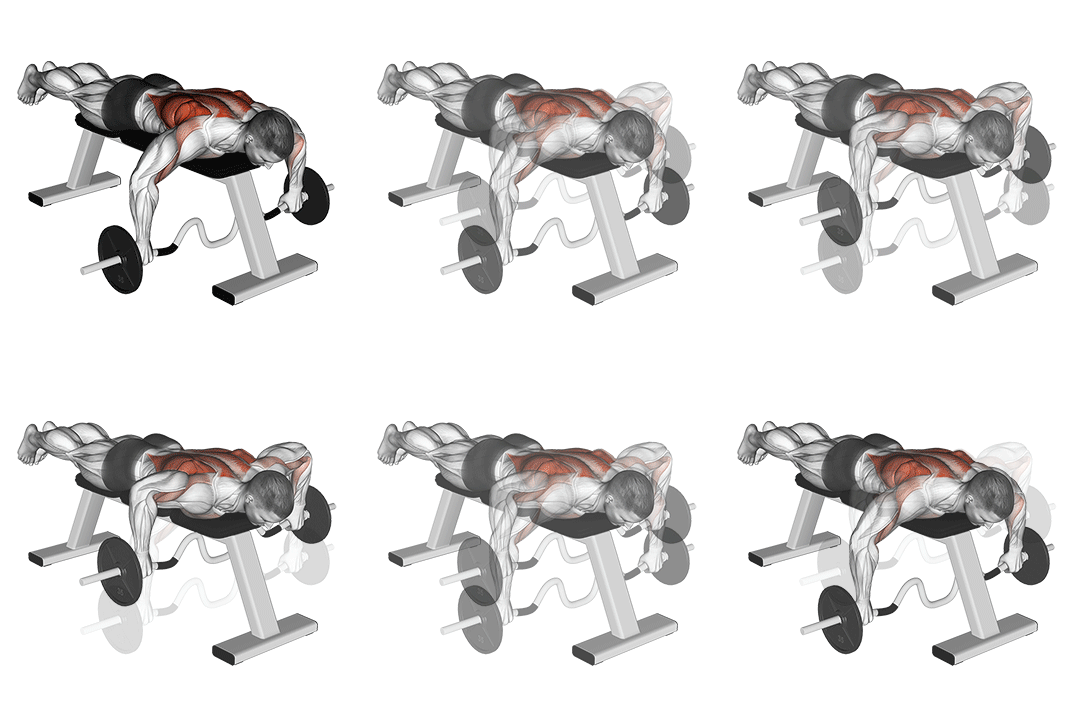
Visual Comparison
Overview
Barbell Pendlay Row vs Lever One Arm Bent Over Row — two horizontal-pull staples for the upper-back. If you want clearer choices for muscle growth, strength, and practical training, this guide has your back. You'll get side-by-side technique cues, the biomechanics behind each lift (force vectors, length-tension, torso angle), rep-range recommendations, and when to pick one over the other based on goals, equipment, and injury risk. Read on and use the actionable cues to pick and program the row that moves you toward measurable progress.
Key Differences
- Difficulty levels differ: Barbell Pendlay Row is advanced, while Lever One Arm Bent Over Row is intermediate.
- Both exercises target the Upper-back using Barbell. The main differences are in their movement patterns and muscle activation angles.
Pros & Cons
Barbell Pendlay Row
+ Pros
- Allows heavier absolute loading for maximal strength and posterior chain carryover
- Bar starts on the floor, promoting explosive concentric force and clear start position
- Strong isometric demand on erector spinae and glutes improves torso stiffness
- Great for improving barbell pulling power and low-rep strength work (3–6 reps)
− Cons
- High technical demand—needs solid hip hinge and torso control
- Greater spinal loading and risk if performed with poor form
- Less continuous time under tension for hypertrophy unless tempo is modified
Lever One Arm Bent Over Row
+ Pros
- Unilateral loading corrects imbalances and improves unilateral spinal stability
- Longer time under tension and full-range contractions favor hypertrophy (6–12 reps)
- Easier to scale with lighter loads or dumbbell/landmine substitutions
- Less peak spinal shear—gentler on lower back for many lifters
− Cons
- Harder to match absolute load of a barbell Pendlay row for pure strength
- Requires good anti-rotation bracing and can reveal core weaknesses
- Barbell single-arm setups can be awkward; may need substitutions (dumbbell/landmine)
When Each Exercise Wins
The unilateral row provides longer time under tension and more complete end-range contraction per side, which promotes muscle growth. Use 6–12 reps per side with a controlled 2–3 second eccentric to maximize hypertrophy.
Pendlay rows let you load the bar heavier and train explosive concentric force from a dead stop—ideal for improving barbell pulling strength and transferring to deadlifts or heavy compound lifts. Program 3–6 rep sets at 80–90% of 1RM equivalents.
It’s easier to learn with lighter weights, helps teach scapular retraction and unilateral control, and reduces lumbar demand. Beginners can start at 8–12 reps per side while mastering hip hinge mechanics.
One-arm rows translate well to dumbbells or a landmine and require less total load and setup than a heavy barbell Pendlay. That makes them practical for limited equipment and tight spaces.
Frequently Asked Questions
Can I do both Barbell Pendlay Row and Lever One Arm Bent Over Row in the same workout?
Yes. Pairing them works well: do Pendlay rows early for heavy strength sets (3–6 reps) and follow with one-arm rows for hypertrophy (8–12 reps per side). Manage volume so total weekly work per muscle group stays in the 10–20 hard sets range.
Which exercise is better for beginners?
Lever one-arm bent over rows are better for beginners because they use lighter loads, teach unilateral control, and place less isometric demand on the lower back. Start with 8–12 reps per side and focus on hip hinge and scapular retraction.
How do the muscle activation patterns differ?
Pendlay rows create high peak force with brief contractions beginning from a fully lengthened start on the floor, emphasizing rapid force development and erector spinae bracing. One-arm rows maintain continuous tension through the eccentric and concentric phases, increasing time under tension and emphasizing sustained lat and rhomboid contraction.
Can Lever One Arm Bent Over Row replace Barbell Pendlay Row?
It can replace Pendlay rows for hypertrophy and maintenance, but not for maximal barbell pulling strength. If your priority is increasing heavy barbell strength or deadlift transfer, keep Pendlay rows in the program; use one-arm rows as a complement or substitute when loading or equipment is limited.
Expert Verdict
Use the Pendlay Row when your goal is measurable barbell strength, high peak force, and improved deadlift/pulling performance—focus on low reps (3–6), strict torso parallelism (0–20° from horizontal), and progressive overload. Choose the Lever One Arm Bent Over Row when you prioritize upper-back thickness, unilateral balance, and lower lumbar stress reduction—use 6–12 reps per side with controlled eccentrics and full scapular retraction. Both moves belong in a rounded program: cycle blocks of Pendlay work for strength and include one-arm rows for hypertrophy and imbalance correction.
Also Compare
More comparisons with Barbell Pendlay Row
More comparisons with Lever One Arm Bent Over Row
Compare More Exercises
Use our free comparison tool to analyze any two exercises head-to-head.
Compare Exercises