

Barbell Press Sit-up vs Barbell Rollerout: Complete Comparison Guide
Barbell Press Sit-up vs Barbell Rollerout — you’re comparing two heavy-duty core builders that use a barbell but stress your midsection very differently. I’ll walk you through which one targets the rectus abdominis more effectively, how the shoulders and lower back get involved, the equipment and skill needed, and precise technique cues so you can choose the best movement for your goals. Expect clear sets/reps recommendations, progression ideas, and a decisive verdict to help you pick the right exercise for muscle growth, strength, or safer training.
Exercise Comparison
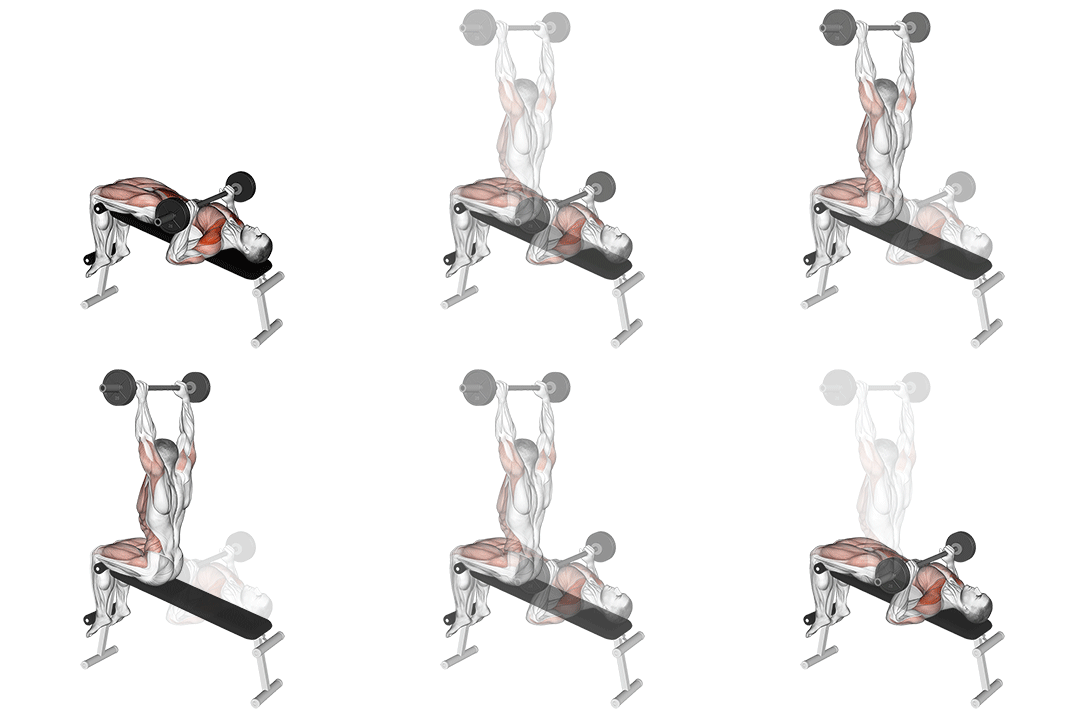
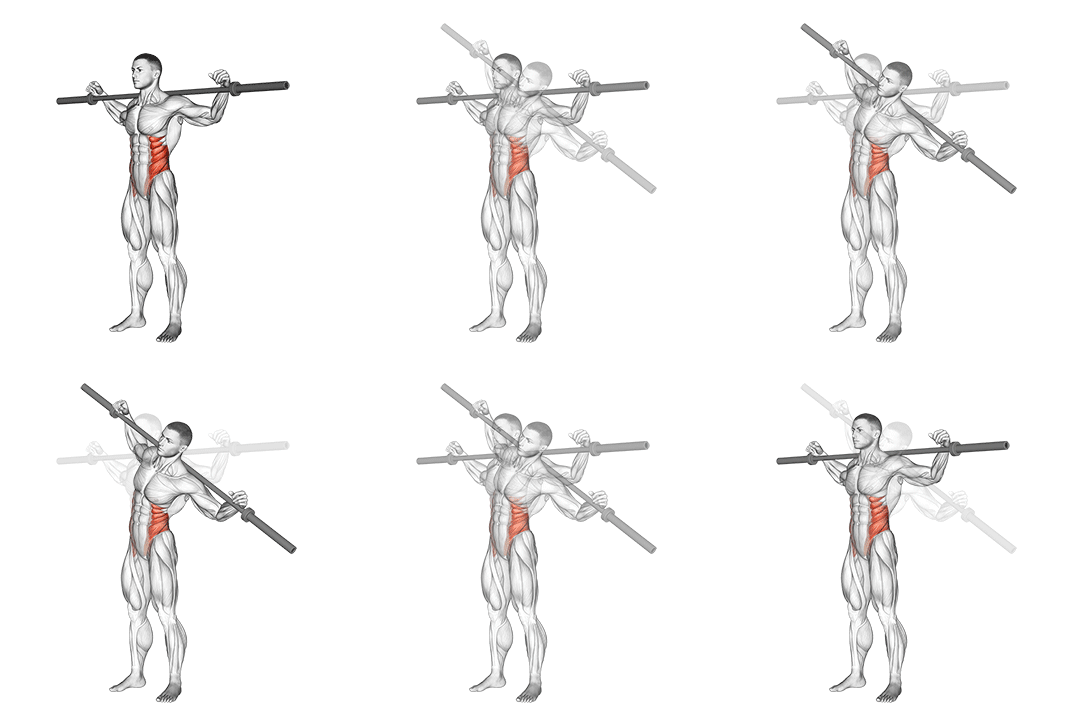
Barbell Press Sit-up
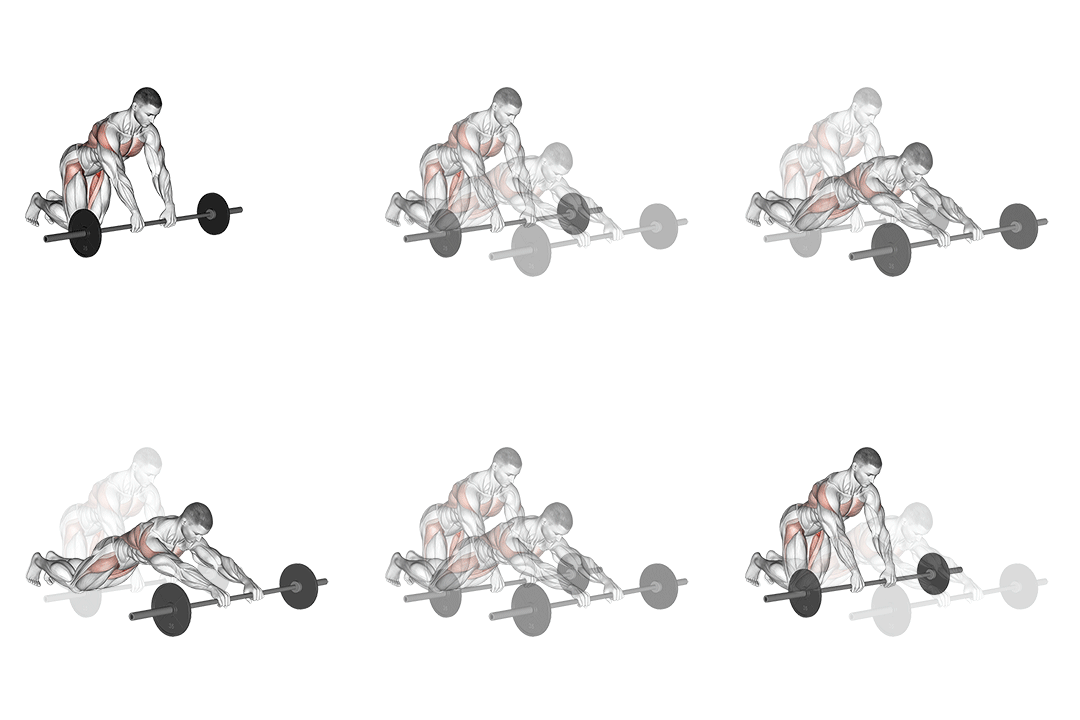
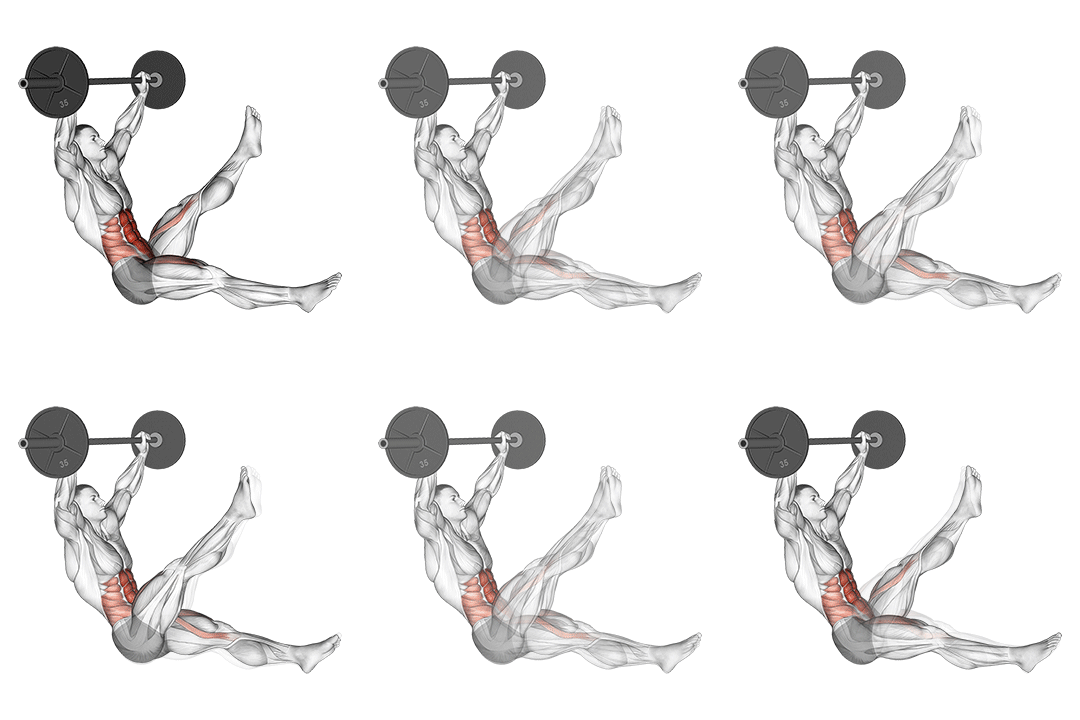
Barbell Rollerout
Head-to-Head Comparison
| Attribute | Barbell Press Sit-up | Barbell Rollerout |
|---|---|---|
| Target Muscle |
Abs
|
Abs
|
| Body Part |
Waist
|
Waist
|
| Equipment |
Barbell
|
Barbell
|
| Difficulty |
Intermediate
|
Advanced
|
| Movement Type |
Compound
|
Compound
|
| Secondary Muscles |
2
|
1
|
Secondary Muscles Activated
Barbell Press Sit-up
Barbell Rollerout
Visual Comparison
Overview
Barbell Press Sit-up vs Barbell Rollerout — you’re comparing two heavy-duty core builders that use a barbell but stress your midsection very differently. I’ll walk you through which one targets the rectus abdominis more effectively, how the shoulders and lower back get involved, the equipment and skill needed, and precise technique cues so you can choose the best movement for your goals. Expect clear sets/reps recommendations, progression ideas, and a decisive verdict to help you pick the right exercise for muscle growth, strength, or safer training.
Key Differences
- Difficulty levels differ: Barbell Press Sit-up is intermediate, while Barbell Rollerout is advanced.
- Both exercises target the Abs using Barbell. The main differences are in their movement patterns and muscle activation angles.
Pros & Cons
Barbell Press Sit-up
+ Pros
- Loads the rectus abdominis concentrically and allows clear progressive overload with plates and bar weight
- Trains shoulder pressing pattern simultaneously for upper-body carryover
- Easier to scale for intermediate athletes via load and rep adjustments
- Less extreme lumbar stress than a full rollerout; safer for many lifters
− Cons
- Requires good thoracic mobility and scapular control to press safely
- Can shift work away from pure core if you rely too much on the shoulders
- Less emphasis on anti-extension endurance compared to rollerout
Barbell Rollerout
+ Pros
- Develops high anti-extension core strength and long-lever control
- Strong carryover to functional tasks that resist spinal extension under load
- Minimal concentric shoulder demand — isolates the core’s stabilizing role
- Progressions (band assistance, partial rollouts) allow technical ramp-up
− Cons
- High technical demand with greater lumbar shear risk at end-range
- Requires specific bar/plate setup and floor space for rolling
- Harder to add heavy external load safely compared to a loaded sit-up
When Each Exercise Wins
The Press Sit-up lets you use added external load and higher time under tension in a concentric/eccentric cycle (8–15 reps) to drive rectus hypertrophy. The shoulder press element also increases overall work, offering more straightforward progressive overload for muscle growth.
For pure anti-extension and core strength the Rollerout wins: it forces sustained high tension in the rectus and obliques and trains the posterior chain to resist anterior torque. Use heavy-controlled sets of 6–12 reps or long holds to build resilience to spinal extension.
The Press Sit-up has a gentler technical curve and you can scale load and ROM progressively. Beginners can start with a light training bar and 8–12 controlled reps to build trunk flexion strength before attempting advanced anti-extension work.
Most home setups already include a barbell and plates that work for a press sit-up, and the movement tolerates substitution (dumbbells or a sandbag). Rollerouts require small plates and smooth rolling space that many home gyms lack.
Frequently Asked Questions
Can I do both Barbell Press Sit-up and Barbell Rollerout in the same workout?
Yes — but order matters. Do the technical, high-skill Rollerout early when you’re fresh to protect your lower back, then finish with heavier or higher-volume Barbell Press Sit-ups for hypertrophy. Limit total core volume to avoid fatigue-related form breakdown.
Which exercise is better for beginners?
Barbell Press Sit-up is better for most beginners because it’s easier to scale by lowering load and range of motion. Start with light weight and focus on a strong brace and neutral neck before attempting any rollerout progressions.
How do the muscle activation patterns differ?
The Press Sit-up creates a concentric rectus peak around mid-range (≈30–45° of trunk flexion) plus transient deltoid/pec activation during the press; the Rollerout forces sustained rectus and oblique isometric/eccentric activation through near-full extension, increasing posterior chain co-contraction to resist anterior torque.
Can Barbell Rollerout replace Barbell Press Sit-up?
Not completely — the Rollerout is superior for anti-extension strength but less practical for straightforward hypertrophy and shoulder training. Use the Rollerout to build core durability and the Press Sit-up when you need loadable, repeatable hypertrophy stimulus.
Expert Verdict
Choose the Barbell Press Sit-up when your priority is measurable progressive overload for abdominal hypertrophy, and when you want a compound movement that also trains the shoulders and chest. Aim for 3–4 sets of 8–15 reps with strict tempo (2-0-1) and a braced core. Pick the Barbell Rollerout when you need to build anti-extension resilience and core strength that resists high anterior torque; progress cautiously from partial rollouts to full range and focus on slow eccentric control. If you can, include both across training phases: Press Sit-ups in hypertrophy blocks and Rollerouts in strength or durability blocks.
Also Compare
More comparisons with Barbell Press Sit-up
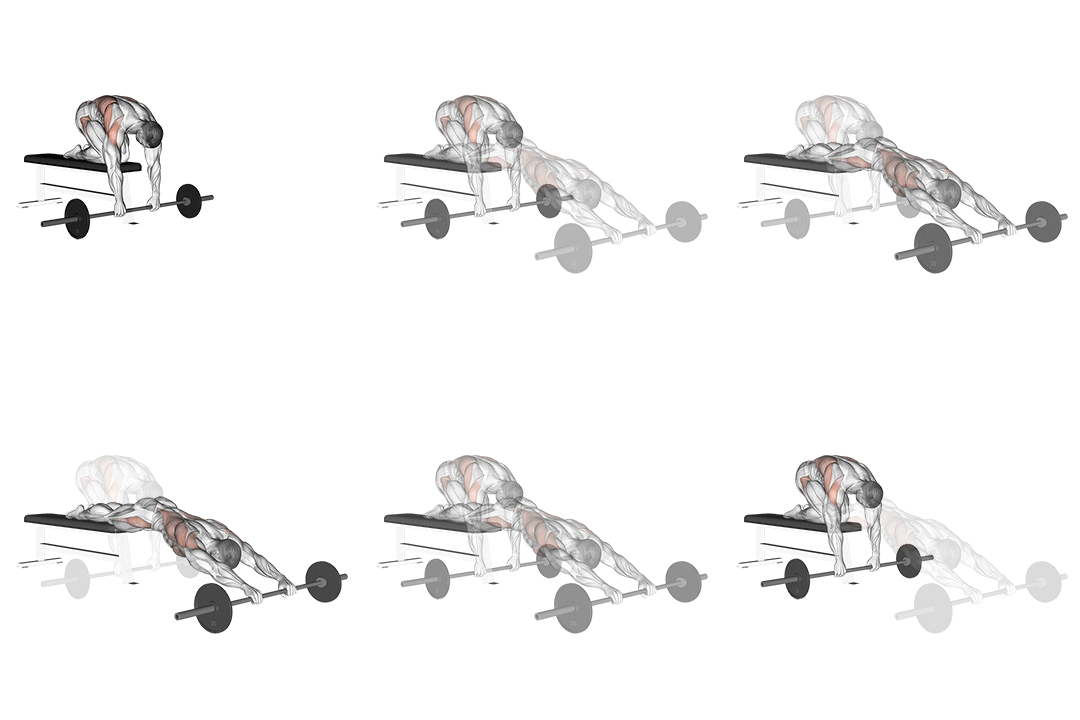
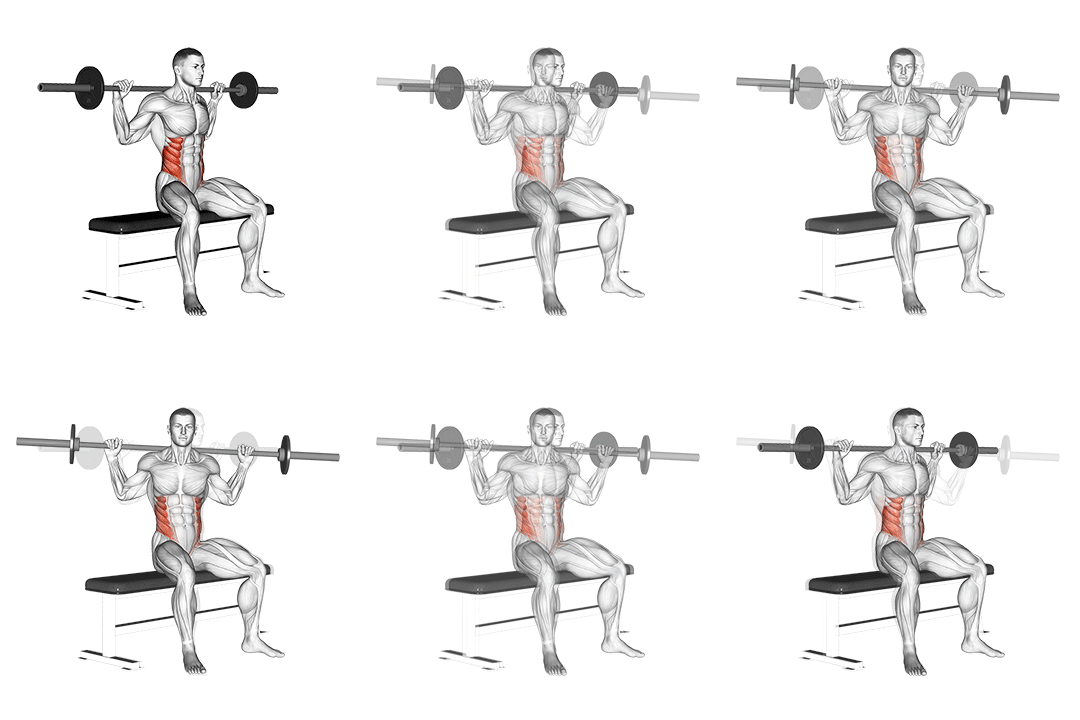
Compare More Exercises
Use our free comparison tool to analyze any two exercises head-to-head.
Compare Exercises