

Barbell Press Sit-up vs Barbell Rollerout From Bench: Complete Comparison Guide
Barbell Press Sit-up vs Barbell Rollerout From Bench — you’re choosing two barbell-based, compound core movements that load your abs under different levers and force vectors. I’ll walk you through how each hits the rectus abdominis, obliques, shoulders and upper chest/triceps, what equipment and setup each needs, technique cues you can use today, and which one to pick for hypertrophy, strength, or stability. Read on to learn clear, actionable recommendations and exact rep ranges and progressions for both exercises.
Exercise Comparison
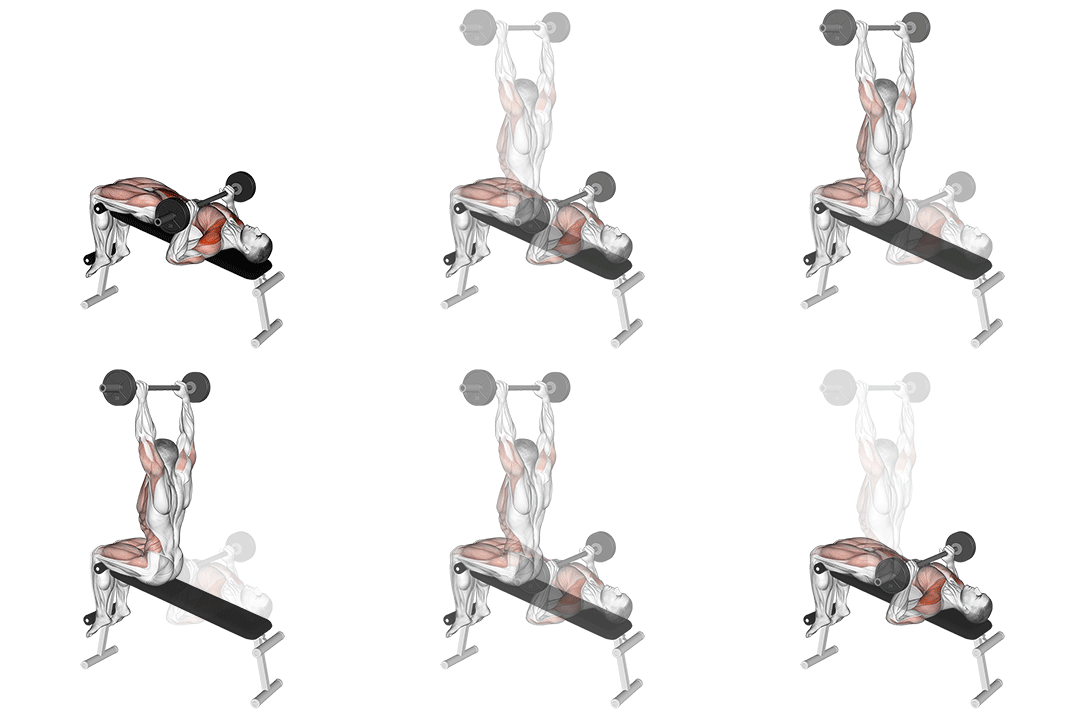
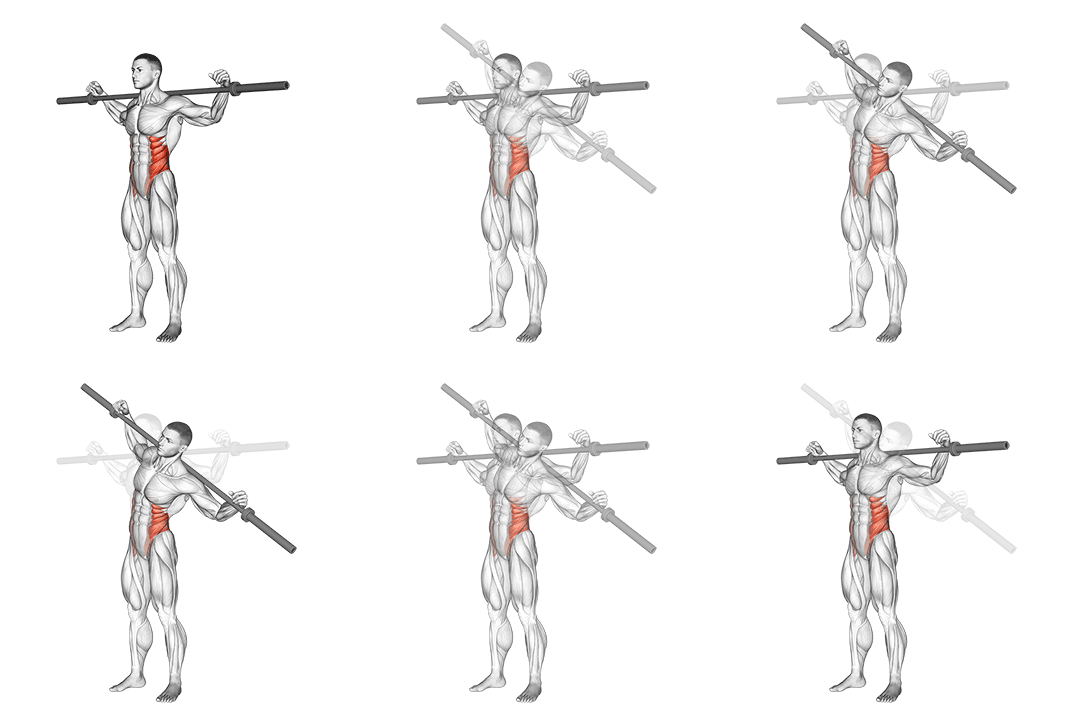
Barbell Press Sit-up
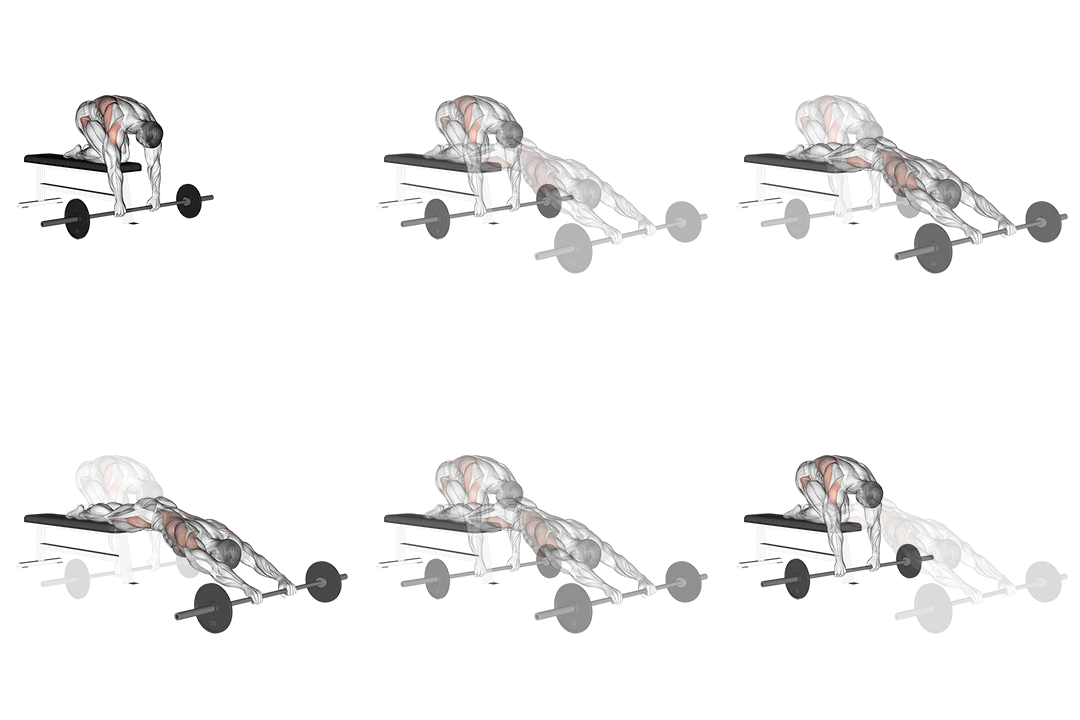
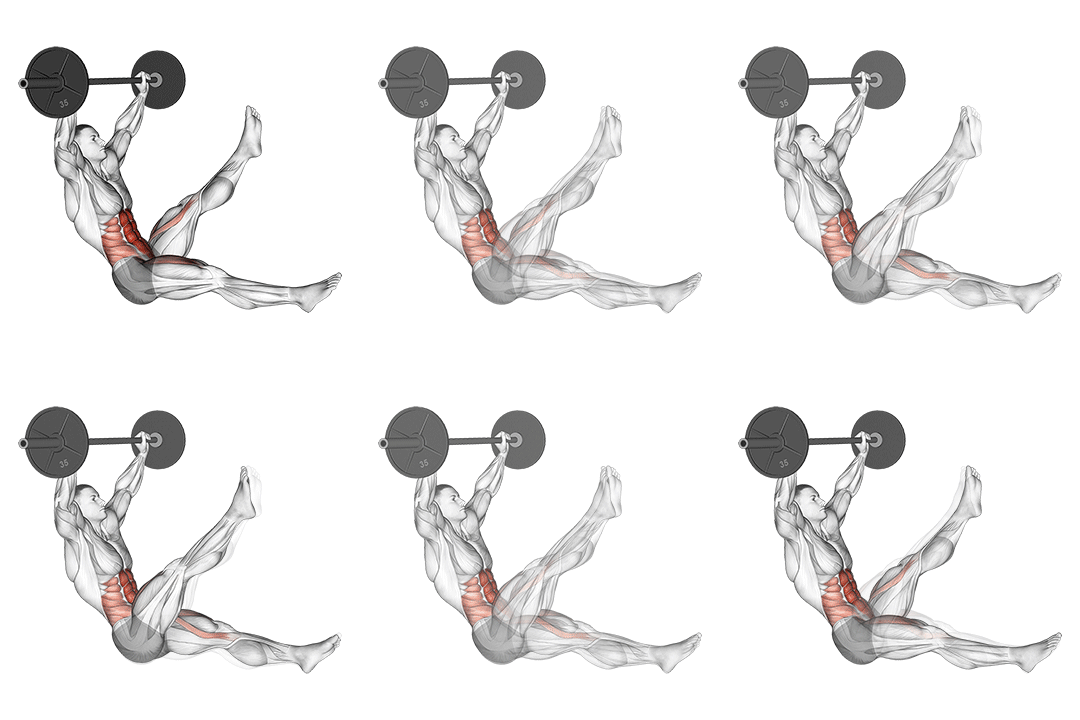
Barbell Rollerout From Bench
Head-to-Head Comparison
| Attribute | Barbell Press Sit-up | Barbell Rollerout From Bench |
|---|---|---|
| Target Muscle |
Abs
|
Abs
|
| Body Part |
Waist
|
Waist
|
| Equipment |
Barbell
|
Barbell
|
| Difficulty |
Intermediate
|
Intermediate
|
| Movement Type |
Compound
|
Compound
|
| Secondary Muscles |
2
|
2
|
Secondary Muscles Activated
Barbell Press Sit-up
Barbell Rollerout From Bench
Visual Comparison
Overview
Barbell Press Sit-up vs Barbell Rollerout From Bench — you’re choosing two barbell-based, compound core movements that load your abs under different levers and force vectors. I’ll walk you through how each hits the rectus abdominis, obliques, shoulders and upper chest/triceps, what equipment and setup each needs, technique cues you can use today, and which one to pick for hypertrophy, strength, or stability. Read on to learn clear, actionable recommendations and exact rep ranges and progressions for both exercises.
Key Differences
- Both exercises target the Abs using Barbell. The main differences are in their movement patterns and muscle activation angles.
Pros & Cons
Barbell Press Sit-up
+ Pros
- Combines trunk flexion and pressing for multi‑joint core and shoulder development
- Easy to load progressively with plates (work sets in 8–15 reps)
- Short lever reduces lumbar shear compared to long‑arm rollouts
- Versatile — can be used for hypertrophy (8–12 reps) or conditioning (15–20 reps)
− Cons
- Requires coordinated timing of sit‑up and press — technique breakdown causes lost efficiency
- Can overload shoulders if pressing with excessive lumbar flexion
- Less emphasis on anti‑extension endurance compared with rollouts
Barbell Rollerout From Bench
+ Pros
- High anti‑extension demand builds deep core stiffness and transverse abdominis recruitment
- Long lever increases challenge without heavy external load — effective for strength endurance
- Clear progression pathway (knees → bench → standing) to increase difficulty
- Directly trains the core to resist spinal hyperextension under load
− Cons
- Higher shear and extension torque at the lumbar spine if bracing is poor
- Requires more shoulder mobility and stable bench setup
- Harder to add small, incremental resistance — small increases in reach produce big jumps in difficulty
When Each Exercise Wins
The Press Sit‑up allows you to add 5–20% external load reliably and target 8–12 rep ranges while keeping the spine in a safer compression window. The pressing phase increases time under tension for shoulders and upper chest, aiding overall trunk hypertrophy.
Rollerouts develop anti‑extension strength and core stiffness under long‑lever torque, transferring directly to heavy compound lifts. Progressing reach and moving from knees to feet delivers linear increases in core strength and isometric capacity.
Press Sit‑up has a simpler motor pattern and easier regressions (partial sit‑ups, seated presses) and lower risk if you maintain neutral spine and controlled tempo, making it safer for new trainees.
It requires only a barbell and floor space; you can scale load with few plates. Rollerouts need a sturdy bench and shoulder mobility, which may not be available at home.
Frequently Asked Questions
Can I do both Barbell Press Sit-up and Barbell Rollerout From Bench in the same workout?
Yes. Pair them intelligently: use Press Sit‑ups as a hypertrophy movement (8–12 reps) and follow with 2–3 sets of controlled Rollerouts for anti‑extension practice. Keep total volume reasonable and prioritize form — do the rollouts when you are fresh enough to brace correctly.
Which exercise is better for beginners?
Barbell Press Sit‑up is better for beginners because it has simpler progressions and allows gradual loading. Start with partial sit‑ups and light presses, and only add long‑lever rollouts once you can brace isometrically for 20–30 seconds.
How do the muscle activation patterns differ?
Press Sit‑up combines concentric trunk flexion with concentric shoulder pressing, producing cyclic rectus activation and deltoid engagement. Rollerout emphasizes eccentric lengthening of the abs followed by a demanding isometric anti‑extension phase, recruiting transverse abdominis and obliques strongly to resist lumbar extension.
Can Barbell Rollerout From Bench replace Barbell Press Sit-up?
Only if your goal is anti‑extension strength and you have the shoulder mobility and bracing capacity. Rollerouts don’t provide the same concentric pressing stimulus for the shoulders and chest, so for balanced trunk and upper‑body hypertrophy keep the Press Sit‑up in your program.
Expert Verdict
Use the Barbell Press Sit‑up when your priority is progressive muscle growth, straightforward loading, and a lower‑risk multi‑joint core and shoulder stimulus. Aim for 8–12 reps with controlled tempo and press the bar at ~45°–75° of shoulder flexion to emphasize upper chest and anterior deltoid involvement. Choose the Barbell Rollerout From Bench when you want maximal anti‑extension capacity and core stiffness — progress from knee rollouts to bench rollouts and then to standing, keeping reps low (6–10) for strength endurance or 8–15 for conditioning. If you have shoulder mobility and solid bracing, rollouts build a stronger transfer to heavy compound lifts; if not, prioritize the press sit‑up and build up to longer lever work.
Also Compare
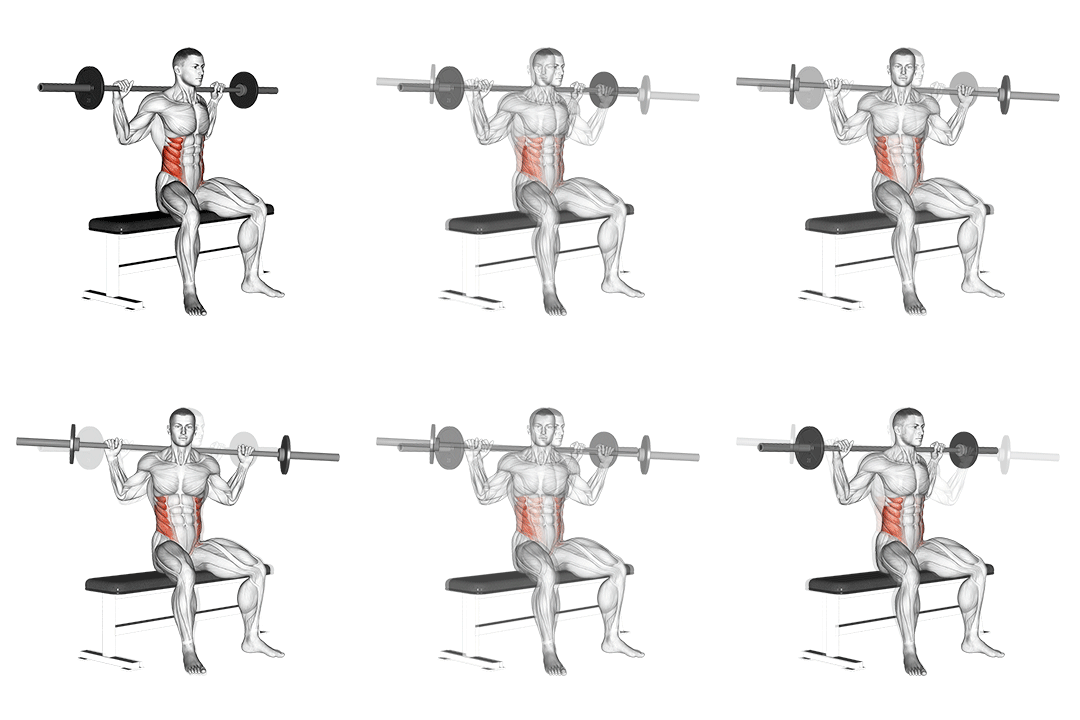
More comparisons with Barbell Press Sit-up
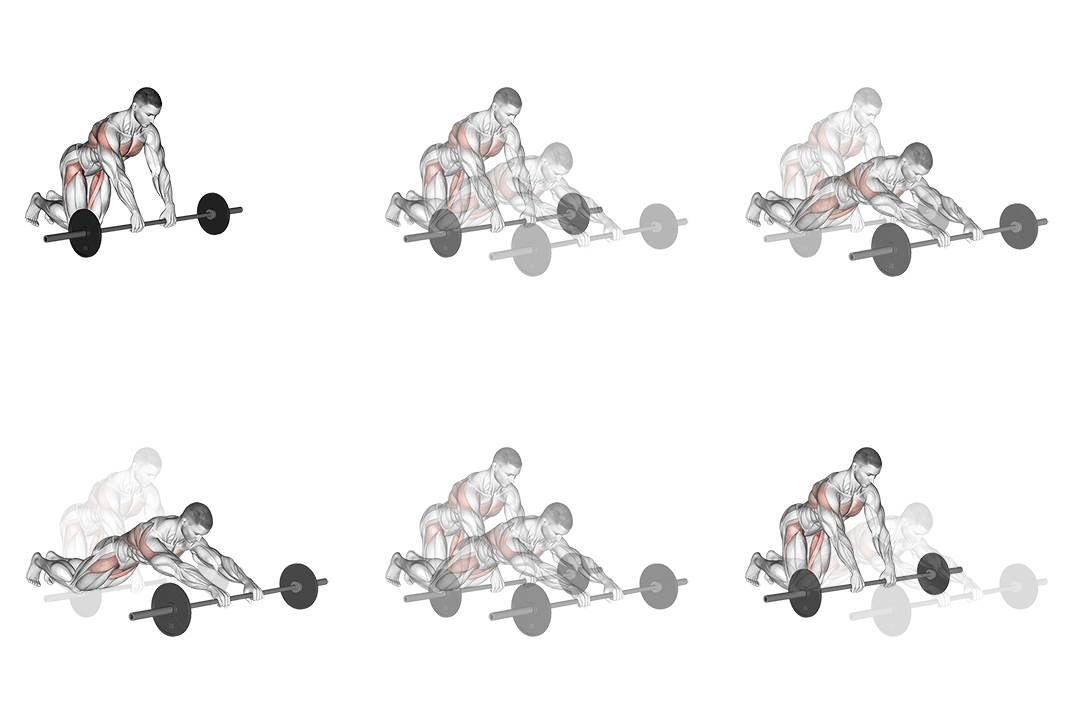
More comparisons with Barbell Rollerout From Bench
Compare More Exercises
Use our free comparison tool to analyze any two exercises head-to-head.
Compare Exercises