

Barbell Press Sit-up vs Barbell Seated Twist: Complete Comparison Guide
Barbell Press Sit-up vs Barbell Seated Twist — if you want a stronger, thicker midsection you need to choose exercises that match your goals. In this comparison you'll get clear, evidence-based differences in muscle targets, biomechanics, loading options, and technique cues. I'll show which move better drives rectus abdominis hypertrophy, which builds rotational strength, how to set rep ranges (6–12 for size, 8–15 for endurance), and step-by-step form cues so you can use either safely in your program.
Exercise Comparison
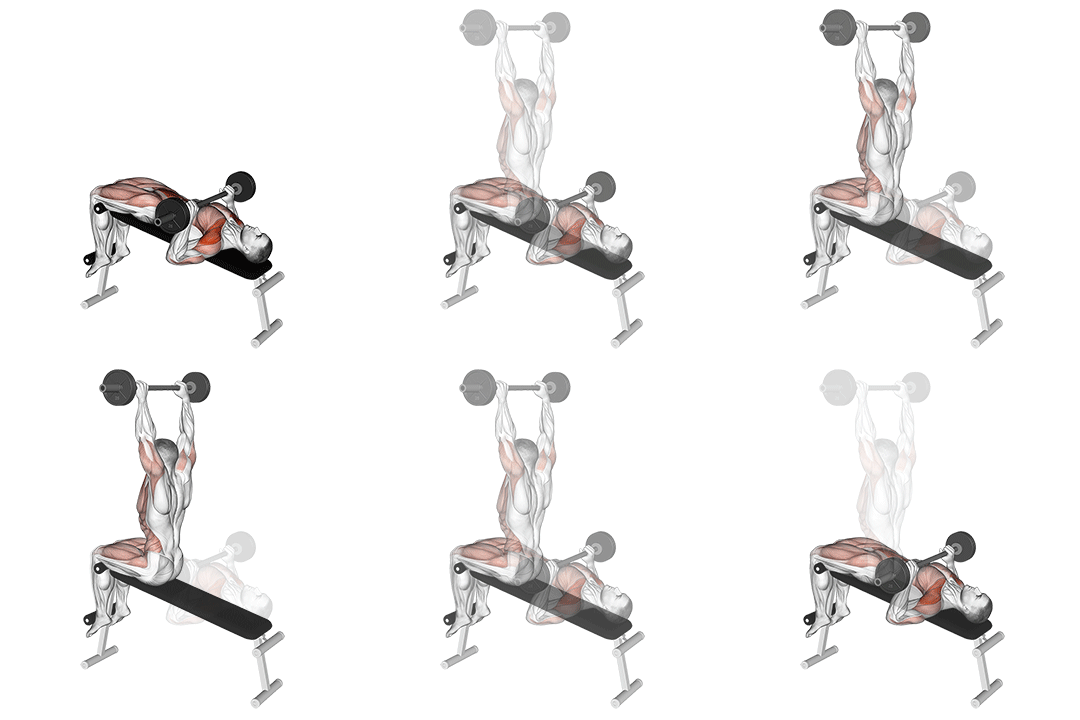
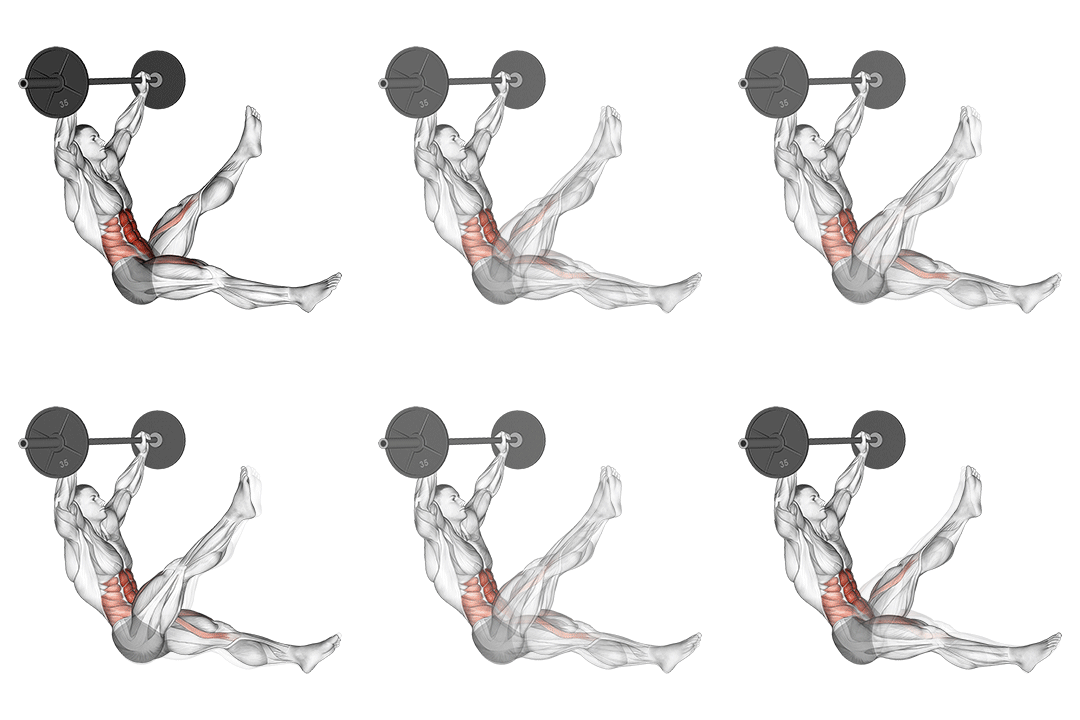
Barbell Press Sit-up
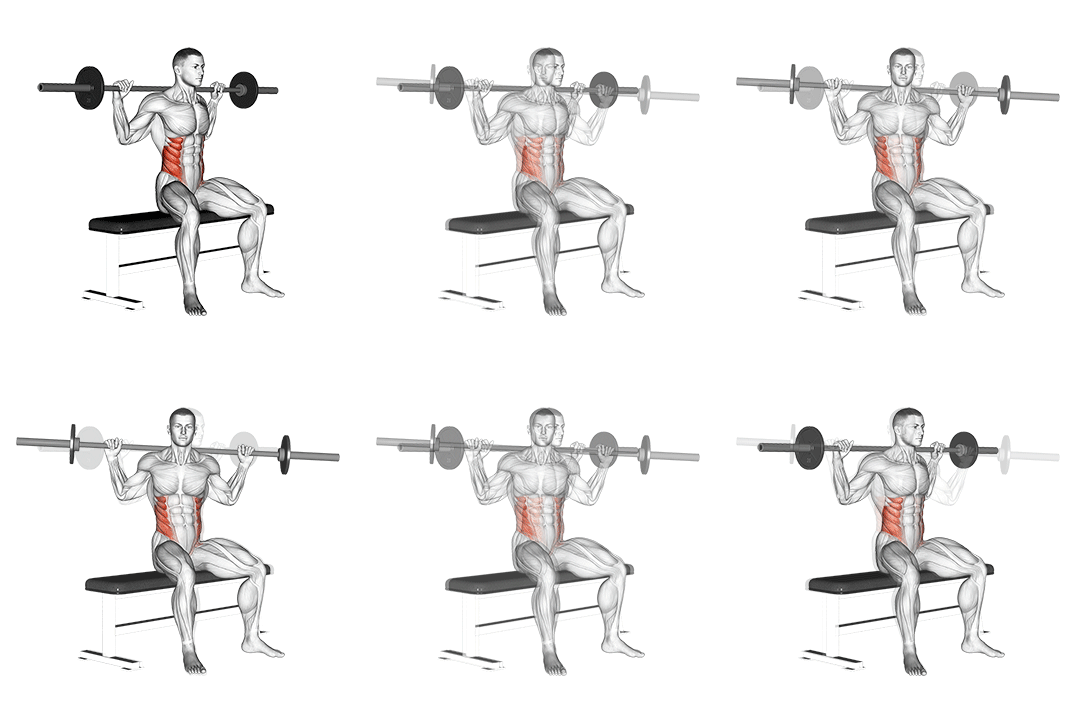
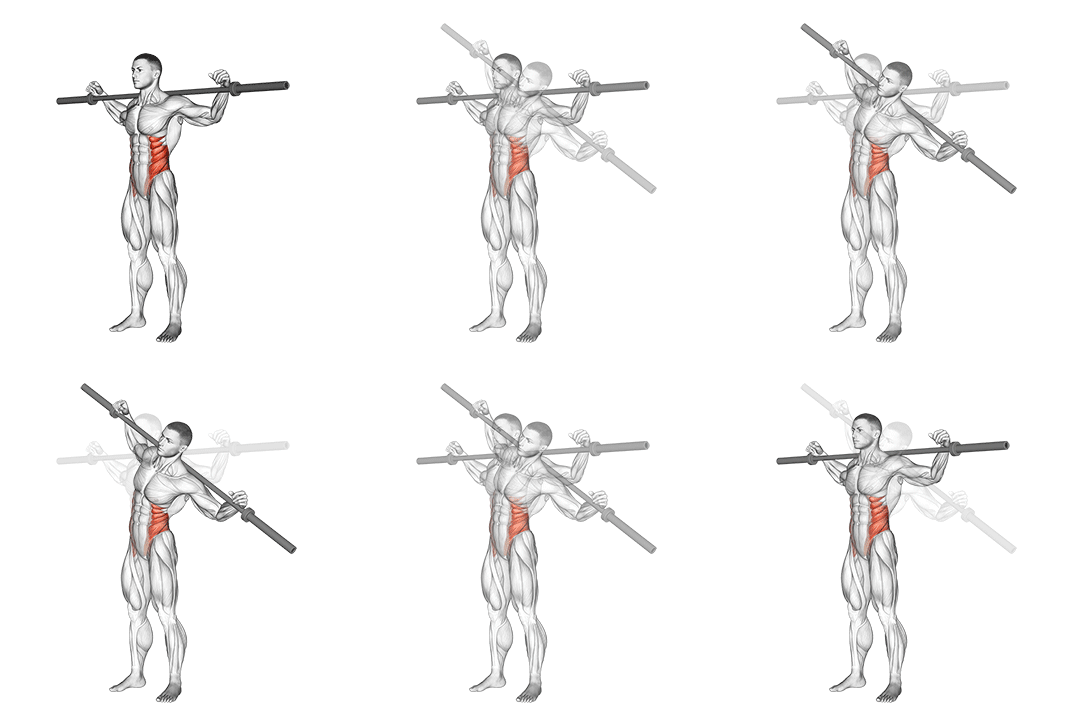
Barbell Seated Twist
Head-to-Head Comparison
| Attribute | Barbell Press Sit-up | Barbell Seated Twist |
|---|---|---|
| Target Muscle |
Abs
|
Abs
|
| Body Part |
Waist
|
Waist
|
| Equipment |
Barbell
|
Barbell
|
| Difficulty |
Intermediate
|
Intermediate
|
| Movement Type |
Compound
|
Compound
|
| Secondary Muscles |
2
|
2
|
Secondary Muscles Activated
Barbell Press Sit-up
Barbell Seated Twist
Visual Comparison
Overview
Barbell Press Sit-up vs Barbell Seated Twist — if you want a stronger, thicker midsection you need to choose exercises that match your goals. In this comparison you'll get clear, evidence-based differences in muscle targets, biomechanics, loading options, and technique cues. I'll show which move better drives rectus abdominis hypertrophy, which builds rotational strength, how to set rep ranges (6–12 for size, 8–15 for endurance), and step-by-step form cues so you can use either safely in your program.
Key Differences
- Both exercises target the Abs using Barbell. The main differences are in their movement patterns and muscle activation angles.
Pros & Cons
Barbell Press Sit-up
+ Pros
- Loads the rectus abdominis heavily through a long ROM, promoting hypertrophy
- Combines hip flexion and pressing, training transfer to compound athletic actions
- Easy to apply linear progressive overload with heavier barbells
- Efficient full-body stimulus — works shoulders and chest as secondary movers
− Cons
- Requires solid shoulder stability and overhead clearance
- Higher compressive forces on the spine during loaded flexion
- Complex coordination — harder for beginners to master
Barbell Seated Twist
+ Pros
- Targets obliques and anti-rotation core strength effectively
- Lower setup demands — works well seated with limited space
- Gentler on the shoulder complex than overhead pressing variants
- Allows precise single-side loading and tempo control for conditioning
− Cons
- Lower absolute loading potential limits maximal hypertrophy stimulus
- Can place shear stress on lumbar spine if rotation is forced under load
- Harder to quantify progressive overload compared with vertical pressing
When Each Exercise Wins
The Press Sit-up permits higher absolute loads and a larger sagittal ROM, producing greater mechanical tension on the rectus abdominis and hip flexors. Use 6–12 reps with controlled 2–3 second eccentrics to maximize hypertrophy.
Because it combines pressing and trunk flexion, you can progressively overload the movement to build raw trunk and upper-body strength, applying heavier bars and lower rep sets (4–8) to raise force capacity.
The Seated Twist has simpler mechanics and a smaller learning curve — focus on controlled 45–60° rotations and light load to build oblique control before advancing to complex loaded sit-ups.
It needs less overhead space and typically uses lighter weight, so you can do it on a chair or bench at home. It also minimizes setup compared with getting a safe pressing path for the Sit-up.
Frequently Asked Questions
Can I do both Barbell Press Sit-up and Barbell Seated Twist in the same workout?
Yes. Pair them by priority: do the exercise aligned with your main goal first (e.g., Press Sit-up for hypertrophy), then use the Seated Twist as an accessory for oblique work. Keep total volume sensible — 6–12 heavy reps for the primary move, then 8–15 reps per side for the twist.
Which exercise is better for beginners?
Barbell Seated Twist is the safer starting point because it requires less technical sequencing and lower loads. Begin with light weight, focus on 45–60° controlled rotations, and master bracing before progressing to loaded press sit-ups.
How do the muscle activation patterns differ?
The Press Sit-up drives sagittal-plane concentric trunk flexion and strong rectus activation with shoulder involvement from the press, while the Seated Twist loads transverse-plane oblique contraction and spinal stabilizers. That means Press Sit-up stresses length-tension changes in rectus more, and Twist increases oblique moment arms and rotational torque.
Can Barbell Seated Twist replace Barbell Press Sit-up?
No if your goal is rectus-dominant hypertrophy or pressing strength — the Twist doesn’t match the sagittal-plane loading or absolute load capacity of the Press Sit-up. It can replace the sit-up when your goal is rotational control, oblique strength, or when equipment/space is limited.
Expert Verdict
Use the Barbell Press Sit-up when your priority is rectus-dominant hypertrophy and raw trunk/press strength. It creates large sagittal-plane torque and tolerates clear progressive overload — program it for 4–5 sets of 6–12 reps with 2–3 second eccentrics and a braced rib-cage. Choose the Barbell Seated Twist when you want targeted oblique development, rotational strength, or a safer option for limited space. Prescribe 3–4 sets of 8–15 reps per side, control rotation to ~45–60°, and emphasize anti-rotation bracing. Both moves belong in a balanced program: press-focused sit-ups for size and strength, seated twists for rotational control and spinal stability.
Also Compare
More comparisons with Barbell Press Sit-up
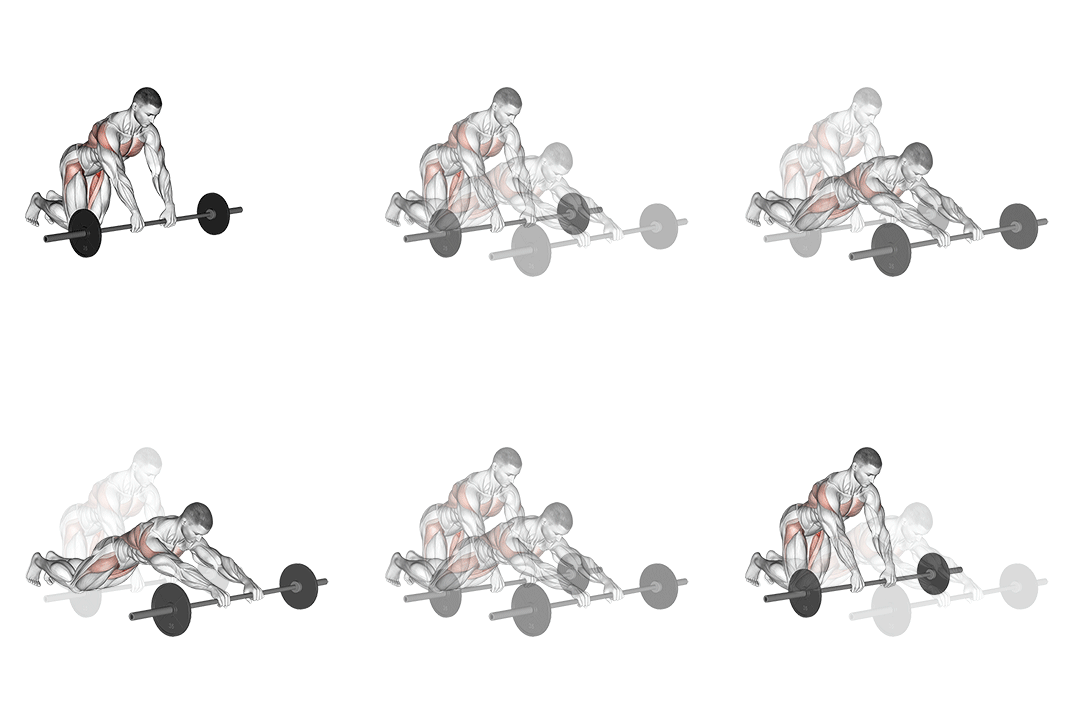
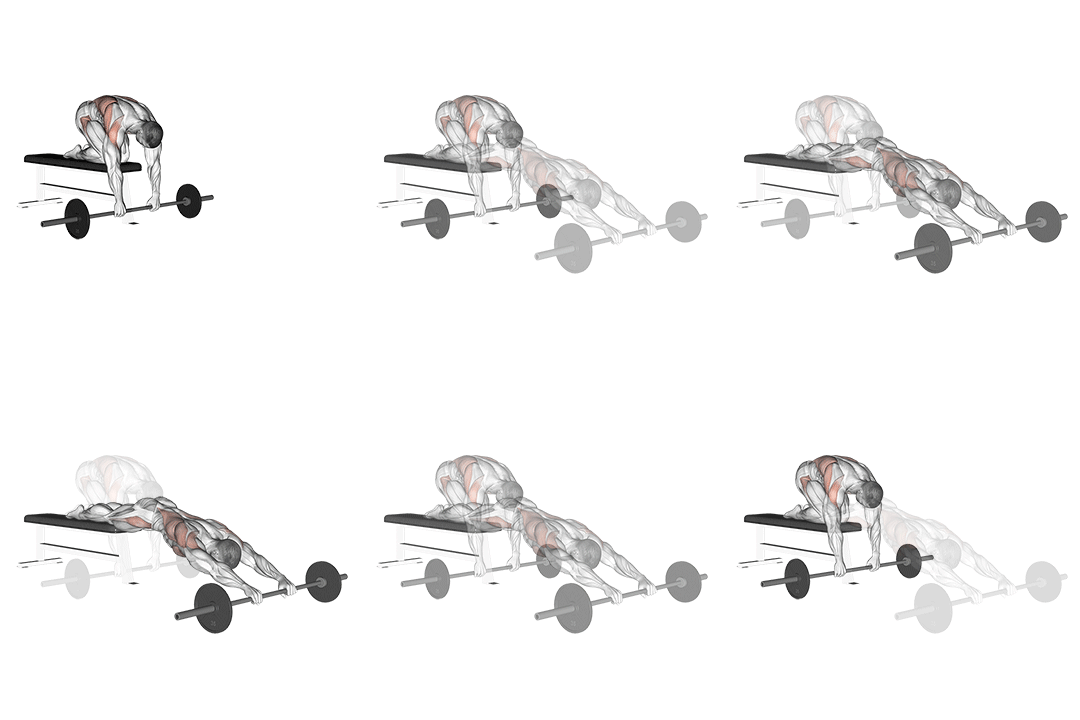
More comparisons with Barbell Seated Twist
Compare More Exercises
Use our free comparison tool to analyze any two exercises head-to-head.
Compare Exercises