

Barbell Reverse Grip Incline Bench Row vs Lever One Arm Bent Over Row: Complete Comparison Guide
Barbell Reverse Grip Incline Bench Row vs Lever One Arm Bent Over Row — two upper-back compound moves that both hit the lats, rhomboids, and rear delts while calling your biceps and forearms into play. If you want clear guidance on which to choose, this guide breaks down muscle activation, biomechanics, equipment needs, technique cues, injury considerations, and programming (rep ranges and progression). Read on and you’ll get specific setup angles, cue lists, and scenarios that tell you which exercise to pick for hypertrophy, strength, beginners, or limited equipment.
Exercise Comparison
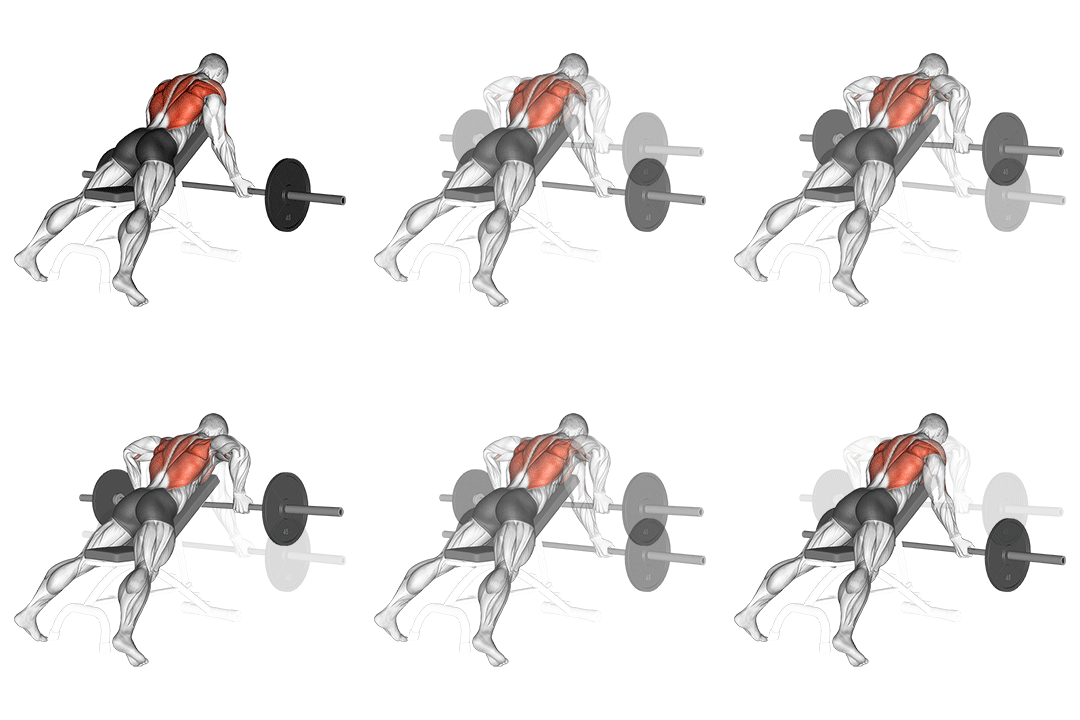
Barbell Reverse Grip Incline Bench Row
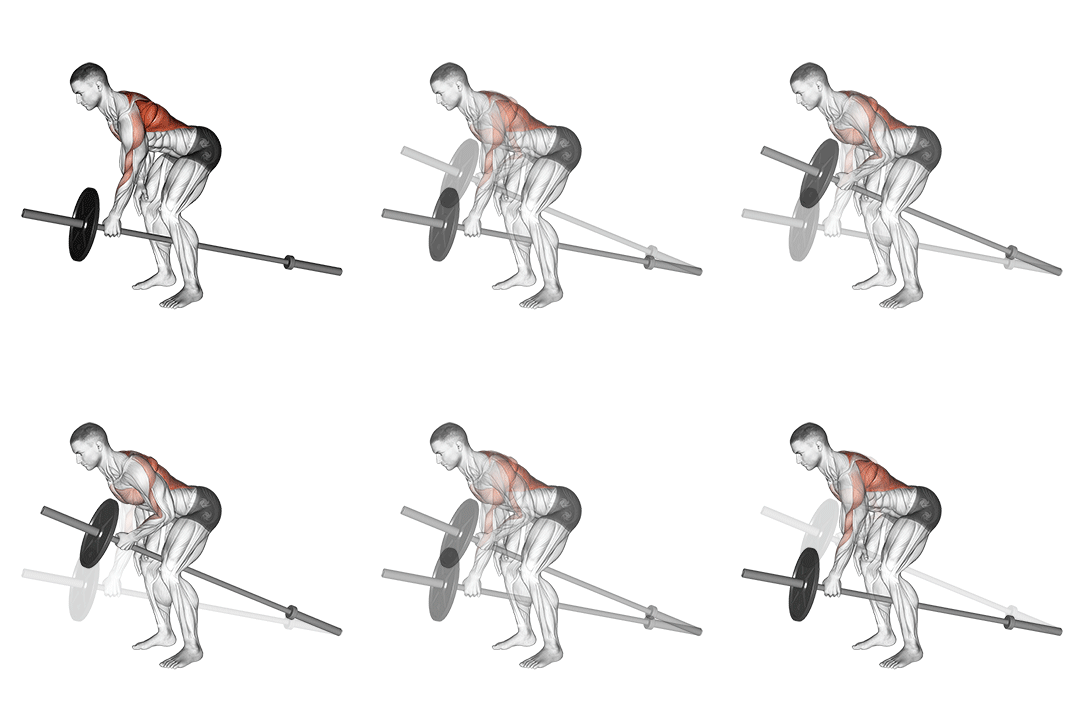
Lever One Arm Bent Over Row
Head-to-Head Comparison
| Attribute | Barbell Reverse Grip Incline Bench Row | Lever One Arm Bent Over Row |
|---|---|---|
| Target Muscle |
Upper-back
|
Upper-back
|
| Body Part |
Back
|
Back
|
| Equipment |
Barbell
|
Barbell
|
| Difficulty |
Intermediate
|
Intermediate
|
| Movement Type |
Compound
|
Compound
|
| Secondary Muscles |
2
|
2
|
Secondary Muscles Activated
Barbell Reverse Grip Incline Bench Row
Lever One Arm Bent Over Row
Visual Comparison
Overview
Barbell Reverse Grip Incline Bench Row vs Lever One Arm Bent Over Row — two upper-back compound moves that both hit the lats, rhomboids, and rear delts while calling your biceps and forearms into play. If you want clear guidance on which to choose, this guide breaks down muscle activation, biomechanics, equipment needs, technique cues, injury considerations, and programming (rep ranges and progression). Read on and you’ll get specific setup angles, cue lists, and scenarios that tell you which exercise to pick for hypertrophy, strength, beginners, or limited equipment.
Key Differences
- Both exercises target the Upper-back using Barbell. The main differences are in their movement patterns and muscle activation angles.
Pros & Cons
Barbell Reverse Grip Incline Bench Row
+ Pros
- Stabilized torso reduces lumbar load and enforces strict horizontal pull
- Supinated grip increases biceps contribution for better arm development
- Easy to overload bilaterally with heavier loads
- Clear cueing: bench contact, chest up, pull to lower ribs
− Cons
- Requires an incline bench and setup time
- Supinated grip can stress the wrists and biceps tendon
- Shorter hip hinge reduces eccentric stretch on the lats
Lever One Arm Bent Over Row
+ Pros
- Needs minimal equipment—highly accessible with a barbell
- Unilateral loading improves symmetry and core anti-rotation strength
- Longer lat stretch improves length-tension for hypertrophy
- Versatile angles (vary trunk angle to emphasize different fibers)
− Cons
- Higher technical demand: hip hinge and bracing required
- Greater low-back and hamstring involvement if form breaks down
- Harder to progressively overload both sides equally without extra setup
When Each Exercise Wins
The longer initial stretch and unilateral loading produce strong lat length-tension stimuli and better peak contraction control, which supports 6–12 rep hypertrophy work per side. You can also vary trunk angle to target upper vs lower lat fibers for balanced development.
The bench stabilizes your torso and lets you load bilaterally heavier, so you can apply progressive overload more efficiently in low-rep (3–6) strength phases. The fixed position reduces weak links from core fatigue, aiding heavier sets.
Bench support simplifies technique and limits lumbar stress, allowing beginners to learn the horizontal pull pattern and build elbow flexor strength safely before adding unilateral hinge complexity.
With minimal equipment (just a barbell and space), the one-arm bent-over row is easier to perform at home. It also lets you address imbalances without needing an adjustable incline bench or extra machines.
Frequently Asked Questions
Can I do both Barbell Reverse Grip Incline Bench Row and Lever One Arm Bent Over Row in the same workout?
Yes. Pairing them works well: use the incline reverse-grip row as your heavy bilateral strength movement (3–6 reps) and finish with the one-arm bent-over row for unilateral hypertrophy (8–12 reps per side). Ensure you manage volume to avoid excessive fatigue—total working sets of 6–12 per week per exercise is a good guideline.
Which exercise is better for beginners?
The Barbell Reverse Grip Incline Bench Row is better for beginners because the bench stabilizes the torso and reduces lower-back demand, making it easier to learn scapular retraction and pulling mechanics. Start with light loads and focus on chest contact, neutral spine, and pulling the elbows back to the ribs.
How do the muscle activation patterns differ?
The incline reverse-grip row emphasizes scapular retraction with an earlier concentric peak and more elbow-flexor involvement due to the supinated grip. The one-arm bent-over row creates a larger initial lat stretch and a later concentric peak with greater core and posterior chain activation from the hip hinge.
Can Lever One Arm Bent Over Row replace Barbell Reverse Grip Incline Bench Row?
Yes for hypertrophy and home setups—especially if you lack a bench—but not entirely for strength phases where heavy bilateral loading matters. If your goal is raw upper-back size and you can progress load unilaterally, it can replace the incline row; for maximal bilateral overload, keep the incline barbell variation.
Expert Verdict
Use the Barbell Reverse Grip Incline Bench Row when you want a stable, heavy bilateral horizontal pull that reduces lower-back stress and allows you to push heavy loads for strength (aim for 3–6 reps) or controlled hypertrophy sets (6–10 reps). Choose the Lever One Arm Bent Over Row when you want a longer lat stretch, unilateral control to fix asymmetries, and a move that doubles as a core anti-rotation challenge; program it for 6–12 reps per side. If your priority is pure upper-back mass with minimal equipment at home, prioritize the one-arm row; if you have bench access and want to maximize overloaded sets, prioritize the incline reverse-grip row.
Also Compare
More comparisons with Barbell Reverse Grip Incline Bench Row
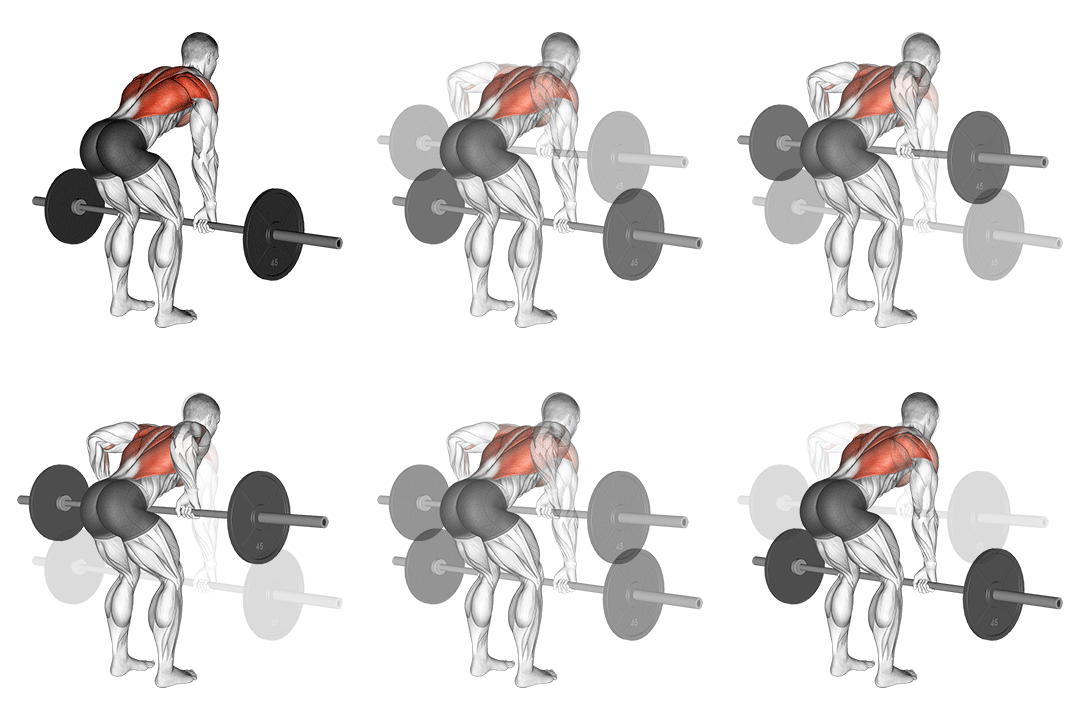
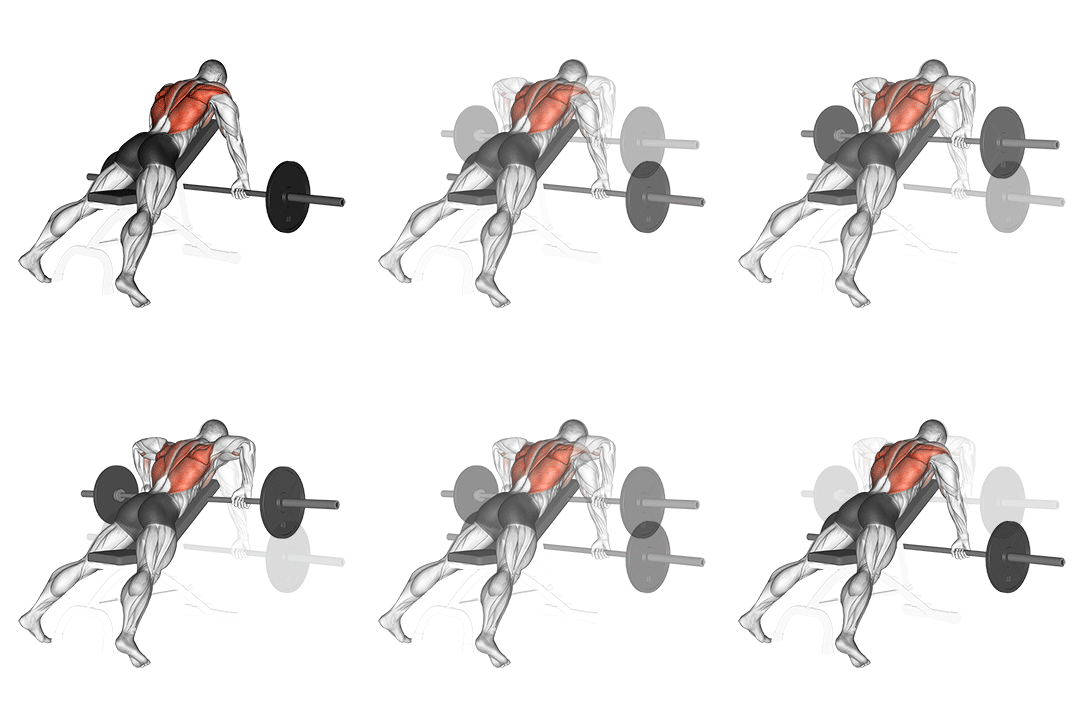
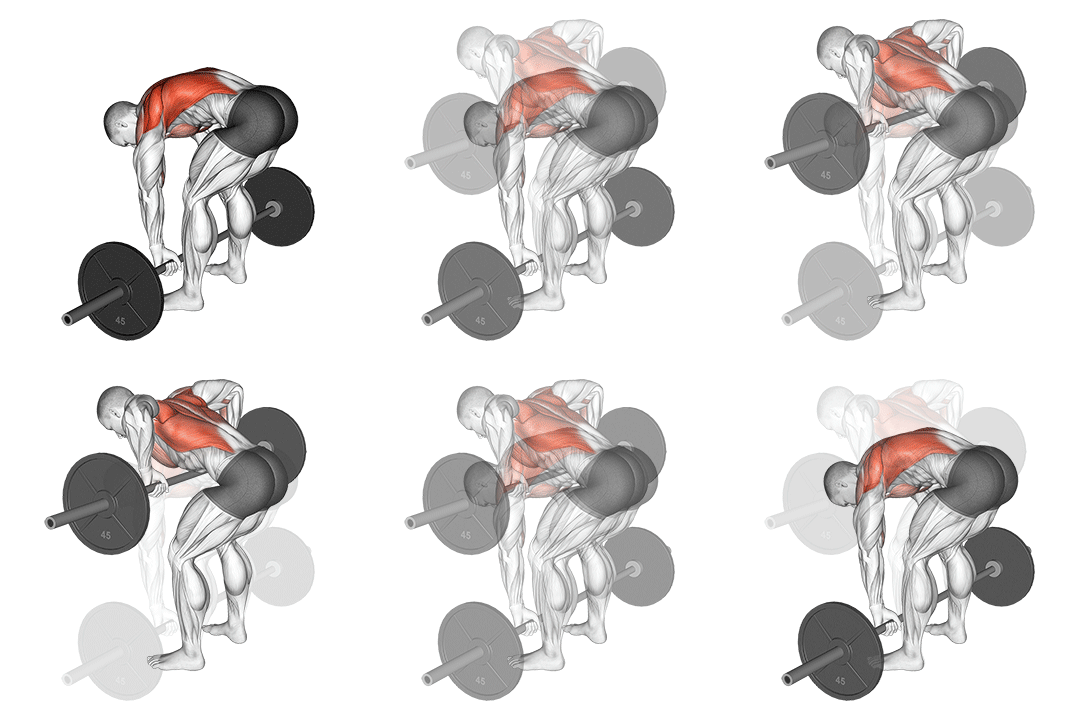
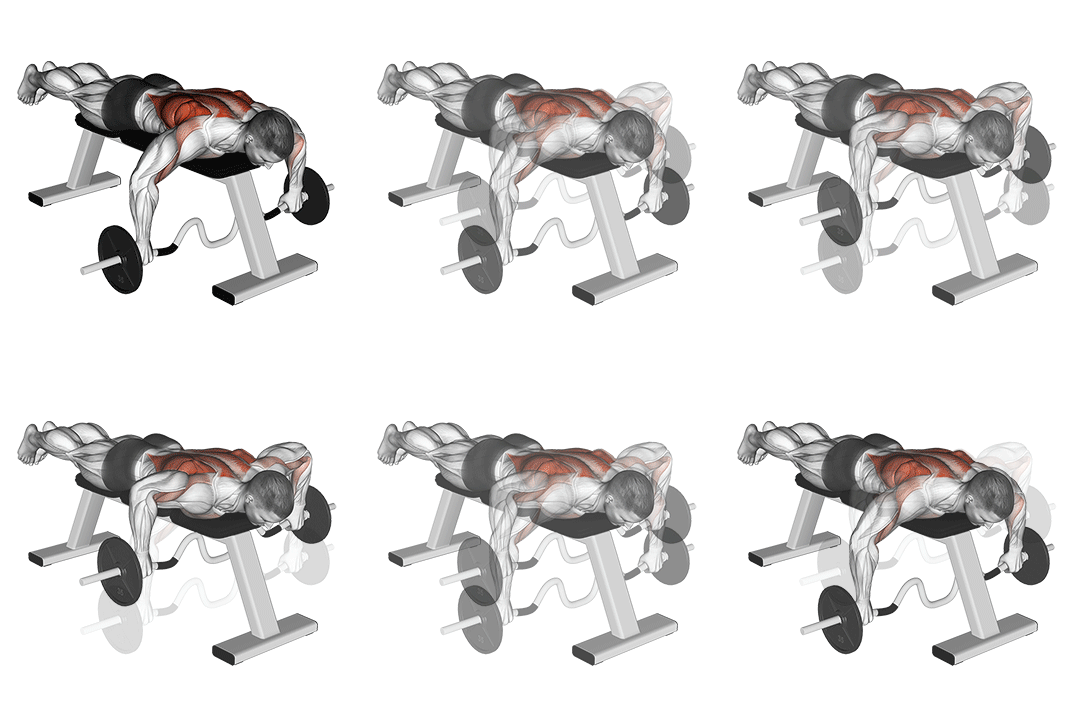
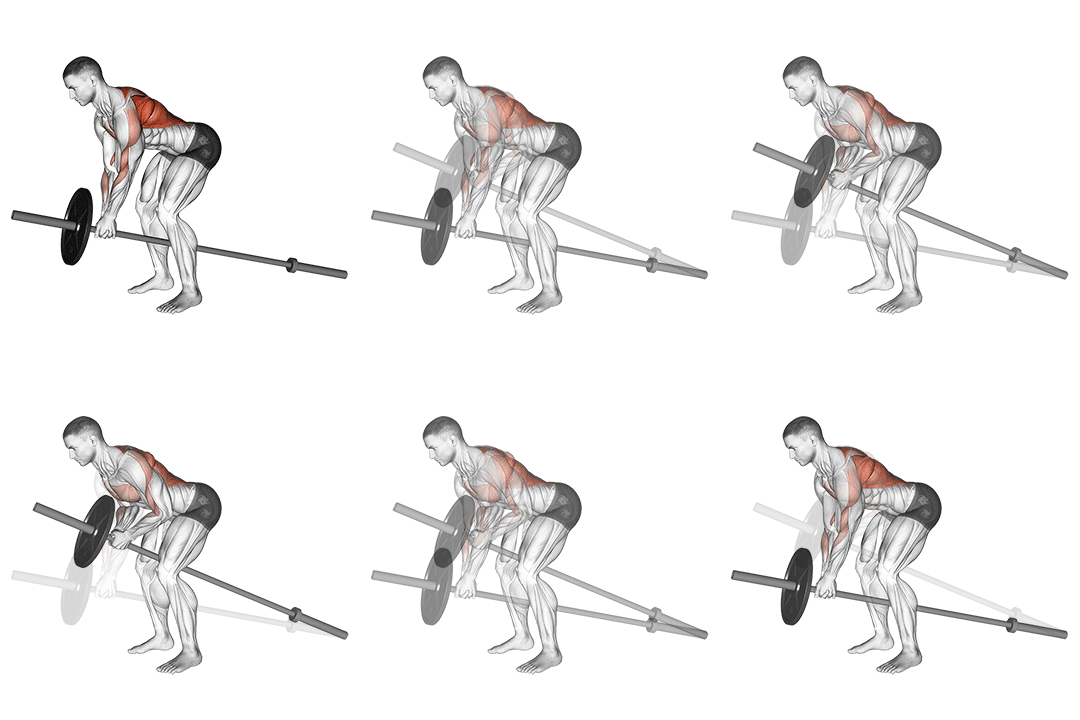
More comparisons with Lever One Arm Bent Over Row
Compare More Exercises
Use our free comparison tool to analyze any two exercises head-to-head.
Compare Exercises