

Barbell Rollerout From Bench vs Barbell Seated Twist: Complete Comparison Guide
Barbell Rollerout From Bench vs Barbell Seated Twist — both use a barbell to challenge your waist, but they stress your core in very different ways. You’ll get a clear breakdown of which exercise hits the rectus abdominis harder, which one loads the obliques and lower back, and practical cues so you can perform each safely. I’ll cover biomechanics, technique cues (hip, spine, shoulder angles), rep ranges, progression options, and who should prioritize each move based on strength, hypertrophy, or home training needs.
Exercise Comparison
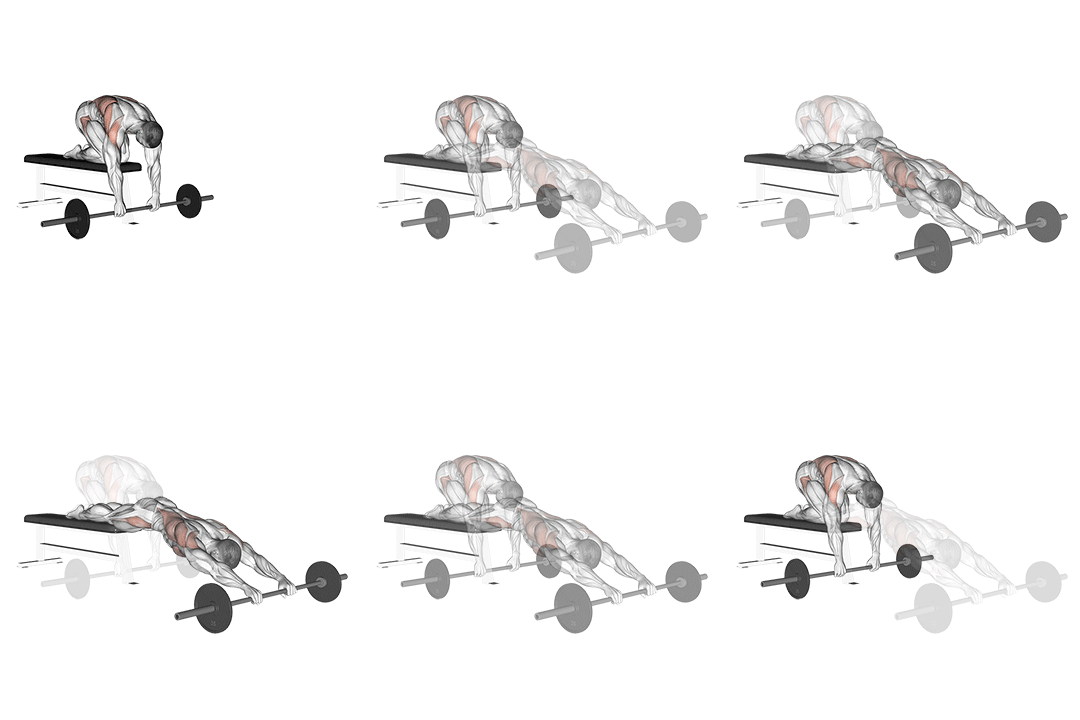
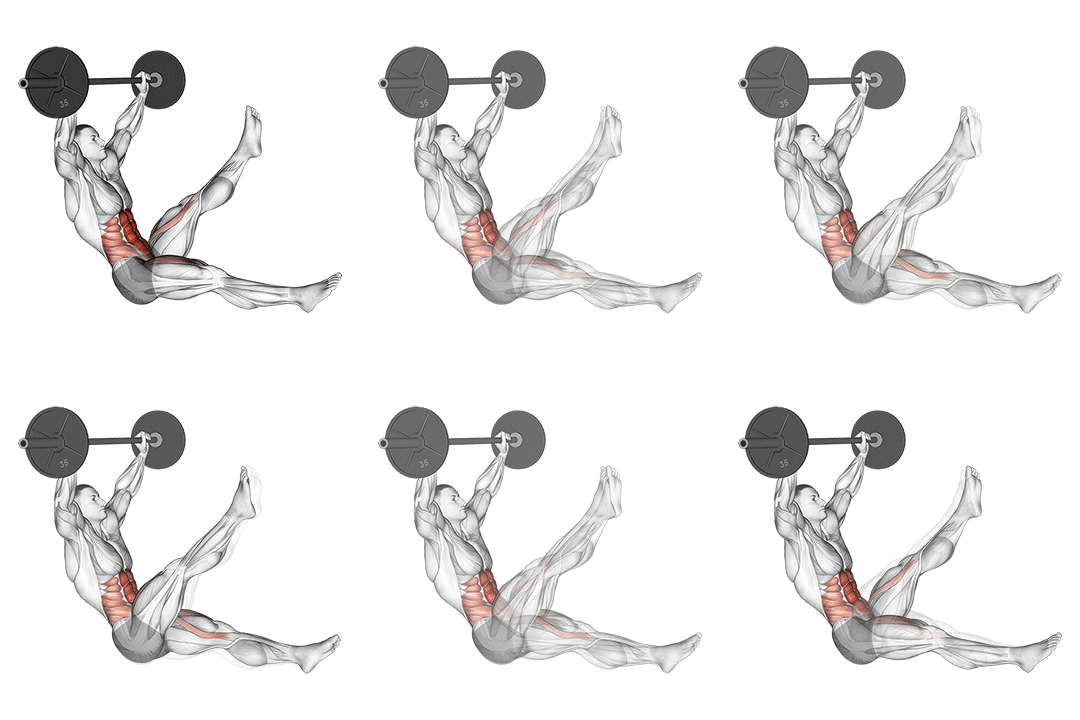
Barbell Rollerout From Bench
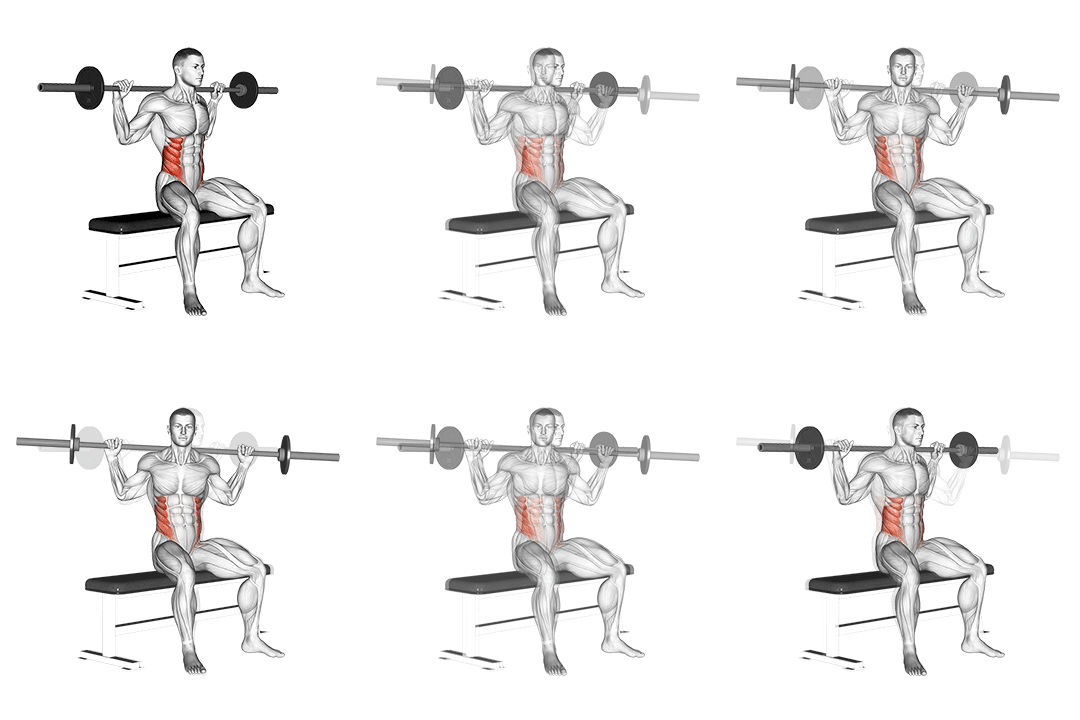
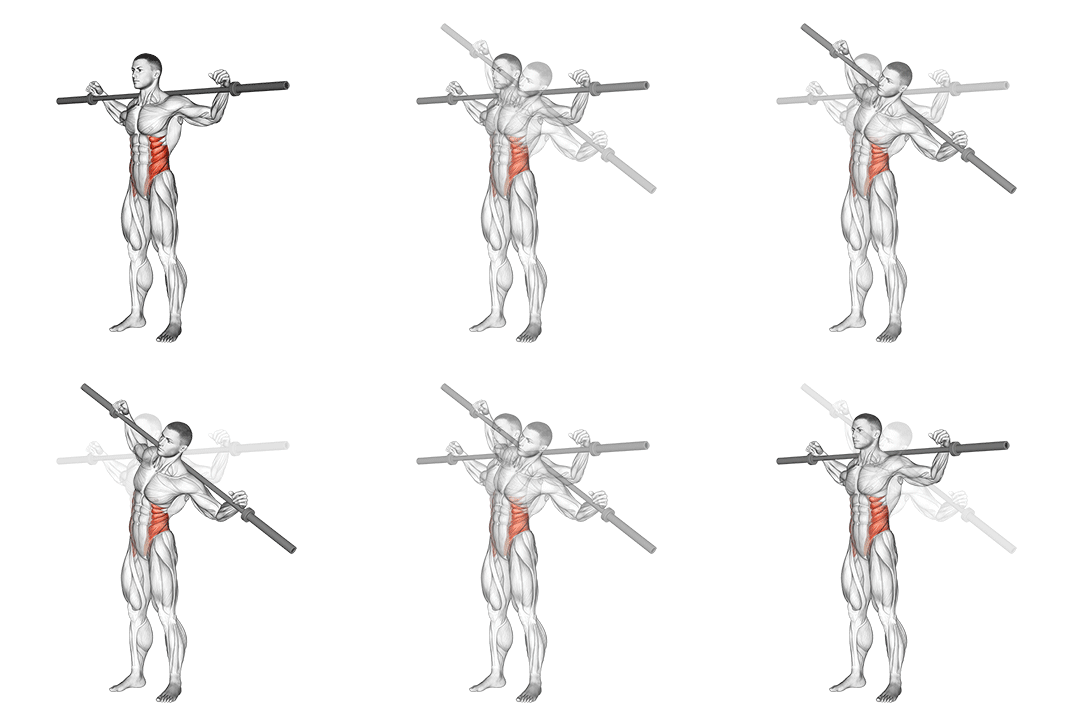
Barbell Seated Twist
Head-to-Head Comparison
| Attribute | Barbell Rollerout From Bench | Barbell Seated Twist |
|---|---|---|
| Target Muscle |
Abs
|
Abs
|
| Body Part |
Waist
|
Waist
|
| Equipment |
Barbell
|
Barbell
|
| Difficulty |
Intermediate
|
Intermediate
|
| Movement Type |
Compound
|
Compound
|
| Secondary Muscles |
2
|
2
|
Secondary Muscles Activated
Barbell Rollerout From Bench
Barbell Seated Twist
Visual Comparison
Overview
Barbell Rollerout From Bench vs Barbell Seated Twist — both use a barbell to challenge your waist, but they stress your core in very different ways. You’ll get a clear breakdown of which exercise hits the rectus abdominis harder, which one loads the obliques and lower back, and practical cues so you can perform each safely. I’ll cover biomechanics, technique cues (hip, spine, shoulder angles), rep ranges, progression options, and who should prioritize each move based on strength, hypertrophy, or home training needs.
Key Differences
- Both exercises target the Abs using Barbell. The main differences are in their movement patterns and muscle activation angles.
Pros & Cons
Barbell Rollerout From Bench
+ Pros
- High anti-extension demand recruits rectus abdominis and deep core stabilizers
- Strong transfer to resisting trunk collapse in compound lifts
- Easy to increase challenge via roll distance, tempo, or added load
- Also trains shoulder stability and triceps isometrically
− Cons
- Higher risk to lumbar spine if you lose bracing or use excessive range
- Requires baseline core strength — not ideal for beginners
- Needs adequate floor/bench setup and rolling capability
Barbell Seated Twist
+ Pros
- Directly targets obliques and rotational strength
- Easier to scale with load and technique for most lifters
- Lower immediate risk to lumbar spine when done thoracically
- Minimal space and simple setup — good for circuits
− Cons
- Less anti-extension carryover; limited rectus overload compared to rollerout
- Can be performed with poor lumbar rotation if hips are not stabilized
- May not sufficiently challenge overall core stiffness for advanced athletes
When Each Exercise Wins
The rollerout places the rectus abdominis under sustained tension at longer muscle lengths and higher time under tension, promoting hypertrophy when performed for 8–15 controlled reps or 3–4 sets with slow eccentrics. Its anti-extension vector loads the anterior chain more effectively than rotational-only movements.
For developing anti-extension strength and core stiffness you want long-lever isometric and eccentric loading; the rollerout scales by distance and tempo, producing direct transfer to heavy compound lifts and preventing trunk collapse under load.
Seated twists let beginners load rotational strength safely with clear range limits (about 30–45° per side) and easier coaching cues. You can teach bracing and hip stabilization without exposing the trainee to long-lever anti-extension failure.
Seated twists require less specialized setup and less floor space; you can perform them with a single barbell or even a light bar substitute. Rollerouts need room to roll and a stable bench surface for safe execution.
Frequently Asked Questions
Can I do both Barbell Rollerout From Bench and Barbell Seated Twist in the same workout?
Yes — sequencing matters. Do heavy rollerouts early when your core is fresh to protect the lumbar spine, then add seated twists later for targeted oblique work. Keep total core volume to 8–12 sets per session to avoid fatigue-related form breakdown.
Which exercise is better for beginners?
Barbell Seated Twist is better for most beginners because it isolates rotation with lower anti-extension demand and easier scaling. Teach bracing and hip stabilization first, then introduce rollerouts once the trainee can hold a 30–60 second plank with neutral spine.
How do the muscle activation patterns differ?
The rollerout creates sustained anterior chain and anti-extension activation (rectus abdominis, serratus, scapular stabilizers) at longer muscle lengths, while the seated twist produces phasic oblique contractions and lumbar extensor engagement mainly during rotational torque. Rollerout = isometric/eccentric anti-extension; seated twist = concentric/eccentric rotation.
Can Barbell Seated Twist replace Barbell Rollerout From Bench?
Not entirely — if your goal is anti-extension strength and preventing trunk collapse under heavy loads, the rollerout is the superior option. If you need oblique isolation, thoracic rotation, or a lower-risk alternative, the seated twist can replace rollerouts in some programs but won’t fully replicate anti-extension stimulus.
Expert Verdict
Choose the Barbell Rollerout From Bench when your priority is building anterior core strength, anti-extension capacity, and transferring stiffness to heavy lifts — program it for 3–4 sets of 6–12 reps or 3–5 controlled reps with slow eccentrics across a 60–100 cm roll. Choose the Barbell Seated Twist when you want targeted oblique development, safer progression for beginners, or a compact exercise for circuits — use 8–15 reps per side and emphasize thoracic rotation (~30–45°) while keeping hips stable. Use both in a phased program: prioritize rollerouts during strength blocks and seated twists during hypertrophy or conditioning phases.
Also Compare
More comparisons with Barbell Rollerout From Bench
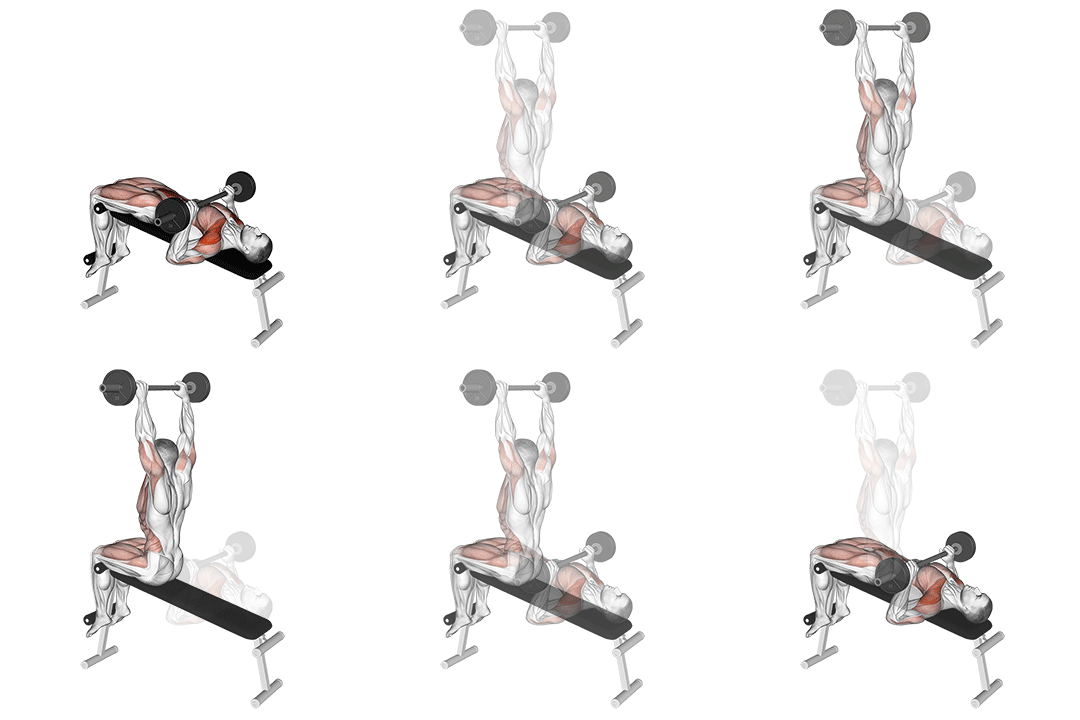
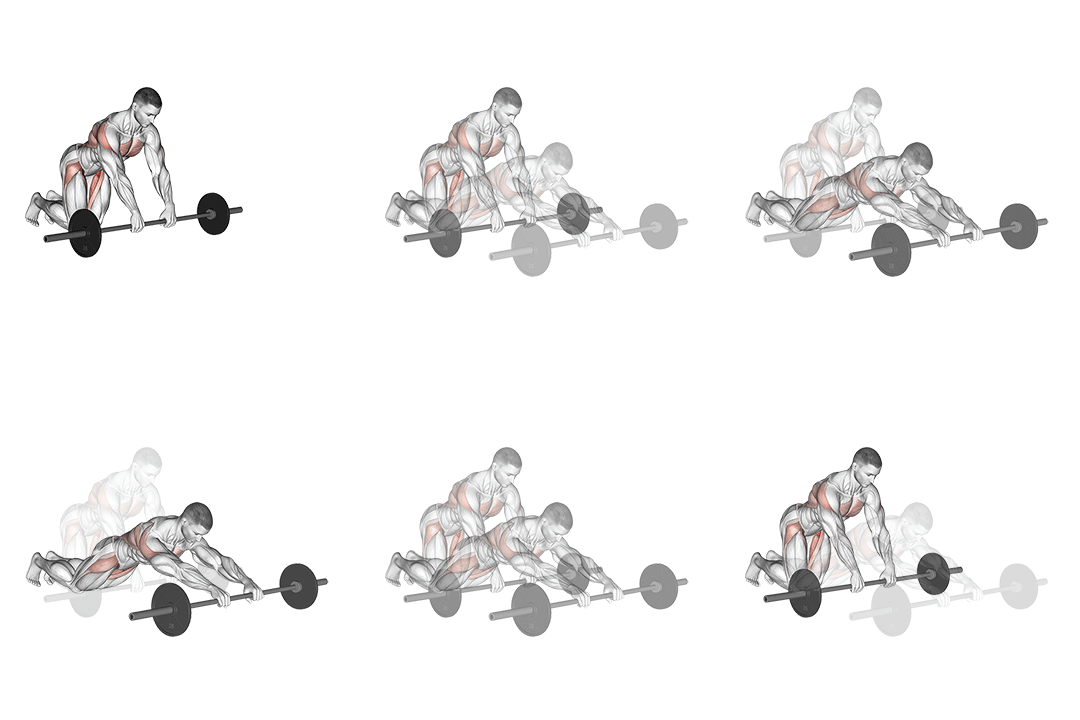
More comparisons with Barbell Seated Twist
Compare More Exercises
Use our free comparison tool to analyze any two exercises head-to-head.
Compare Exercises