

Barbell Rollerout From Bench vs Barbell Side Bent V. 2: Complete Comparison Guide
Barbell Rollerout From Bench vs Barbell Side Bent V. 2 — both use a barbell but train your waist in very different ways. If you want clear guidance on which to pick for core strength, oblique size, equipment needs, and injury risk, this guide has your back. You’ll get a side-by-side look at primary and secondary muscle activation, specific technique cues (hip, spine, shoulder positions), rep ranges, and progression options so you can choose the move that matches your goals and experience level.
Exercise Comparison
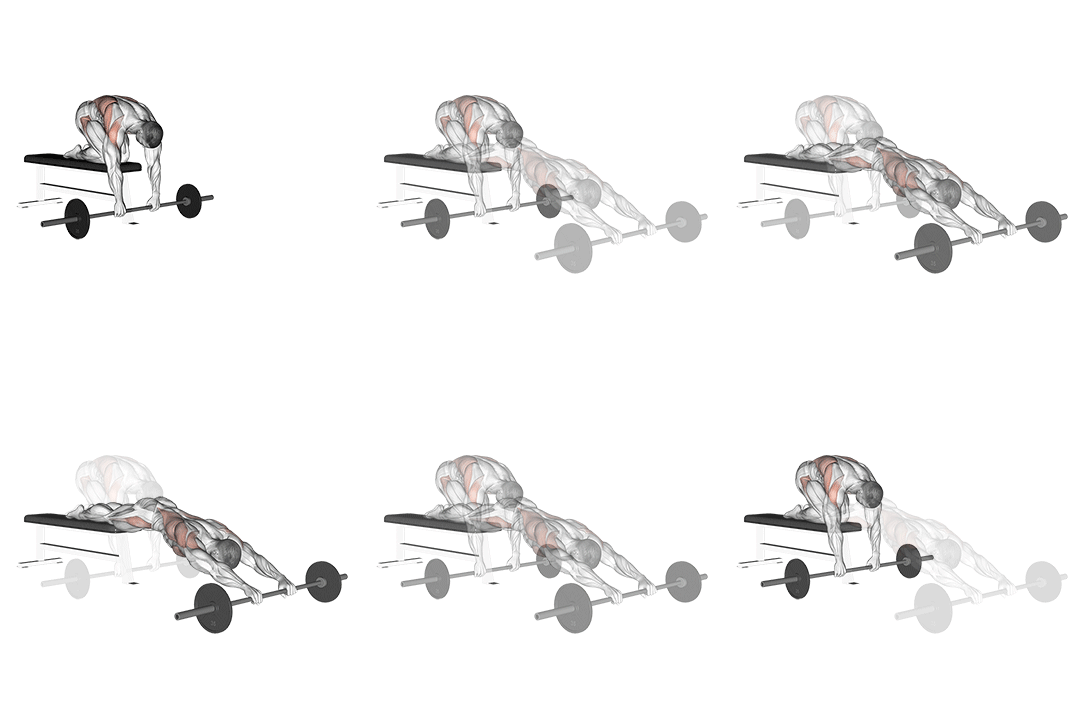
Barbell Rollerout From Bench
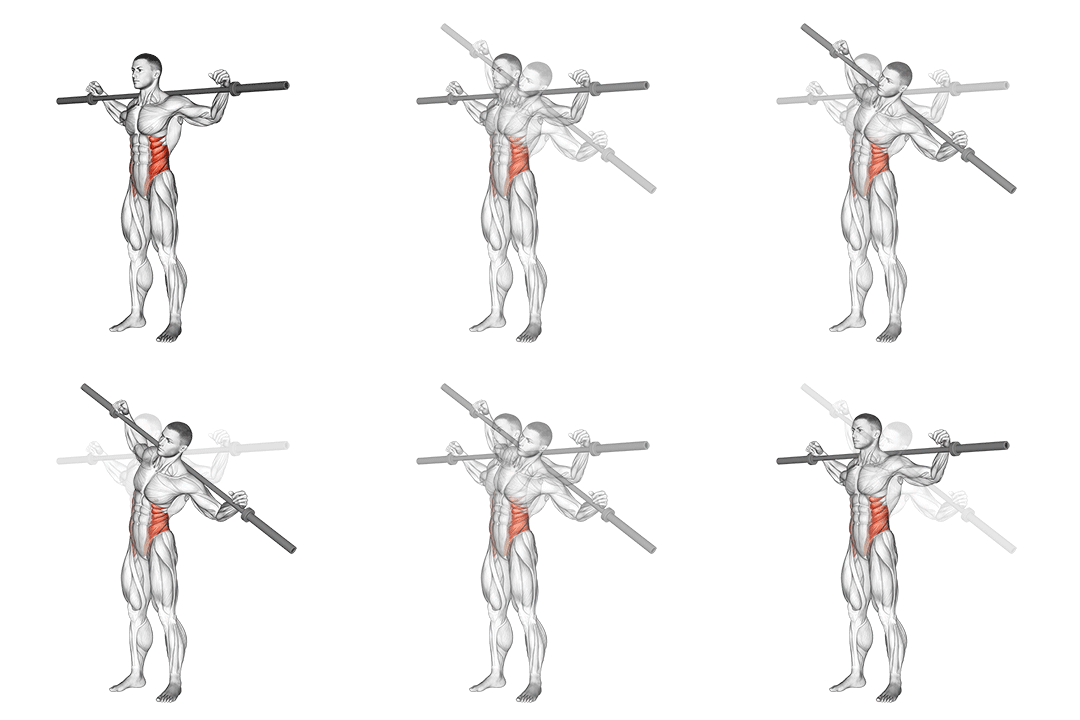
Barbell Side Bent V. 2
Head-to-Head Comparison
| Attribute | Barbell Rollerout From Bench | Barbell Side Bent V. 2 |
|---|---|---|
| Target Muscle |
Abs
|
Abs
|
| Body Part |
Waist
|
Waist
|
| Equipment |
Barbell
|
Barbell
|
| Difficulty |
Intermediate
|
Beginner
|
| Movement Type |
Compound
|
Compound
|
| Secondary Muscles |
2
|
2
|
Secondary Muscles Activated
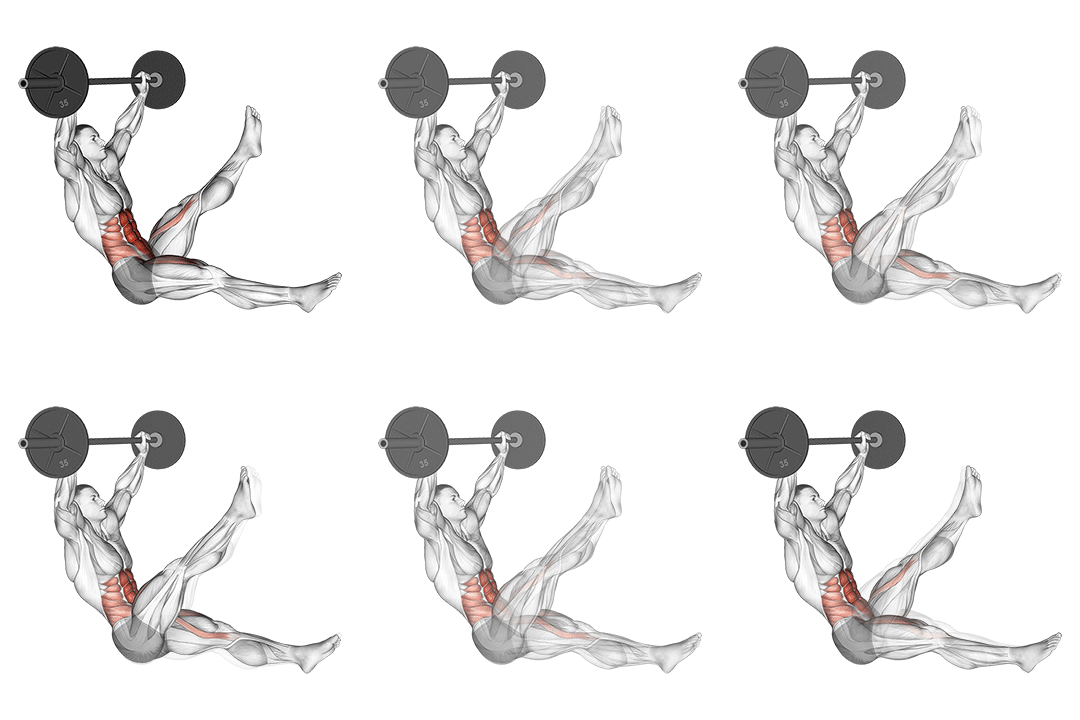
Barbell Rollerout From Bench
Barbell Side Bent V. 2
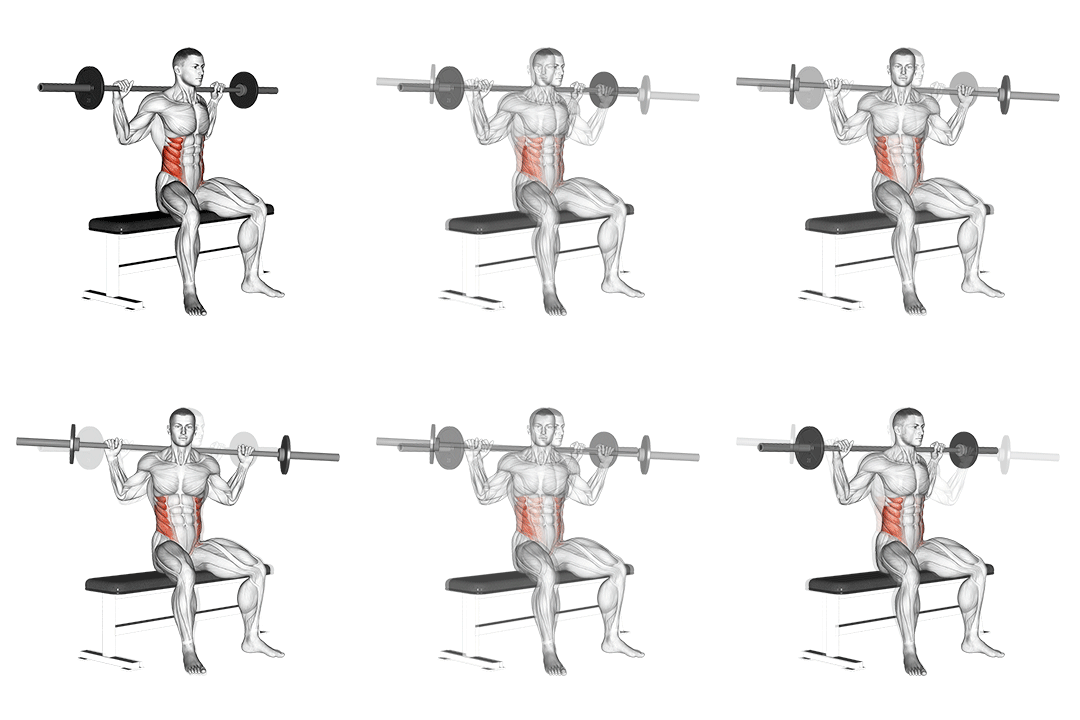
Visual Comparison
Overview
Barbell Rollerout From Bench vs Barbell Side Bent V. 2 — both use a barbell but train your waist in very different ways. If you want clear guidance on which to pick for core strength, oblique size, equipment needs, and injury risk, this guide has your back. You’ll get a side-by-side look at primary and secondary muscle activation, specific technique cues (hip, spine, shoulder positions), rep ranges, and progression options so you can choose the move that matches your goals and experience level.
Key Differences
- Difficulty levels differ: Barbell Rollerout From Bench is intermediate, while Barbell Side Bent V. 2 is beginner.
- Both exercises target the Abs using Barbell. The main differences are in their movement patterns and muscle activation angles.
Pros & Cons
Barbell Rollerout From Bench
+ Pros
- High anti-extension demand trains deep core stabilizers and rectus abdominis effectively
- Transfers to athletic patterns requiring trunk stiffness under load
- Multiple progression options (distance, eccentrics, pauses)
- Also activates shoulders and triceps for integrated upper-body stability
− Cons
- Requires solid shoulder and core control — technical for intermediates
- Higher lumbar spine stress if performed with poor form
- Needs bench and open floor space for safe execution
Barbell Side Bent V. 2
+ Pros
- Simple to learn — beginner friendly technical demands
- Directly targets obliques and lateral core for hypertrophy
- Minimal space and easy to load heavy for progressive overload
- Can be substituted with dumbbell/kettlebell if barbell isn’t available
− Cons
- Less challenge to anti-extension/core stiffness compared to rollerout
- Risk of lateral shear if torso rotation or hip shift occurs
- Can over-emphasize one side if you don’t control loading and tempo
When Each Exercise Wins
Side Bent V. 2 allows higher axial loading and direct oblique tension across 10–20 reps, which favors hypertrophy via increased time under tension. The short-range, high-load lateral flexion maximizes oblique length-tension relationships for size.
Rollerout builds core strength through anti-extension under a long lever arm, improving transferable trunk stiffness; perform 4–8 reps with controlled eccentrics to increase strength. This pattern enhances force transfer to heavy lifts and athletic movements.
Side Bent is mechanically simpler and easier to cue: keep neutral spine, hinge minimally at the hips, and bend laterally 20–40°. You can safely start with light load and higher reps while learning hip and spine control.
Side Bent requires less space and can be adapted to a single dumbbell or kettlebell, making it far more practical for most home setups. Rollerout needs more room, a bench, and more advanced core control.
Frequently Asked Questions
Can I do both Barbell Rollerout From Bench and Barbell Side Bent V. 2 in the same workout?
Yes — pairing them makes sense: start with Rollerouts for core strength (4–8 hard reps) then follow with Side Bents for oblique hypertrophy (10–15 reps/side). Keep total volume reasonable and prioritize form to avoid cumulative low-back fatigue.
Which exercise is better for beginners?
Barbell Side Bent V. 2 is better for beginners because it’s single-plane and easier to control; start light and focus on a neutral spine and even range of motion. Progress to Rollerouts once you can maintain trunk stiffness and have adequate shoulder stability.
How do the muscle activation patterns differ?
Rollerout stresses anti-extension under a long anterior lever, producing high rectus abdominis and deep core activation across a 0–45° forward travel. Side Bent creates frontal-plane torque with peak oblique activation near 20–40° lateral flexion and increased contralateral lower-back stabilization.
Can Barbell Side Bent V. 2 replace Barbell Rollerout From Bench?
Side Bent can replace Rollerout when your goal is oblique size or you lack the skill/space for roll-outs, but it won’t develop anti-extension resilience to the same degree. If core stiffness under long-lever loads is a priority, keep Rollerouts in the program.
Expert Verdict
Use Barbell Rollerout From Bench when your priority is core strength, anti-extension resilience, and transferring trunk stiffness to compound lifts — program it for lower reps (4–10) with slow eccentrics or long-distance roll-outs. Choose Barbell Side Bent V. 2 when you want direct oblique development, easy progression with heavier loads, and a beginner-friendly option — aim for 10–20 reps per side with strict tempo and minimal hip shift. If you want a balanced program, pair Side Bent for oblique hypertrophy and Rollerout for anti-extension strength on different days or phases.
Also Compare
More comparisons with Barbell Rollerout From Bench
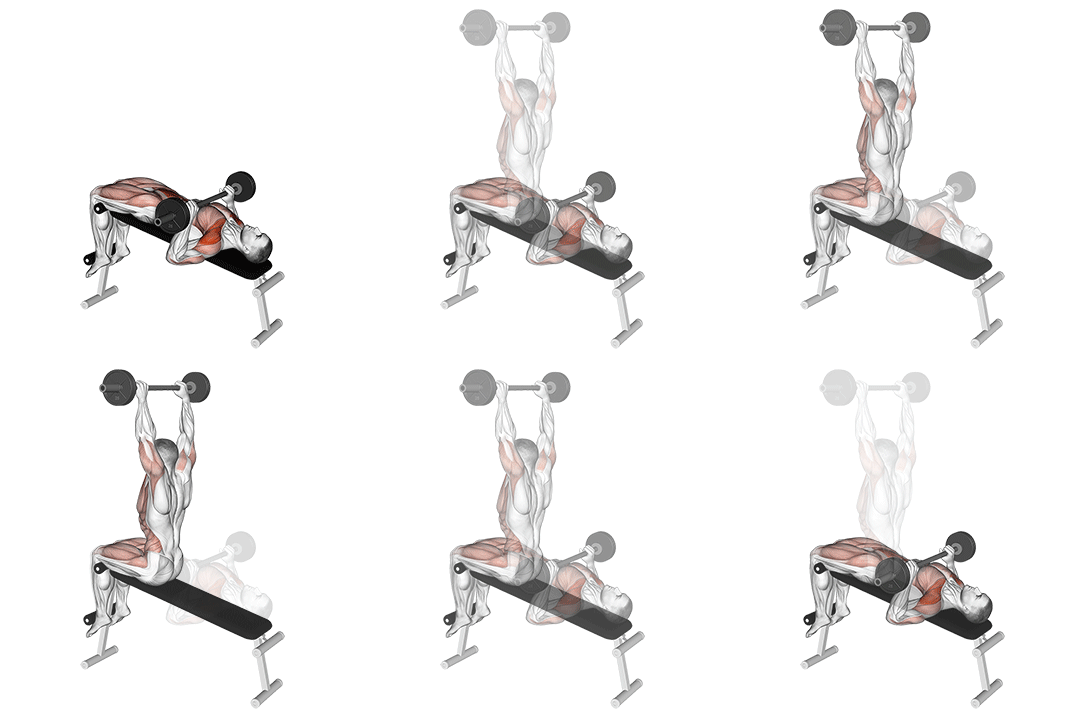
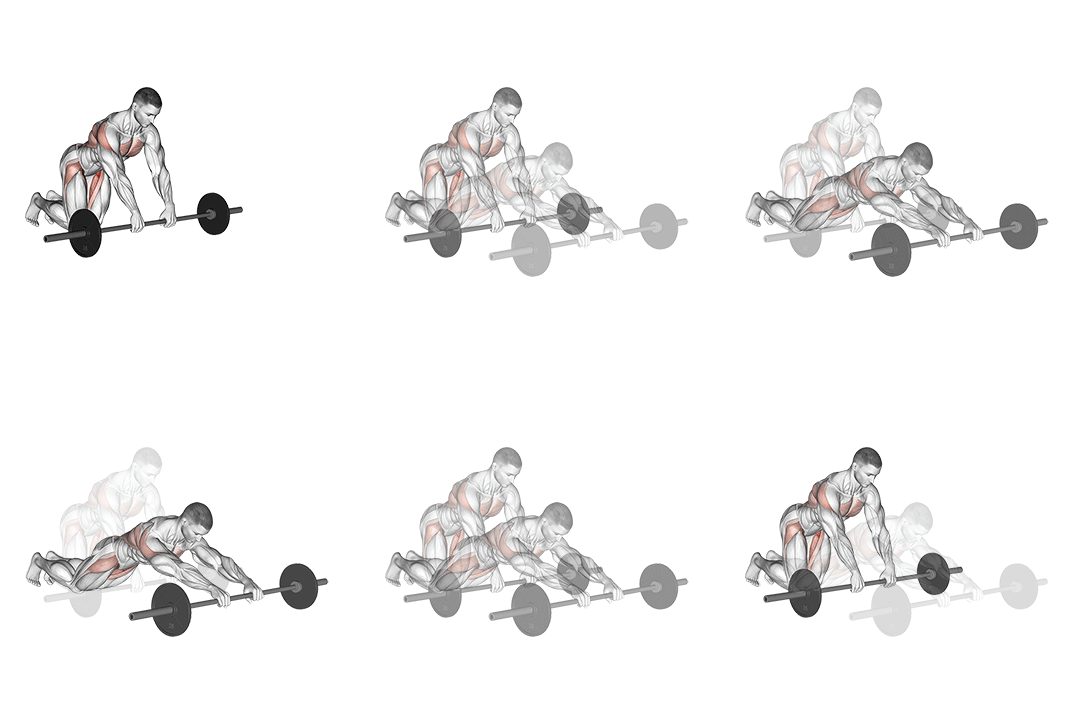
More comparisons with Barbell Side Bent V. 2
Compare More Exercises
Use our free comparison tool to analyze any two exercises head-to-head.
Compare Exercises