

Barbell Rollerout From Bench vs Barbell Sitted Alternate Leg Raise (female): Complete Comparison Gui
Barbell Rollerout From Bench vs Barbell Sitted Alternate Leg Raise (female) — two intermediate barbell core moves that look similar on paper but load your trunk very differently. You’ll get clear technique cues, the biomechanics behind muscle activation, equipment needs, learning curves, and which exercise to pick for muscle growth, strength, or convenience. Read on to learn exact rep ranges, joint angles to watch, how the force vectors change the load on your rectus abdominis and obliques, and practical progressions you can use in your next workout.
Exercise Comparison
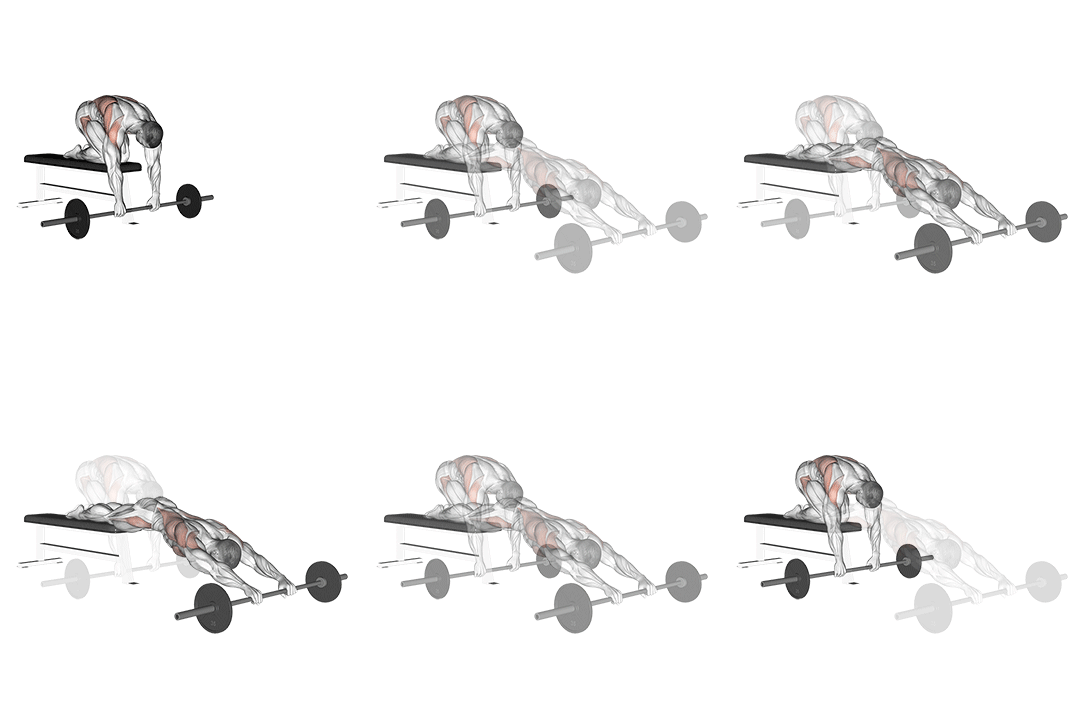
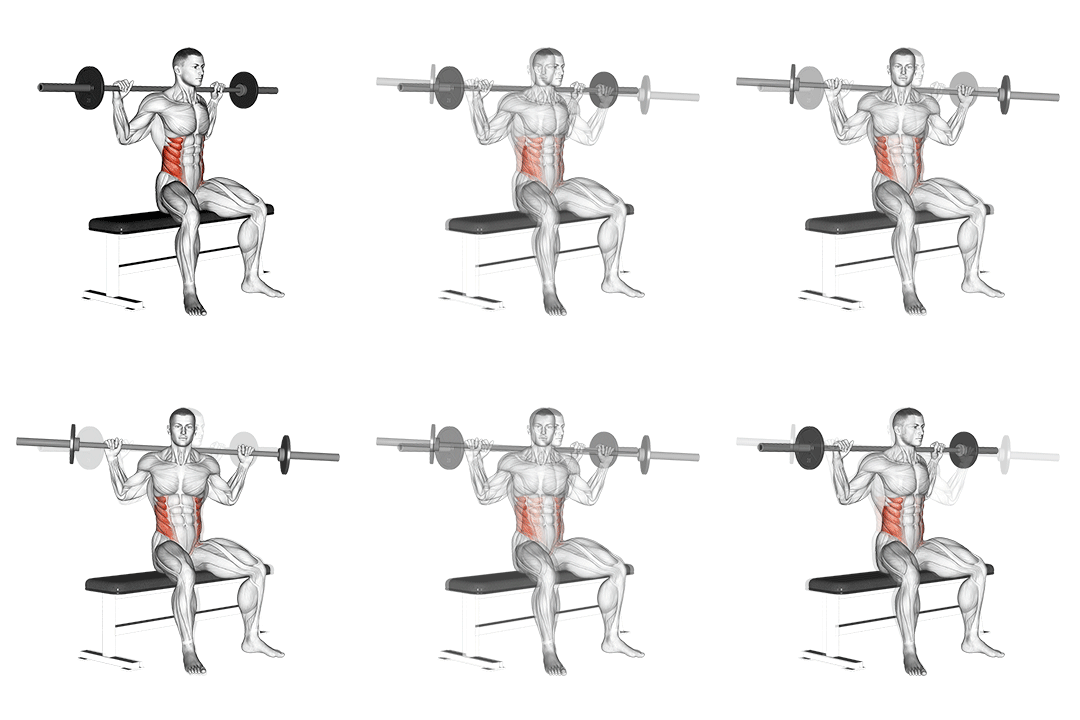
Barbell Rollerout From Bench
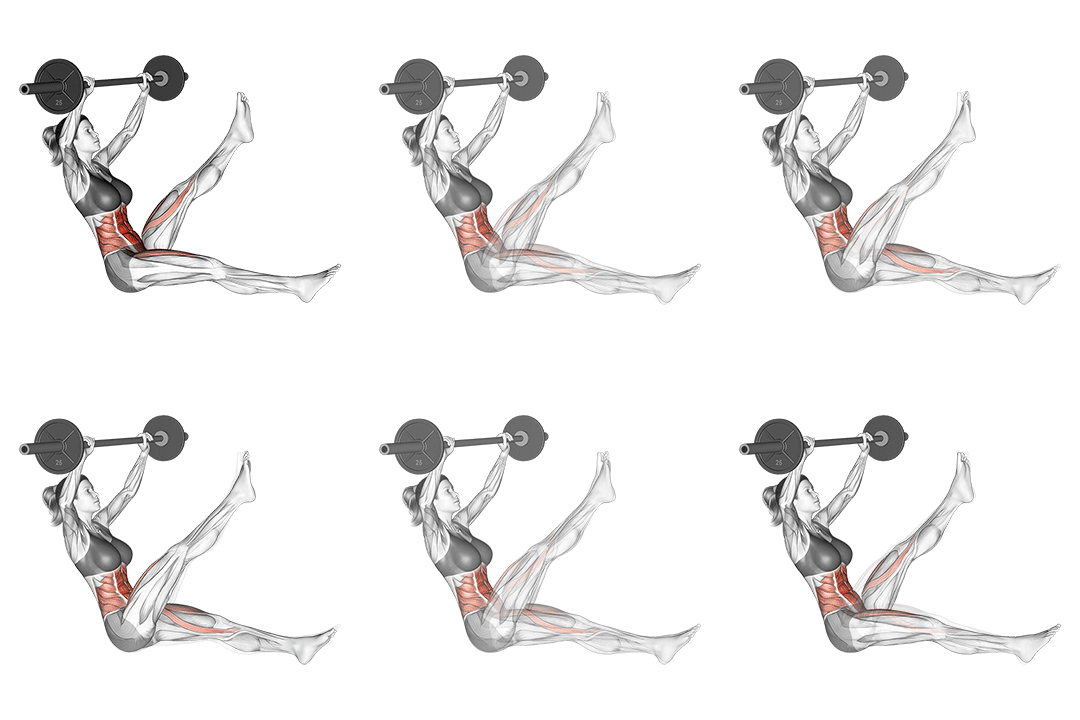
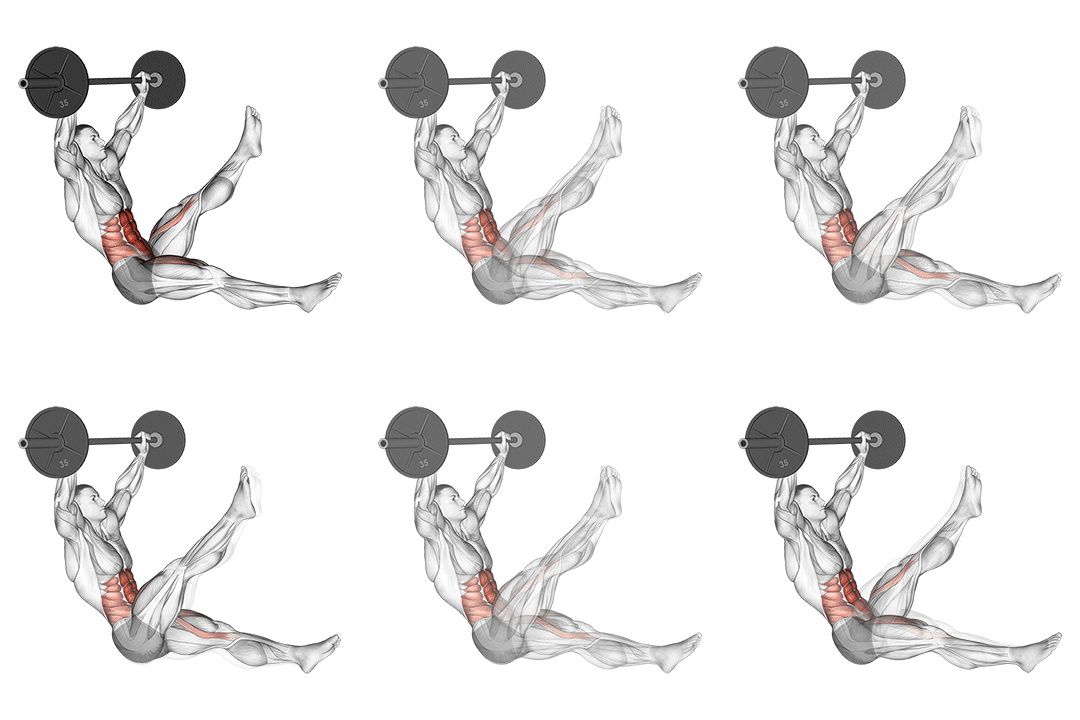
Barbell Sitted Alternate Leg Raise (female)
Head-to-Head Comparison
| Attribute | Barbell Rollerout From Bench | Barbell Sitted Alternate Leg Raise (female) |
|---|---|---|
| Target Muscle |
Abs
|
Abs
|
| Body Part |
Waist
|
Waist
|
| Equipment |
Barbell
|
Barbell
|
| Difficulty |
Intermediate
|
Intermediate
|
| Movement Type |
Compound
|
Isolation
|
| Secondary Muscles |
2
|
2
|
Secondary Muscles Activated
Barbell Rollerout From Bench
Barbell Sitted Alternate Leg Raise (female)
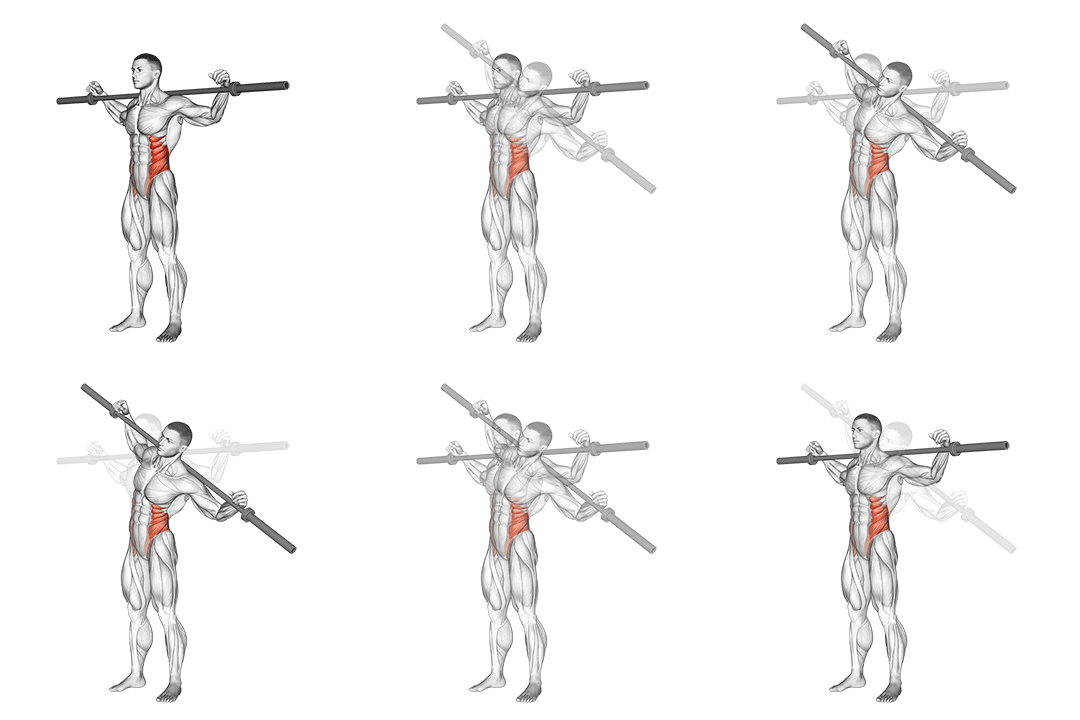
Visual Comparison
Overview
Barbell Rollerout From Bench vs Barbell Sitted Alternate Leg Raise (female) — two intermediate barbell core moves that look similar on paper but load your trunk very differently. You’ll get clear technique cues, the biomechanics behind muscle activation, equipment needs, learning curves, and which exercise to pick for muscle growth, strength, or convenience. Read on to learn exact rep ranges, joint angles to watch, how the force vectors change the load on your rectus abdominis and obliques, and practical progressions you can use in your next workout.
Key Differences
- Barbell Rollerout From Bench is a compound movement, while Barbell Sitted Alternate Leg Raise (female) is an isolation exercise.
- Both exercises target the Abs using Barbell. The main differences are in their movement patterns and muscle activation angles.
Pros & Cons
Barbell Rollerout From Bench
+ Pros
- High anti-extension demand builds resilient anterior core under load
- Easy to increase mechanical difficulty via ROM or standing progression
- Also trains shoulder and triceps stabilizers isometrically
- Efficient for low-rep strength work (6–12 reps) and eccentric control
− Cons
- Higher technical demand; requires shoulder and scapular stability
- Greater risk of lumbar hyperextension if form breaks down
- Needs smooth surface and bench setup, less portable
Barbell Sitted Alternate Leg Raise (female)
+ Pros
- Simple hip-flexion pattern is easy to cue and teach
- Lower injury risk to shoulders; gentler on the upper body
- Accessible with minimal equipment and space
- Effective for higher-rep metabolic core work (10–20+ reps)
− Cons
- Limited absolute overload compared to lever-based rollouts
- Greater reliance on hip flexors can reduce isolated rectus work
- Can encourage lumbar flexion momentum if tempo is poor
When Each Exercise Wins
For targeted muscle growth of the lower rectus and hip flexors, the seated leg raise allows higher rep ranges (10–20+) and more time under tension. Its cyclic concentric contractions and ability to accumulate volume make it a better isolation tool for hypertrophy.
Rollerouts create higher mechanical demand through longer lever arms and anti-extension loading, which is ideal for building maximal core strength. You can progress via ROM, added load, or standing variations to increase force output.
Beginners learn the hip-flexion pattern faster and can control tempo and range without heavy shoulder or scapular demands. It lets you build endurance and core awareness in 2–4 sessions before moving to more complex patterns.
Seated leg raises require minimal space and lower technical setup, and you can use a light barbell, dumbbell, or plate. Rollerouts often need a bench, smooth floor, and more shoulder stability, making them less practical at home.
Frequently Asked Questions
Can I do both Barbell Rollerout From Bench and Barbell Sitted Alternate Leg Raise (female) in the same workout?
Yes — pairing them makes sense: do rollerouts earlier for maximal-strength sets (3–5 sets of 6–10) and finish with seated alternate leg raises for volume (2–3 sets of 12–20). That sequencing uses rollerouts when you have fresh shoulder and core stability, then accumulates fatigue with isolation work.
Which exercise is better for beginners?
Barbell Sitted Alternate Leg Raise (female) is better for beginners because it follows a simpler hip-flexion pattern, has lower shoulder demands, and is easier to cue. Start with controlled tempo (2 s up, 2 s down) and 10–15 reps to build endurance and technique.
How do the muscle activation patterns differ?
Rollerouts emphasize isometric and eccentric control of the rectus abdominis and obliques across a long ROM, increasing anti-extension torque at the lumbar spine. Seated leg raises generate cyclic concentric hip-flexion torque that targets the lower rectus and iliopsoas through repeated 0–90° hip flexion actions.
Can Barbell Sitted Alternate Leg Raise (female) replace Barbell Rollerout From Bench?
It can replace rollouts for hypertrophy or when shoulder stability is limited, but it won’t replicate the anti-extension strength stimulus of a rollout. If your priority is maximal core strength under long-lever loading, keep rollouts in the program; for volume or accessibility, use seated leg raises.
Expert Verdict
Choose Barbell Rollerout From Bench when your goal is to build anti-extension core strength and train the trunk under long-lever conditions—use 4–6 sets of 6–12 controlled reps, focus on neutral spine and scapular stability, and progress cautiously to standing variations. Choose Barbell Sitted Alternate Leg Raise (female) when you want targeted lower-rectus and hip-flexor hypertrophy or a low-shoulder-impact core finisher—use 3–4 sets of 10–20 reps with slow tempo and no rocking. If you value progression potential for strength, pick the rollout; if you need accessibility, higher rep volume, or easier learning, pick the seated leg raise.
Also Compare
More comparisons with Barbell Rollerout From Bench
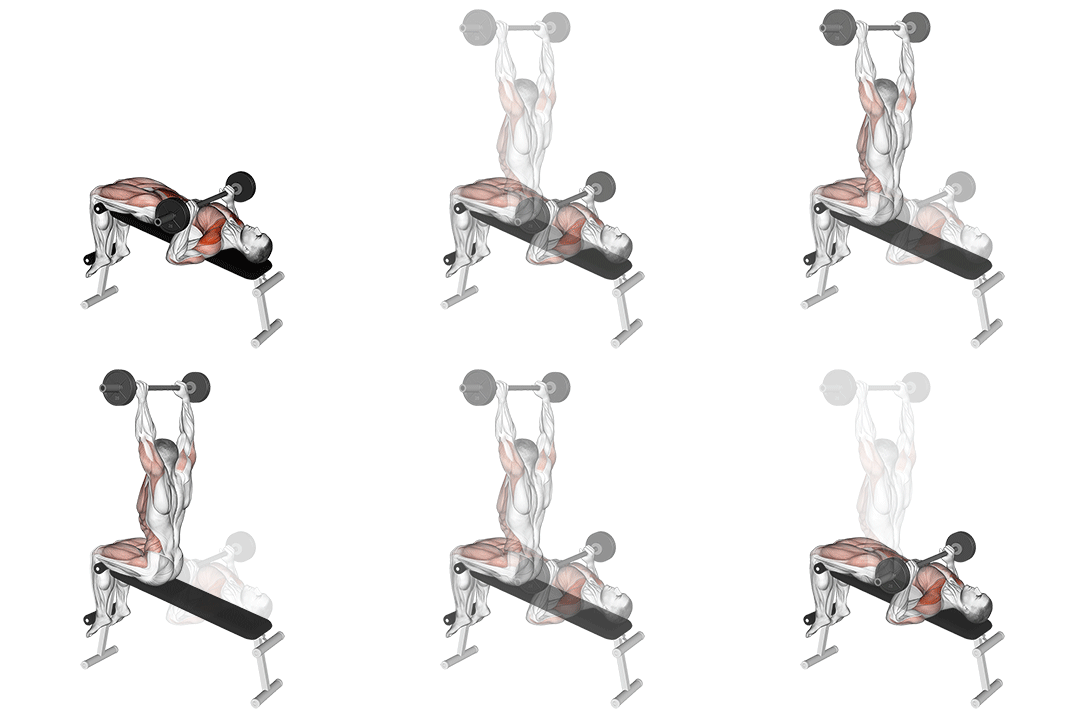
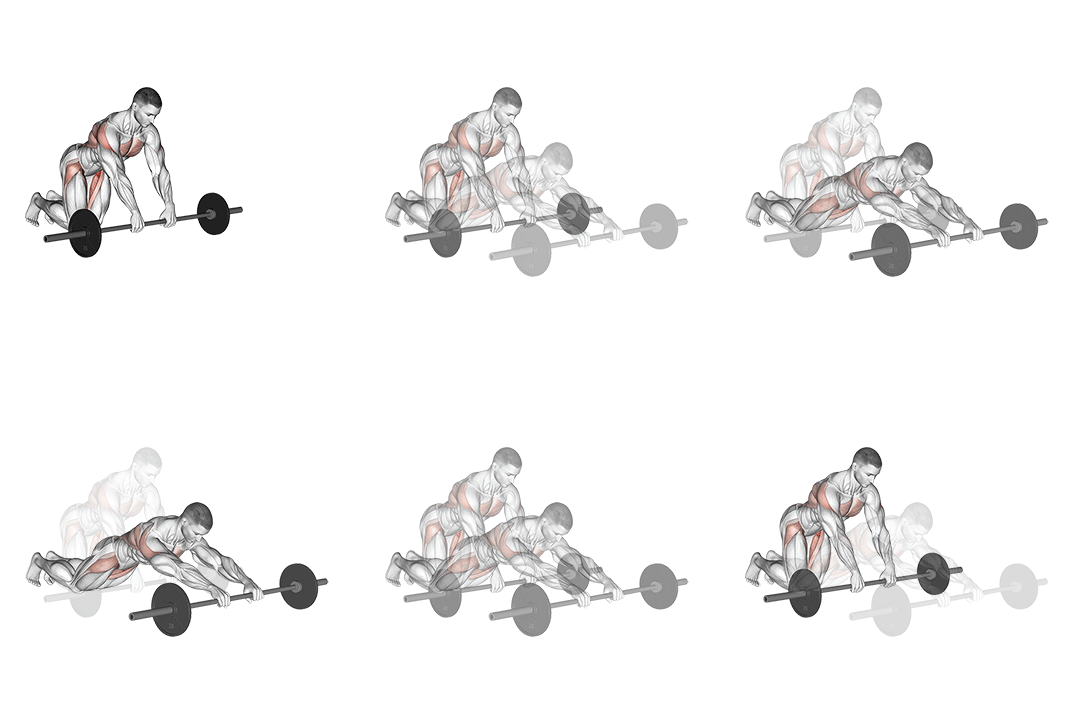
More comparisons with Barbell Sitted Alternate Leg Raise (female)
Compare More Exercises
Use our free comparison tool to analyze any two exercises head-to-head.
Compare Exercises