

Barbell Rollerout vs Barbell Rollerout From Bench: Complete Comparison Guide
Barbell Rollerout vs Barbell Rollerout From Bench is a common decision for trainees who want a stronger, more defined midsection. You’ll learn which movement stresses the rectus abdominis and obliques more, how the bench variant alters shoulder and triceps involvement, and clear technique cues so you can perform each safely. I’ll cover muscle activation, equipment needs, difficulty and progression paths, and give practical recommendations for hypertrophy, strength, beginners, and home training based on biomechanics and movement patterns.
Exercise Comparison
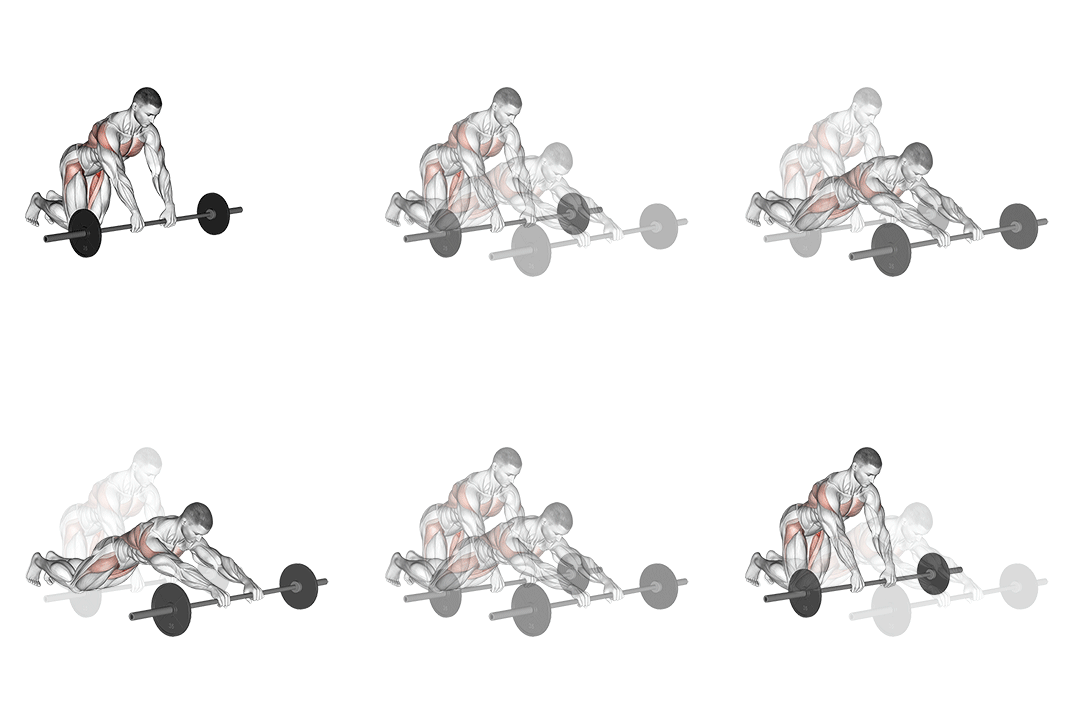
Barbell Rollerout
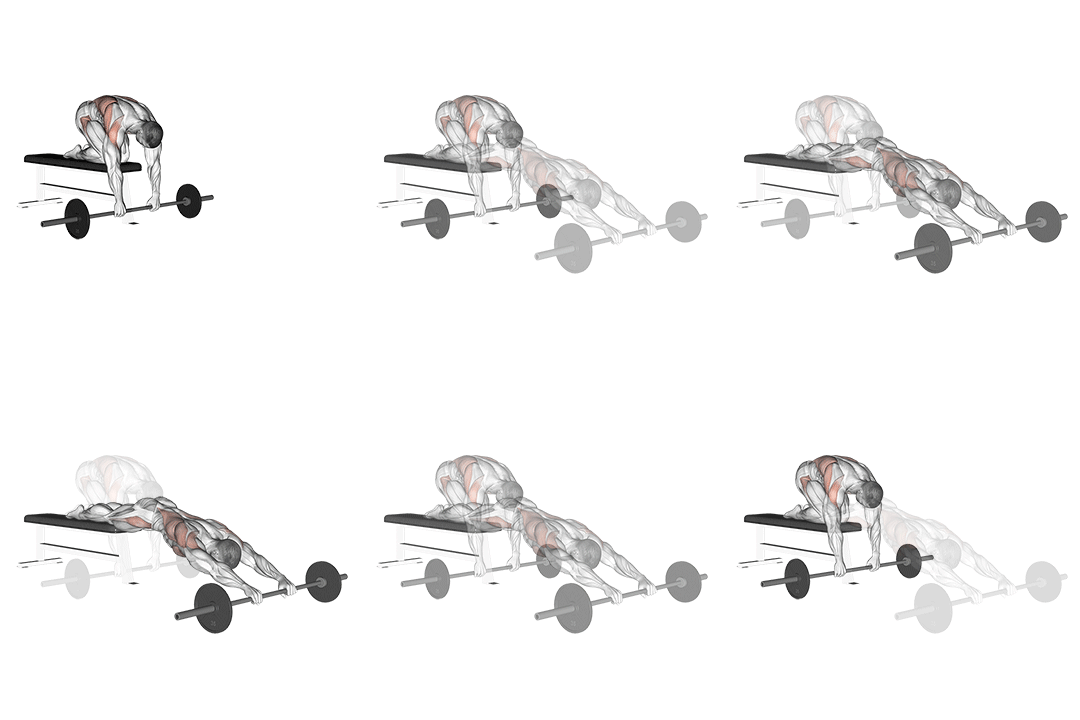
Barbell Rollerout From Bench
Head-to-Head Comparison
| Attribute | Barbell Rollerout | Barbell Rollerout From Bench |
|---|---|---|
| Target Muscle |
Abs
|
Abs
|
| Body Part |
Waist
|
Waist
|
| Equipment |
Barbell
|
Barbell
|
| Difficulty |
Advanced
|
Intermediate
|
| Movement Type |
Compound
|
Compound
|
| Secondary Muscles |
1
|
2
|
Secondary Muscles Activated
Barbell Rollerout
Barbell Rollerout From Bench
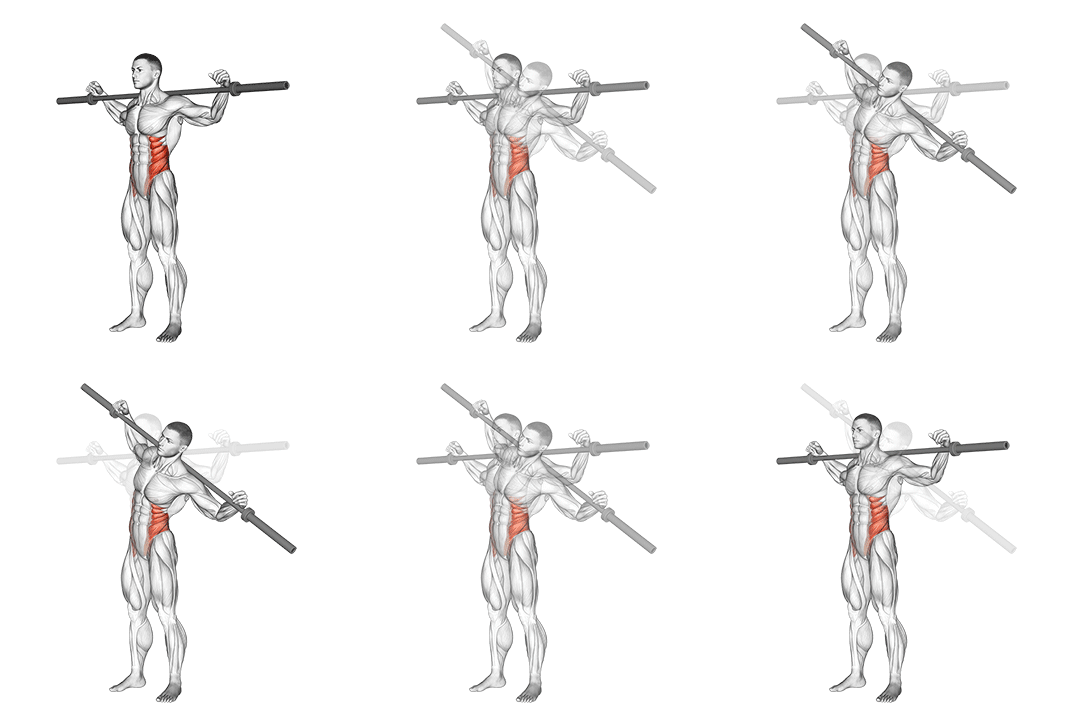
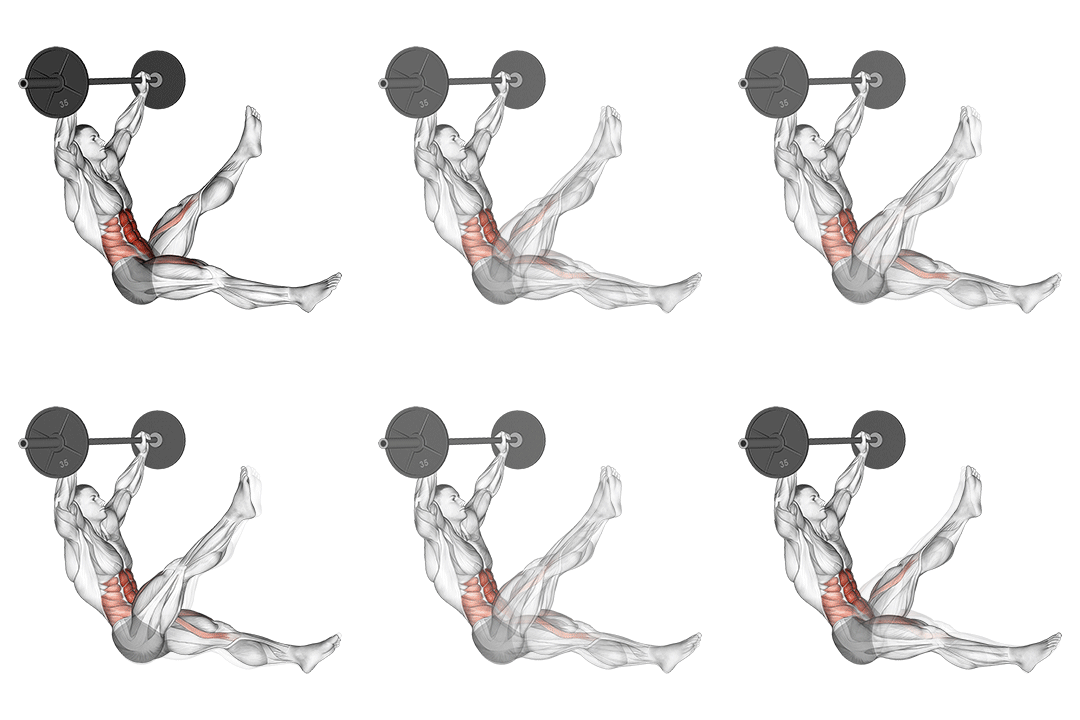
Visual Comparison
Overview
Barbell Rollerout vs Barbell Rollerout From Bench is a common decision for trainees who want a stronger, more defined midsection. You’ll learn which movement stresses the rectus abdominis and obliques more, how the bench variant alters shoulder and triceps involvement, and clear technique cues so you can perform each safely. I’ll cover muscle activation, equipment needs, difficulty and progression paths, and give practical recommendations for hypertrophy, strength, beginners, and home training based on biomechanics and movement patterns.
Key Differences
- Difficulty levels differ: Barbell Rollerout is advanced, while Barbell Rollerout From Bench is intermediate.
- Both exercises target the Abs using Barbell. The main differences are in their movement patterns and muscle activation angles.
Pros & Cons
Barbell Rollerout
+ Pros
- Maximal core overload through extended ROM and high eccentric tension
- Better carryover to anti-extension strength for deadlift and pressing stability
- Easy to progress by increasing ROM, tempo, or band resistance
- Greater posterior chain stabilization challenge (erectors, glutes)
− Cons
- High technical demand; requires strong lumbar control
- Greater risk of lower back strain if form breaks
- Not friendly for limited shoulder or wrist mobility
Barbell Rollerout From Bench
+ Pros
- Lower entry barrier—reduced ROM makes it easier to learn
- Adds shoulder and triceps isometric demand, improving press-related stability
- Less lumbar stress, safer for trainees with mild back issues
- Simple to scale—move bench height or hand position to modify difficulty
− Cons
- Reduced peak abdominal eccentric loading compared to floor rollerout
- Can shift too much work to shoulders/triceps if you overuse the upper body
- Bench setup may limit natural scapular motion if hands are too close to edge
When Each Exercise Wins
The full-range rollerout exposes the rectus abdominis to longer eccentric time under tension, which is more effective for stimulating muscle growth. Use 8–15 controlled reps with 3–4 second eccentrics to maximize abdominal hypertrophy.
To build anti-extension strength you need maximal torque across the hip-lumbar complex; the floor rollerout provides greater leverage demand and specificity. Perform 4–8 reps with added tempo or band resistance for neural and strength adaptations.
The bench shortens ROM and reduces lumbar loading, letting you learn core bracing and scapular control without hitting end-range extension. Start with 8–12 reps and focus on neutral spine and controlled protraction.
Many home setups include a bench but not roller wheels; the bench variant is easier to set up safely and limits ROM so you can train core effectively without full-floor clearance. Use lighter plates and slow tempo if you lack a spotter.
Frequently Asked Questions
Can I do both Barbell Rollerout and Barbell Rollerout From Bench in the same workout?
Yes. Use the bench variant as a warm-up and neural primer (2–3 sets of 8–12 reps) and finish with 2–4 sets of full rollerouts for higher-intensity work. Sequence the easier bench sets first to groove technique, then challenge your ROM while fresh.
Which exercise is better for beginners?
Barbell Rollerout From Bench is better for beginners because it reduces range of motion and lumbar loading, letting you build bracing and scapular control. Progress to the floor rollerout after 4–8 weeks of consistent form and strength.
How do the muscle activation patterns differ?
The floor rollerout increases eccentric time under tension for the rectus abdominis and demands more erector spinae stabilization, while the bench variant shortens the abdominal eccentric phase and increases isometric demand on the anterior deltoids and triceps during control and return.
Can Barbell Rollerout From Bench replace Barbell Rollerout?
It can replace the floor version for training phases focused on control, rehab, or higher volume, but it won’t fully replace the strength-specific overload the full rollerout provides. Use the bench version as a long-term training tool if you can’t safely perform full rollerouts.
Expert Verdict
Use the Barbell Rollerout when you want maximal anti-extension overload and long-term strength or hypertrophy for the abs and posterior chain. Its longer ROM and higher eccentric demand make it the clear choice for advanced trainees who have solid lumbar control and shoulder mobility. Choose the Barbell Rollerout From Bench if you’re intermediate, rehabbing, new to anti-extension work, or want to limit lumbar stress while still improving core strength and shoulder stability. Both fit into 2–4 week cycles: prioritize the bench version to build control, then graduate toward full rollerouts for carryover.
Also Compare
More comparisons with Barbell Rollerout
More comparisons with Barbell Rollerout From Bench
Compare More Exercises
Use our free comparison tool to analyze any two exercises head-to-head.
Compare Exercises