

Barbell Rollerout vs Barbell Seated Twist: Complete Comparison Guide
Barbell Rollerout vs Barbell Seated Twist — both train your abs and waist, but they do it through very different mechanics. If you want clear guidance on which to use, this guide walks you through primary and secondary muscle activation, equipment needs, learning curves, injury risk, and rep-range recommendations. You'll get specific technique cues (body angles, brace timing, and ROM limits), biomechanical reasons one exercise emphasizes anti-extension while the other emphasizes rotation, and actionable advice so you can pick the right move for hypertrophy, strength, or home workouts.
Exercise Comparison
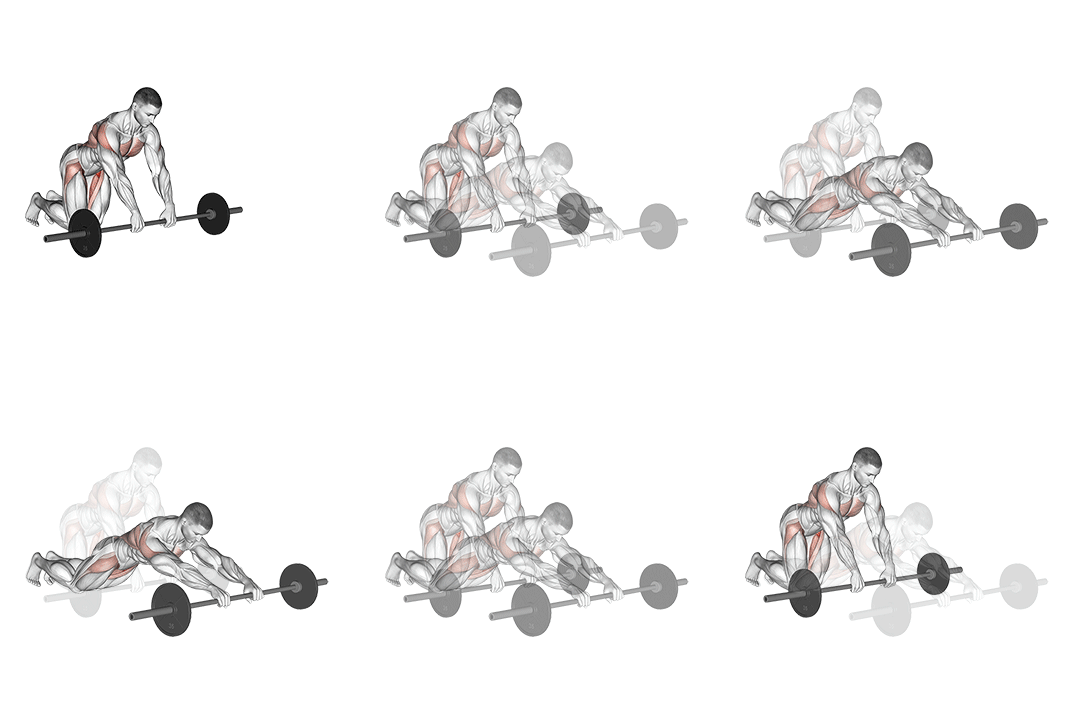
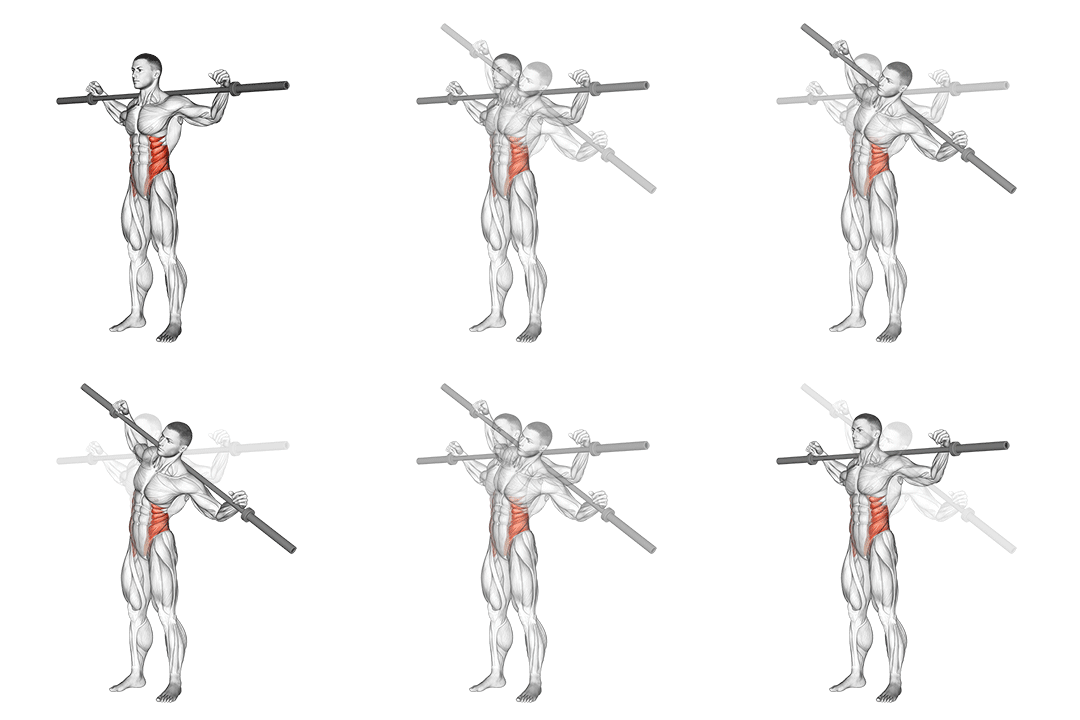
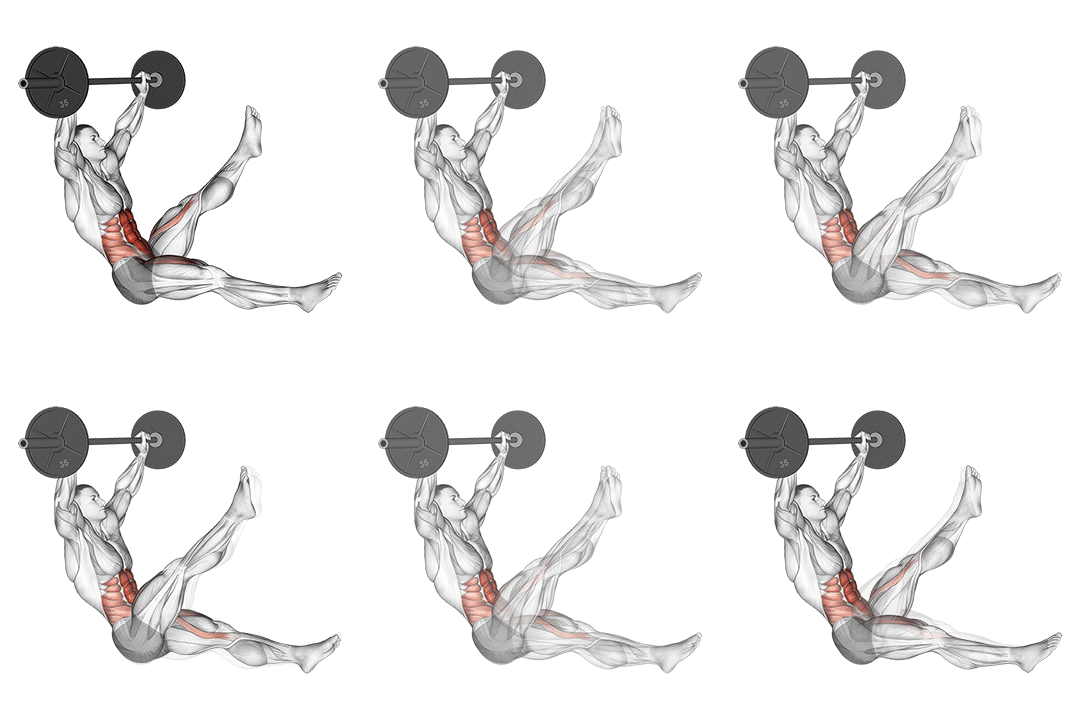
Barbell Rollerout
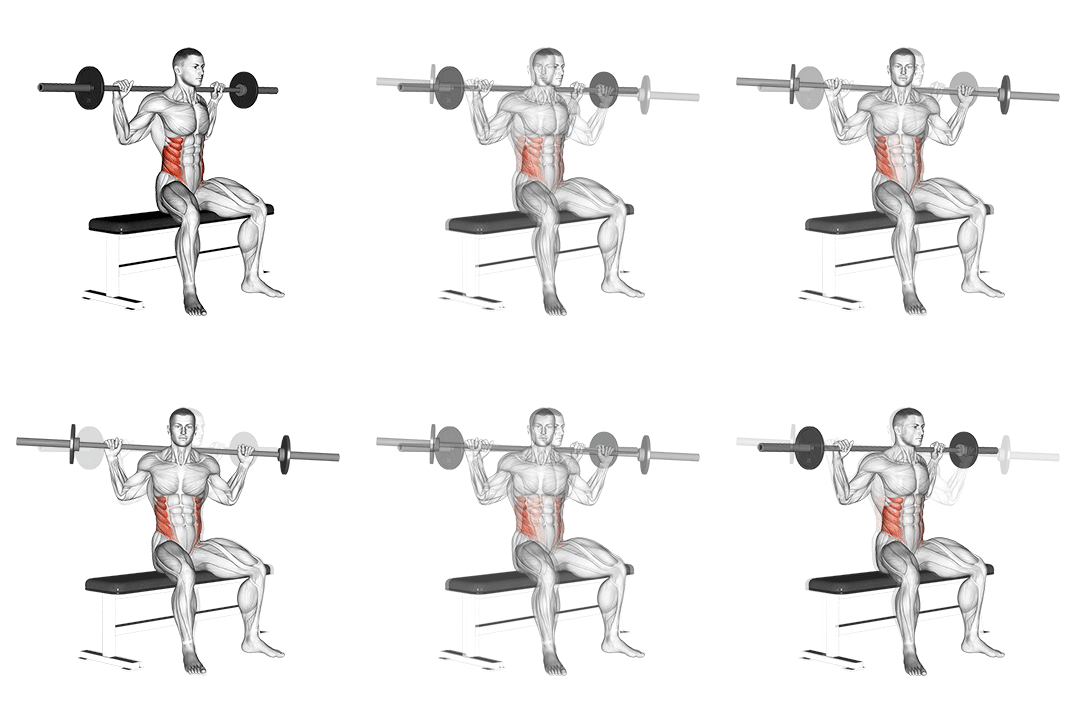
Barbell Seated Twist
Head-to-Head Comparison
| Attribute | Barbell Rollerout | Barbell Seated Twist |
|---|---|---|
| Target Muscle |
Abs
|
Abs
|
| Body Part |
Waist
|
Waist
|
| Equipment |
Barbell
|
Barbell
|
| Difficulty |
Advanced
|
Intermediate
|
| Movement Type |
Compound
|
Compound
|
| Secondary Muscles |
1
|
2
|
Secondary Muscles Activated
Barbell Rollerout
Barbell Seated Twist
Visual Comparison
Overview
Barbell Rollerout vs Barbell Seated Twist — both train your abs and waist, but they do it through very different mechanics. If you want clear guidance on which to use, this guide walks you through primary and secondary muscle activation, equipment needs, learning curves, injury risk, and rep-range recommendations. You'll get specific technique cues (body angles, brace timing, and ROM limits), biomechanical reasons one exercise emphasizes anti-extension while the other emphasizes rotation, and actionable advice so you can pick the right move for hypertrophy, strength, or home workouts.
Key Differences
- Difficulty levels differ: Barbell Rollerout is advanced, while Barbell Seated Twist is intermediate.
- Both exercises target the Abs using Barbell. The main differences are in their movement patterns and muscle activation angles.
Pros & Cons
Barbell Rollerout
+ Pros
- High anti-extension demand builds deep core stiffness and rectus strength
- Long ROM increases fascial tension and time under tension for abs
- Scalable with progressions (knees → feet, eccentric overload, band-assisted)
- Benefits shoulder girdle stability and anterior chain integration
− Cons
- Advanced technique — requires excellent bracing and scapular control
- Higher lumbar stress risk if form breaks down
- Needs space and a smooth-rolling bar setup
Barbell Seated Twist
+ Pros
- Cleaner rotational loading for oblique hypertrophy
- Lower learning curve and easier to load progressively
- Compact setup — can be done seated at home or in gym
- Less total-body fatigue; easier to program in circuits
− Cons
- Less anti-extension challenge for the rectus abdominis
- Can rely on arm/hip momentum if not stabilized
- Limited progression options for core stiffness compared with Rollerout
When Each Exercise Wins
The Seated Twist targets obliques directly with repeated concentric contractions and easier progressive loading (8–20 reps per side). Its rotational torque and short, repeatable ROM allow focused hypertrophy through tempo and load increments.
Rollerouts develop anti-extension strength and whole-core stiffness that transfers to heavy compound lifts. Use low reps (4–8) with strict form or controlled eccentrics to build force tolerance and spinal stability.
The seated position reduces whole-body stability demands and teaches rotational control safely. You can start with light loads and limit rotation to ~30° per side while learning bracing.
Seated Twists need less space and are safer without spotters or specialized rolling surfaces. A light barbell or even a single plate suffices, making them easy to program at home.
Frequently Asked Questions
Can I do both Barbell Rollerout and Barbell Seated Twist in the same workout?
Yes. Pair them intelligently: perform Rollerouts early when your core is fresh to avoid form breakdown, then use Seated Twists as accessory work for oblique hypertrophy. Keep overall volume sensible (e.g., 3–4 sets Rollerout, then 2–3 sets of 8–15 reps per side for twists).
Which exercise is better for beginners?
Barbell Seated Twist is better for most beginners because it requires less anti-extension control and is easier to load progressively. Start with limited rotation (~30°) and focus on pelvic bracing before increasing range or weight.
How do the muscle activation patterns differ?
Rollerouts create sustained rectus and transverse abdominis activation to resist extension across a long ROM, with peak demand near full extension. Seated Twists produce alternating unilateral oblique peaks at ~30–45° rotation, emphasizing rotational torque rather than sagittal-plane control.
Can Barbell Seated Twist replace Barbell Rollerout?
Not completely. If your goal is anti-extension strength and spinal stiffness, the Rollerout is superior. If your priority is oblique development or a lower-risk, easier-to-load option, Seated Twists can replace Rollerouts in accessory-focused phases.
Expert Verdict
Use Barbell Rollerout when your goal is to build anti-extension core strength, improve transfer to heavy compound lifts, and develop deep trunk stiffness — prioritize it in low-rep strength blocks (4–8 reps) and only if you have solid bracing and lumbar control. Choose Barbell Seated Twist when you want targeted oblique hypertrophy, easier loading, and a safer option for beginners or home sessions — use 8–20 reps per side with 30–45° rotations. Program both strategically: Rollerouts for spinal control and strength phases, Twists for rotational mass and accessory work that supports performance and aesthetics.
Also Compare
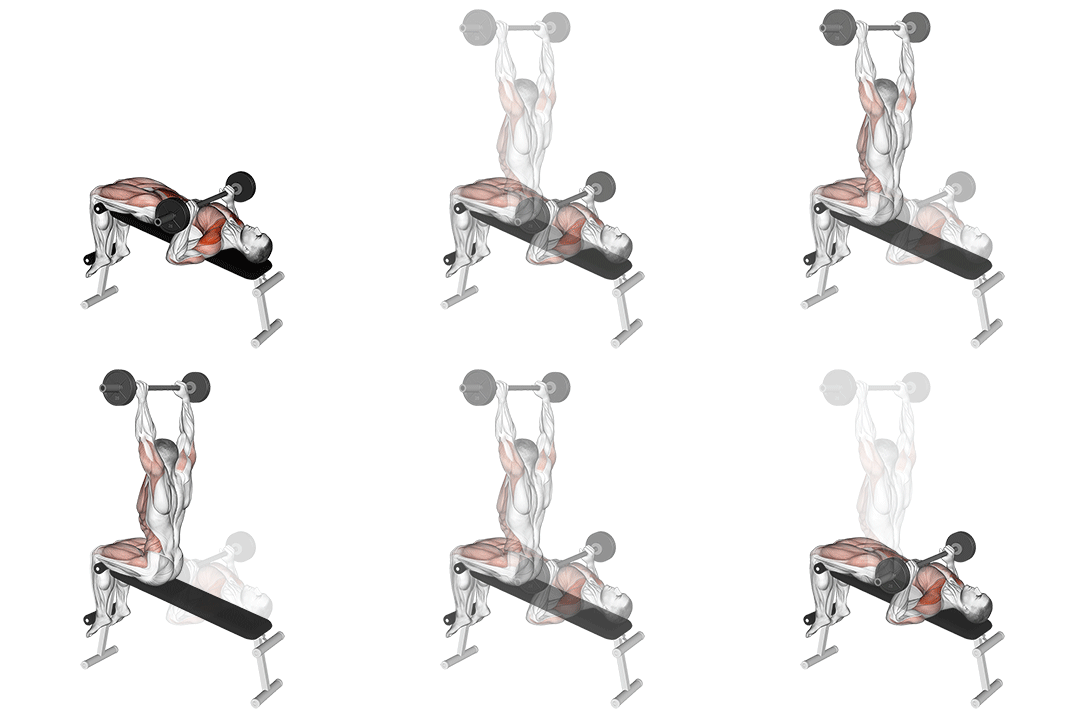
More comparisons with Barbell Rollerout
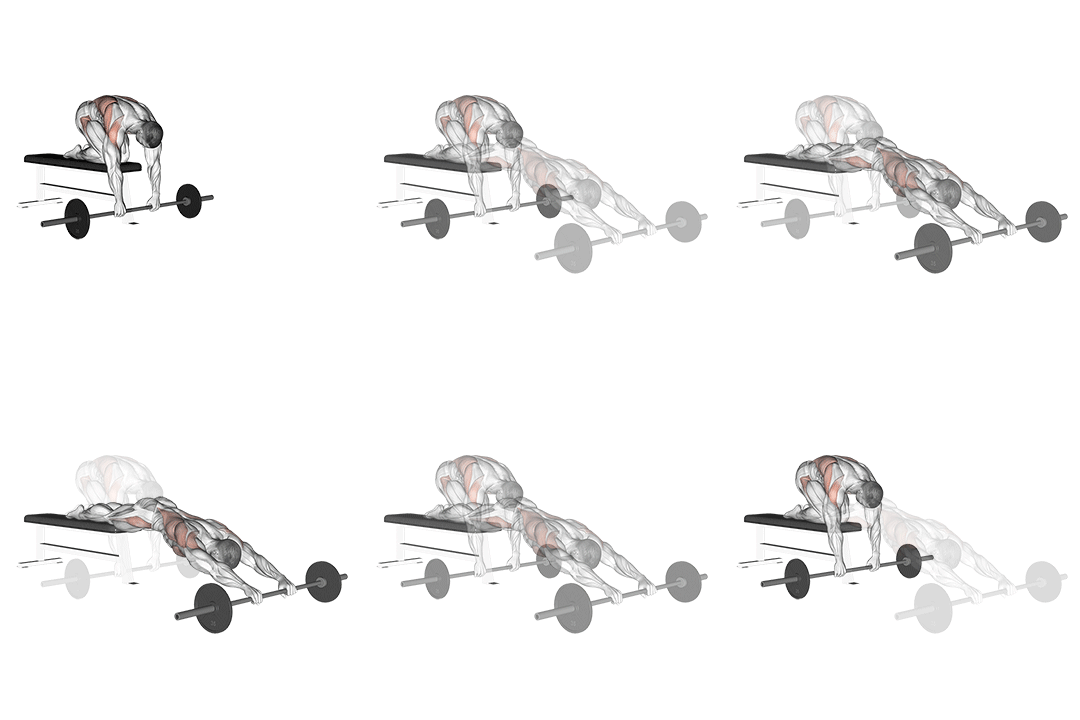
More comparisons with Barbell Seated Twist
Compare More Exercises
Use our free comparison tool to analyze any two exercises head-to-head.
Compare Exercises