

Barbell Rollerout vs Barbell Side Bent V. 2: Complete Comparison Guide
Barbell Rollerout vs Barbell Side Bent V. 2 — you’re about to get a clear breakdown so you can pick the right core move for your goals. I’ll compare primary and secondary muscle activation, equipment needs, difficulty, injury risk, and give practical technique cues and rep ranges. You’ll learn when to use the Rollerout for high anti-extension demand and when the Side Bent V. 2 is a safer, oblique-focused choice for beginners or volume work. Read on for specific progressions and sample set/rep suggestions.
Exercise Comparison
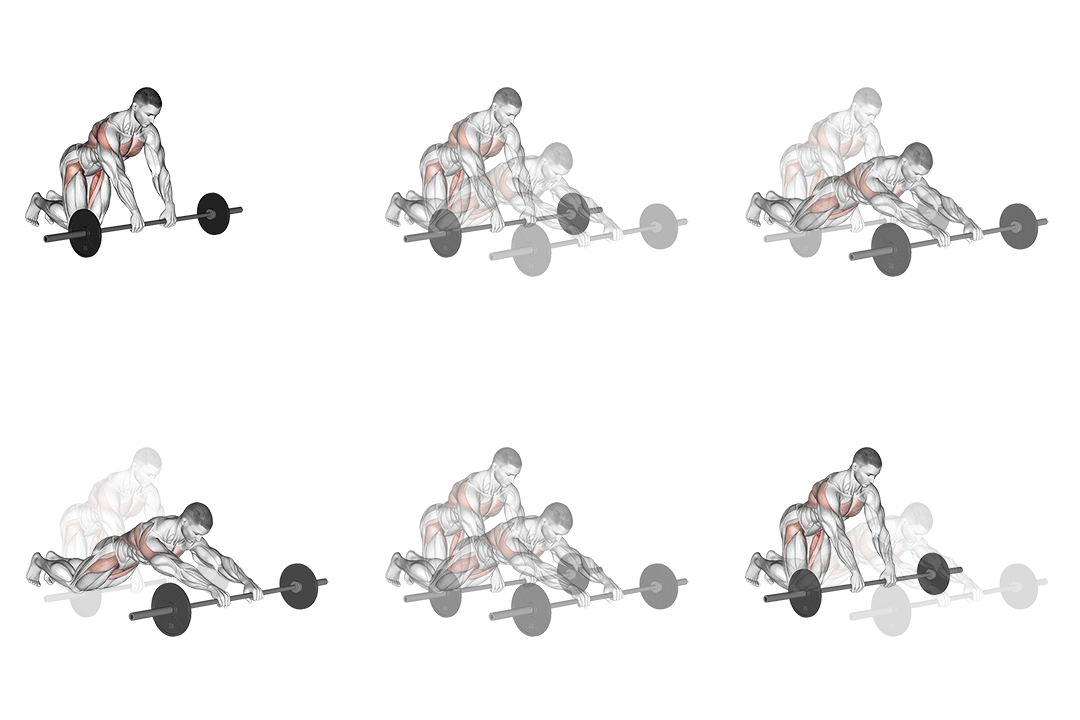
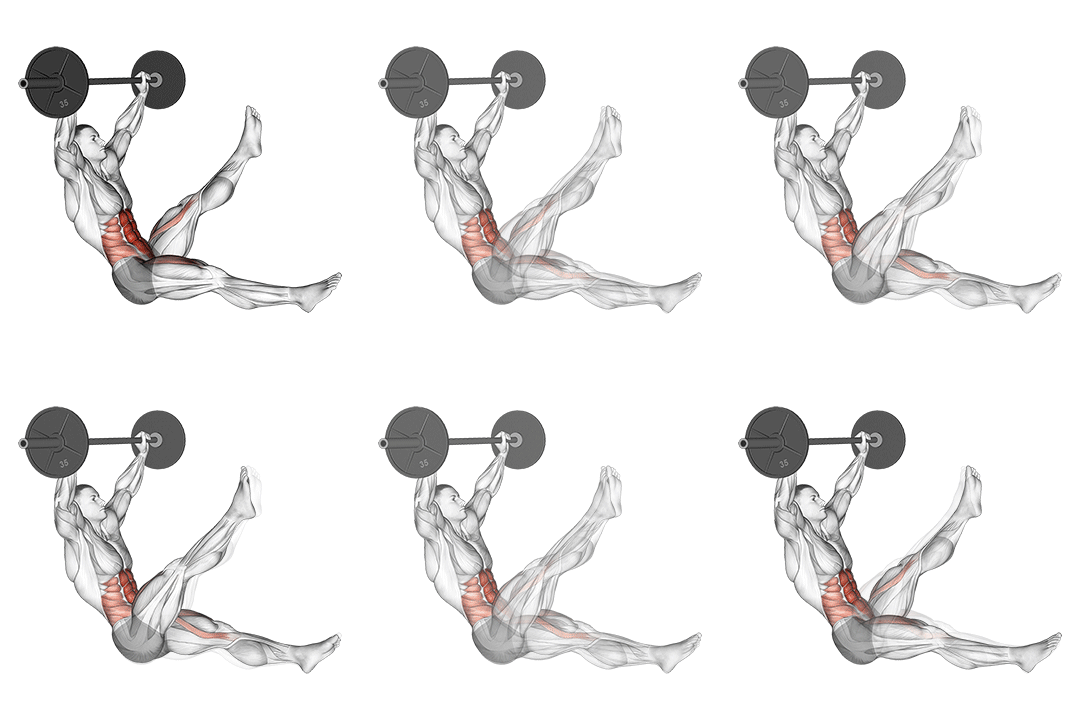
Barbell Rollerout
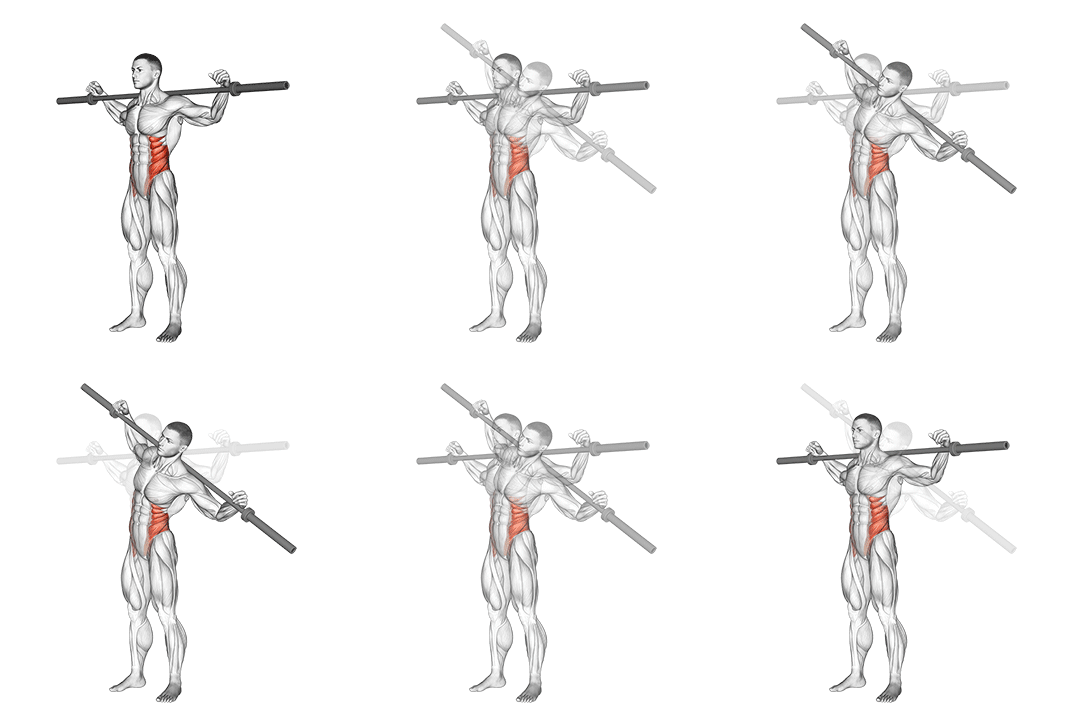
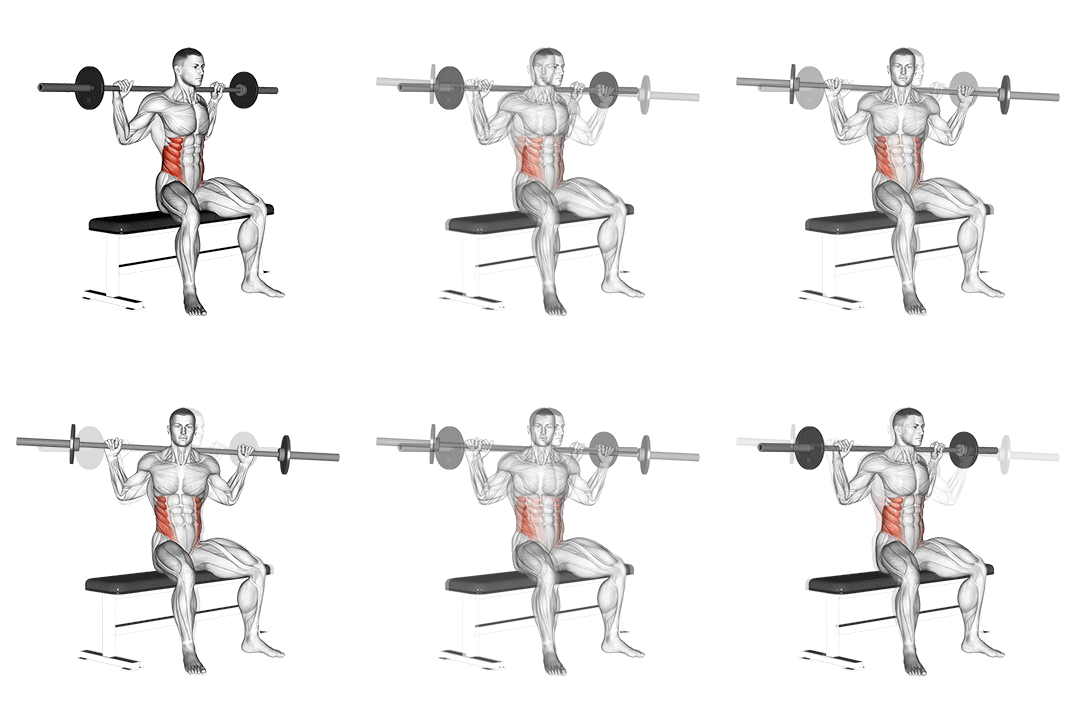
Barbell Side Bent V. 2
Head-to-Head Comparison
| Attribute | Barbell Rollerout | Barbell Side Bent V. 2 |
|---|---|---|
| Target Muscle |
Abs
|
Abs
|
| Body Part |
Waist
|
Waist
|
| Equipment |
Barbell
|
Barbell
|
| Difficulty |
Advanced
|
Beginner
|
| Movement Type |
Compound
|
Compound
|
| Secondary Muscles |
1
|
2
|
Secondary Muscles Activated
Barbell Rollerout
Barbell Side Bent V. 2
Visual Comparison
Overview
Barbell Rollerout vs Barbell Side Bent V. 2 — you’re about to get a clear breakdown so you can pick the right core move for your goals. I’ll compare primary and secondary muscle activation, equipment needs, difficulty, injury risk, and give practical technique cues and rep ranges. You’ll learn when to use the Rollerout for high anti-extension demand and when the Side Bent V. 2 is a safer, oblique-focused choice for beginners or volume work. Read on for specific progressions and sample set/rep suggestions.
Key Differences
- Difficulty levels differ: Barbell Rollerout is advanced, while Barbell Side Bent V. 2 is beginner.
- Both exercises target the Abs using Barbell. The main differences are in their movement patterns and muscle activation angles.
Pros & Cons
Barbell Rollerout
+ Pros
- Massive anti-extension demand that builds rectus abdominis and deep stabilizers
- High time-under-tension during long eccentric ranges improves muscle remodeling
- Easily progressed via ROM, plate diameter, or standing variations
- Minimal equipment beyond a barbell and plates
− Cons
- High lumbar shear risk if bracing or pelvic tilt is lost
- Requires substantial shoulder stability and hip mobility
- Advanced coordination makes it unsuitable under heavy fatigue or for some beginners
Barbell Side Bent V. 2
+ Pros
- Beginner-friendly posture and movement pattern
- Directly loads obliques and lateral stabilizers with a clear moment arm
- Lower risk to the anterior trunk and shoulders
- Easy to program into circuits, higher rep sets, and superset work
− Cons
- Less anti-extension overload, so limited for rectus abdominis strength development
- Smaller progression window for maximal core torque compared with rollouts
- Risk of spinal lateral compression if done with heavy, uncontrolled momentum
When Each Exercise Wins
Rollouts produce long eccentric tension and prolonged time under tension on the rectus abdominis, which favors hypertrophy when done for 3–5 sets of 8–15 controlled reps or slow eccentrics (3–5 second lowerings). The long muscle length under load increases remodeling stimulus.
Rollouts train anti-extension torque and core stiffness under horizontal shear — valuable for transferable core strength. Use low-rep, high-effort sets (3–6 reps per set, 4–6 sets) with partial rollouts to build maximal force production.
Side Bent V. 2 has simpler mechanics and lower mobility demands. You can start with light loads and 3–4 sets of 10–20 reps while learning bracing and breath control without exposing the lumbar spine to high shear.
Side Bent V. 2 needs only a barbell and small footprint, tolerates lighter weights, and doesn’t require smooth rolling surfaces. It fits compact spaces and is easier to scale for high-rep core circuits.
Frequently Asked Questions
Can I do both Barbell Rollerout and Barbell Side Bent V. 2 in the same workout?
Yes — pair them strategically: do Rollerouts early when you’re fresh to train anti-extension strength (3–5 sets), then use Side Bent V. 2 later for oblique volume (3–4 sets of 10–20). Monitor fatigue so form stays strict on rollouts.
Which exercise is better for beginners?
Barbell Side Bent V. 2 is better for beginners because it has simpler mechanics, lower mobility demands, and lower lumbar shear. Start light and focus on controlled reps and breathing before increasing load.
How do the muscle activation patterns differ?
Rollouts emphasize anti-extension and long-length eccentric loading of the rectus and transverse abdominis, producing sustained tension near end-range. Side Bent V. 2 produces concentric oblique contraction with a larger lateral moment arm, so obliques and ipsilateral lumbar stabilizers carry a higher share of the load.
Can Barbell Side Bent V. 2 replace Barbell Rollerout?
Not fully — Side Bent V. 2 targets lateral flexion and obliques but lacks the sustained anti-extension torque of rollouts. If your goal is core stiffness and anterior chain strength, keep rollouts; use Side Bent V. 2 as a complementary or substitution exercise when rollouts aren’t appropriate.
Expert Verdict
Use Barbell Rollerout when your goal is high anti-extension strength and targeted rectus abdominis development — especially if you can maintain a posterior pelvic tilt, strong breath brace, and shoulder stability. Program 3–5 sets of 6–12 controlled repetitions or partial rollouts progressing to full ROM. Choose Barbell Side Bent V. 2 if you’re newer to training, need more oblique emphasis, or want a low-risk, high-volume core option; aim for 3–4 sets of 10–20 reps per side. If you want both transverse stiffness and lateral strength, include Side Bent V. 2 for volume and Rollerout for strength-focused sessions, but prioritize form to minimize lumbar stress.
Also Compare
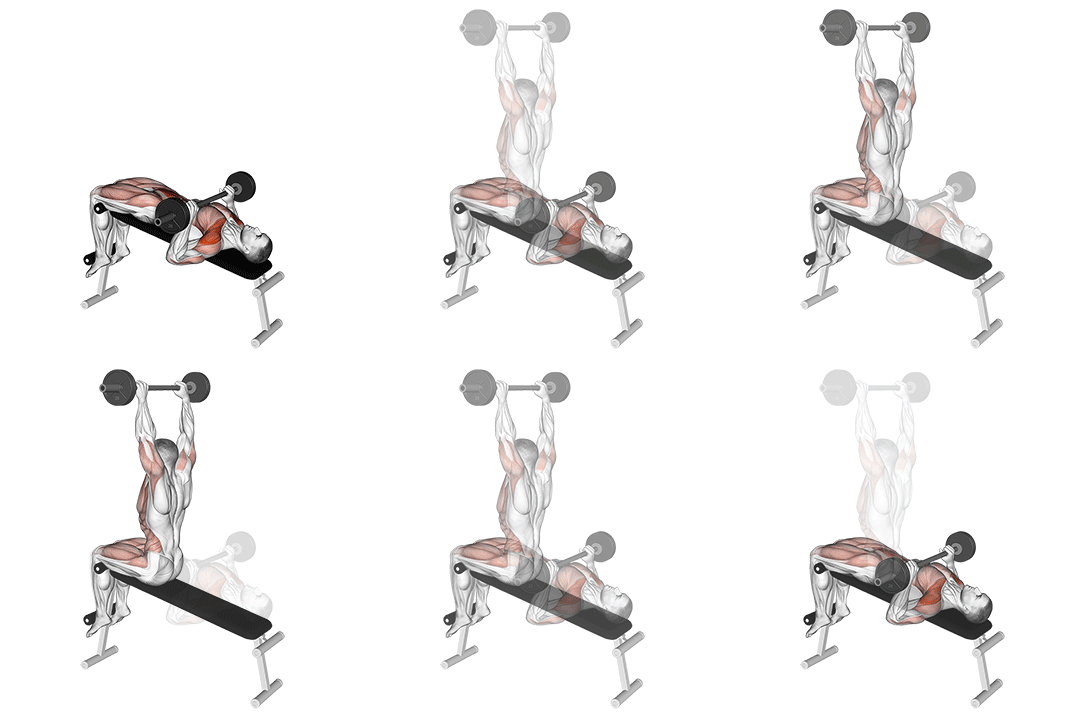
More comparisons with Barbell Rollerout
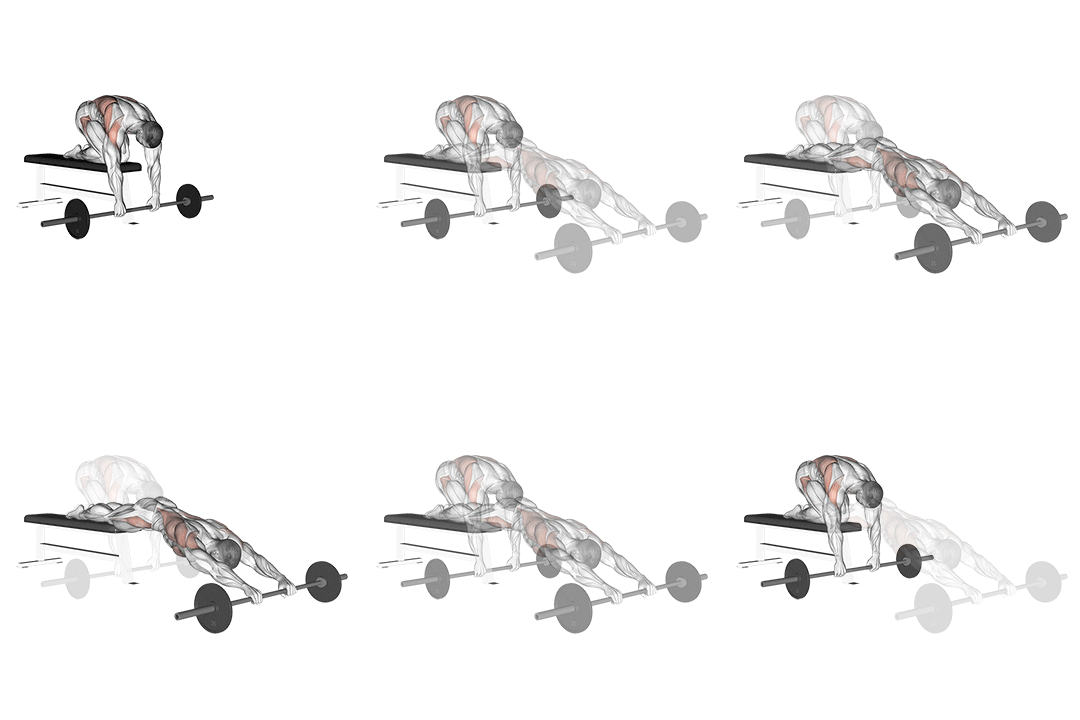
More comparisons with Barbell Side Bent V. 2
Compare More Exercises
Use our free comparison tool to analyze any two exercises head-to-head.
Compare Exercises