

Barbell Rollerout vs Barbell Sitted Alternate Leg Raise: Complete Comparison Guide
Barbell Rollerout vs Barbell Sitted Alternate Leg Raise — two barbell-based core moves that stress your waist in very different ways. You’ll get a clear, practical comparison so you can pick the right exercise for strength, muscle growth, or safe home training. I’ll cover primary and secondary muscle activation, required equipment, learning curves, injury risk, and rep/technique cues so you can add the right move to your program and progress with confidence.
Exercise Comparison
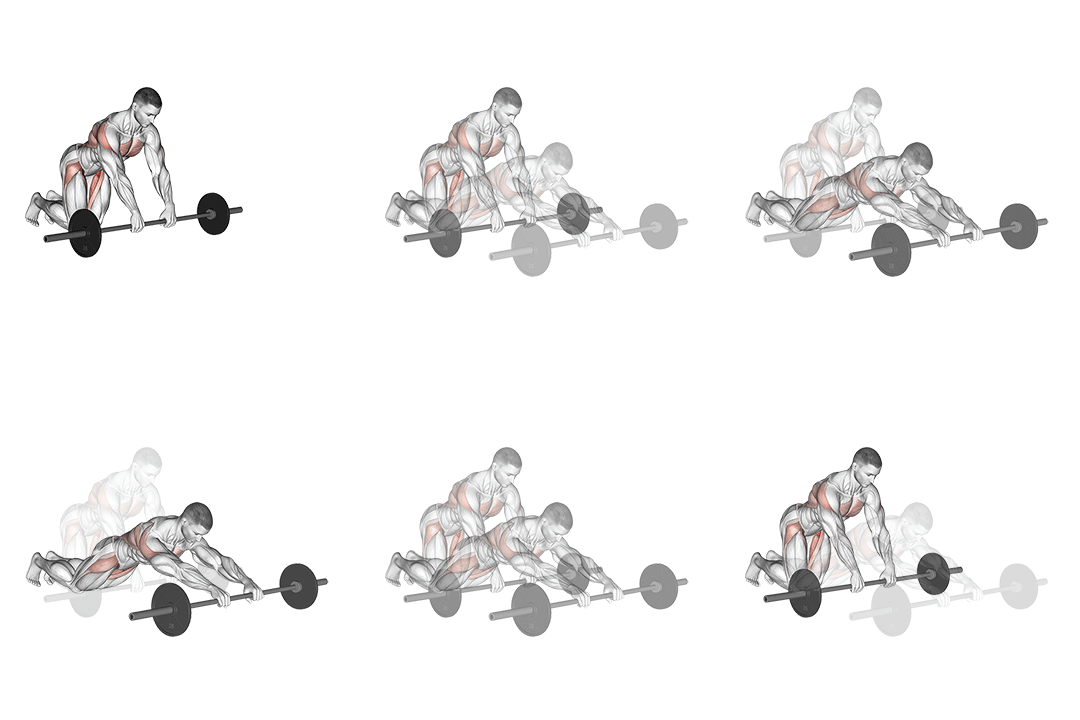
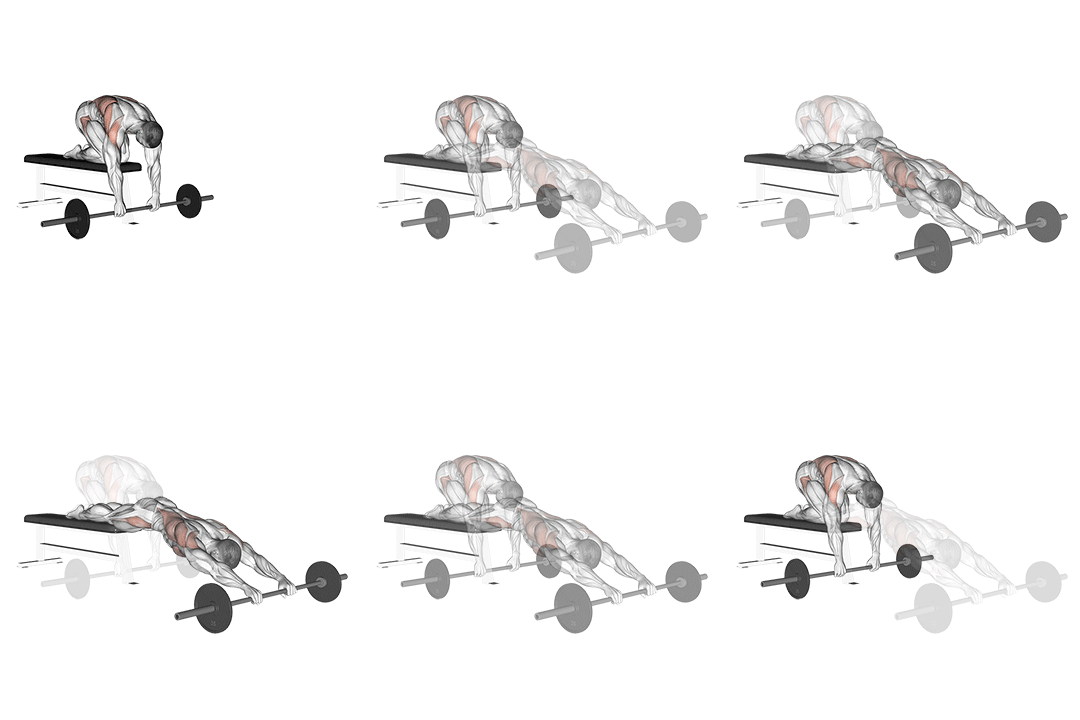
Barbell Rollerout
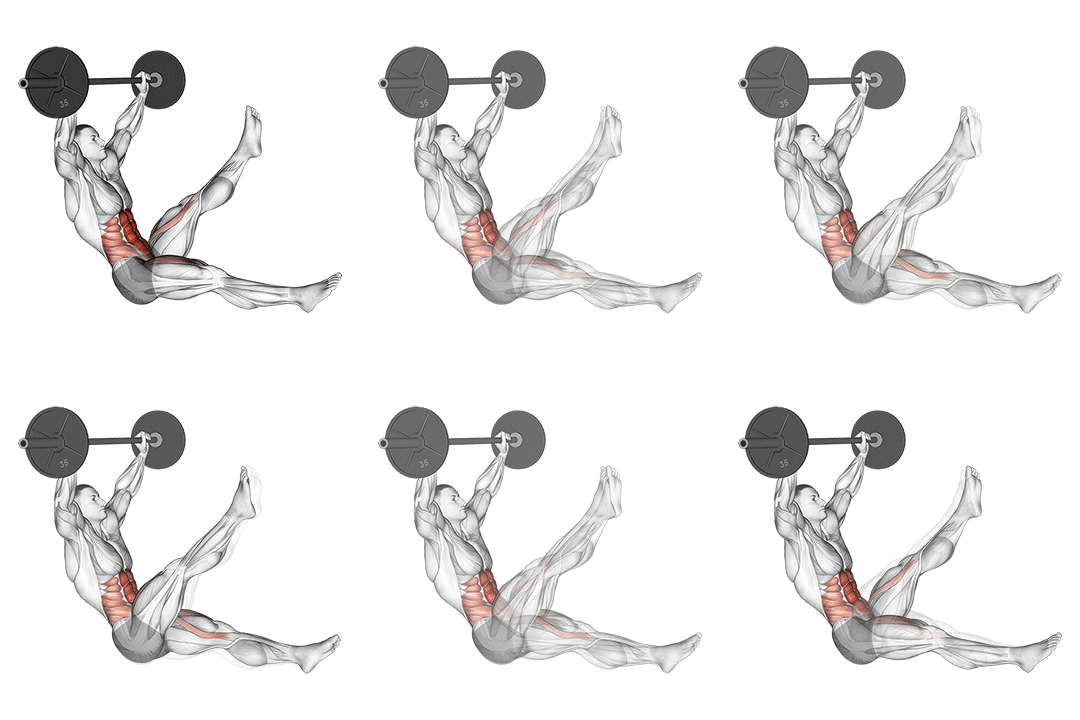
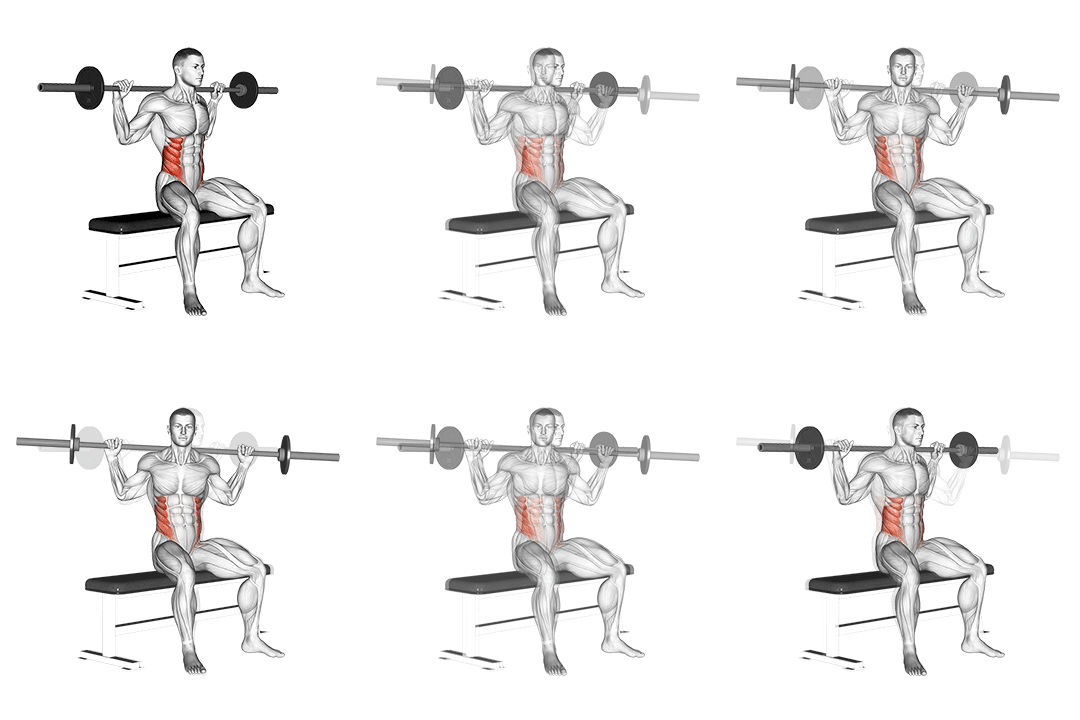
Barbell Sitted Alternate Leg Raise
Head-to-Head Comparison
| Attribute | Barbell Rollerout | Barbell Sitted Alternate Leg Raise |
|---|---|---|
| Target Muscle |
Abs
|
Abs
|
| Body Part |
Waist
|
Waist
|
| Equipment |
Barbell
|
Barbell
|
| Difficulty |
Advanced
|
Intermediate
|
| Movement Type |
Compound
|
Isolation
|
| Secondary Muscles |
1
|
1
|
Secondary Muscles Activated
Barbell Rollerout
Barbell Sitted Alternate Leg Raise
Visual Comparison
Overview
Barbell Rollerout vs Barbell Sitted Alternate Leg Raise — two barbell-based core moves that stress your waist in very different ways. You’ll get a clear, practical comparison so you can pick the right exercise for strength, muscle growth, or safe home training. I’ll cover primary and secondary muscle activation, required equipment, learning curves, injury risk, and rep/technique cues so you can add the right move to your program and progress with confidence.
Key Differences
- Barbell Rollerout is a compound movement, while Barbell Sitted Alternate Leg Raise is an isolation exercise.
- Difficulty levels differ: Barbell Rollerout is advanced, while Barbell Sitted Alternate Leg Raise is intermediate.
- Both exercises target the Abs using Barbell. The main differences are in their movement patterns and muscle activation angles.
Pros & Cons
Barbell Rollerout
+ Pros
- High anti-extension demand builds core strength and spinal stability
- Engages lower back, lats, and shoulder stabilizers for integrated strength
- Scalable by range-of-motion and progression to standing rollouts
- Excellent carryover to lifts requiring trunk stiffness (deadlift, squat)
− Cons
- Advanced difficulty — requires strong baseline core control
- Higher risk of lumbar hyperextension if technique fails
- Requires more floor space and precise bar control
Barbell Sitted Alternate Leg Raise
+ Pros
- Cleaner isolation of rectus abdominis with controlled hip flexion
- Lower technical demand—easier to teach and progress
- Better for hypertrophy with higher TUT (8–15 rep ranges, tempo options)
- More accessible for home and gym setups with bench or chair
− Cons
- Places greater load on hip flexors which can dominate the movement
- Less carryover to anti-extension strength than rollouts
- Bar placement across thighs can be uncomfortable without padding
When Each Exercise Wins
Sitted alternate leg raises let you control tempo and time under tension (3–4 sets of 8–15 reps) and isolate the rectus abdominis without large anti-extension moments, making it easier to apply progressive overload for muscle growth.
Rollouts develop anti-extension strength and core stiffness under long-lever loads, which transfers directly to improved stability for heavy squats and deadlifts; aim for 3–5 sets of 4–8 reps with controlled range progression.
The seated position reduces lumbar shear and allows simple progressions (isometric holds, reduced ROM), making it safer and quicker to teach basic abdominal control.
Requires less open floor space and lower starting core strength; you can perform it with a single barbell and a chair, while rollerouts need more room and baseline ability.
Frequently Asked Questions
Can I do both Barbell Rollerout and Barbell Sitted Alternate Leg Raise in the same workout?
Yes. Start with the rollerout if your priority is strength (do 3–4 sets of low reps), then finish with seated alternate leg raises for 2–3 sets of higher reps to add metabolic stimulus and hypertrophy. Allow 48–72 hours between intense core sessions for recovery.
Which exercise is better for beginners?
Barbell Sitted Alternate Leg Raise is better for most beginners because it has a gentler learning curve and lower lumbar loading. Begin with bodyweight or light-loaded versions and progress range and tempo before advancing to harder variants.
How do the muscle activation patterns differ?
Rollouts generate an anti-extension pattern with high eccentric demand on the abs and notable lower-back recruitment as you control return; activation peaks near maximum reach. Sitted alternate leg raises produce concentric-driven rectus abdominis activity and sustained isometric tension during hip flexion, with stronger involvement of the hip flexors.
Can Barbell Sitted Alternate Leg Raise replace Barbell Rollerout?
It can replace rollerouts if your goal is abs hypertrophy or beginner-friendly core work, but not if you need anti-extension strength and trunk stiffness for performance. If you eliminate rollouts, include other anti-extension drills (plank variations, Pallof press progressions) to maintain that capacity.
Expert Verdict
Choose Barbell Rollerout when your primary goal is anti-extension strength, spinal stiffness, and carryover to heavy compound lifts. Use progressive range-of-motion and prioritize pelvic tilt control; program rollouts for lower-volume strength blocks (3–5 sets of 4–8 reps). Choose Barbell Sitted Alternate Leg Raise when you want focused rectus abdominis hypertrophy, safer regressions, and easier at-home implementation — aim for 3–4 sets of 8–15 reps with controlled tempo and pauses. Pair both within a cycle: use seated raises during hypertrophy phases and rollouts during strength or athletic phases to develop complementary adaptations.
Also Compare
More comparisons with Barbell Rollerout
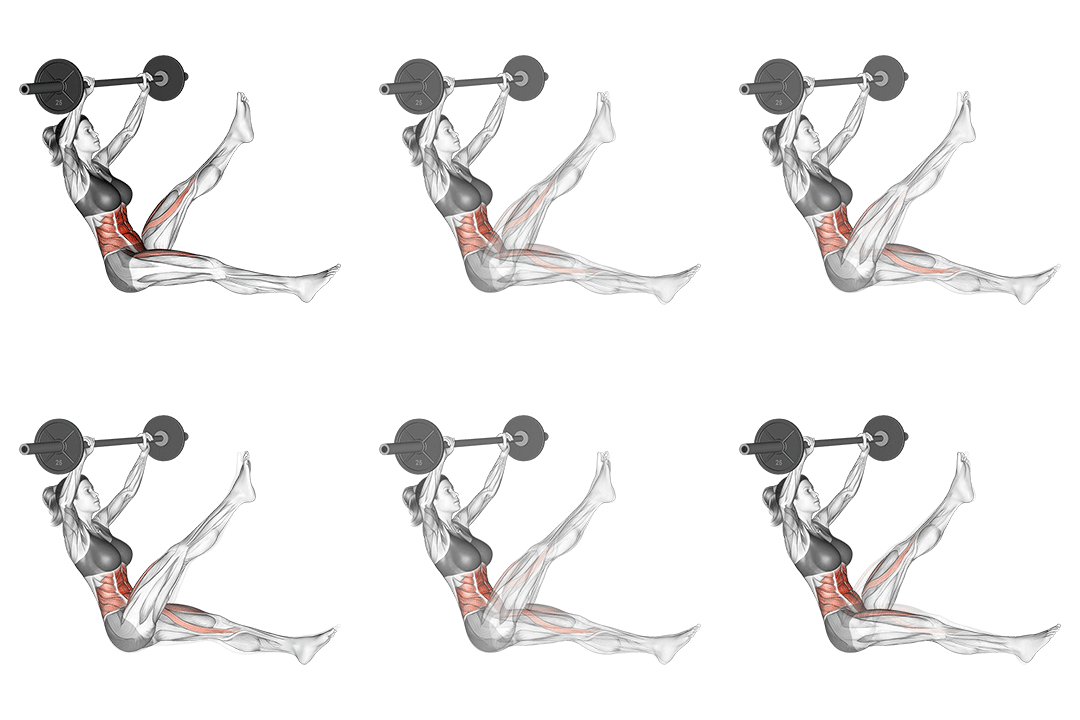
More comparisons with Barbell Sitted Alternate Leg Raise
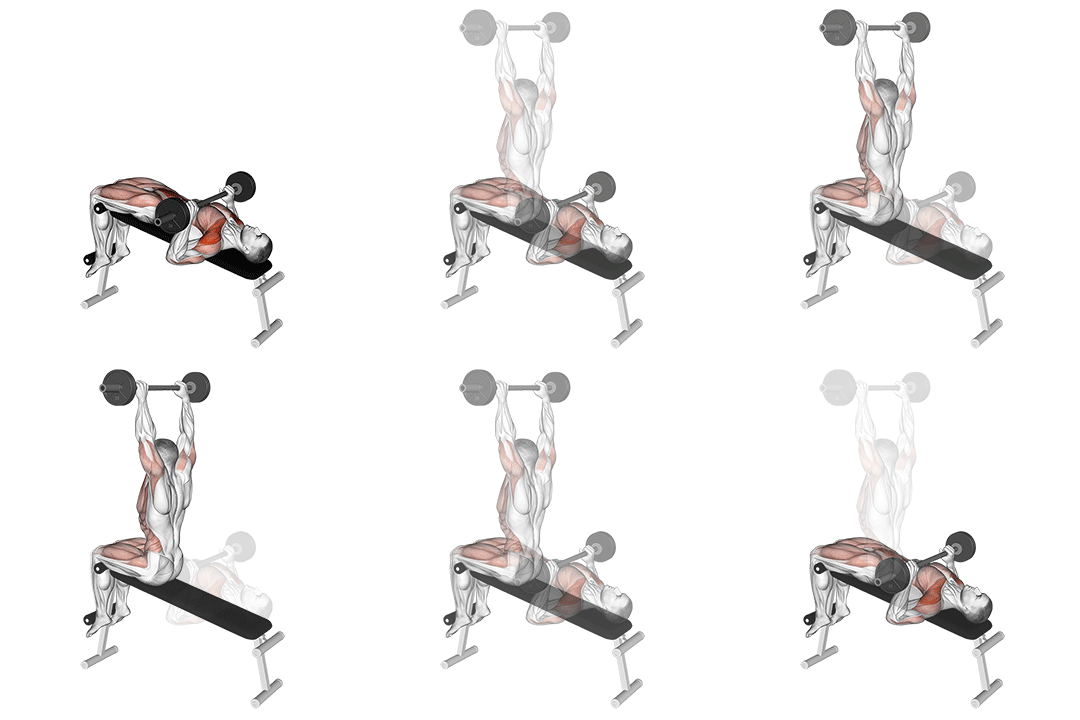
Compare More Exercises
Use our free comparison tool to analyze any two exercises head-to-head.
Compare Exercises