

Barbell Rollerout vs Barbell Sitted Alternate Leg Raise (female): Complete Comparison Guide
Barbell Rollerout vs Barbell Sitted Alternate Leg Raise (female) — if you want stronger, more defined abs, both moves deserve a look. I’ll walk you through how each stresses the rectus abdominis, the role of hip flexors and lower back, the equipment and difficulty, and practical progressions. You’ll get clear technique cues, rep and set ranges (for example 3–5 sets of 5–12 reps depending on goal), and biomechanical explanations so you can choose the exercise that matches your experience and training objective.
Exercise Comparison
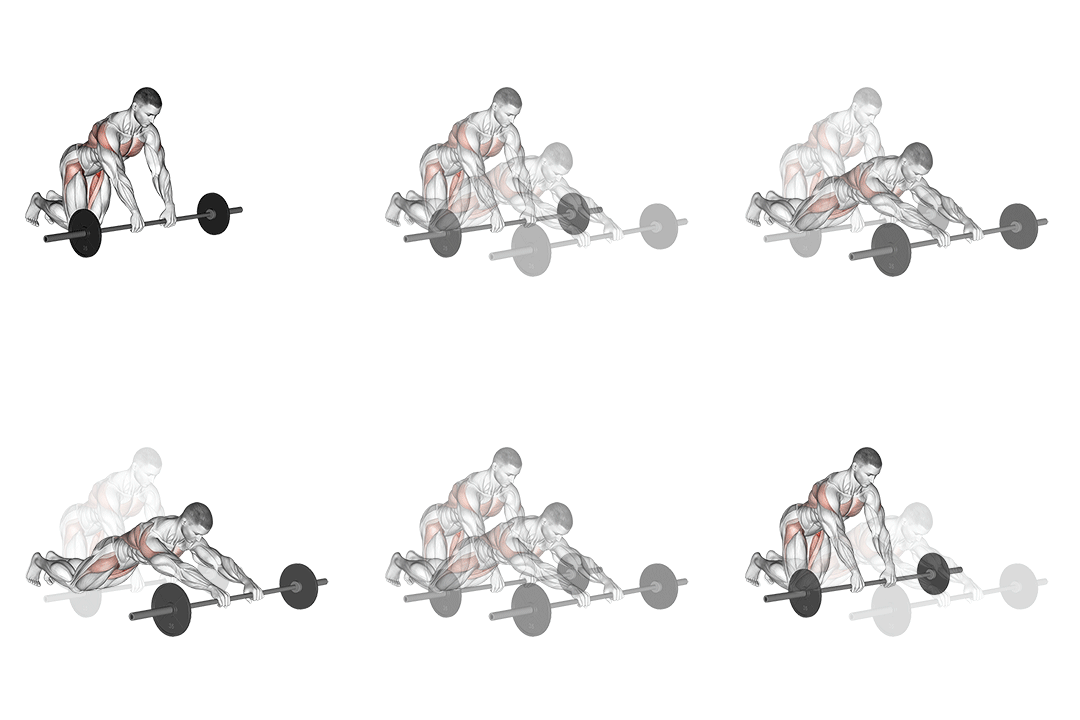
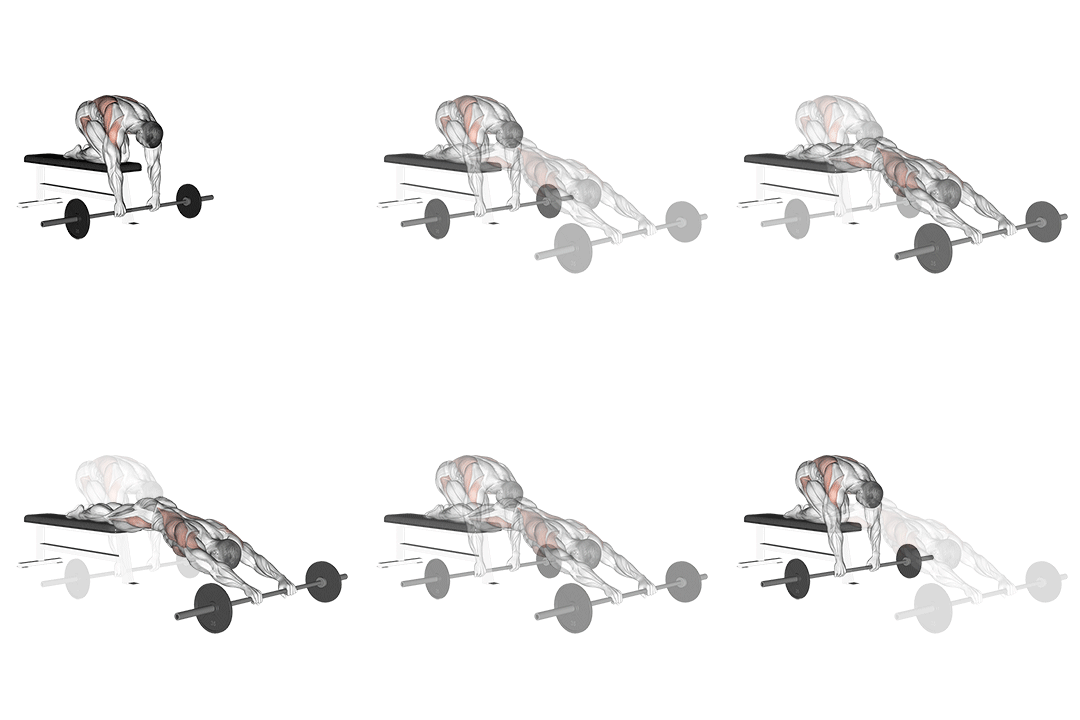
Barbell Rollerout
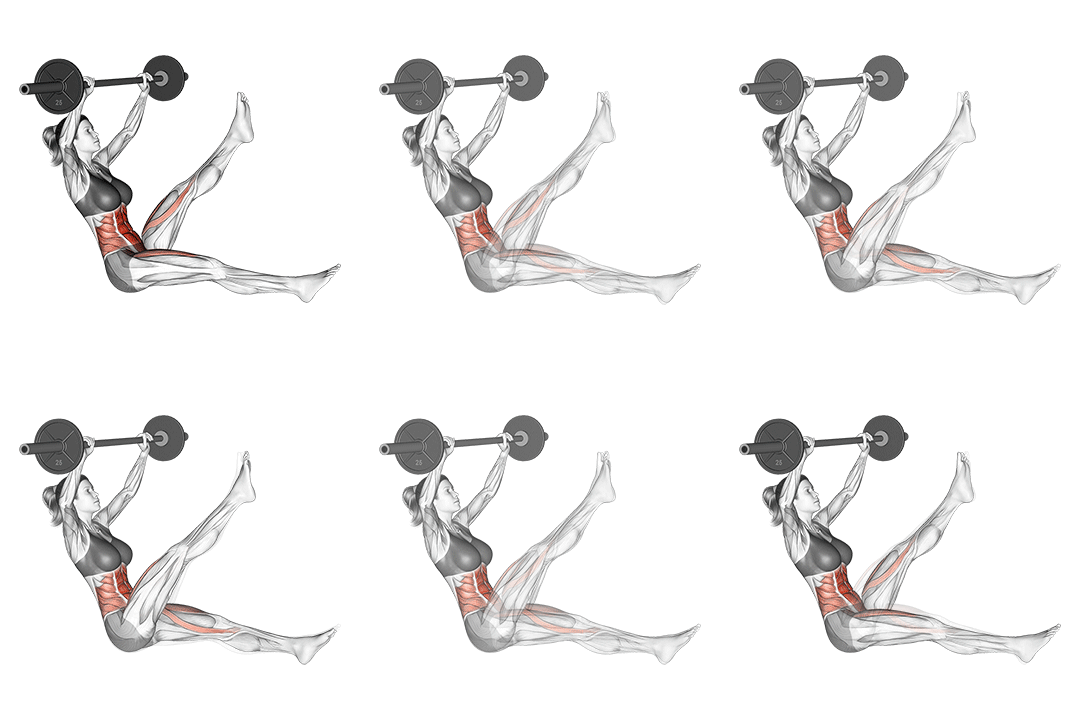
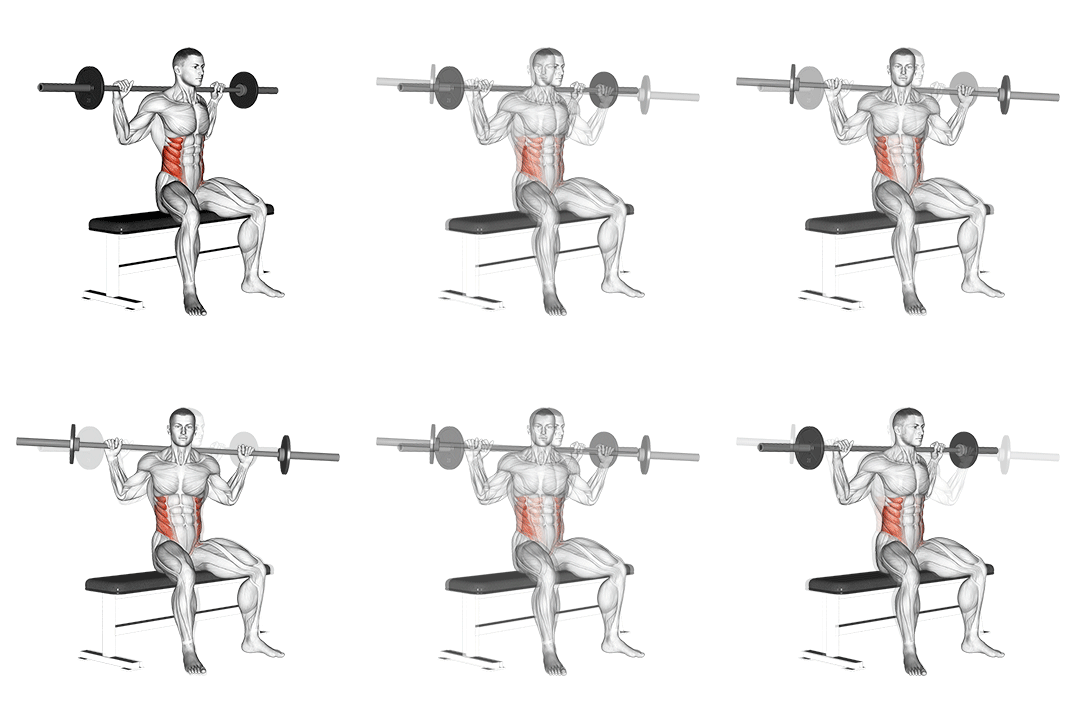
Barbell Sitted Alternate Leg Raise (female)
Head-to-Head Comparison
| Attribute | Barbell Rollerout | Barbell Sitted Alternate Leg Raise (female) |
|---|---|---|
| Target Muscle |
Abs
|
Abs
|
| Body Part |
Waist
|
Waist
|
| Equipment |
Barbell
|
Barbell
|
| Difficulty |
Advanced
|
Intermediate
|
| Movement Type |
Compound
|
Isolation
|
| Secondary Muscles |
1
|
2
|
Secondary Muscles Activated
Barbell Rollerout
Barbell Sitted Alternate Leg Raise (female)
Visual Comparison
Overview
Barbell Rollerout vs Barbell Sitted Alternate Leg Raise (female) — if you want stronger, more defined abs, both moves deserve a look. I’ll walk you through how each stresses the rectus abdominis, the role of hip flexors and lower back, the equipment and difficulty, and practical progressions. You’ll get clear technique cues, rep and set ranges (for example 3–5 sets of 5–12 reps depending on goal), and biomechanical explanations so you can choose the exercise that matches your experience and training objective.
Key Differences
- Barbell Rollerout is a compound movement, while Barbell Sitted Alternate Leg Raise (female) is an isolation exercise.
- Difficulty levels differ: Barbell Rollerout is advanced, while Barbell Sitted Alternate Leg Raise (female) is intermediate.
- Both exercises target the Abs using Barbell. The main differences are in their movement patterns and muscle activation angles.
Pros & Cons
Barbell Rollerout
+ Pros
- High anti-extension demand builds resilient anterior core and spinal stability
- Engages multiple stabilizers (lats, shoulders, lower back) for carryover to lifts
- Scalable by roll distance, unilateral variations, or weighted progressions
- Efficient: high tension per rep so fewer reps (3–8) can be effective
− Cons
- Advanced technical demand; poor form risks lumbar hyperextension
- Requires equipment and space (rolling barbell or ab wheel)
- Less isolation of lower rectus — hip flexors aren’t targeted much
Barbell Sitted Alternate Leg Raise (female)
+ Pros
- Simple to teach and perform; good for consistent rep ranges (8–20 reps)
- Isolates lower rectus abdominis and trains controlled hip flexion
- Requires minimal equipment and space
- Lower acute spinal loading so safer for many trainees
− Cons
- Limited transfer to resisting trunk extension under load
- Heavier reliance on hip flexors can lead to quads/hip-flexor dominance
- Lower ceiling for whole-body core strength compared with anti-extension drills
When Each Exercise Wins
For targeted rectus hypertrophy, controlled 8–20 rep ranges with 2–3s eccentrics on each leg create repeated concentric/eccentric cycles and metabolic stress. The seated alternate leg raise isolates the lower rectus and hip flexors, making it easier to accumulate volume without high spinal shear.
Rollerouts build anti-extension strength under long-lever torque and transfer directly to heavy compound lifts that require core stiffness. Low-rep, high-tension progressions (3–6 reps, pause at the farthest point) develop maximal trunk rigidity.
Beginners benefit from simpler motor patterns and lower risk. Start with bodyweight single-leg raises, 2–3 sets of 10–15 controlled reps, then add light barbell loading as technique and pelvic control improve.
The seated leg raise can be done with bodyweight or a light barbell and needs little space. Rollerouts require a rolling barbell or ab wheel and greater control, making them less practical without gear.
Frequently Asked Questions
Can I do both Barbell Rollerout and Barbell Sitted Alternate Leg Raise (female) in the same workout?
Yes. Pair them smartly: do Rollerouts early when you’re fresh (3–5 sets of 3–6 reps) to train anti-extension strength, then add 2–3 sets of 8–15 seated alternate leg raises for hypertrophy and finishers. Monitor fatigue to avoid form breakdown on rollouts.
Which exercise is better for beginners?
The Barbell Sitted Alternate Leg Raise (female) is better for beginners because it’s easier to learn, has lower spinal loading, and isolates the rectus. Start with bodyweight versions and progress load or tempo before attempting rollerouts.
How do the muscle activation patterns differ?
Rollerouts emphasize sustained anti-extension tension in the rectus and obliques with secondary activation of erectors, lats, and shoulder stabilizers due to long moment arms. Sitted alternate leg raises produce repeated concentric hip flexion, increasing dynamic rectus and iliopsoas work with less shoulder or lat involvement.
Can Barbell Sitted Alternate Leg Raise (female) replace Barbell Rollerout?
It can replace rollerouts if your goal is isolated abdominal hypertrophy or you lack equipment or core stability for rollouts. For developing anti-extension strength and full-body trunk stiffness, however, the rollerout is the superior choice and should be programmed when you’re ready.
Expert Verdict
If your goal is raw anti-extension strength, trunk stiffness for heavy compounds, and a high ceiling for progression, choose the Barbell Rollerout and build toward longer rollouts with strict bracing and scapular control. If you want targeted rectus development, easier technique, lower spinal load, and something you can do with minimal equipment, pick the Barbell Sitted Alternate Leg Raise (female). For balanced programming, pair them across phases: use seated leg raises during accumulation phases for volume (8–20 reps) and introduce controlled rollerouts in strength phases (3–6 reps) once you have sound lumbar control.
Also Compare
More comparisons with Barbell Rollerout
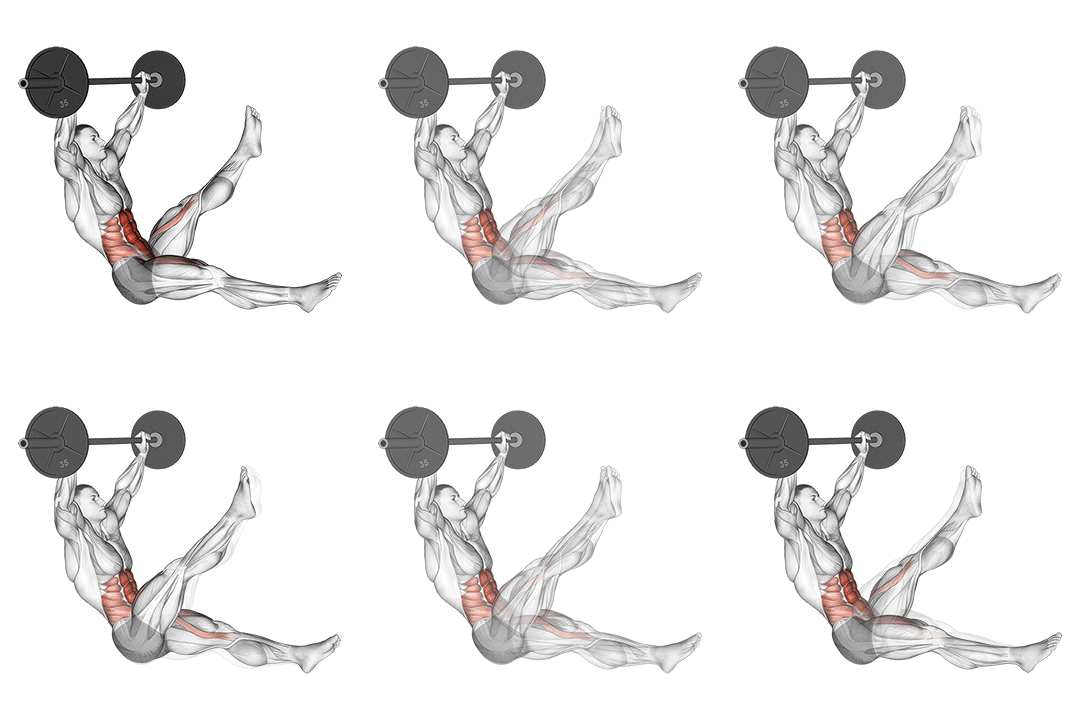
More comparisons with Barbell Sitted Alternate Leg Raise (female)
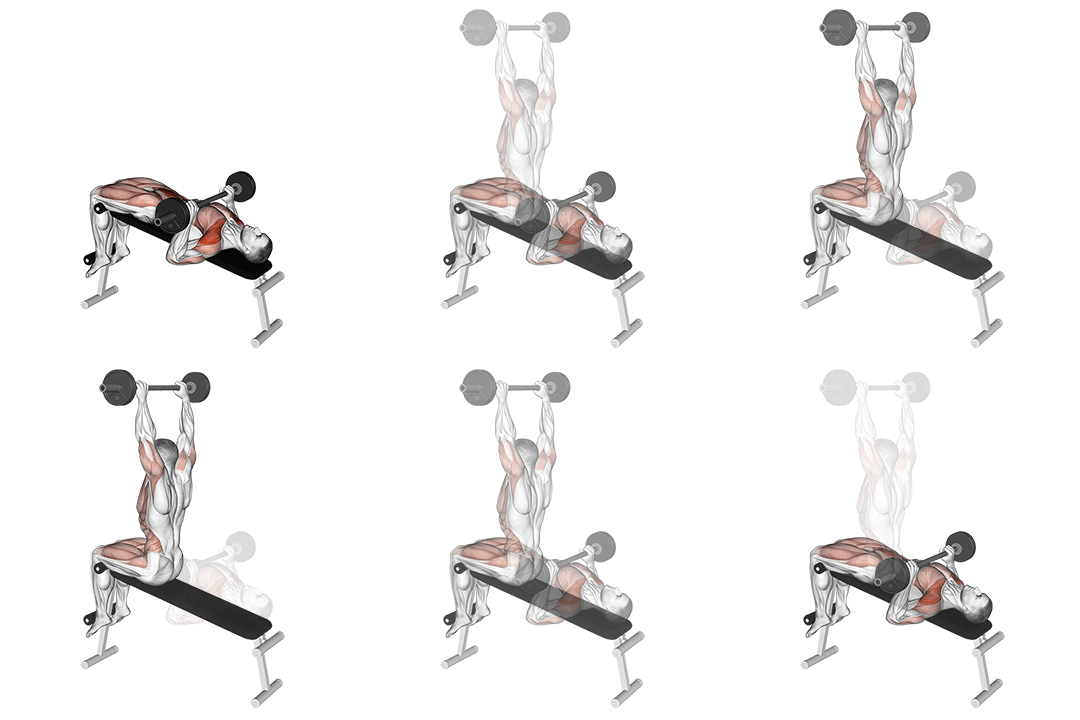
Compare More Exercises
Use our free comparison tool to analyze any two exercises head-to-head.
Compare Exercises