

Barbell Seated Twist vs Barbell Side Bent V. 2: Complete Comparison Guide
Barbell Seated Twist vs Barbell Side Bent V. 2 — you’re choosing between rotation and lateral flexion to train your waist. If you want clear guidance, I’ll walk you through muscle activation, equipment needs, technique cues, injury risk, and which movement fits your goal: hypertrophy, strength, or beginner conditioning. You’ll get rep ranges, progression ideas, and specific biomechanics (force vectors, length–tension behavior) so you can pick the right exercise and execute it safely for steady muscle growth and core resilience.
Exercise Comparison
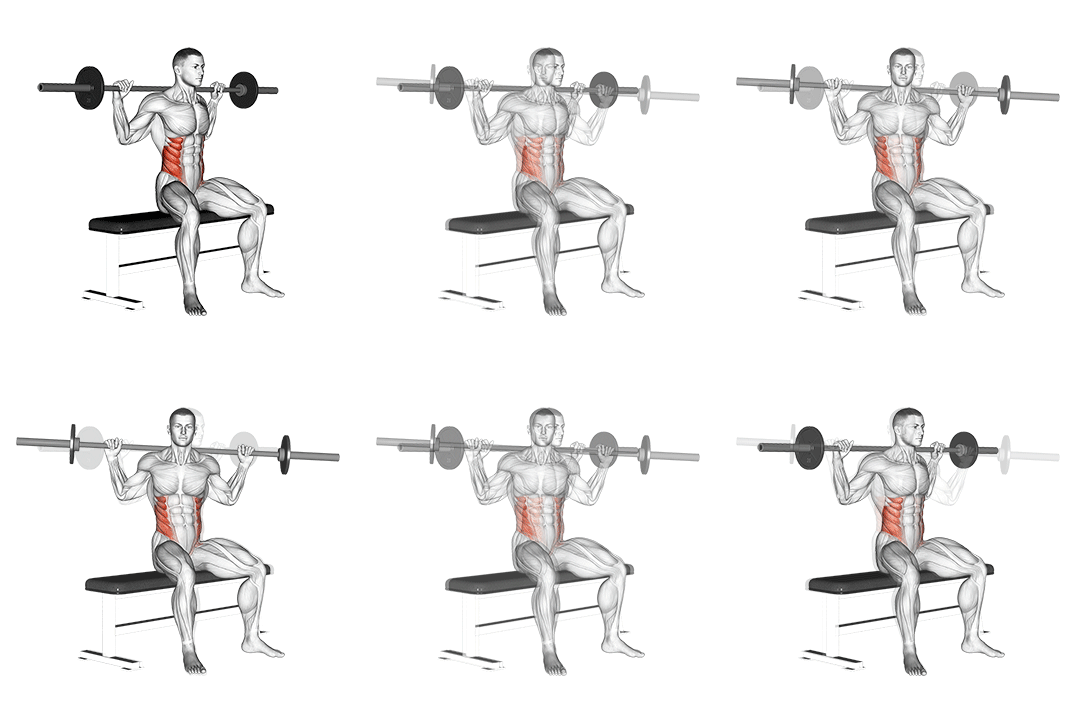
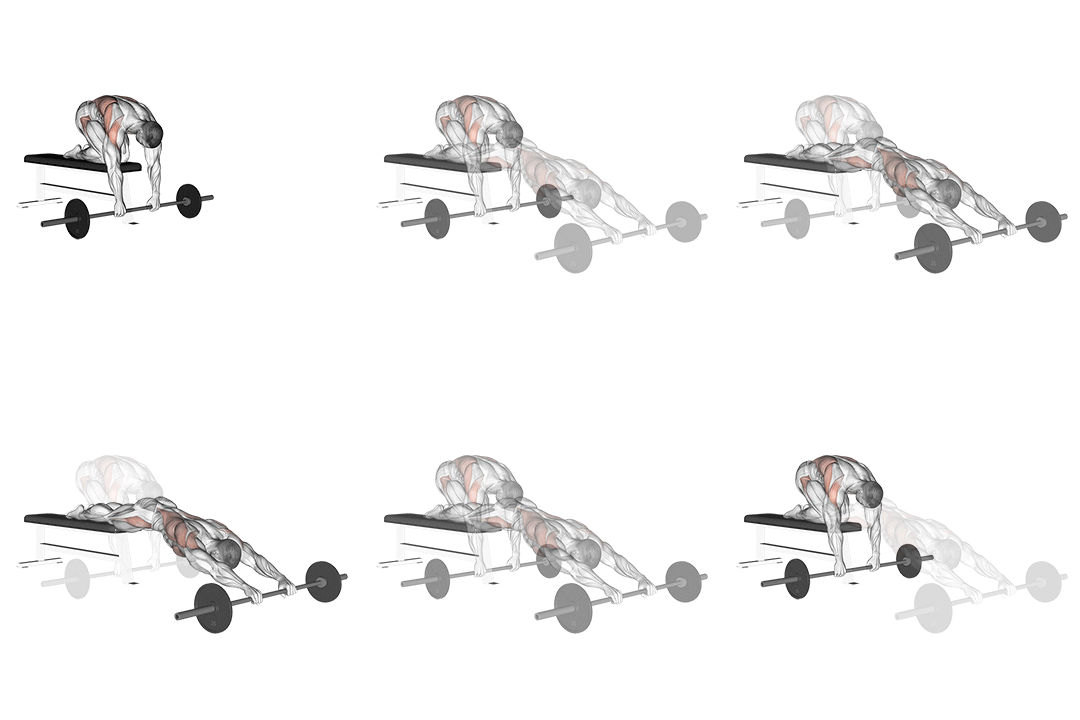
Barbell Seated Twist
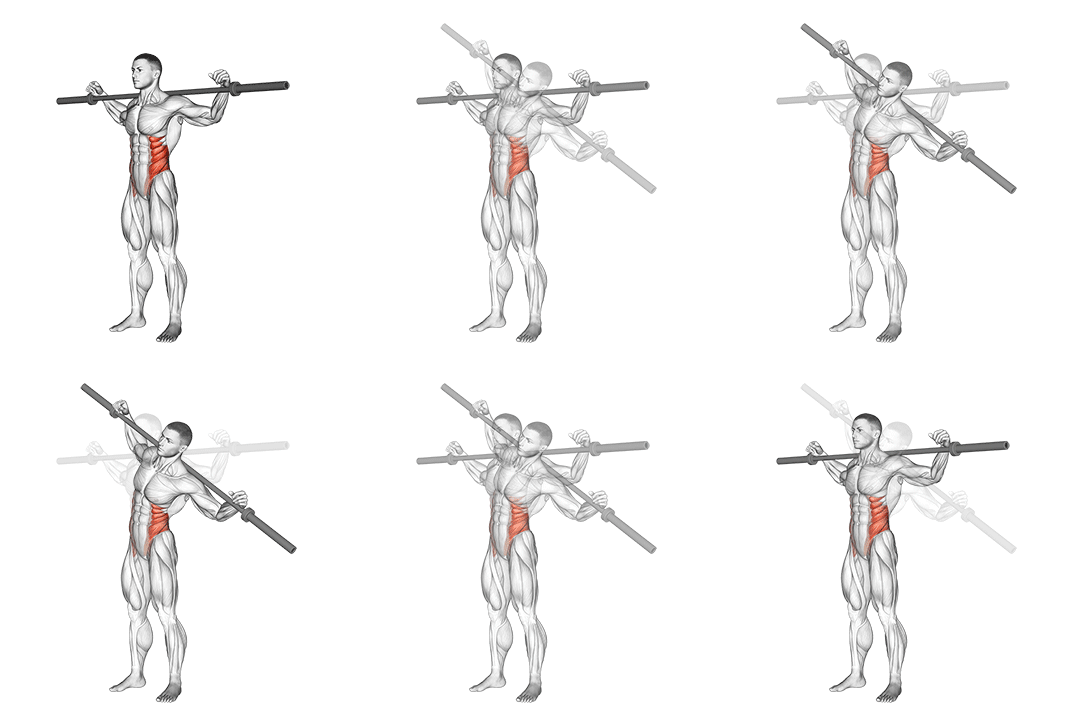
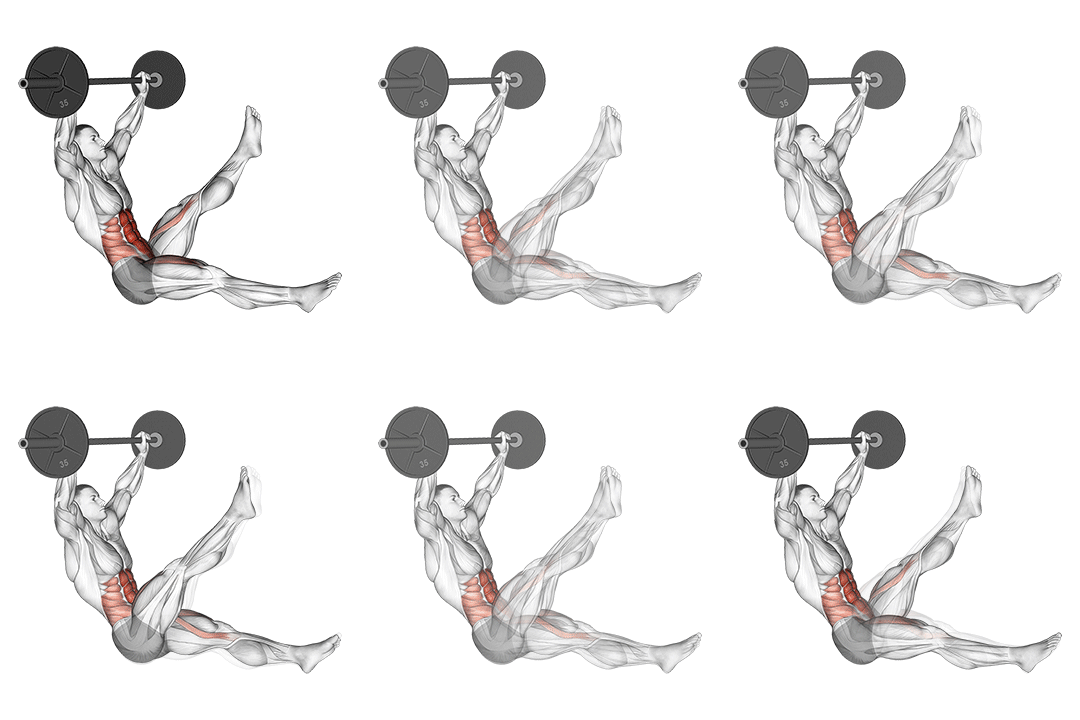
Barbell Side Bent V. 2
Head-to-Head Comparison
| Attribute | Barbell Seated Twist | Barbell Side Bent V. 2 |
|---|---|---|
| Target Muscle |
Abs
|
Abs
|
| Body Part |
Waist
|
Waist
|
| Equipment |
Barbell
|
Barbell
|
| Difficulty |
Intermediate
|
Beginner
|
| Movement Type |
Compound
|
Compound
|
| Secondary Muscles |
2
|
2
|
Secondary Muscles Activated
Barbell Seated Twist
Barbell Side Bent V. 2
Visual Comparison
Overview
Barbell Seated Twist vs Barbell Side Bent V. 2 — you’re choosing between rotation and lateral flexion to train your waist. If you want clear guidance, I’ll walk you through muscle activation, equipment needs, technique cues, injury risk, and which movement fits your goal: hypertrophy, strength, or beginner conditioning. You’ll get rep ranges, progression ideas, and specific biomechanics (force vectors, length–tension behavior) so you can pick the right exercise and execute it safely for steady muscle growth and core resilience.
Key Differences
- Difficulty levels differ: Barbell Seated Twist is intermediate, while Barbell Side Bent V. 2 is beginner.
- Both exercises target the Abs using Barbell. The main differences are in their movement patterns and muscle activation angles.
Pros & Cons
Barbell Seated Twist
+ Pros
- Direct rotational overload that builds transverse-plane strength and anti-rotation capacity
- Strong carryover to sports that require trunk rotation (throwing, striking)
- Easy to control tempo: slow 2–3s concentric and 2–3s eccentric for tension
- Good for unilateral sequencing and asymmetric loading patterns
− Cons
- Higher technical demand—requires pelvic fixation and thoracic rotation rather than lumbar twist
- Potential rotational shear on lumbar spine if performed with excess range or speed
- Requires a bench or seat for stable execution
Barbell Side Bent V. 2
+ Pros
- Beginner-friendly standing pattern with minimal setup
- Allows heavier absolute loads for greater local mechanical tension and hypertrophy
- Clear range of motion (20–45° lateral flexion) reduces motor learning time
- Easier to progress linearly by adding weight or sets
− Cons
- Increased compressive loading of the lumbar spine under heavy weights
- Less transverse-plane (rotational) development compared with twists
- Can encourage unhealthy trunk collapse if you don’t brace and control the eccentric
When Each Exercise Wins
Side Bent V. 2 lets you load the obliques with heavier absolute weight and produces larger length–tension changes at end-range lateral flexion, which supports 8–15 rep hypertrophy work. Use slow eccentrics (2–4s) and 3–4 sets per side.
Seated Twist trains rotational torque and anti-rotation strength that transfers to rotational power and spinal stability. Progress by increasing load, adding pauses at 45° rotation, and using 4–6 rep sets for maximal force training.
The standing lateral bend is easier to teach and execute, with a clear visual range and simpler bracing cues. Start with light loads and 12–20 reps to build endurance and motor patterning.
Side Bent V. 2 requires only a barbell and space; no bench is necessary. It’s simple to scale and fits small home gyms where seating/stability equipment may be limited.
Frequently Asked Questions
Can I do both Barbell Seated Twist and Barbell Side Bent V. 2 in the same workout?
Yes. Sequence them by priority: do the movement aligned with your goal first (e.g., Side Bent for hypertrophy), then follow with Seated Twists for rotational work. Keep total sets under 8–12 per session and manage load to avoid excessive lumbar fatigue.
Which exercise is better for beginners?
Barbell Side Bent V. 2 is better for beginners because it’s a single-plane movement with visible range and easier bracing. Start light, focus on 12–20 reps, and learn to maintain a neutral spine throughout the set.
How do the muscle activation patterns differ?
Seated Twist emphasizes transverse-plane torque so obliques spike during rotation and anti-rotation control; Side Bent V. 2 emphasizes end-range lateral shortening of the obliques and QL with higher compressive load, changing length–tension relationships and peak activation near the bottom of the bend.
Can Barbell Side Bent V. 2 replace Barbell Seated Twist?
It can replace Seated Twist if your goal is oblique size and you accept less rotational training. If you need transverse-plane strength or sport-specific rotation, keep Seated Twists in your program instead of swapping them out completely.
Expert Verdict
Choose Barbell Side Bent V. 2 when your priority is oblique hypertrophy, an easy-to-learn movement, or limited equipment—use 8–15 reps, controlled eccentrics, and progressive overload to build size. Choose Barbell Seated Twist when you want transverse-plane strength, anti-rotation capacity, or sport-specific rotational power; emphasize pelvic fixation, thoracic rotation, and controlled 3–5 second tempos for 4–8 reps or heavy pause reps. Both movements are useful: pair them across phases—use Side Bent for mass and basic strength, then add Seated Twists for rotational strength and stability once your core control is solid.
Also Compare
More comparisons with Barbell Seated Twist
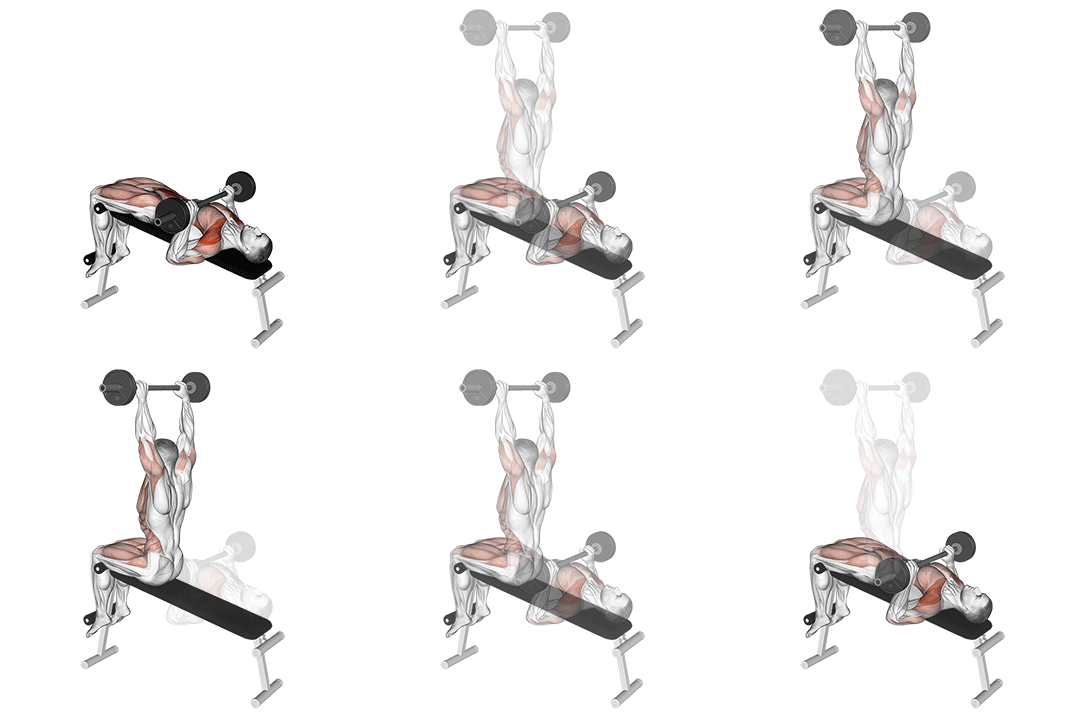
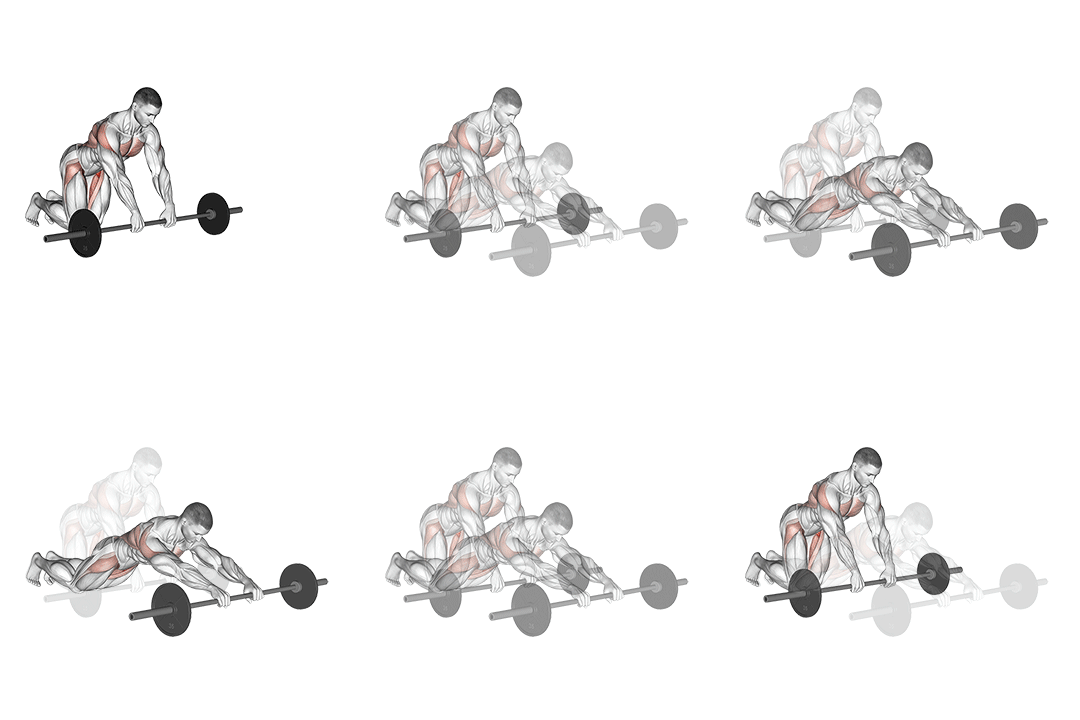
More comparisons with Barbell Side Bent V. 2
Compare More Exercises
Use our free comparison tool to analyze any two exercises head-to-head.
Compare Exercises