

Barbell Seated Twist vs Barbell Sitted Alternate Leg Raise: Complete Comparison Guide
Barbell Seated Twist vs Barbell Sitted Alternate Leg Raise — two barbell core moves that attack your waist from very different angles. You’ll get a practical breakdown of which exercise emphasizes the rectus abdominis, which loads the obliques and hip flexors, and how to use each for hypertrophy, strength, or endurance. I’ll cover movement cues, joint angles, rep ranges, and progression options so you can choose the one that fits your program and protect your spine while maximizing muscle recruitment.
Exercise Comparison
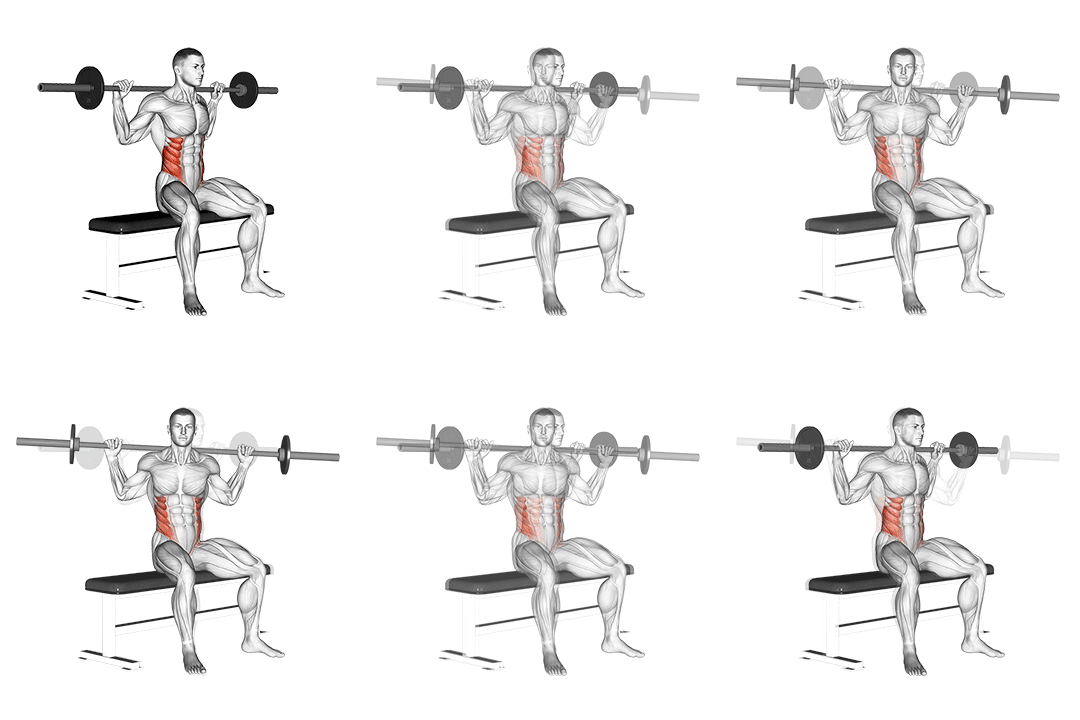
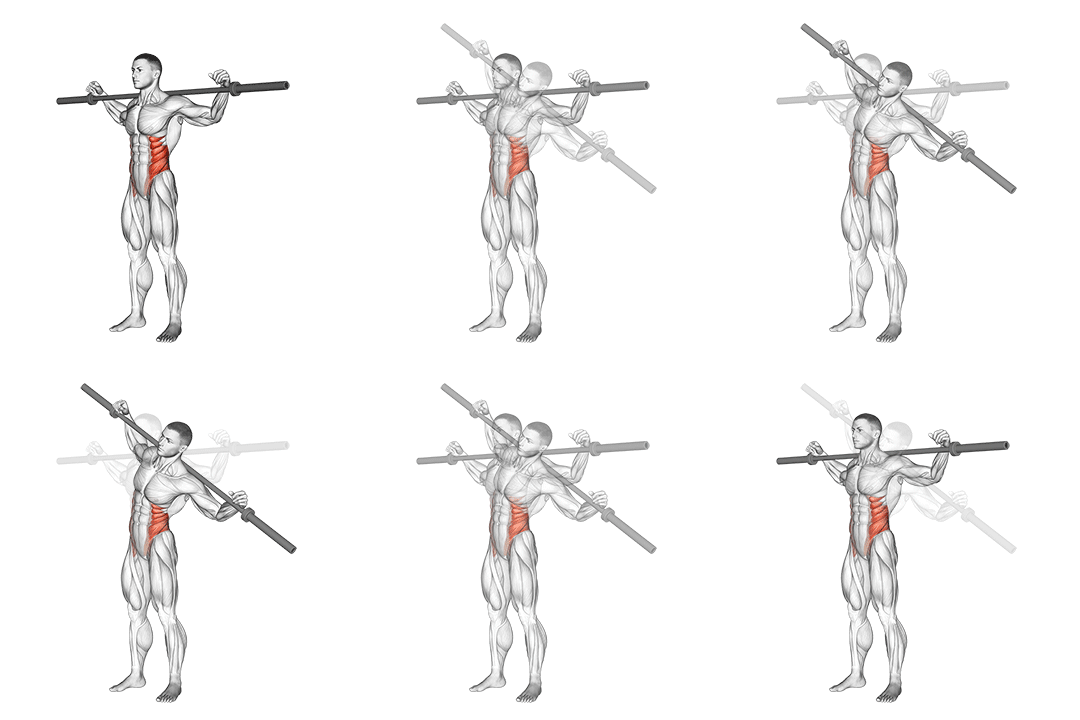
Barbell Seated Twist
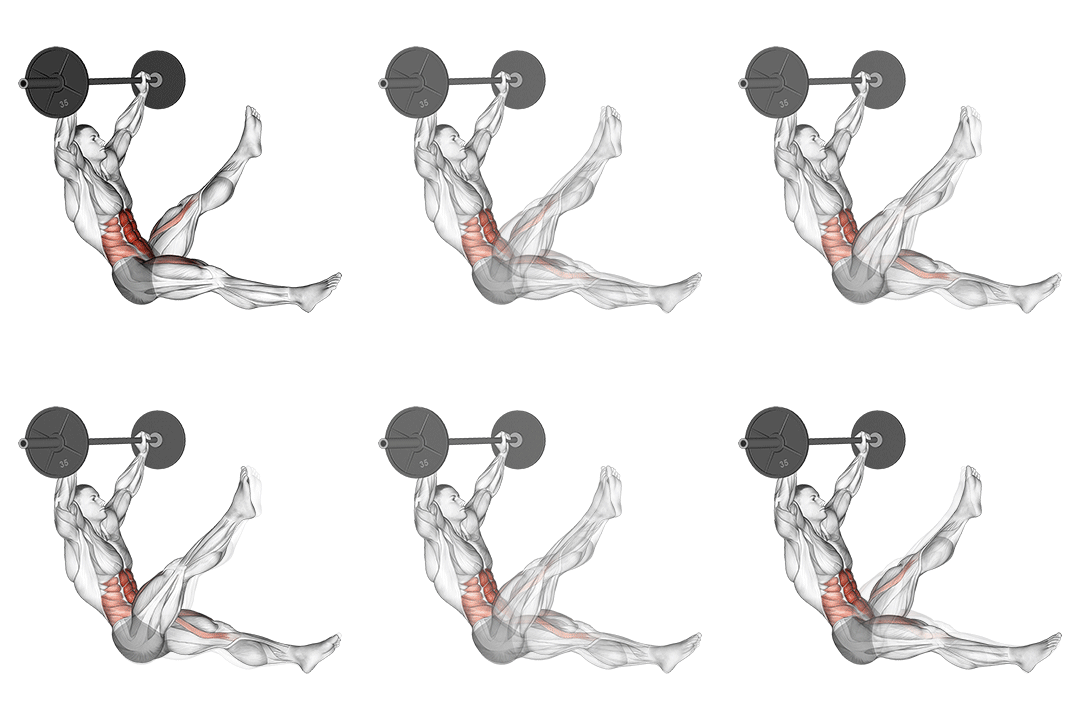
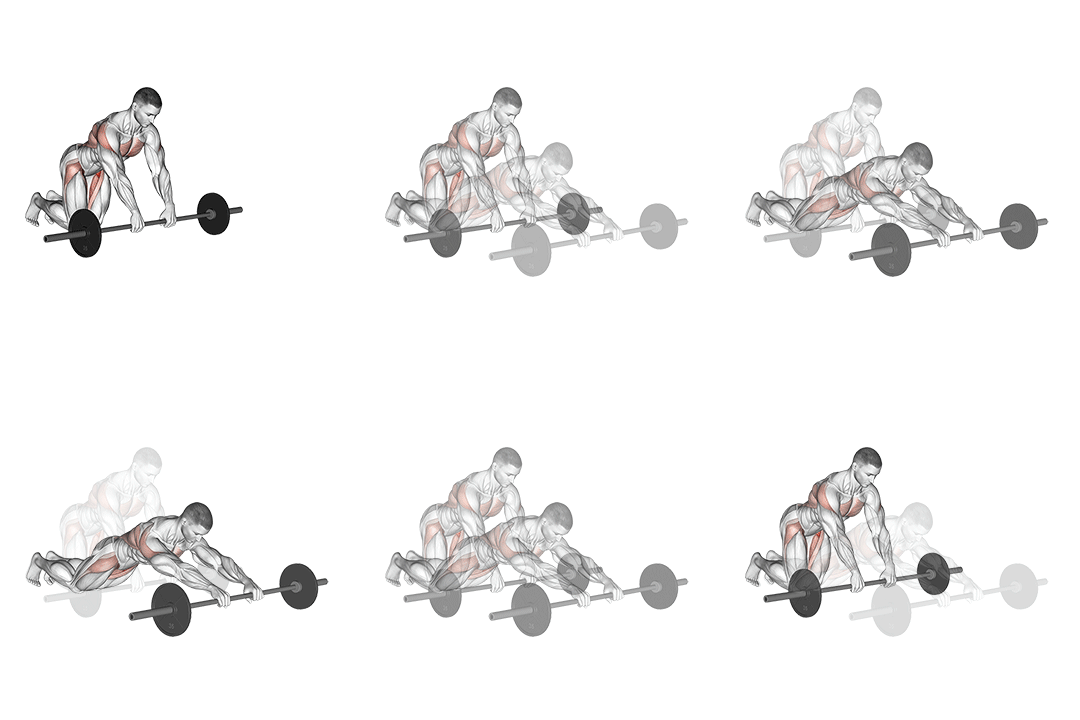
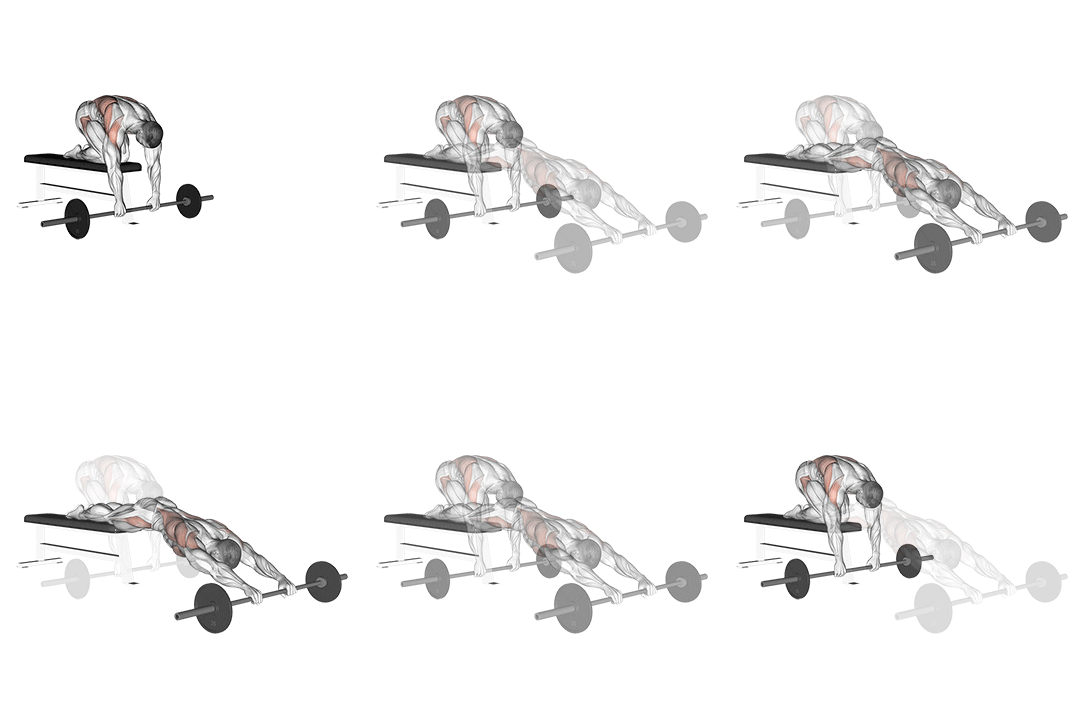
Barbell Sitted Alternate Leg Raise
Head-to-Head Comparison
| Attribute | Barbell Seated Twist | Barbell Sitted Alternate Leg Raise |
|---|---|---|
| Target Muscle |
Abs
|
Abs
|
| Body Part |
Waist
|
Waist
|
| Equipment |
Barbell
|
Barbell
|
| Difficulty |
Intermediate
|
Intermediate
|
| Movement Type |
Compound
|
Isolation
|
| Secondary Muscles |
2
|
1
|
Secondary Muscles Activated
Barbell Seated Twist
Barbell Sitted Alternate Leg Raise
Visual Comparison
Overview
Barbell Seated Twist vs Barbell Sitted Alternate Leg Raise — two barbell core moves that attack your waist from very different angles. You’ll get a practical breakdown of which exercise emphasizes the rectus abdominis, which loads the obliques and hip flexors, and how to use each for hypertrophy, strength, or endurance. I’ll cover movement cues, joint angles, rep ranges, and progression options so you can choose the one that fits your program and protect your spine while maximizing muscle recruitment.
Key Differences
- Barbell Seated Twist is a compound movement, while Barbell Sitted Alternate Leg Raise is an isolation exercise.
- Both exercises target the Abs using Barbell. The main differences are in their movement patterns and muscle activation angles.
Pros & Cons
Barbell Seated Twist
+ Pros
- Loads rotational torque and trains obliques and anti-rotation strength
- Easily progressed with heavier barbells or unilateral variations
- Transfers to rotational sports and improves trunk control under load
- Can be performed with minimal setup using a landmine or bar pad
− Cons
- Higher rotational shear on the lumbar spine if overloaded
- Requires solid bracing technique to protect lower back
- Less targeted for lower rectus abdominis compared to leg raises
Barbell Sitted Alternate Leg Raise
+ Pros
- Isolates lower rectus abdominis and challenges hip flexors
- Clear sagittal plane pattern that’s easy to cue and measure
- Good for hypertrophy with higher rep ranges (8–15 reps)
- Lower rotational stress on spine compared to heavy twists
− Cons
- Places significant demand on hip flexors which can dominate the movement
- Requires careful pelvic control to avoid lumbar flexion
- Harder to progressively overload safely compared to rotational barbell variations
When Each Exercise Wins
The leg raise provides a cleaner, sagittal-plane overload of the rectus abdominis and allows controlled time under tension (8–15 reps, 2–3s eccentrics). Because you can target the lower abs and use slow eccentrics, it produces more localized hypertrophy when programmed with higher reps and volume.
The Seated Twist lets you progressively add external load and train rotational torque and anti-rotation capacity (3–6 reps for strength work). Its force vectors stress the obliques and posterior chain under load, translating to stronger trunk stiffness for loaded lifts and athletic movements.
The single-plane nature and simple cueing (brace, posterior tilt, lift) make the leg raise more beginner-friendly. It teaches pelvic control and lower-ab isolation before adding complex rotation or heavy loading.
Seated twists can be scaled with a light bar, sandbag, or even a broom and weight, and require less strict bench clearance than leg raises. That adaptability makes it easier to train rotational core strength at home with limited equipment.
Frequently Asked Questions
Can I do both Barbell Seated Twist and Barbell Sitted Alternate Leg Raise in the same workout?
Yes. Pair them intelligently: use the Seated Twist early as a heavier, lower-rep strength movement (3–5 sets of 4–8) and follow with the Sitted Alternate Leg Raise for higher-rep hypertrophy (3–4 sets of 10–15). Keep total core volume to 8–12 sets and monitor fatigue to protect the lumbar spine.
Which exercise is better for beginners?
Barbell Sitted Alternate Leg Raise tends to be better for beginners because it’s single-plane and easier to cue. Start with bodyweight or light-loaded leg raises to teach pelvic control before progressing to barbell loading or adding rotational complexity.
How do the muscle activation patterns differ?
The Seated Twist emphasizes oblique activity and anti-rotation torque with peak activation around mid-rotation (≈30–45°), while the Alternate Leg Raise loads the rectus abdominis concentrically as the hip moves from ~0° to 90° and shifts load to the iliopsoas. One is rotational/anti-extension, the other is sagittal hip flexion-driven.
Can Barbell Sitted Alternate Leg Raise replace Barbell Seated Twist?
If your primary goal is lower-ab hypertrophy, yes—the leg raise can replace the twist. But if you need rotational strength or sport-specific torque, the Seated Twist is non-negotiable; they complement each other rather than being perfect substitutes.
Expert Verdict
Use the Barbell Seated Twist when your goal is loaded rotational strength, oblique development, and trunk stiffness under torque—perform 3–5 sets of 4–10 reps, keep rotation to about 30–45° per side, and prioritize bracing to protect the lumbar spine. Choose the Barbell Sitted Alternate Leg Raise when you want targeted lower-rectus hypertrophy and to strengthen hip flexors; program 3–4 sets of 8–15 reps with slow eccentrics and a posterior pelvic tilt. If your program needs both size and functional rotation, include the leg raise for volume and the twist for heavy, low-rep strength work.
Also Compare
More comparisons with Barbell Seated Twist
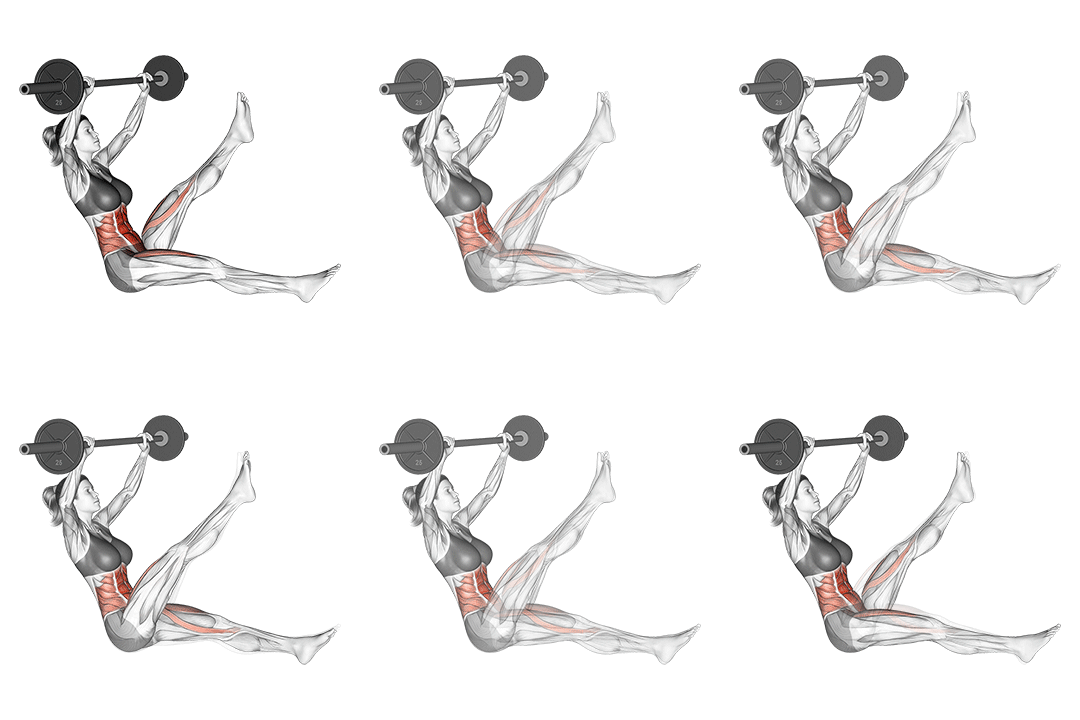
More comparisons with Barbell Sitted Alternate Leg Raise
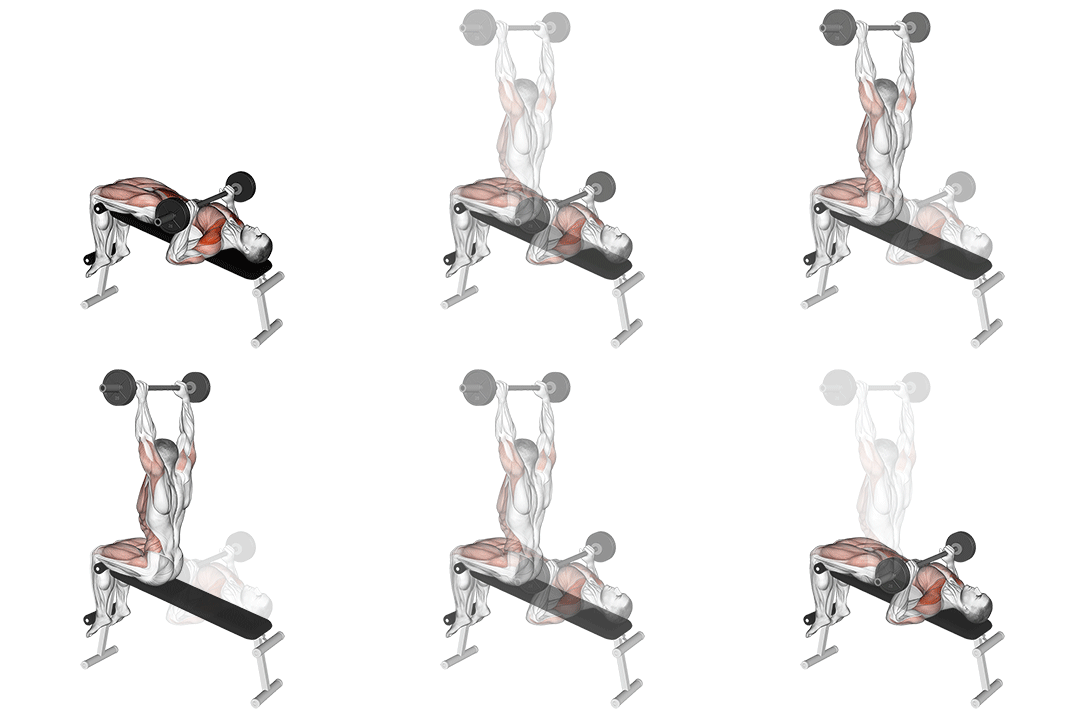
Compare More Exercises
Use our free comparison tool to analyze any two exercises head-to-head.
Compare Exercises