

Barbell Seated Twist vs Barbell Sitted Alternate Leg Raise (female): Complete Comparison Guide
Barbell Seated Twist vs Barbell Sitted Alternate Leg Raise (female) — two barbell-based core moves that both target your abs but load them in different ways. You’ll get a clear breakdown of primary and secondary muscle activation, step-by-step technique cues, equipment needs, difficulty and injury risk, and which exercise to pick for muscle growth, strength, beginners, or home training. Read on and use the actionable cues and rep ranges to pick the move that matches your goals and movement capacity.
Exercise Comparison
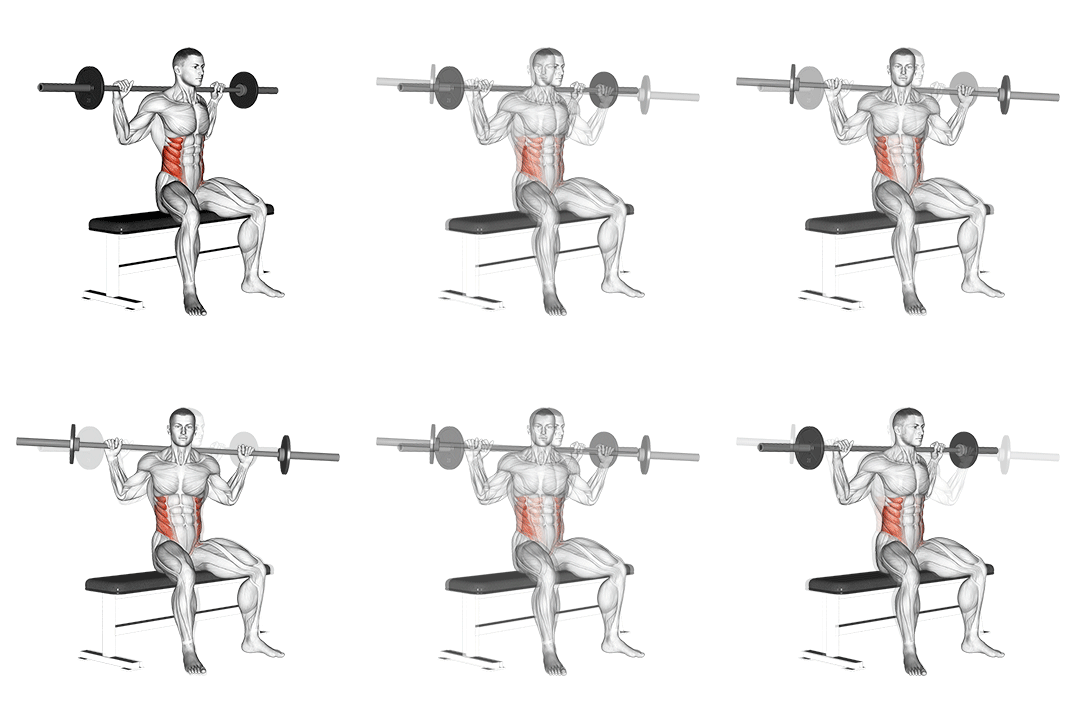
Barbell Seated Twist
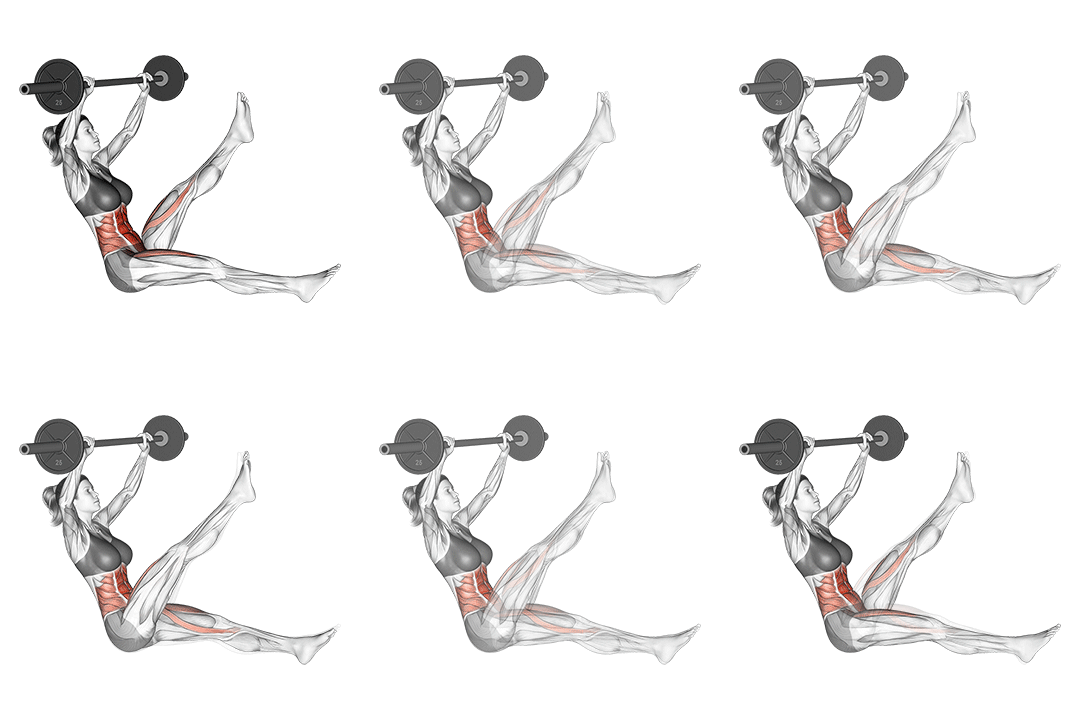
Barbell Sitted Alternate Leg Raise (female)
Head-to-Head Comparison
| Attribute | Barbell Seated Twist | Barbell Sitted Alternate Leg Raise (female) |
|---|---|---|
| Target Muscle |
Abs
|
Abs
|
| Body Part |
Waist
|
Waist
|
| Equipment |
Barbell
|
Barbell
|
| Difficulty |
Intermediate
|
Intermediate
|
| Movement Type |
Compound
|
Isolation
|
| Secondary Muscles |
2
|
2
|
Secondary Muscles Activated
Barbell Seated Twist
Barbell Sitted Alternate Leg Raise (female)
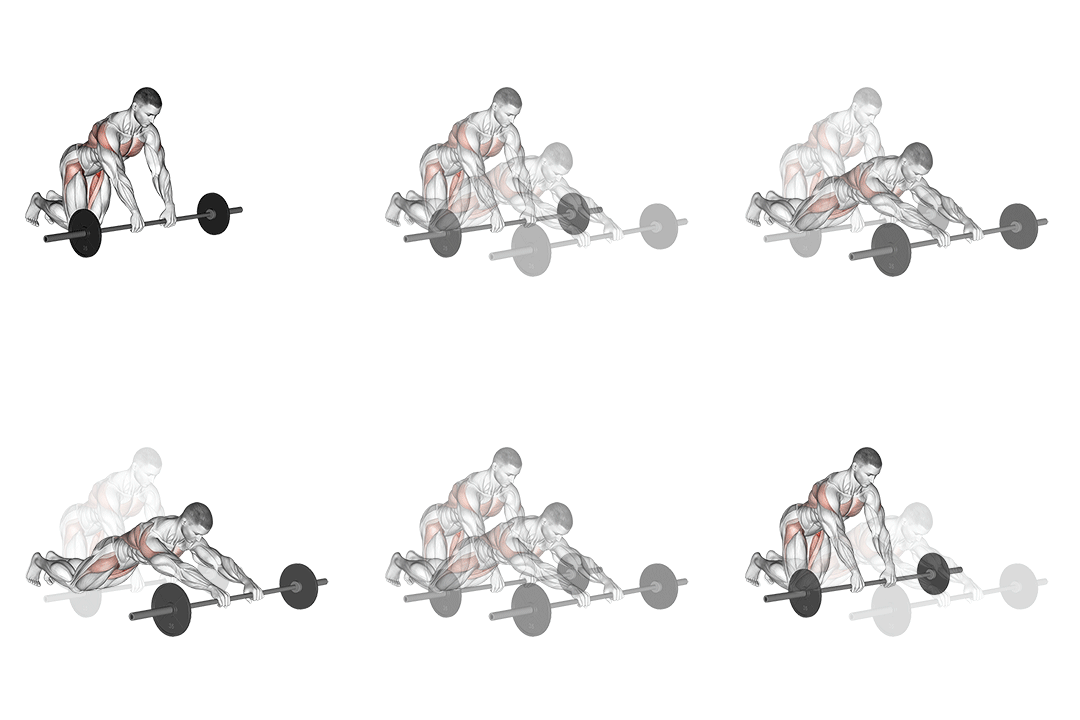
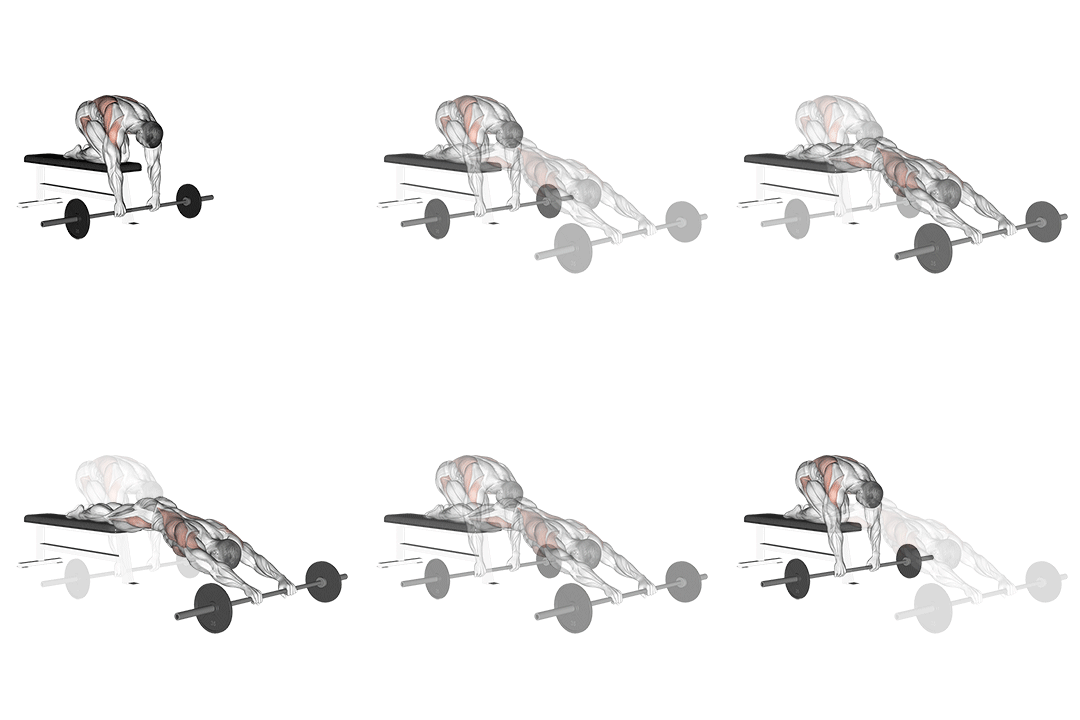
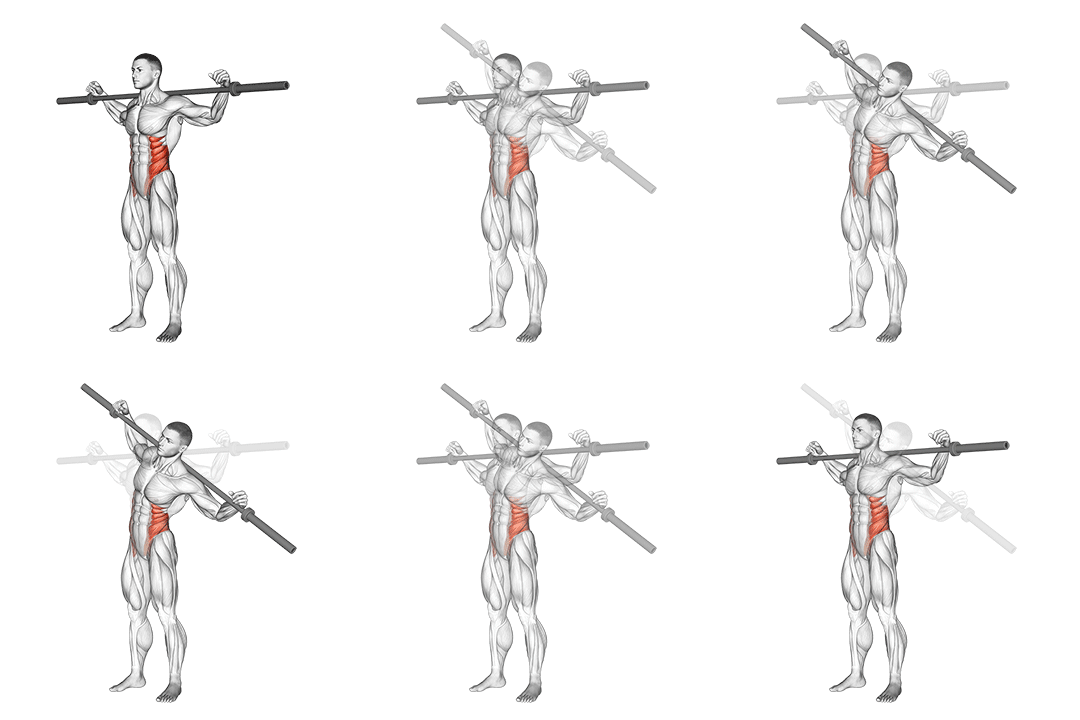
Visual Comparison
Overview
Barbell Seated Twist vs Barbell Sitted Alternate Leg Raise (female) — two barbell-based core moves that both target your abs but load them in different ways. You’ll get a clear breakdown of primary and secondary muscle activation, step-by-step technique cues, equipment needs, difficulty and injury risk, and which exercise to pick for muscle growth, strength, beginners, or home training. Read on and use the actionable cues and rep ranges to pick the move that matches your goals and movement capacity.
Key Differences
- Barbell Seated Twist is a compound movement, while Barbell Sitted Alternate Leg Raise (female) is an isolation exercise.
- Both exercises target the Abs using Barbell. The main differences are in their movement patterns and muscle activation angles.
Pros & Cons
Barbell Seated Twist
+ Pros
- Strong oblique and transverse-plane loading for torso rotation
- Easily progressive with heavier barbells and small increments
- Clear technique cues: rotate thoracic spine 30–45°, keep lumbar neutral
- Good carryover to rotational sports and anti-rotation stability
− Cons
- Poor setup or lumbar rotation can increase shear forces
- Requires thoracic mobility; limited range for some lifters
- Less focused on lower-rectus and hip-flexor development
Barbell Sitted Alternate Leg Raise (female)
+ Pros
- Direct lower-rectus and hip-flexor emphasis for abdominal definition
- Isolation-style loading allows unilateral focus and higher rep sets
- Good for building endurance: 12–20 reps per leg or 30+ tempo reps
- Can be done slow to emphasize eccentric control and anti-extension
− Cons
- Bar on the hips can be uncomfortable without padding
- High hip-flexor involvement may offload abs if lumbar control is weak
- Greater lumbar strain risk if pelvis posterior/anterior tilt isn’t controlled
When Each Exercise Wins
The Seated Twist allows heavier loading and greater progressive overload on the abdominal wall and obliques, with optimal hypertrophy rep ranges of 8–15 per side. Its ability to load rotational torque and increase time under tension makes it better for building thicker obliques and fuller-looking abs.
Strength in anti-rotation and rotational torque transfers directly from Seated Twists because you can incrementally increase external load and maintain a braced torso. The movement trains force vectors relevant to loaded trunk strength better than an isolation leg raise.
As an isolation-style movement, the Sitted Alternate Leg Raise teaches pelvic control and builds rectus abdominis endurance with lower technical demand for thoracic rotation. Start with bodyweight single-leg raises before adding a light barbell pad to progress safely.
If you have a single barbell and a bench, the Sitted Alternate Leg Raise is easier to set up and scale with lighter loads or bodyweight variations; it also needs less rotational space and is simpler to perform in limited space.
Frequently Asked Questions
Can I do both Barbell Seated Twist and Barbell Sitted Alternate Leg Raise (female) in the same workout?
Yes. Pair them in the same session by doing heavy Seated Twist sets first for 3–4 sets of 8–12 per side, then finish with 2–3 sets of 10–15 Alternate Leg Raises per leg to target lower rectus endurance. Monitor fatigue to avoid form breakdown.
Which exercise is better for beginners?
Beginners should start with the Sitted Alternate Leg Raise progression (bodyweight or light-loaded) to develop pelvic control and anti-extension. Progress to the Seated Twist after you demonstrate consistent lumbar stability and adequate thoracic mobility.
How do the muscle activation patterns differ?
Seated Twist emphasizes oblique concentric contraction on the rotating side and eccentric control on the opposite side, producing transverse-plane torque. The Alternate Leg Raise relies on isometric rectus abdominis tension to prevent lumbar extension while hip flexors produce concentric leg lift force.
Can Barbell Sitted Alternate Leg Raise (female) replace Barbell Seated Twist?
Not completely. The Sitted Alternate Leg Raise can substitute if you need lower-rectus focus or limited rotation, but it won’t load obliques and rotational torque the same way. Choose based on whether you prioritize transverse-plane strength or hip-flexor-assisted anterior core work.
Expert Verdict
If your goal is thicker obliques, rotational strength, and straightforward progressive overload, prioritize the Barbell Seated Twist with controlled 8–15 rep sets and thoracic-focused rotation. If you want to emphasize the lower rectus abdominis, build core endurance, or have limited rotation mobility, choose the Barbell Sitted Alternate Leg Raise and work in 10–20 reps per leg while focusing on neutral lumbar position. For balanced development, alternate both across training cycles: use Seated Twists in strength/hypertrophy blocks and Sitted Alternate Leg Raises during endurance or corrective phases. Always brace, maintain lumbar neutrality, and progress load or tempo by ~2.5–5% per week when possible.
Also Compare
More comparisons with Barbell Seated Twist
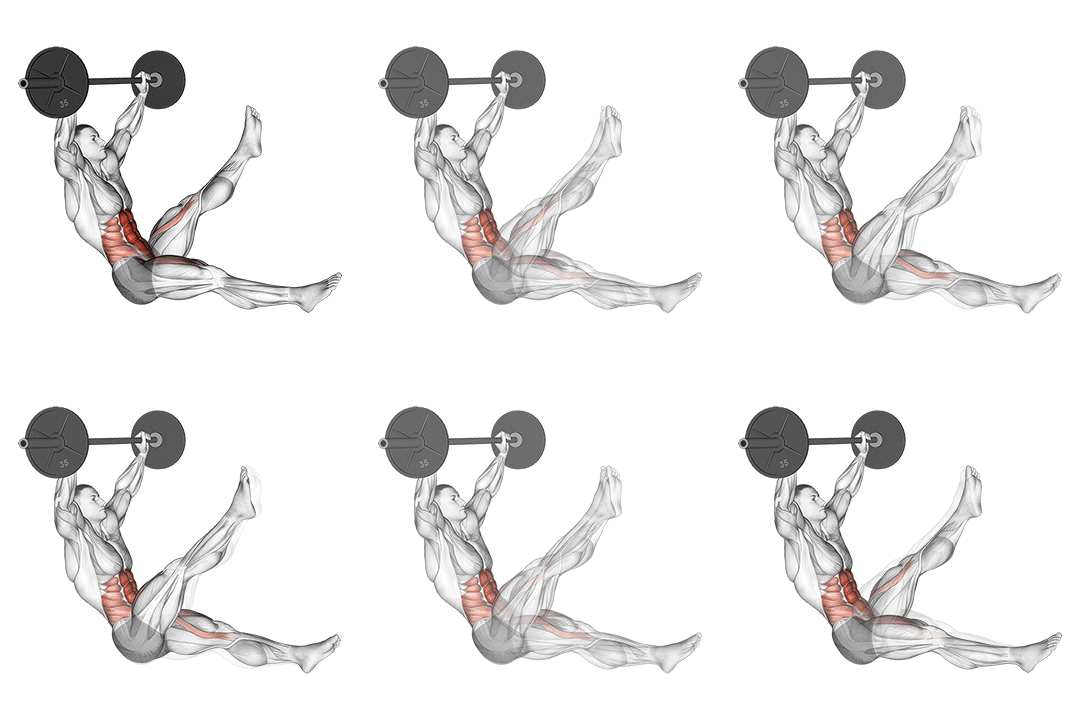
More comparisons with Barbell Sitted Alternate Leg Raise (female)
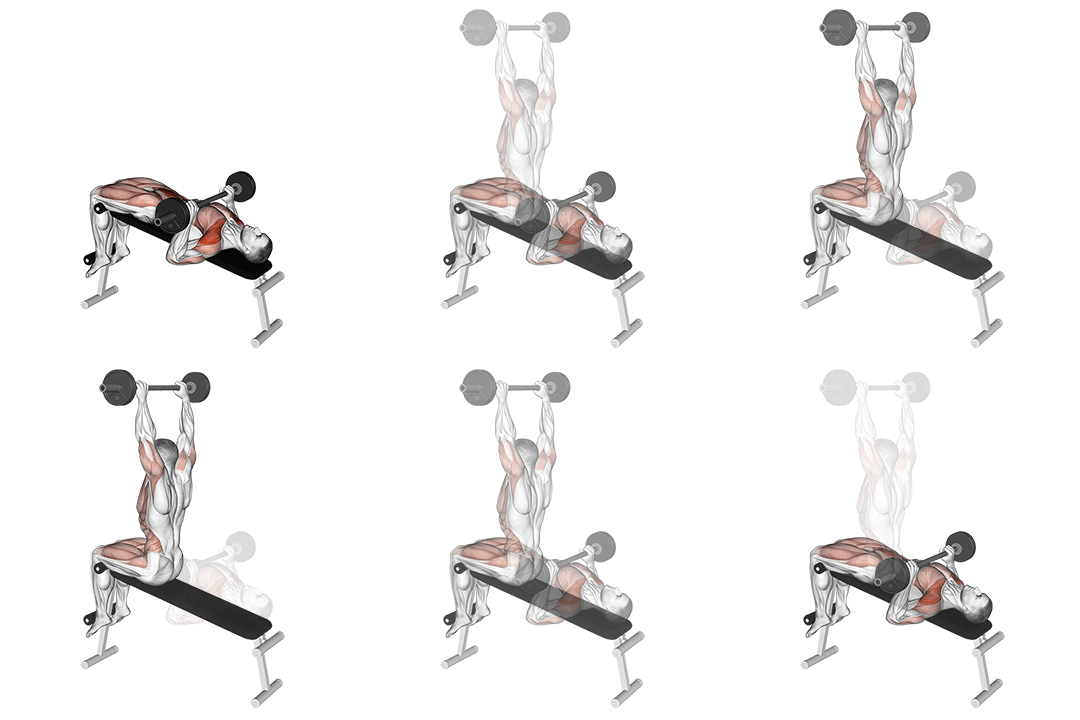
Compare More Exercises
Use our free comparison tool to analyze any two exercises head-to-head.
Compare Exercises