

Bear Crawl vs Mountain Climber: Complete Comparison Guide
Bear Crawl vs Mountain Climber — two bodyweight compounds that tax your cardiovascular system while hammering the core and shoulders. You’ll get a clear, evidence-based breakdown so you can pick the right drill for conditioning, core strength, or metabolic conditioning. I’ll cover primary and secondary muscle activation, technical cues (hip angles, hand placement), progression options, injury risk, and practical reps/times so you can slot these into circuits, warm-ups, or focused sessions.
Exercise Comparison
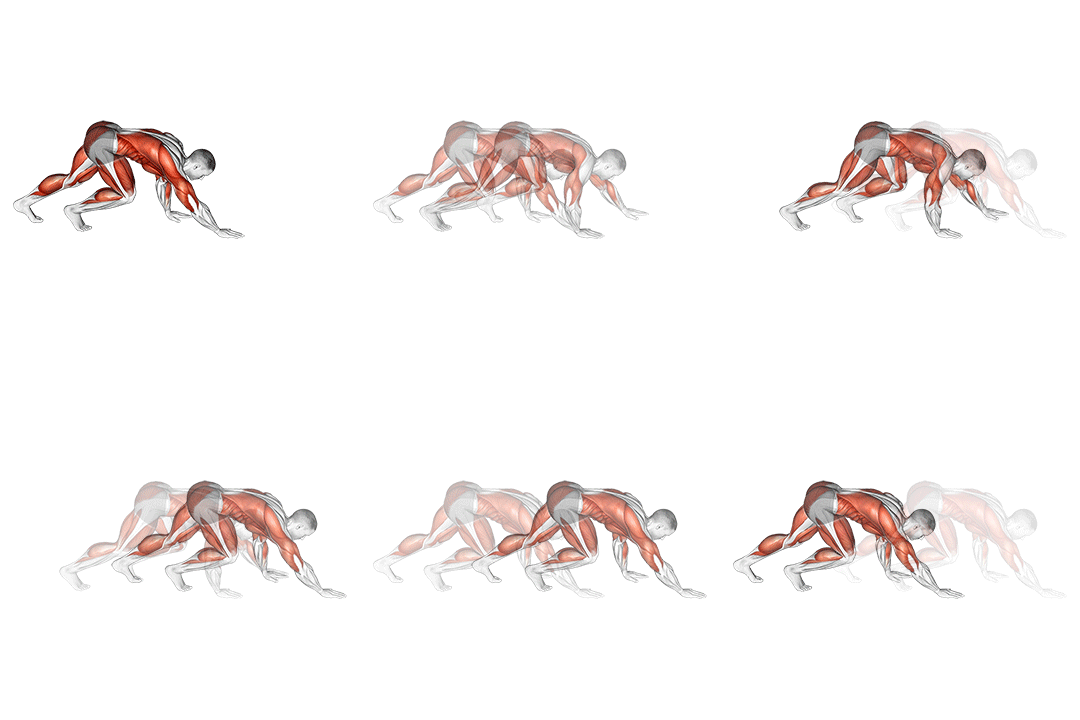
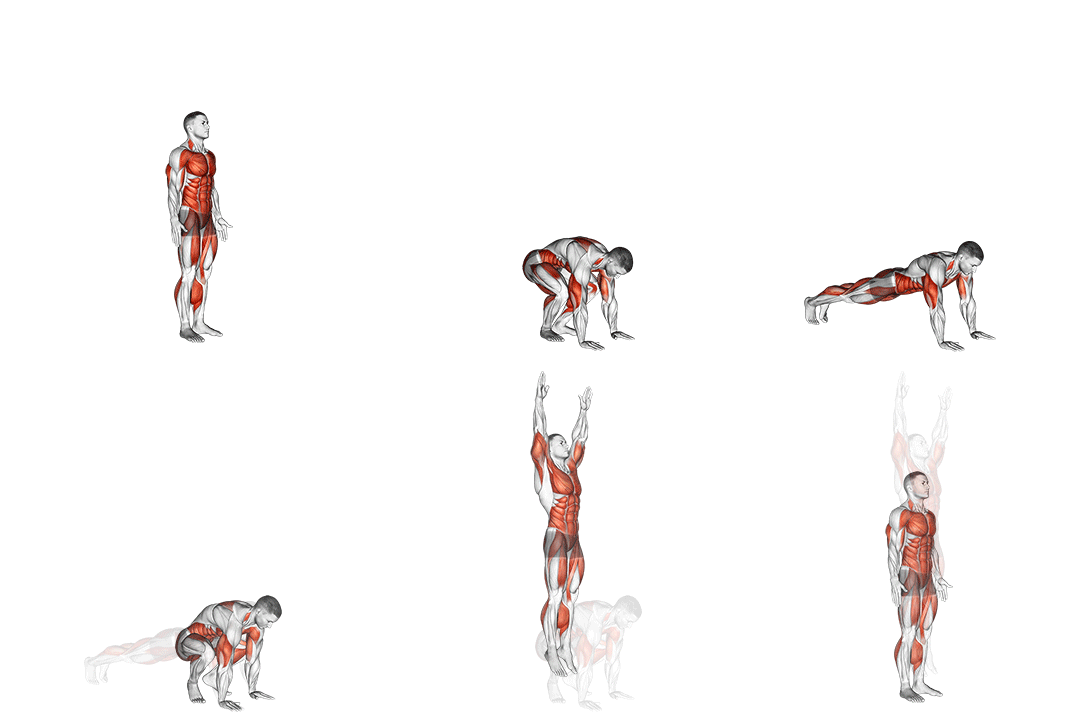
Bear Crawl
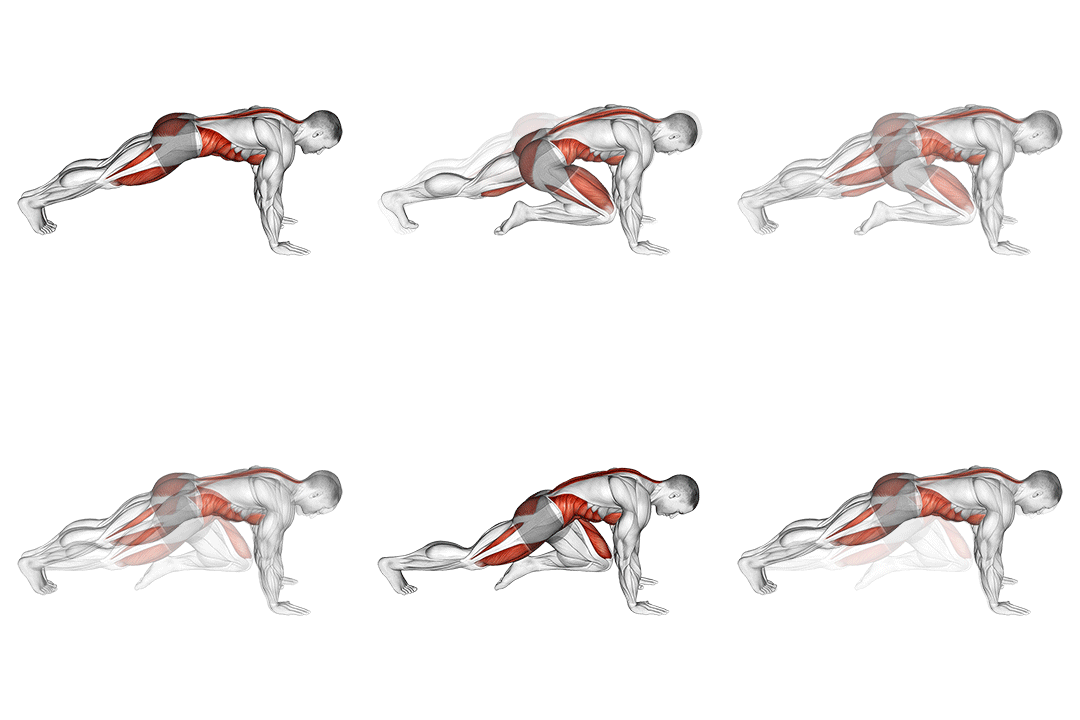
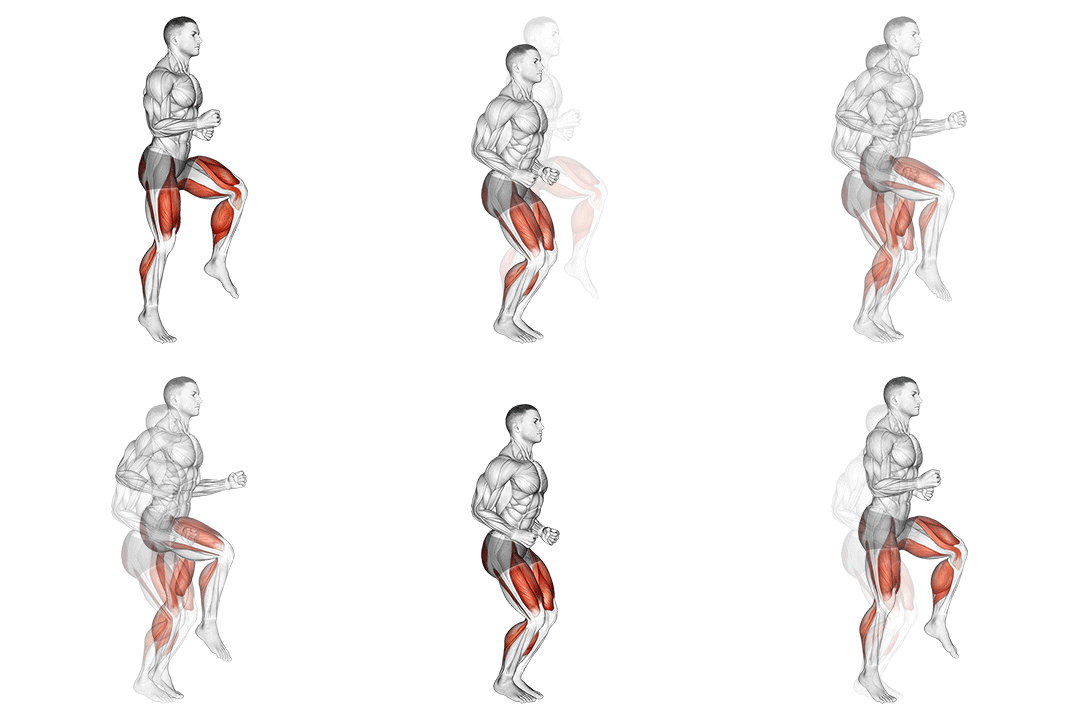
Mountain Climber
Head-to-Head Comparison
| Attribute | Bear Crawl | Mountain Climber |
|---|---|---|
| Target Muscle |
Cardiovascular-system
|
Cardiovascular
|
| Body Part |
Cardio
|
Cardio
|
| Equipment |
Body-weight
|
Body-weight
|
| Difficulty |
Intermediate
|
Intermediate
|
| Movement Type |
Compound
|
Compound
|
| Secondary Muscles |
3
|
3
|
Secondary Muscles Activated
Bear Crawl
Mountain Climber
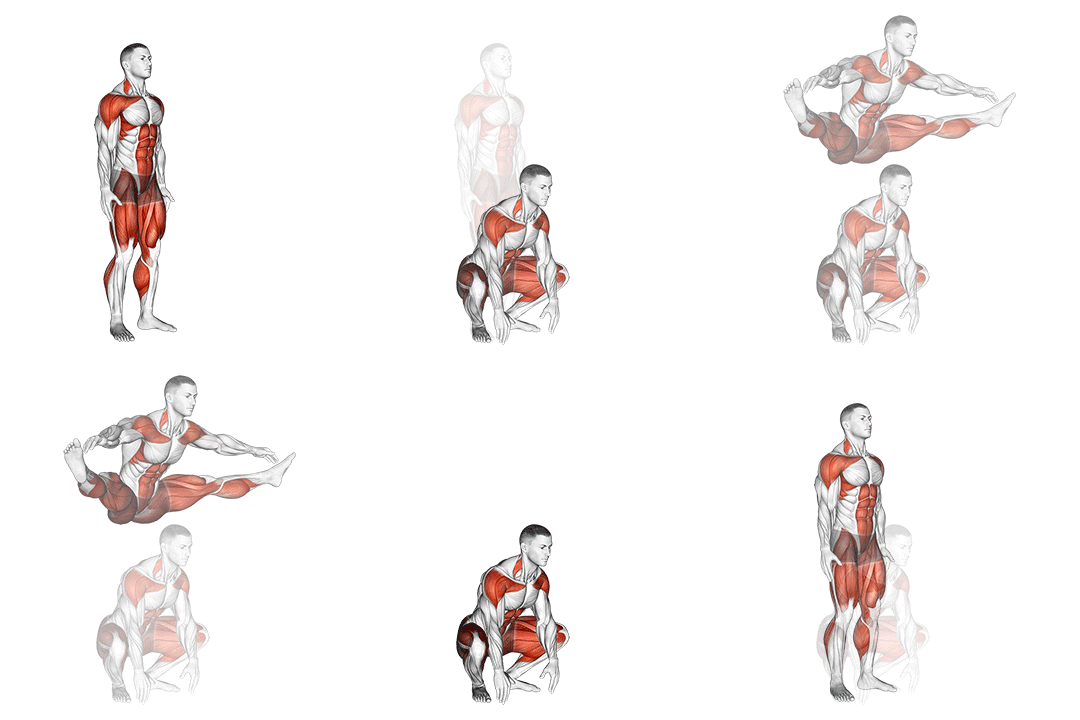
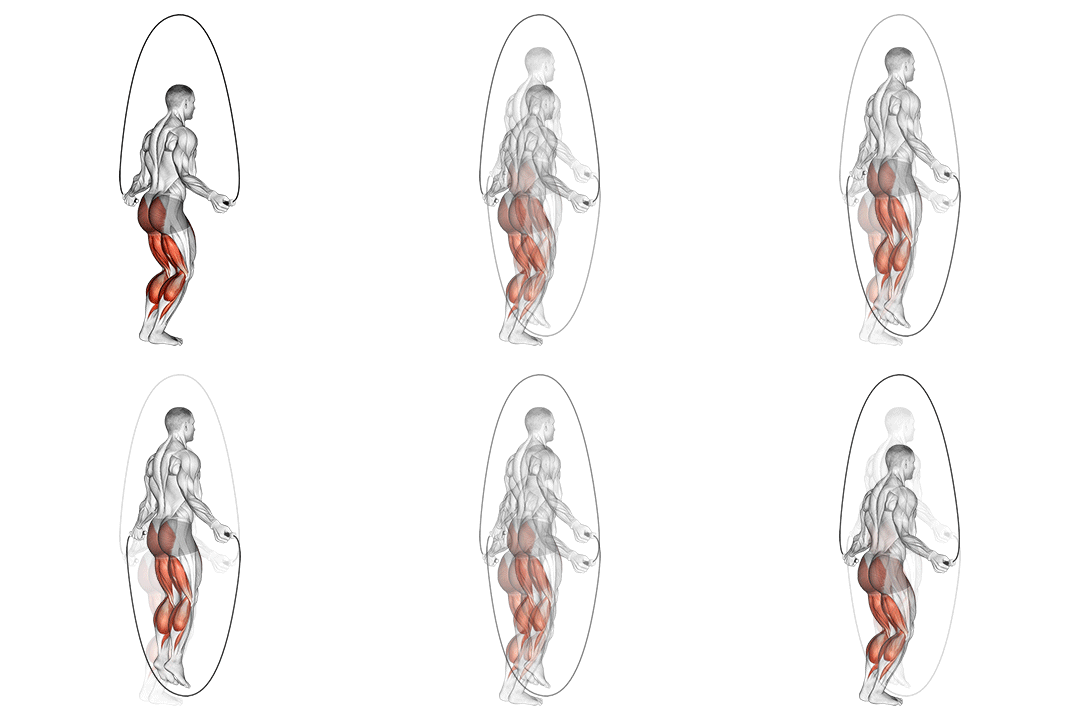
Visual Comparison
Overview
Bear Crawl vs Mountain Climber — two bodyweight compounds that tax your cardiovascular system while hammering the core and shoulders. You’ll get a clear, evidence-based breakdown so you can pick the right drill for conditioning, core strength, or metabolic conditioning. I’ll cover primary and secondary muscle activation, technical cues (hip angles, hand placement), progression options, injury risk, and practical reps/times so you can slot these into circuits, warm-ups, or focused sessions.
Key Differences
- Bear Crawl primarily targets the Cardiovascular-system, while Mountain Climber focuses on the Cardiovascular.
Pros & Cons
Bear Crawl
+ Pros
- Full-body coordination: integrates contralateral limb movement and posterior chain control
- Sustained shoulder and scapular stabilization under load
- Easy to scale distance and add external load (vest, sled)
- Great for developing horizontal force transfer and anti-rotation strength
− Cons
- Requires more floor space than stationary drills
- Higher technical demand — needs coaching for shoulder position and hip height
- Potential wrist or shoulder discomfort if scapular control is poor
Mountain Climber
+ Pros
- Extremely accessible — needs minimal space and no travel path
- High metabolic output in short windows (20–60s), ideal for interval training
- Easy to measure progress with time or rep targets
- Lower coordination demand; beginner-friendly plank base
− Cons
- Can overwork hip flexors and quads with high-volume sets
- Less emphasis on horizontal force transfer and posterior chain
- Fast reps can degrade spinal position if you sacrifice hip alignment
When Each Exercise Wins
Bear Crawl creates sustained tension across the shoulders, triceps, and core while enabling longer time-under-tension and overload options (distance, weight vest). That sustained eccentric control and anti-rotation demand supports localized muscle stimulus better than short, high-speed climber intervals.
Bear Crawl forces continuous scapular stabilization and horizontal force transfer, which trains force vectors relevant to pressing and carries. Adding resistance or increasing distance allows progressive overload for shoulder and core strength.
Mountain Climbers use a stable plank base and simple knee-drive mechanics that are easier to teach and scale. Start with slow, controlled reps (8–12 per side) before increasing speed to protect the lumbar spine.
You can do Mountain Climbers in tight spaces and plug them into circuits (30–45s work) without needing a directional path. They fit well between resistance exercises for metabolic conditioning.
Frequently Asked Questions
Can I do both Bear Crawl and Mountain Climber in the same workout?
Yes — pairing them creates a complementary stimulus: use Bear Crawls for skill and stability (20–40 meters or 30–45s) and Mountain Climbers for high-intensity intervals (20–60s). Sequence Bear Crawls first when fresh to reinforce mechanics, then use Climbers to raise heart rate.
Which exercise is better for beginners?
Mountain Climbers are generally better for beginners because they use a static plank base and simple alternating knee drives. Start with slow, controlled reps (8–12 per side) to build hip flexor and core tolerance before adding speed.
How do the muscle activation patterns differ?
Bear Crawls emphasize sustained scapular and shoulder co-contraction with anti-rotation core engagement and posterior chain coordination, while Mountain Climbers produce repeated concentric hip flexion and anterior core contractions. The force vectors in Bear Crawls are more horizontal-transfer oriented; Climbers are vertical hip-drive dominant.
Can Mountain Climber replace Bear Crawl?
Mountain Climbers can substitute Bear Crawls for conditioning or when space is limited, but they won’t fully replace the shoulder stabilization, contralateral coordination, and horizontal force-transfer stimulus of Bear Crawls. Choose based on whether you prioritize metabolic output (Climbers) or integrated core/shoulder strength (Crawls).
Expert Verdict
Choose Mountain Climbers when you need compact, high-intensity conditioning with easy progressive overload by time or reps (20–60 seconds intervals, 3–5 rounds). They’re the go-to for metabolic conditioning and beginner-friendly core work. Pick Bear Crawls when your goal is integrated shoulder and core strength, coordination, and horizontal force transfer; use 10–40 meters rounds or timed sets of 30–60 seconds and consider a weight vest to progress. Both are intermediate-level, compound, bodyweight tools—use Mountain Climbers for space-efficient conditioning and Bear Crawls for loaded core stability and functional strength.
Also Compare
More comparisons with Bear Crawl
Compare More Exercises
Use our free comparison tool to analyze any two exercises head-to-head.
Compare Exercises