

Behind Head Chest Stretch vs Forward Drag With Press: Complete Comparison Guide
Behind Head Chest Stretch vs Forward Drag With Press — you’re comparing a beginner-level isolation chest stretch with an intermediate compound press. I’ll walk you through how each loads the pectorals, which secondary muscles light up, the equipment and skill required, and when to use each for mobility, hypertrophy, or strength. You’ll get clear technique cues, rep and hold ranges (e.g., 20–60s holds vs 6–12 reps), and biomechanics so you can pick the right move for your sessions.
Exercise Comparison
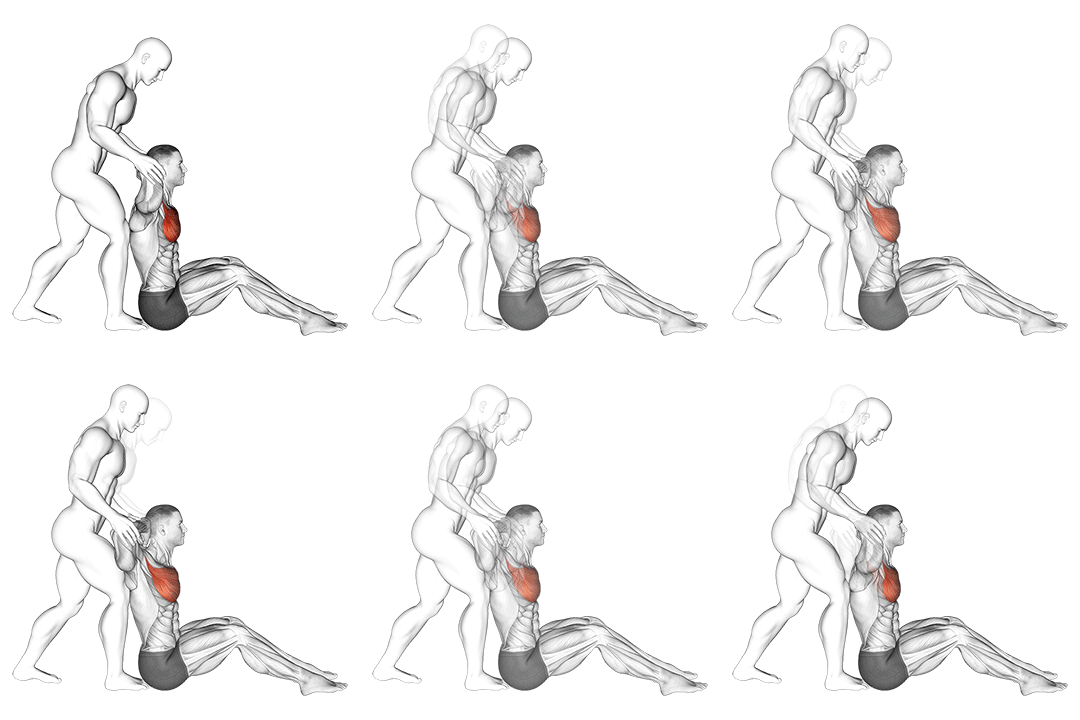
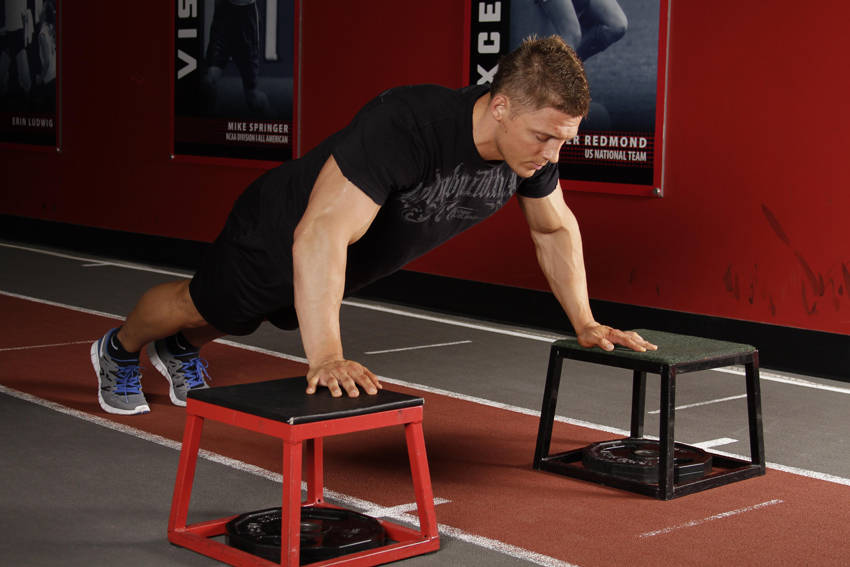
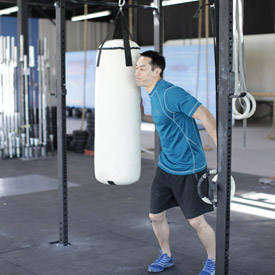
Behind Head Chest Stretch
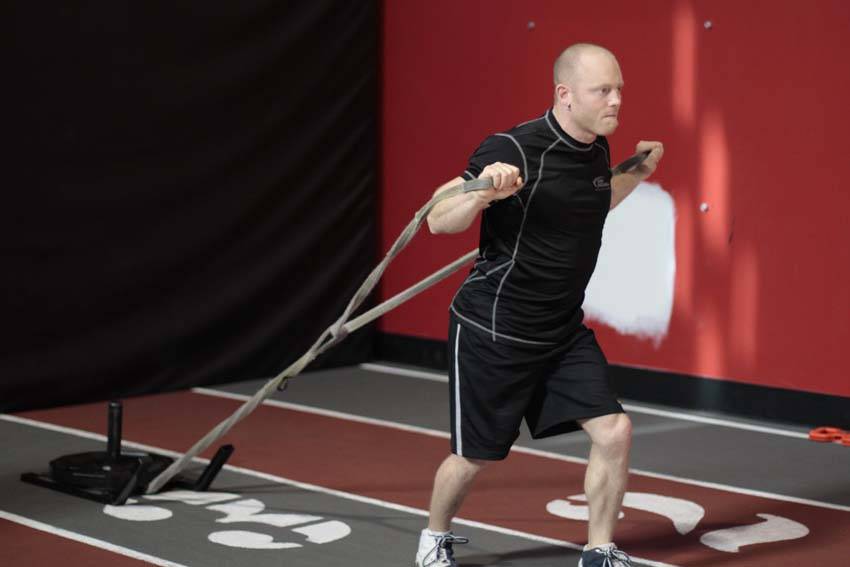
Forward Drag With Press
Head-to-Head Comparison
| Attribute | Behind Head Chest Stretch | Forward Drag With Press |
|---|---|---|
| Target Muscle |
Pectorals
|
Pectorals
|
| Body Part |
Chest
|
Chest
|
| Equipment |
Other
|
Other
|
| Difficulty |
Beginner
|
Intermediate
|
| Movement Type |
Isolation
|
Compound
|
| Secondary Muscles |
2
|
6
|
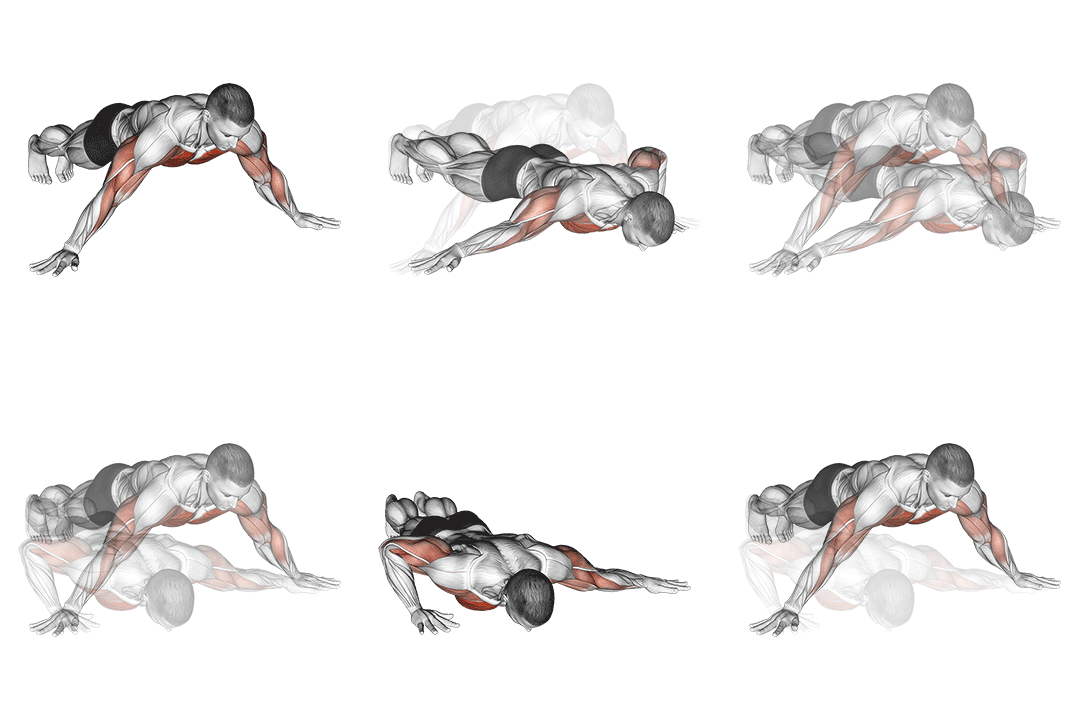
Secondary Muscles Activated
Behind Head Chest Stretch
Forward Drag With Press
Visual Comparison
Overview
Behind Head Chest Stretch vs Forward Drag With Press — you’re comparing a beginner-level isolation chest stretch with an intermediate compound press. I’ll walk you through how each loads the pectorals, which secondary muscles light up, the equipment and skill required, and when to use each for mobility, hypertrophy, or strength. You’ll get clear technique cues, rep and hold ranges (e.g., 20–60s holds vs 6–12 reps), and biomechanics so you can pick the right move for your sessions.
Key Differences
- Behind Head Chest Stretch is an isolation exercise, while Forward Drag With Press is a compound movement.
- Difficulty levels differ: Behind Head Chest Stretch is beginner, while Forward Drag With Press is intermediate.
- Both exercises target the Pectorals using Other. The main differences are in their movement patterns and muscle activation angles.
Pros & Cons
Behind Head Chest Stretch
+ Pros
- Improves pectoral length-tension and thoracic mobility with 20–60s holds
- Very low equipment needs — usable anywhere
- Beginner-friendly technical demands and low load on joints
- Useful as a warm-up or post-workout mobility drill to restore range
− Cons
- Provides minimal active mechanical tension for hypertrophy
- Limited progression for strength — primarily mobility work
- Can place the anterior shoulder in a vulnerable position if scapular control is poor
Forward Drag With Press
+ Pros
- High active mechanical tension for hypertrophy and strength (use 6–12 reps for growth, 4–6 for strength)
- Recruits multiple muscle groups and the kinetic chain for efficient work
- Easy to progressively overload by adding resistance or increasing tempo
- Improves functional pushing strength due to combined drag/press pattern
− Cons
- Requires equipment (bands, sled, cable, or landmine) and more space
- Higher technical demand — needs coordination and trunk stability
- Greater injury risk if performed with poor bracing or shoulder mechanics
When Each Exercise Wins
Forward Drag With Press produces greater active mechanical tension and allows progressive overload (use 6–12 reps, controlled eccentrics). Its force vectors and compound recruiting of the pecs and deltoids drive more muscle growth than a passive stretch.
The compound nature and ability to load heavily (4–8 rep ranges) make the Forward Drag With Press superior for building pushing strength and improving force transfer through the kinetic chain.
Beginners benefit from the low technical demand and mobility focus of the Behind Head Chest Stretch, which teaches thoracic extension and scapular retraction without heavy loading or complex sequencing.
Because it requires minimal or no equipment and little space, the Behind Head Chest Stretch wins for home sessions. It’s also a practical warm-up to prepare the chest for bodyweight presses if you don’t have weights.
Frequently Asked Questions
Can I do both Behind Head Chest Stretch and Forward Drag With Press in the same workout?
Yes — start with the Behind Head Chest Stretch as a mobility primer (20–40s holds) to improve thoracic extension and scapular position, then perform the Forward Drag With Press as your loaded work. That order optimizes range before loading and reduces compensatory patterns.
Which exercise is better for beginners?
For beginners the Behind Head Chest Stretch is better because it teaches scapular retraction and chest opening with low load. Use it to build mobility before progressing to the technically demanding Forward Drag With Press.
How do the muscle activation patterns differ?
The stretch produces low, sustained activation and increases passive tension at long muscle lengths, improving flexibility. The Forward Drag With Press produces high concentric-eccentric activation with peak forces during the press, engaging the pecs, deltoids, and triceps for active work.
Can Forward Drag With Press replace Behind Head Chest Stretch?
No — the Forward Drag With Press can’t fully replace the mobility and lengthening stimulus of the Behind Head Chest Stretch. If your goal is mobility or correcting posture, keep the stretch; if your goal is strength or hypertrophy, prioritize the compound press.
Expert Verdict
Use the Behind Head Chest Stretch when your priority is mobility, posture, and restoring optimal length-tension relationships in the pectorals — hold for 20–60 seconds, cue scapular retraction, and keep the ribs down. Choose Forward Drag With Press when you want measurable progression for hypertrophy or strength: load the movement, use 4–8 reps for strength or 6–12 for muscle growth, and focus on coordinated drive and press mechanics. Integrate both: warm up and open the chest with the stretch, then load the compound press for progressive overload if your program targets muscle growth or strength.
Also Compare
More comparisons with Behind Head Chest Stretch
Compare More Exercises
Use our free comparison tool to analyze any two exercises head-to-head.
Compare Exercises