

Bench Dip (knees Bent) vs Body-up: Complete Comparison Guide
Bench Dip (knees Bent) vs Body-up puts two bodyweight triceps movers head-to-head so you can pick the right tool for your upper-arm work. You’ll get clear comparisons of muscle activation, equipment needs, movement cues, progression routes, and injury risk. I’ll give specific technique cues (hands placement, elbow tuck, stop points), rep ranges for hypertrophy and strength (8–15 and 4–6 respectively), and biomechanics notes on length-tension and force vectors. Read this to decide whether you should prioritize accessible volume at home or a more challenging dip that lets you add progressive overload.
Exercise Comparison
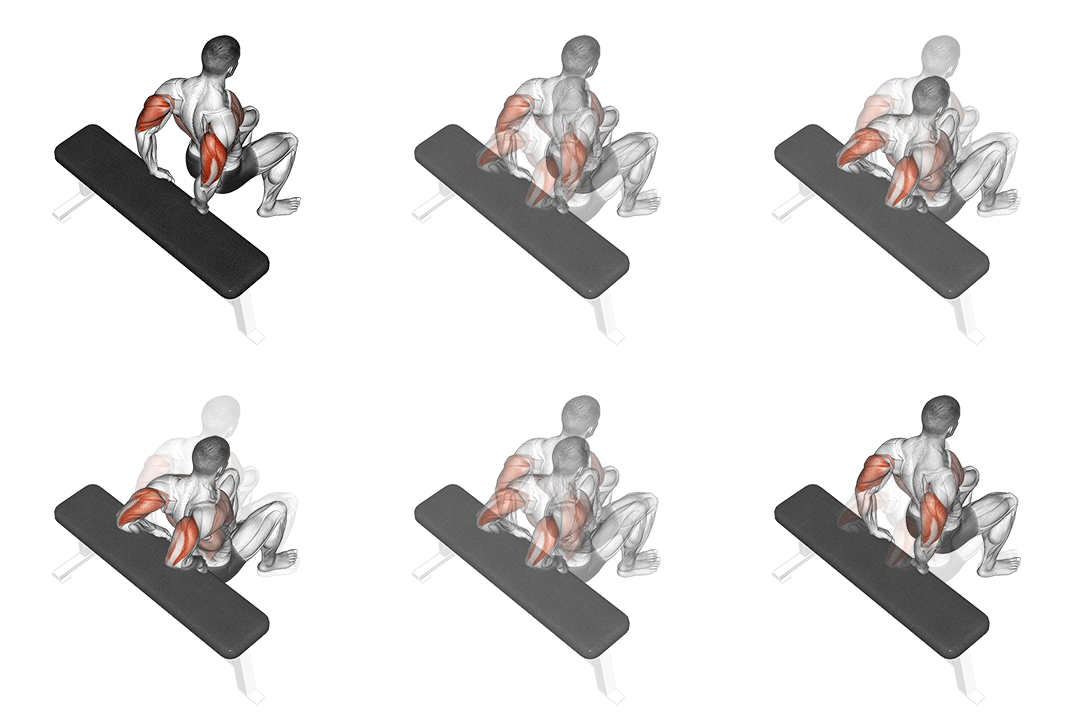
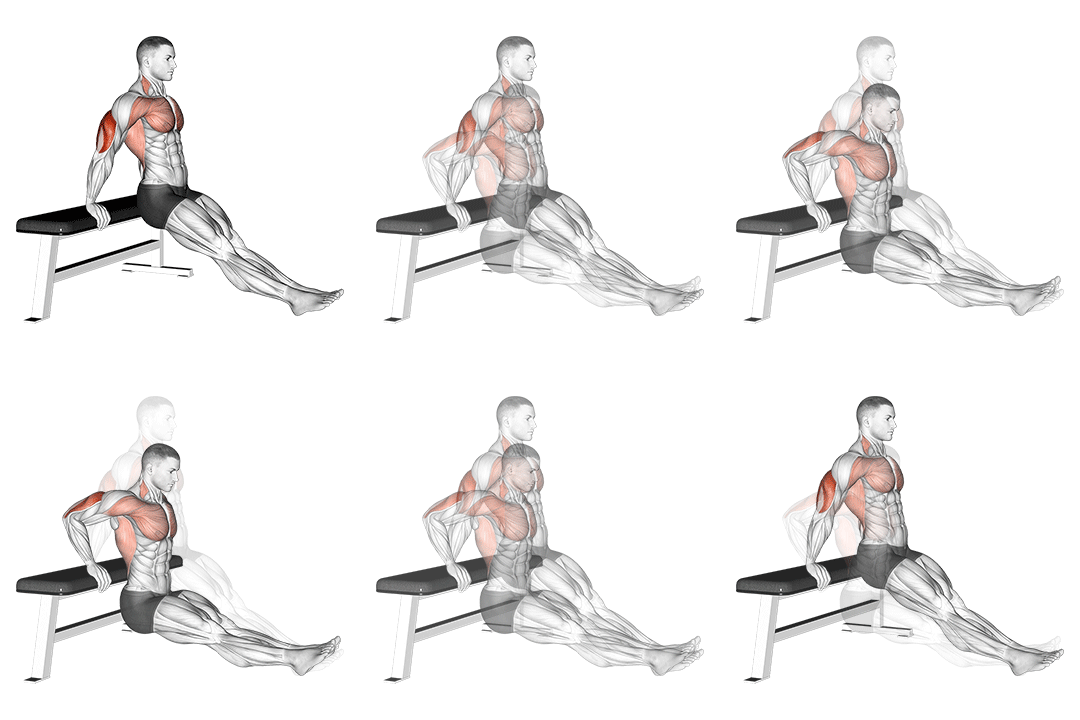
Bench Dip (knees Bent)
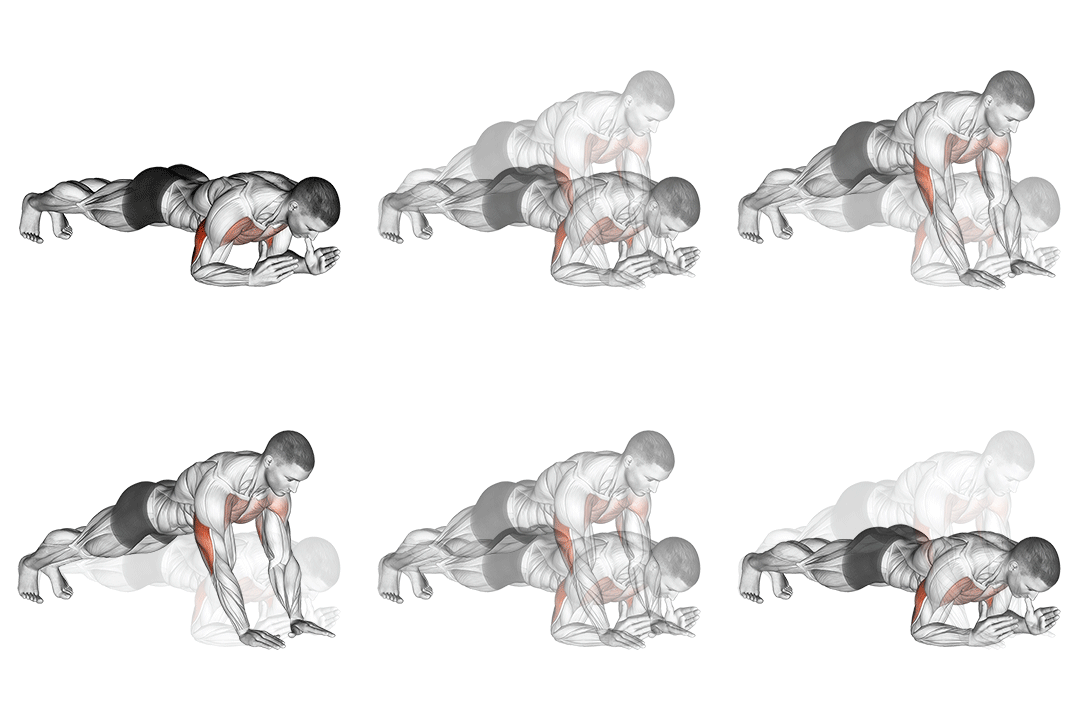
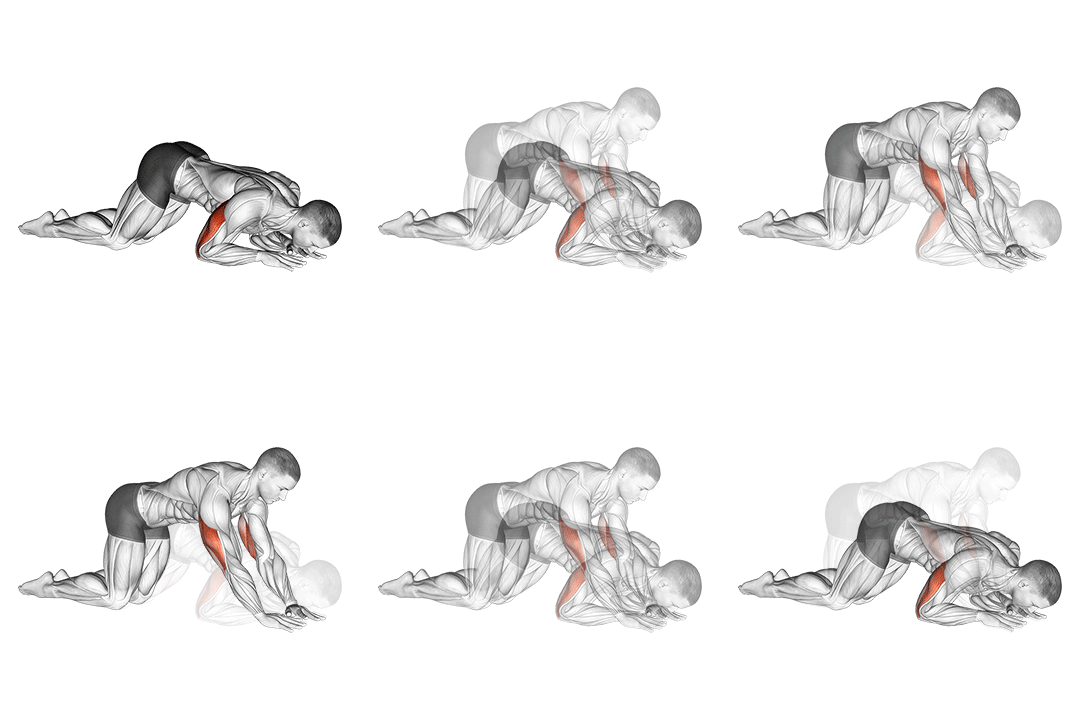
Body-up
Head-to-Head Comparison
| Attribute | Bench Dip (knees Bent) | Body-up |
|---|---|---|
| Target Muscle |
Triceps
|
Triceps
|
| Body Part |
Upper-arms
|
Upper-arms
|
| Equipment |
Body-weight
|
Body-weight
|
| Difficulty |
Beginner
|
Intermediate
|
| Movement Type |
Compound
|
Compound
|
| Secondary Muscles |
2
|
2
|
Secondary Muscles Activated
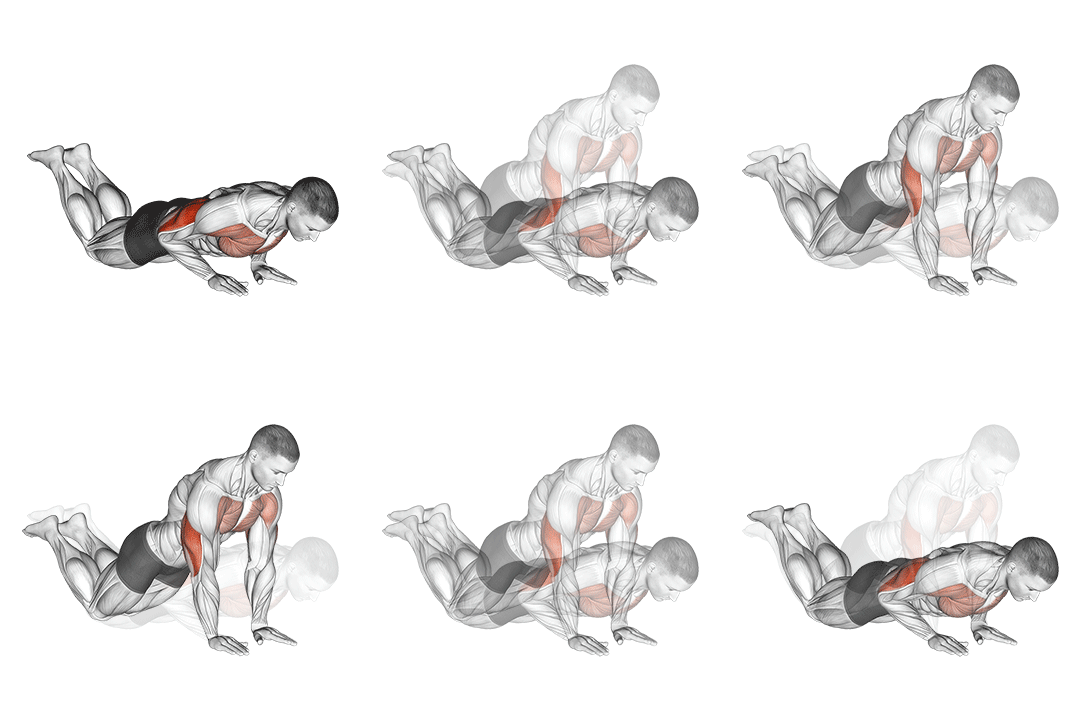
Bench Dip (knees Bent)
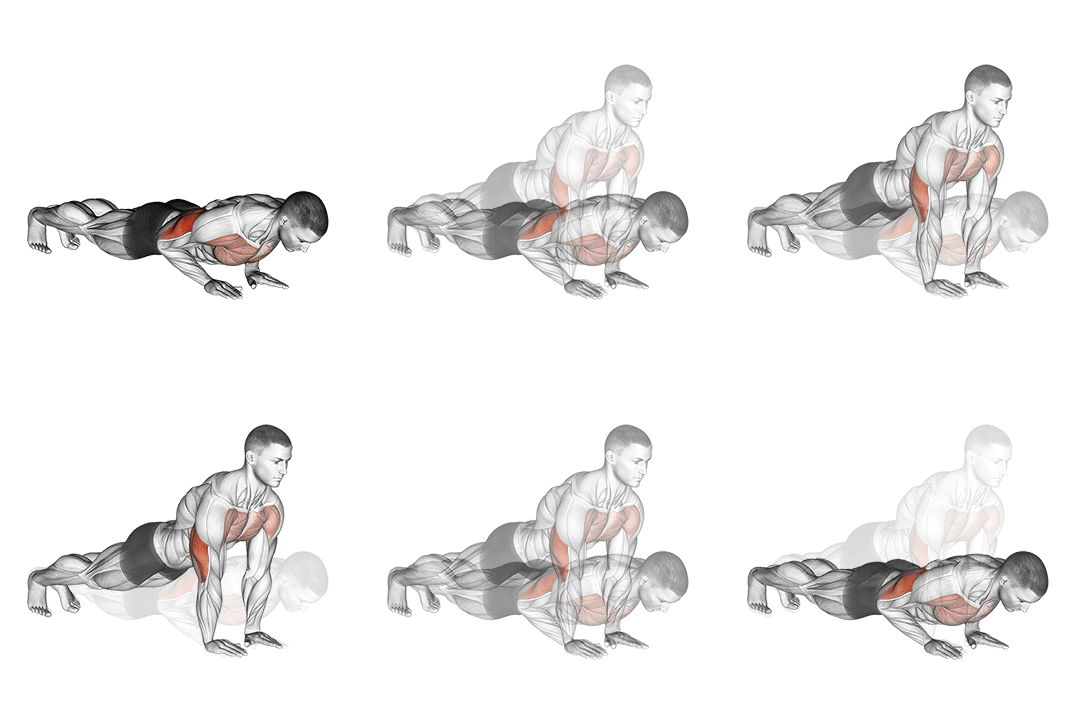
Body-up
Visual Comparison
Overview
Bench Dip (knees Bent) vs Body-up puts two bodyweight triceps movers head-to-head so you can pick the right tool for your upper-arm work. You’ll get clear comparisons of muscle activation, equipment needs, movement cues, progression routes, and injury risk. I’ll give specific technique cues (hands placement, elbow tuck, stop points), rep ranges for hypertrophy and strength (8–15 and 4–6 respectively), and biomechanics notes on length-tension and force vectors. Read this to decide whether you should prioritize accessible volume at home or a more challenging dip that lets you add progressive overload.
Key Differences
- Difficulty levels differ: Bench Dip (knees Bent) is beginner, while Body-up is intermediate.
- Both exercises target the Triceps using Body-weight. The main differences are in their movement patterns and muscle activation angles.
Pros & Cons
Bench Dip (knees Bent)
+ Pros
- Requires only a bench or chair — highly accessible
- Beginners-friendly due to reduced load and stability demands
- Easy to accumulate volume for hypertrophy (8–15 reps x 3–5 sets)
- Low setup time and minimal equipment
− Cons
- Limited progression unless you change leverage or add weight to feet
- Places more stress on anterior shoulder when dipping deep
- Chest and shoulder involvement can reduce triceps isolation
Body-up
+ Pros
- Higher triceps loading and ROM for stronger muscle stimulus
- Better progression options (weighted dips, ring variations, tempo)
- Improves scapular control and shoulder stability
- Transfers well to other upper-body pushing strength
− Cons
- Requires dip bars or rings — less accessible at home
- Higher technical demand and steeper learning curve
- Can overload wrists and shoulders if mobility or form is poor
When Each Exercise Wins
Body-up wins because it permits a longer effective ROM and easier progressive overload (weighted dips, negatives). Aim for 8–15 reps with controlled 2–3 second eccentrics to maximize time under tension.
Body-up better supports heavy loading (4–6 reps) and direct force production through a vertical force vector, allowing you to add 5–20% extra load safely for progressive strength adaptations.
Bench Dip (knees Bent) reduces the moment arm and stability demand, making it easier to learn elbow extension mechanics and accumulate volume without high shoulder stress when you stop around 90° elbow flexion.
Most homes have a bench, chair, or couch. The exercise requires no special gear and lets you build triceps volume safely with rep ranges of 10–20 until you can progress to more challenging dips.
Frequently Asked Questions
Can I do both Bench Dip (knees Bent) and Body-up in the same workout?
Yes — pair them intelligently: start with Body-up for heavy sets (strength or weighted work) then finish with Bench Dip (knees Bent) as a higher-rep finisher to increase metabolic stress. Keep total shoulder volume in check and stop any set that causes anterior shoulder pinching.
Which exercise is better for beginners?
Bench Dip (knees Bent) is better for most beginners because it shortens the lever arm and reduces stability requirements, letting you groove elbow-extension mechanics and build tolerance before attempting Body-up.
How do the muscle activation patterns differ?
Bench dips shift some load to the pectoralis major and anterior deltoid because of shoulder extension and a more horizontal force vector; Body-up keeps the force vector more vertical and emphasizes triceps during the concentric phase. Also, different shoulder and elbow angles change length-tension relationships, altering which triceps head is stressed most.
Can Body-up replace Bench Dip (knees Bent)?
Yes for trainees with sufficient shoulder stability and access to bars — Body-up can replace bench dips for greater overload and progression. However, beginners or people training at home may prefer bench dips as a safer, more accessible starting point.
Expert Verdict
Choose Bench Dip (knees Bent) when accessibility and safe volume matter: it’s the clear pick for beginners, home workouts, or when you want to accumulate high rep sets (10–20) with minimal setup. Pick Body-up when your goal is stronger triceps and you can manage a steeper technical demand—use it for lower-rep strength blocks (4–6) or hypertrophy sets (8–15) while adding external load. Use elbow-tuck cues (10–20° from the torso), stop around 90° elbow flexion to protect the shoulder, and progress from bench dips to body-ups as scapular control and shoulder mobility improve.
Also Compare
More comparisons with Bench Dip (knees Bent)
Compare More Exercises
Use our free comparison tool to analyze any two exercises head-to-head.
Compare Exercises