

Bench Dip (knees Bent) vs Close-grip Push-up: Complete Comparison Guide
Bench Dip (knees Bent) vs Close-grip Push-up — both train your triceps, chest, and shoulders, but they load those muscles differently. In this guide you’ll get a direct comparison of muscle activation, mechanics, equipment needs, and injury risk. You’ll learn clear technique cues, rep ranges for hypertrophy and strength (6–12 and 3–6/6–8 respectively), and how to progress each move. By the end you’ll know which exercise to pick for triceps growth, strength, shoulder health, or a no-equipment home session.
Exercise Comparison
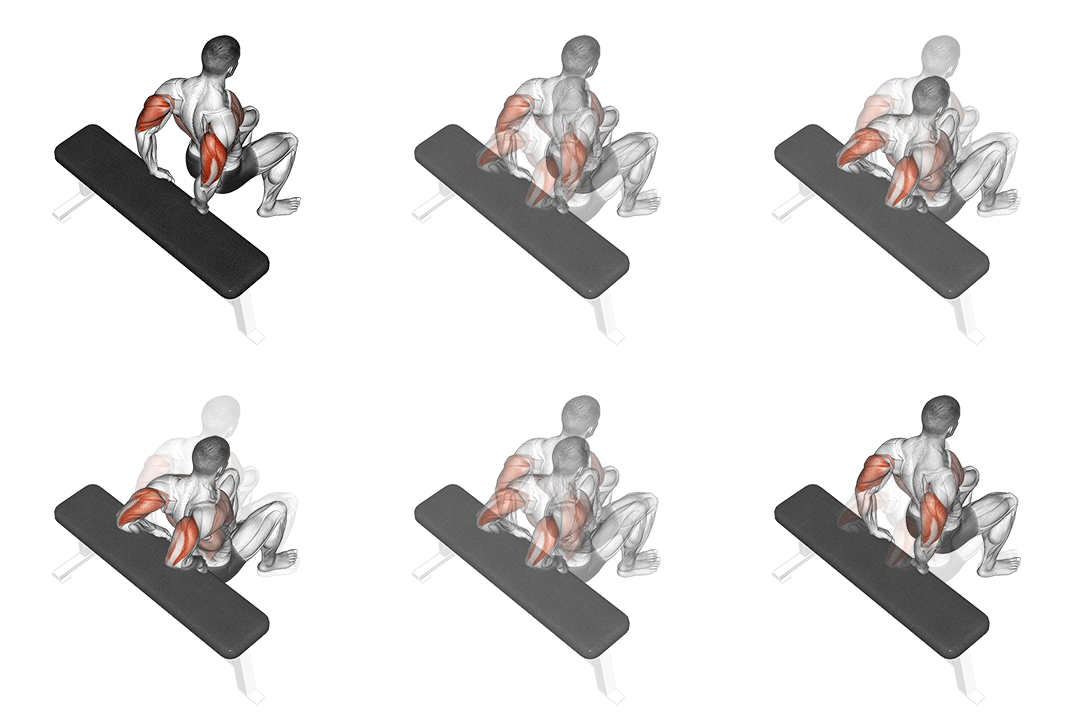
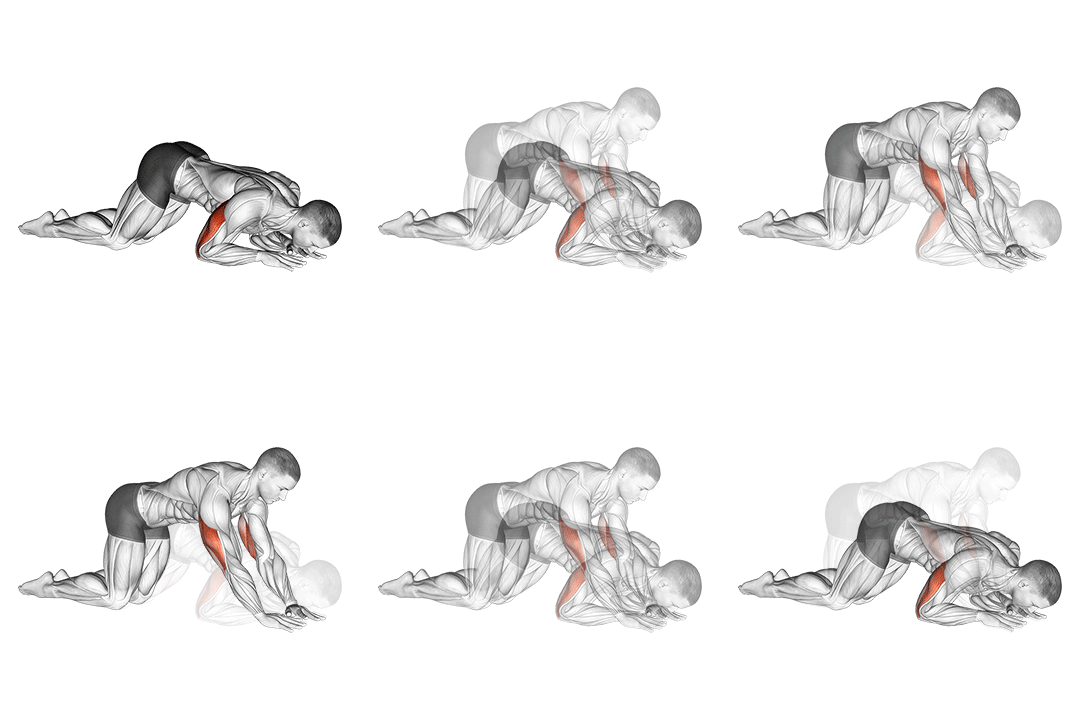
Bench Dip (knees Bent)
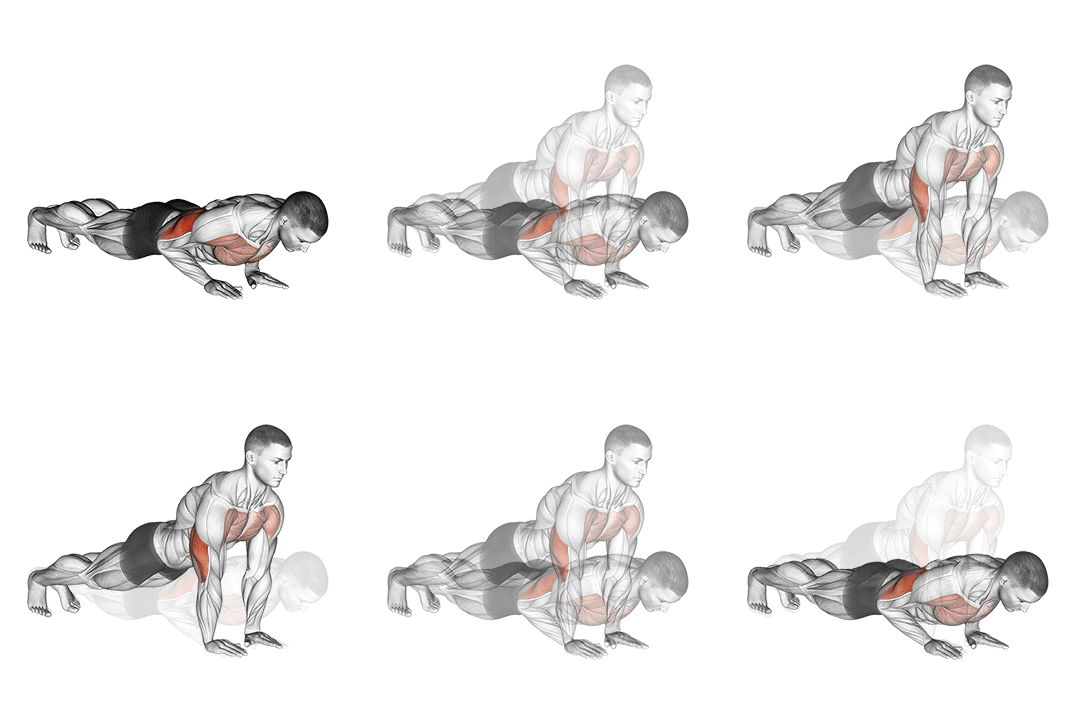
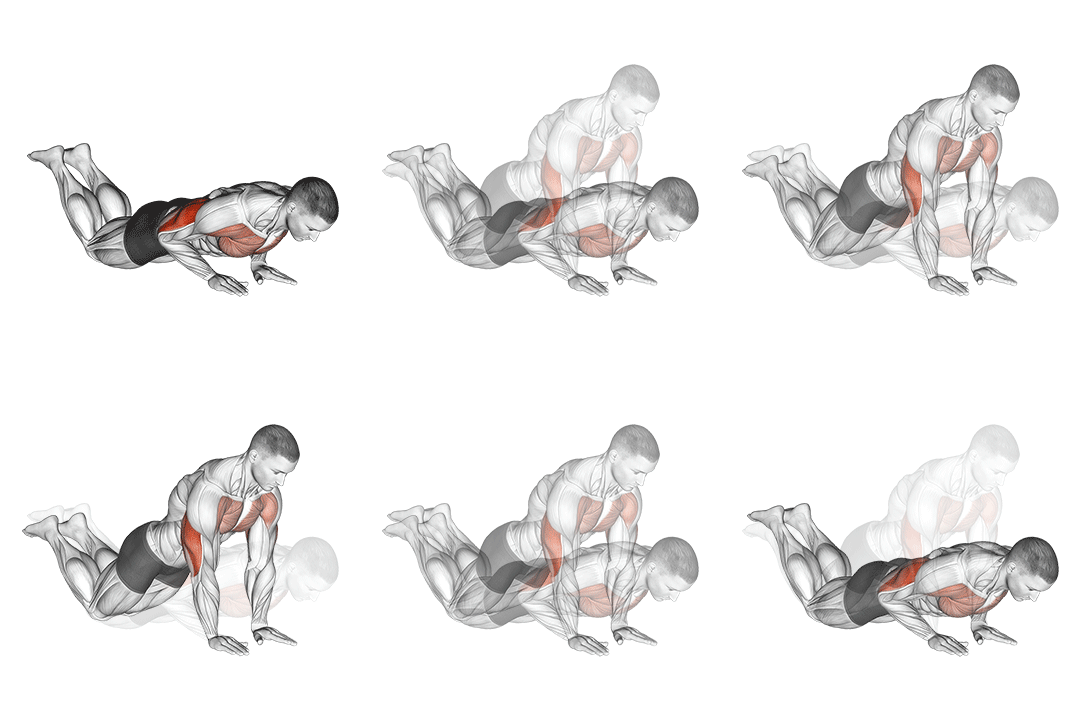
Close-grip Push-up
Head-to-Head Comparison
| Attribute | Bench Dip (knees Bent) | Close-grip Push-up |
|---|---|---|
| Target Muscle |
Triceps
|
Triceps
|
| Body Part |
Upper-arms
|
Upper-arms
|
| Equipment |
Body-weight
|
Body-weight
|
| Difficulty |
Beginner
|
Intermediate
|
| Movement Type |
Compound
|
Compound
|
| Secondary Muscles |
2
|
2
|
Secondary Muscles Activated
Bench Dip (knees Bent)
Close-grip Push-up
Visual Comparison
Overview
Bench Dip (knees Bent) vs Close-grip Push-up — both train your triceps, chest, and shoulders, but they load those muscles differently. In this guide you’ll get a direct comparison of muscle activation, mechanics, equipment needs, and injury risk. You’ll learn clear technique cues, rep ranges for hypertrophy and strength (6–12 and 3–6/6–8 respectively), and how to progress each move. By the end you’ll know which exercise to pick for triceps growth, strength, shoulder health, or a no-equipment home session.
Key Differences
- Difficulty levels differ: Bench Dip (knees Bent) is beginner, while Close-grip Push-up is intermediate.
- Both exercises target the Triceps using Body-weight. The main differences are in their movement patterns and muscle activation angles.
Pros & Cons
Bench Dip (knees Bent)
+ Pros
- Strong long-head triceps stretch due to shoulder extension
- Simple setup — bench or chair only
- Easy to control range of motion (limit to ≤90° elbow flexion)
- Good introductory compound pressing movement for beginners
− Cons
- Higher shoulder impingement risk if taken too deep
- Limited progressive overload options without added weight
- Less core and scapular stabilization demand compared to push-ups
Close-grip Push-up
+ Pros
- Scalable with incline/decline, bands, or added weight
- Stronger core and scapular stabilizer recruitment
- Lower shoulder impingement risk with proper technique
- Versatile for both hypertrophy (6–12 reps) and strength (3–6 reps) work
− Cons
- Requires better core and scapular control — harder to learn
- Wrist discomfort for some lifters without modification
- Slightly less long-head stretch compared to dips
When Each Exercise Wins
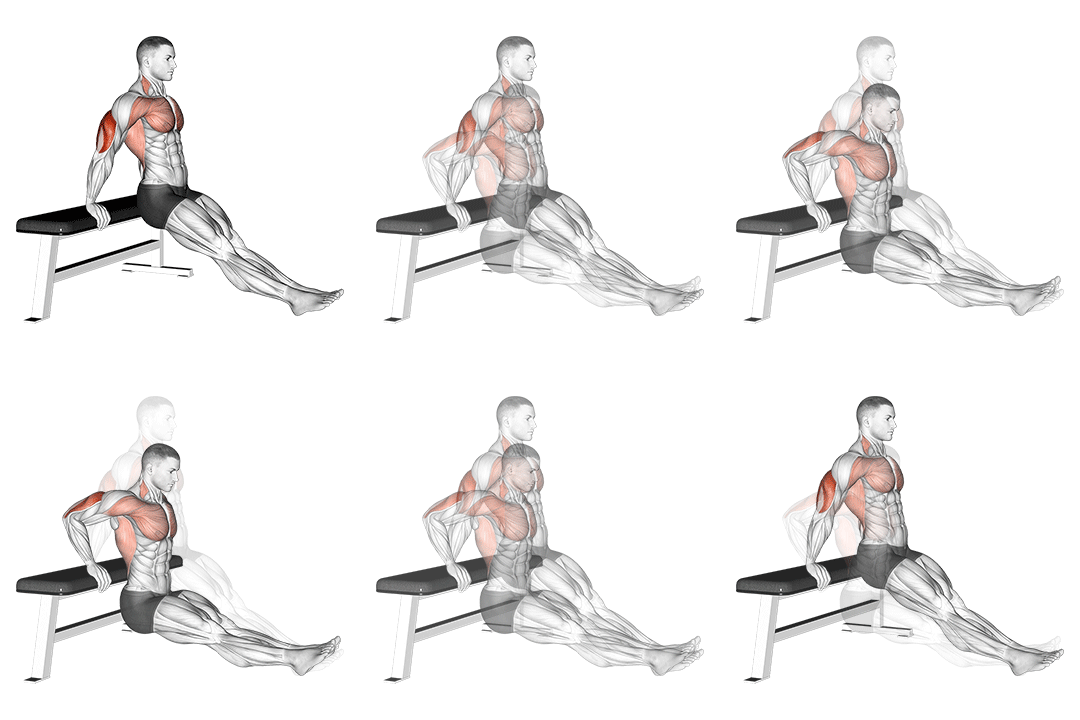
Bench dips expose the long head of the triceps to greater stretch because of shoulder extension, increasing length-tension stimulus useful for hypertrophy when you control depth (8–12 reps, 2:1 eccentric:concentric tempo). If you can safely add load, dips can produce robust triceps growth.
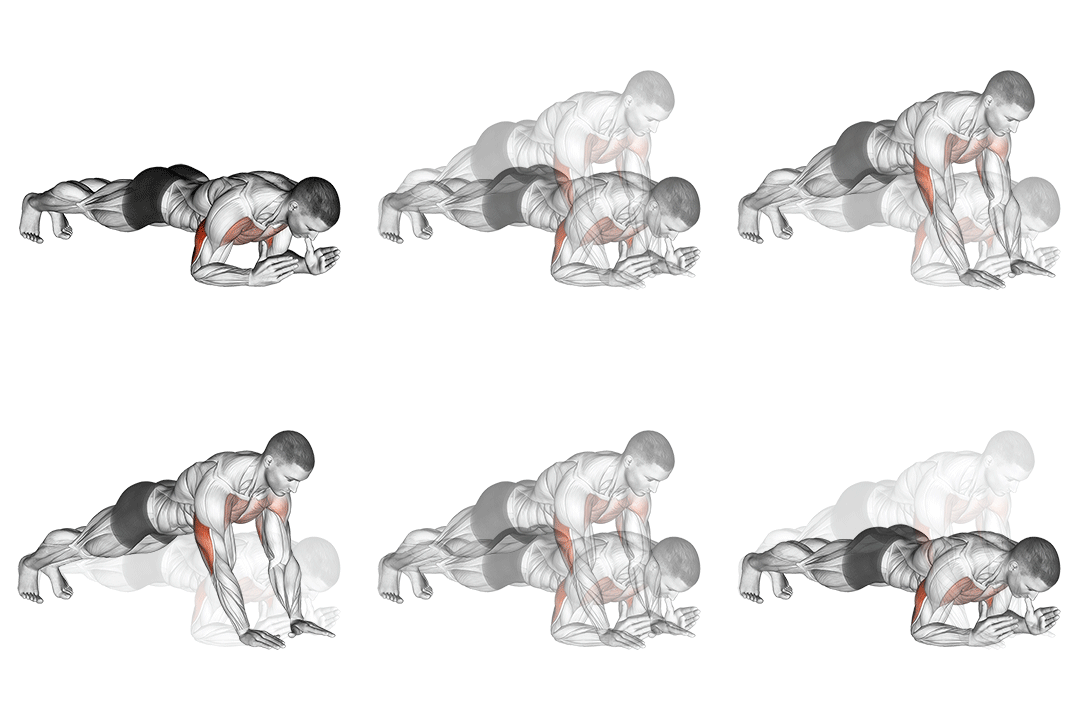
Close-grip push-ups offer clearer progressive overload options (weighted vest, band resistance, elevated feet) and demand full-body tension, which translates better to raw pressing strength when trained in low rep ranges (3–6 reps or heavy sets of 6–8).
Bench dips are easier to learn and let you focus on elbow extension without challenging core and scapular stability; start with knees bent and limit depth to control shoulder load while you build triceps control.
Close-grip push-ups need no furniture, scale easily with simple household modifications, and avoid the shoulder extension that can be problematic without proper mobility or supervision.
Frequently Asked Questions
Can I do both Bench Dip (knees Bent) and Close-grip Push-up in the same workout?
Yes. Pair them as a triceps superset (e.g., 8–12 bench dips followed by 10–15 close-grip push-ups) to fatigue different parts of the muscle and recruit stabilizers. Use lighter volume if both are heavy in the same session to avoid overworking the anterior shoulder.
Which exercise is better for beginners?
Bench Dip (knees Bent) is generally easier for beginners because the bench stabilizes your hips and isolates elbow extension. Start here to build basic triceps strength, then add close-grip push-ups once you have core and scapular control.
How do the muscle activation patterns differ?
Dips produce greater long-head triceps activation because shoulder extension lengthens that head, while close-grip push-ups show steadier lateral/medial head firing and higher serratus and core activation due to the horizontal force vector and plank position.
Can Close-grip Push-up replace Bench Dip (knees Bent)?
Yes for many lifters — close-grip push-ups can replace dips when you need safer shoulder mechanics and better progression options. If your goal is maximal long-head stretch for hypertrophy and your shoulders tolerate it, keep dips in rotation.
Expert Verdict
Use Bench Dip (knees Bent) when your priority is locally stressing the triceps long head and you need a beginner-friendly compound movement; keep elbow flexion to ~90° and use 8–12 reps for hypertrophy. Choose Close-grip Push-up when you want scalable overload, better core and scapular development, and a safer shoulder profile; progress with incline, decline, or added resistance and target 3–6 reps for strength or 6–12 for size. If shoulder mobility or pain is present, favor close-grip push-ups and build scapular control before adding dip-like patterns. Both moves have a place—pick based on shoulder health and your progression plan.
Also Compare
More comparisons with Bench Dip (knees Bent)
Compare More Exercises
Use our free comparison tool to analyze any two exercises head-to-head.
Compare Exercises