

Bench Dip (knees Bent) vs Close-grip Push-up (on Knees): Complete Comparison Guide
Bench Dip (knees Bent) vs Close-grip Push-up (on Knees) — both are beginner, bodyweight triceps builders you can do at home. You’ll get a clear head-to-head on primary muscle targeting, secondary shoulder and chest involvement, equipment needs, injury risk, and how to progress each move. I’ll give technique cues, biomechanical reasons behind muscle activation, rep ranges for hypertrophy and strength, and who should pick which exercise based on your goals and mobility.
Exercise Comparison
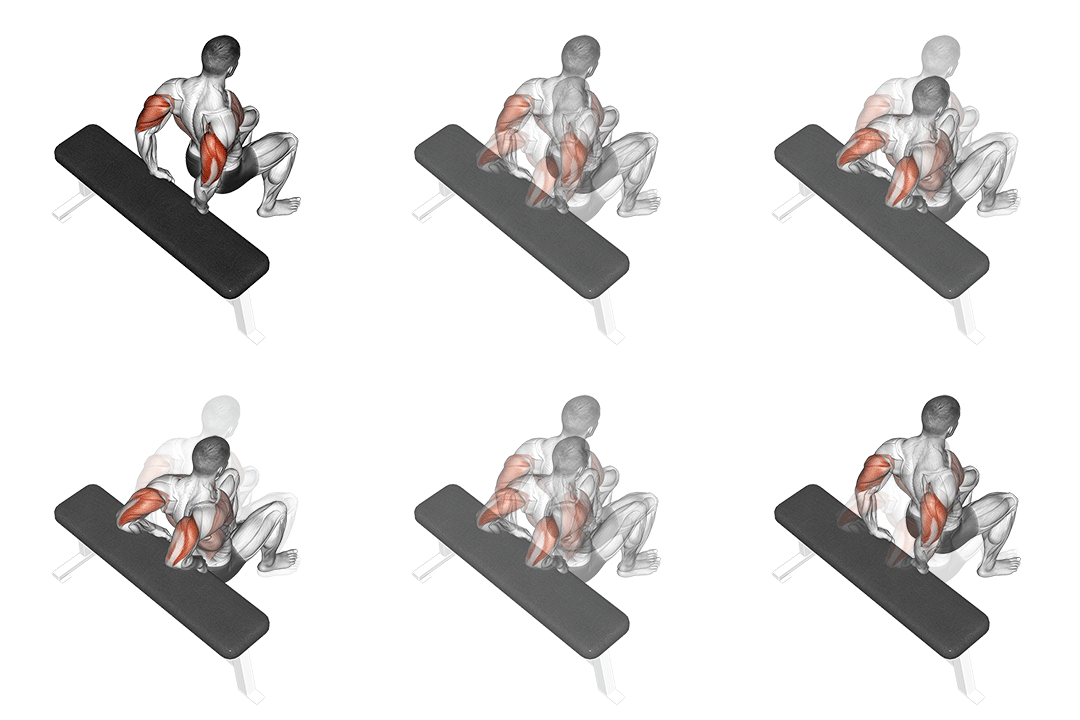
Bench Dip (knees Bent)
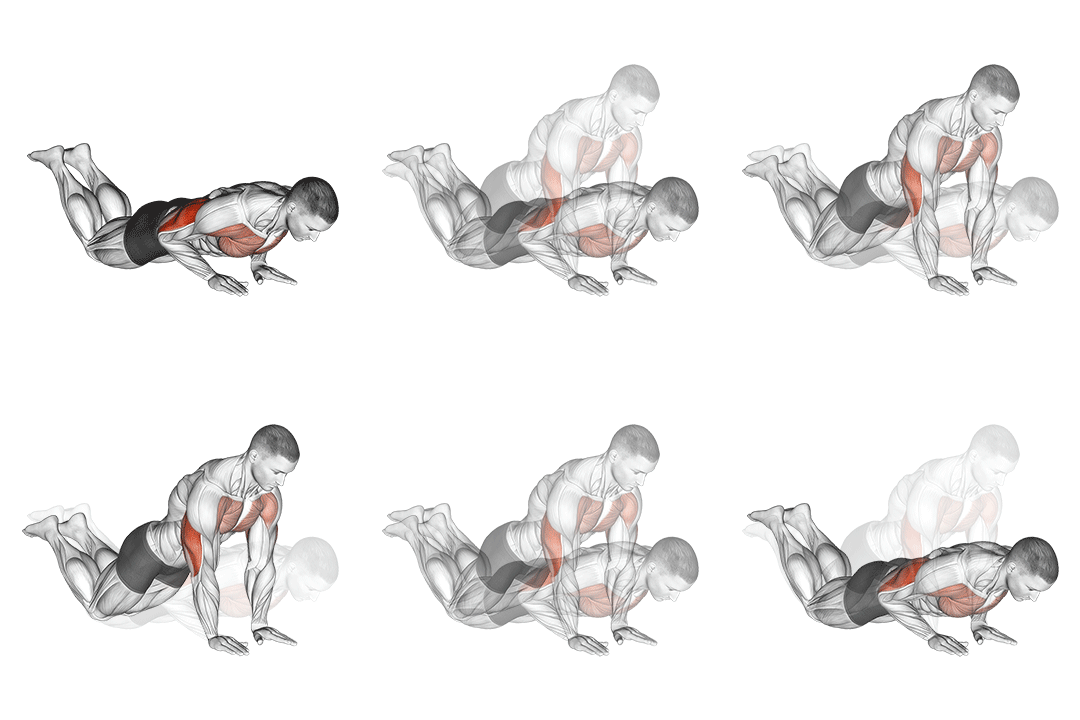
Close-grip Push-up (on Knees)
Head-to-Head Comparison
| Attribute | Bench Dip (knees Bent) | Close-grip Push-up (on Knees) |
|---|---|---|
| Target Muscle |
Triceps
|
Triceps
|
| Body Part |
Upper-arms
|
Upper-arms
|
| Equipment |
Body-weight
|
Body-weight
|
| Difficulty |
Beginner
|
Beginner
|
| Movement Type |
Compound
|
Compound
|
| Secondary Muscles |
2
|
2
|
Secondary Muscles Activated
Bench Dip (knees Bent)
Close-grip Push-up (on Knees)
Visual Comparison
Overview
Bench Dip (knees Bent) vs Close-grip Push-up (on Knees) — both are beginner, bodyweight triceps builders you can do at home. You’ll get a clear head-to-head on primary muscle targeting, secondary shoulder and chest involvement, equipment needs, injury risk, and how to progress each move. I’ll give technique cues, biomechanical reasons behind muscle activation, rep ranges for hypertrophy and strength, and who should pick which exercise based on your goals and mobility.
Key Differences
- Both exercises target the Triceps using Body-weight. The main differences are in their movement patterns and muscle activation angles.
Pros & Cons
Bench Dip (knees Bent)
+ Pros
- Stronger long-head triceps stretch and load for hypertrophy
- Easy to increase intensity by lengthening lever or adding weight
- Simple setup on a bench or chair
- Also recruits chest and anterior deltoid for compound loading
− Cons
- Higher shoulder impingement risk if you go too deep
- Requires a stable elevated surface
- Harder to master technique safely for those with limited shoulder mobility
Close-grip Push-up (on Knees)
+ Pros
- Requires no equipment and is highly accessible
- Lower shoulder impingement risk with proper form
- Easier to learn and scale from knees to full push-up
- Builds core stability and serratus anterior engagement
− Cons
- Less long-head triceps stretch compared to dips
- Progression may be slower without added resistance
- Can put pressure on wrists unless modified
When Each Exercise Wins
The bench dip places the triceps long head under greater stretch through shoulder extension, increasing length-tension stimulus. That extra mechanical tension, combined with 8–12 reps per set, favors muscle growth.
You can more readily overload the dip by extending legs or adding weight to reach lower-rep strength sets (4–6 reps). The vertical loading path lets you progressively increase external resistance more easily than the kneeling push-up.
The kneeling close-grip push-up is easier to learn, has lower shoulder risk, and teaches a safe horizontal pressing pattern while letting you focus on elbow tuck and scapular control.
No equipment, minimal setup, and scalable progression make the kneeling close-grip push-up the most practical choice for consistent home training.
Frequently Asked Questions
Can I do both Bench Dip (knees Bent) and Close-grip Push-up (on Knees) in the same workout?
Yes. Pairing them works well: use the dip as a heavier triceps-focused set and the close-grip knee push-up as a volume or technique set. Keep total volume in check—8–12 dip reps plus 2–3 sets of 8–15 push-ups is a practical approach.
Which exercise is better for beginners?
Close-grip Push-up (on Knees) is better for most beginners because it teaches pressing mechanics with less shoulder risk and no equipment. Start here to build strength, then introduce bench dips as mobility and strength improve.
How do the muscle activation patterns differ?
Bench dips increase long-head triceps activation due to shoulder extension and a more vertical force vector—peak tension at the bottom near 90° elbow flexion. Close-grip knee push-ups emphasize concentric triceps action through the final 20–30° of extension with greater horizontal chest and core involvement.
Can Close-grip Push-up (on Knees) replace Bench Dip (knees Bent)?
Yes for general triceps strength and accessibility, but not entirely if your goal is maximal triceps mechanical tension and progressive overload. Replace dips with push-ups for safety or convenience, but use dips when you need a stronger overload stimulus.
Expert Verdict
Both moves have a place in your program. Choose Bench Dip (knees Bent) when you want a stronger mechanical overload on the triceps long head and can control shoulder range—use 6–12 reps, stop when elbows hit ~90° to limit extreme shoulder extension, and progress by increasing lever length or adding weight. Use Close-grip Push-up (on Knees) if you need a safer, equipment-free option to build base strength, core stability, and scapular control; aim for 8–15 reps and progress to full close-grip push-ups. If you value hypertrophy and progressive overload, favor bench dips; if you prioritize accessibility and joint health, pick the kneeling close-grip push-up.
Also Compare
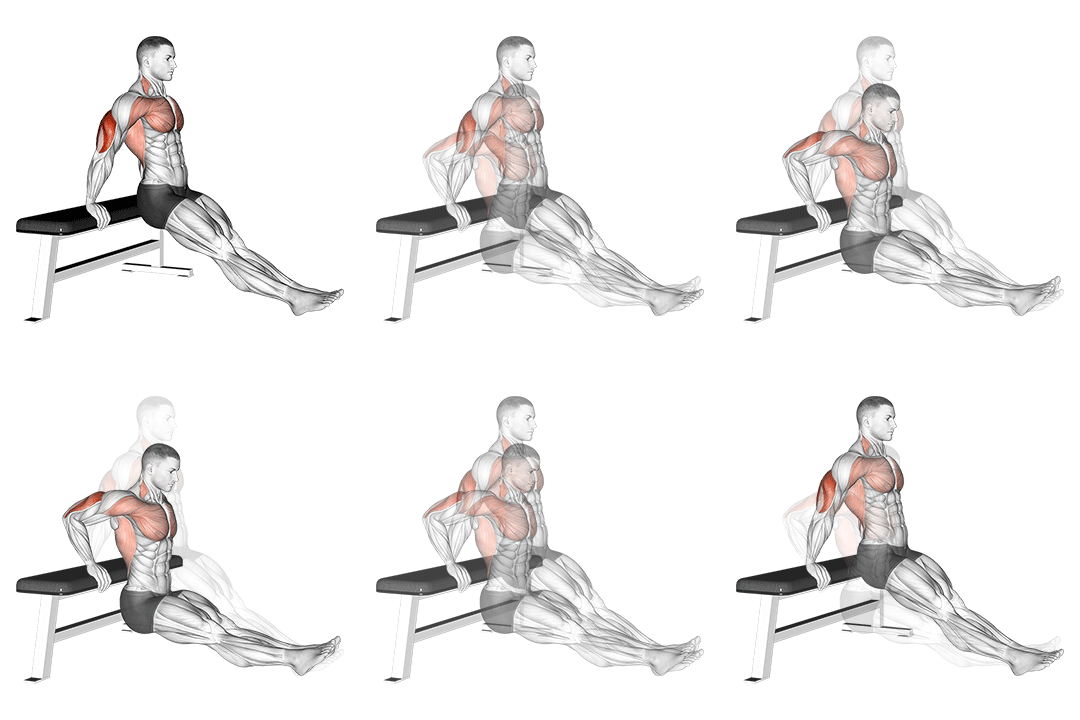
More comparisons with Bench Dip (knees Bent)
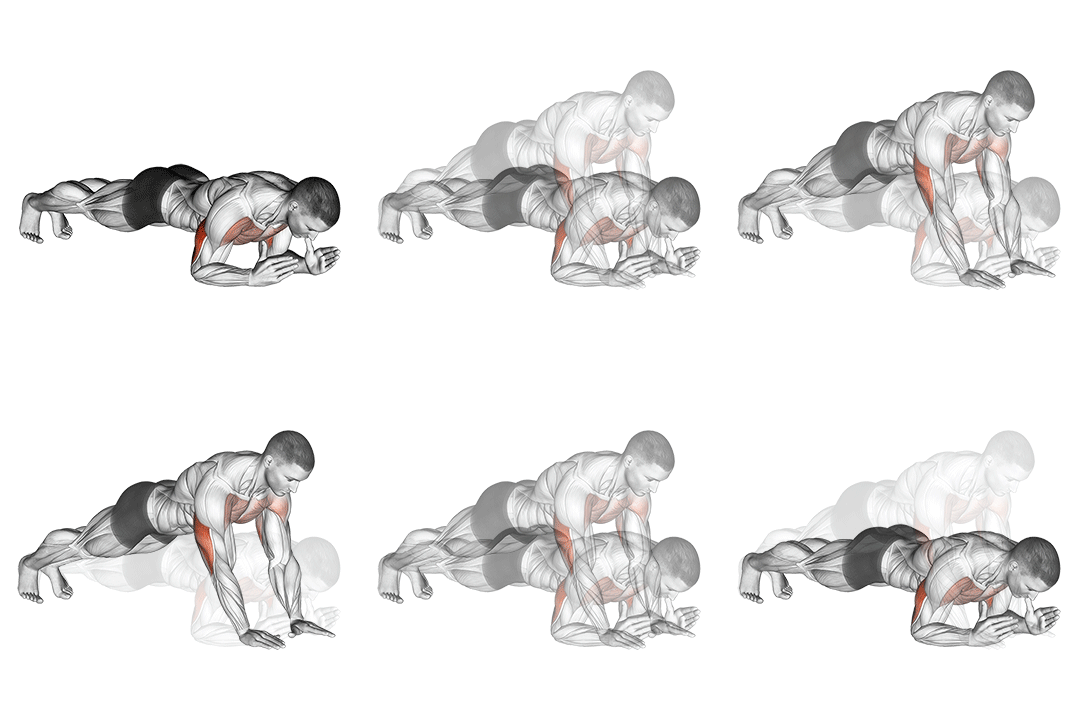
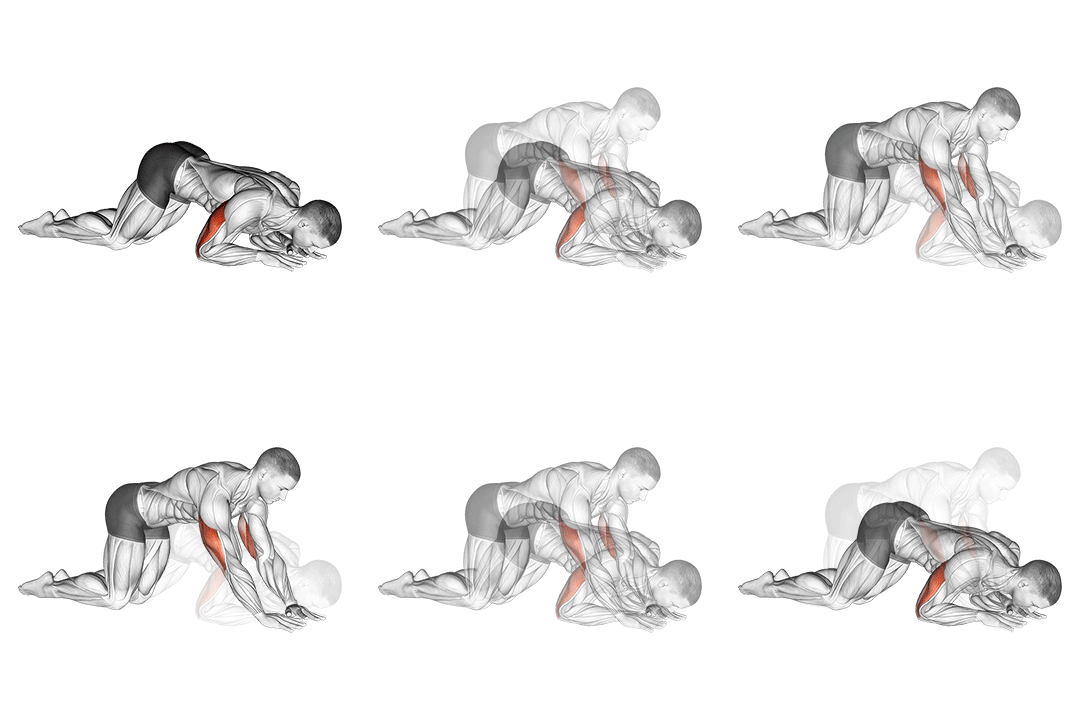
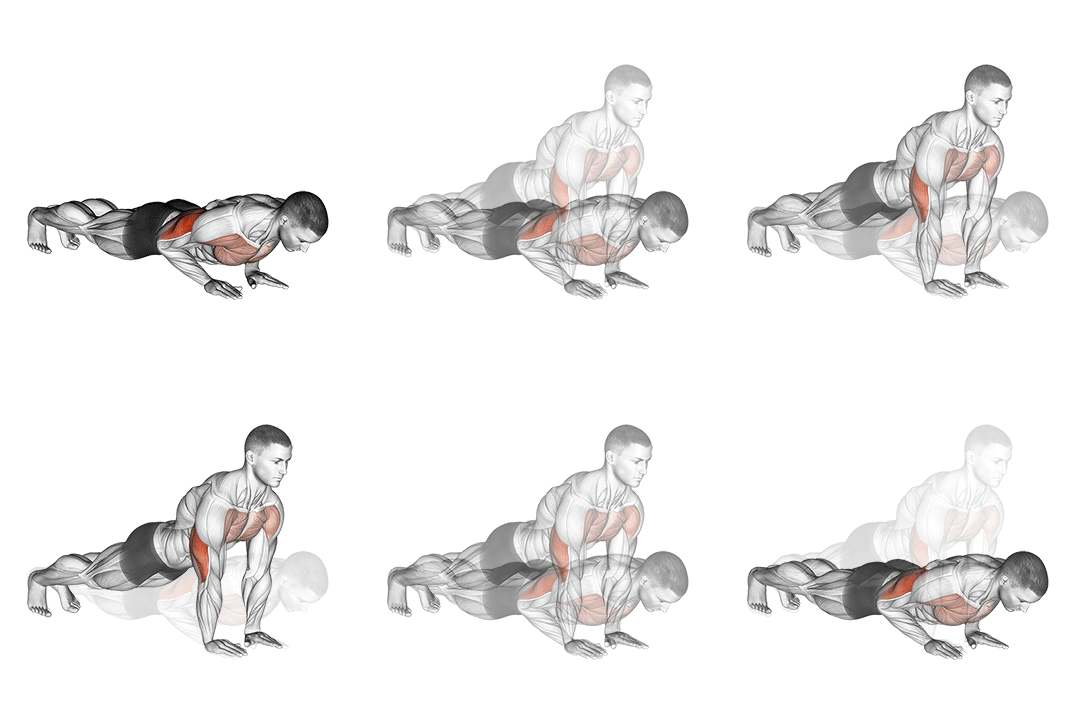
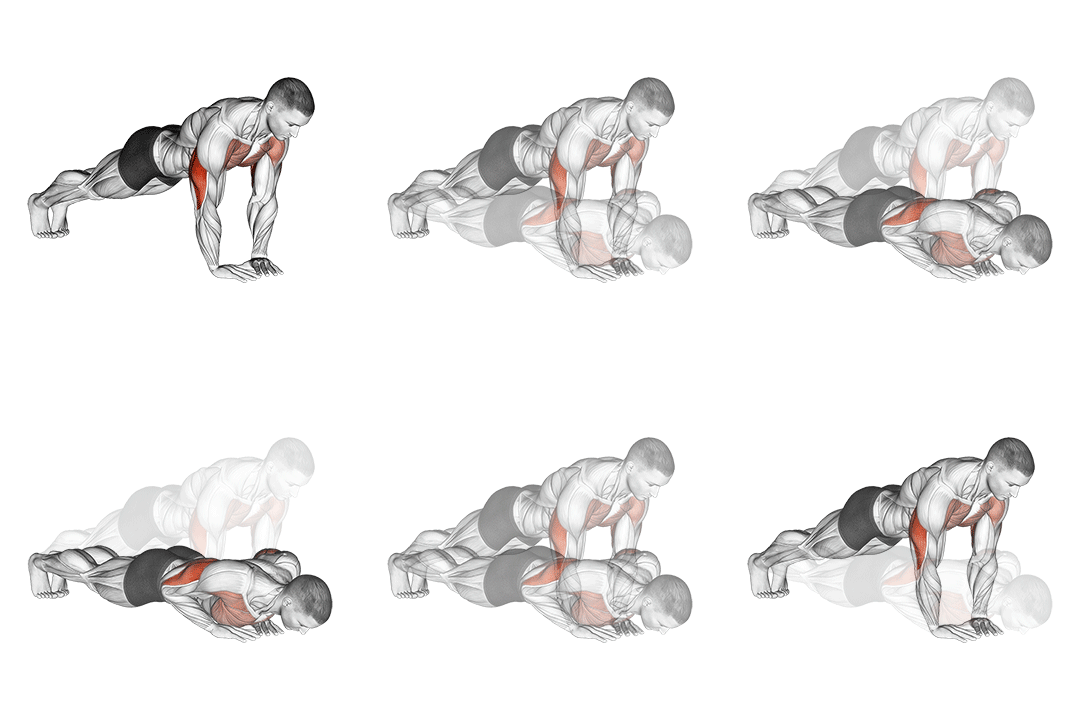
More comparisons with Close-grip Push-up (on Knees)
Compare More Exercises
Use our free comparison tool to analyze any two exercises head-to-head.
Compare Exercises