

Bench Dip (knees Bent) vs Diamond Push-up: Complete Comparison Guide
Bench Dip (knees Bent) vs Diamond Push-up — two bodyweight triceps builders that look similar on paper but load your arms and shoulders very differently. You’ll get a clear breakdown of which exercise hits the triceps harder, how the chest and shoulders contribute, what equipment and progressions each needs, and which one carries more joint risk. Read technique cues, rep ranges for strength and hypertrophy (6–12 for muscle growth; 3–6 for strength), and specific recommendations so you can pick the right move for your program.
Exercise Comparison
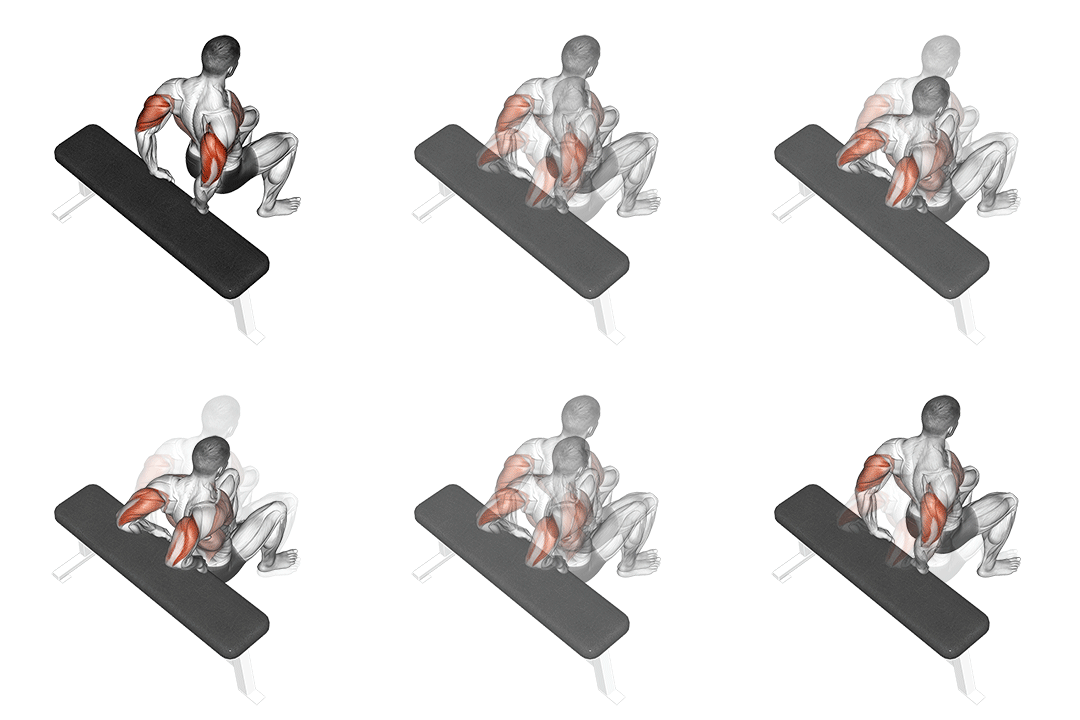
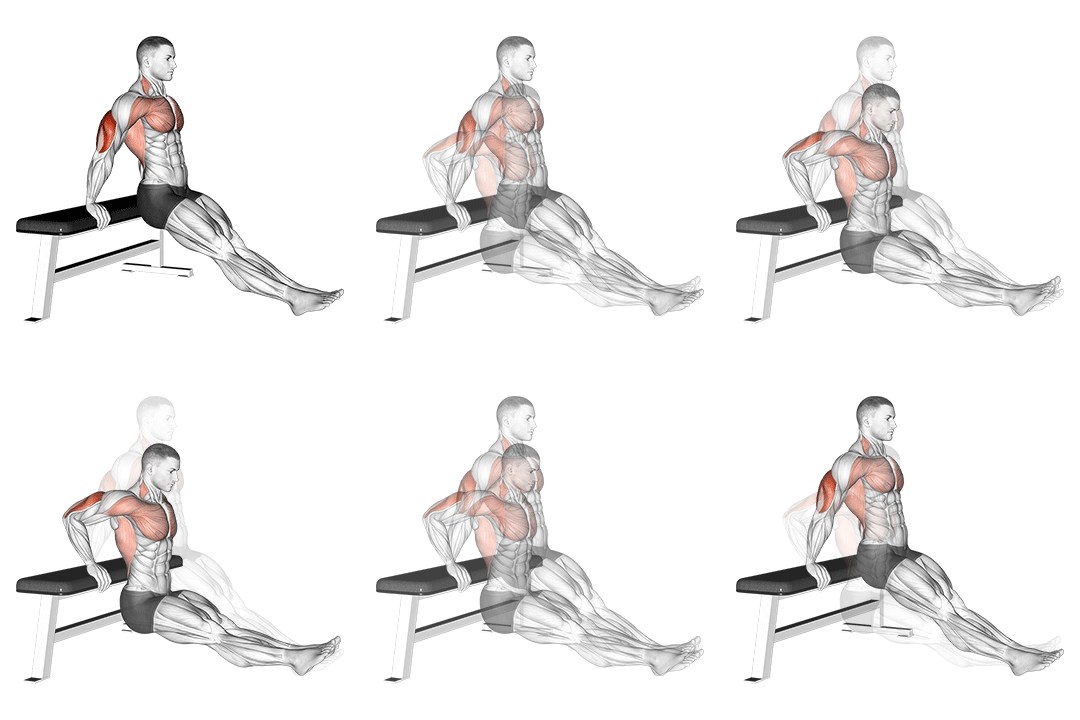
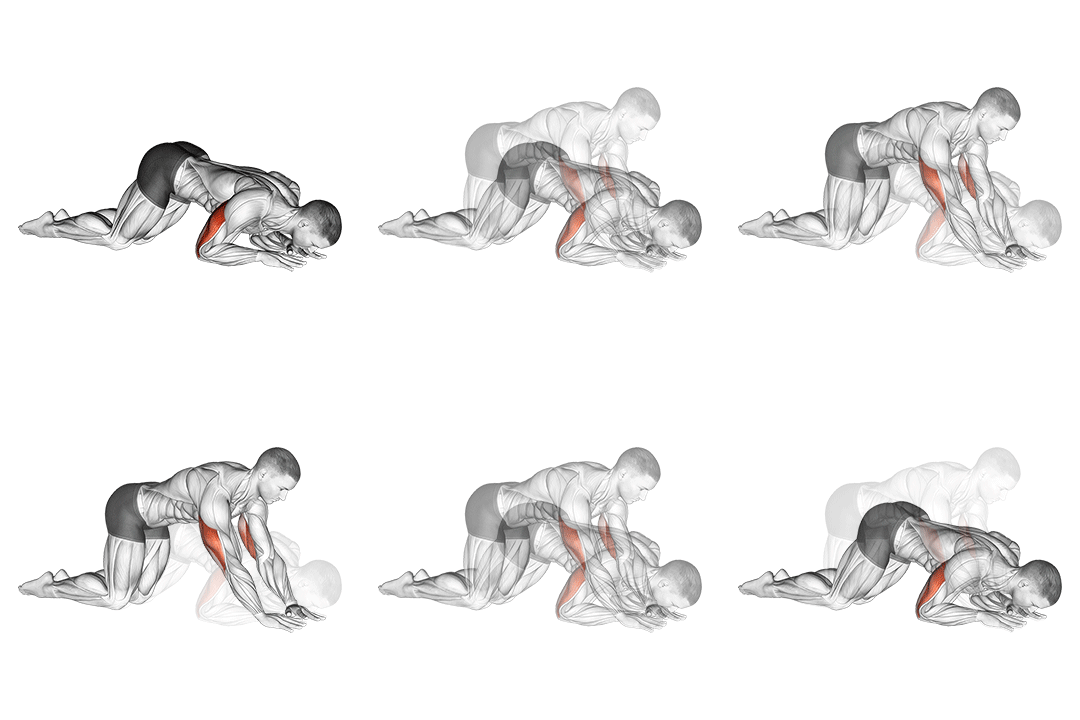
Bench Dip (knees Bent)
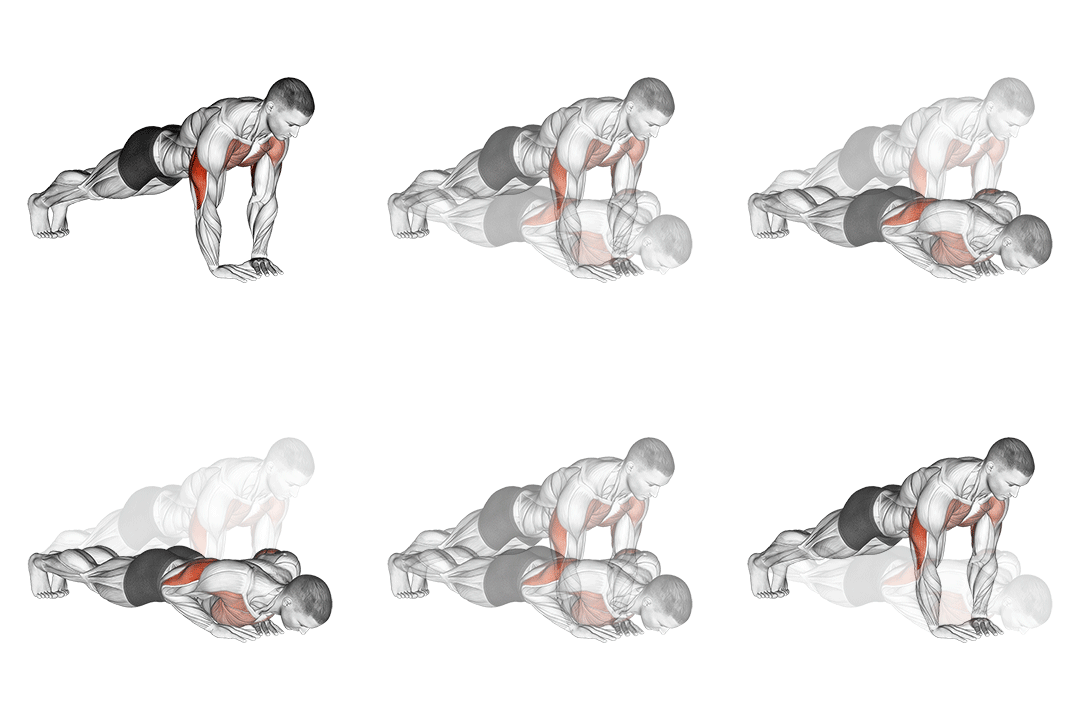
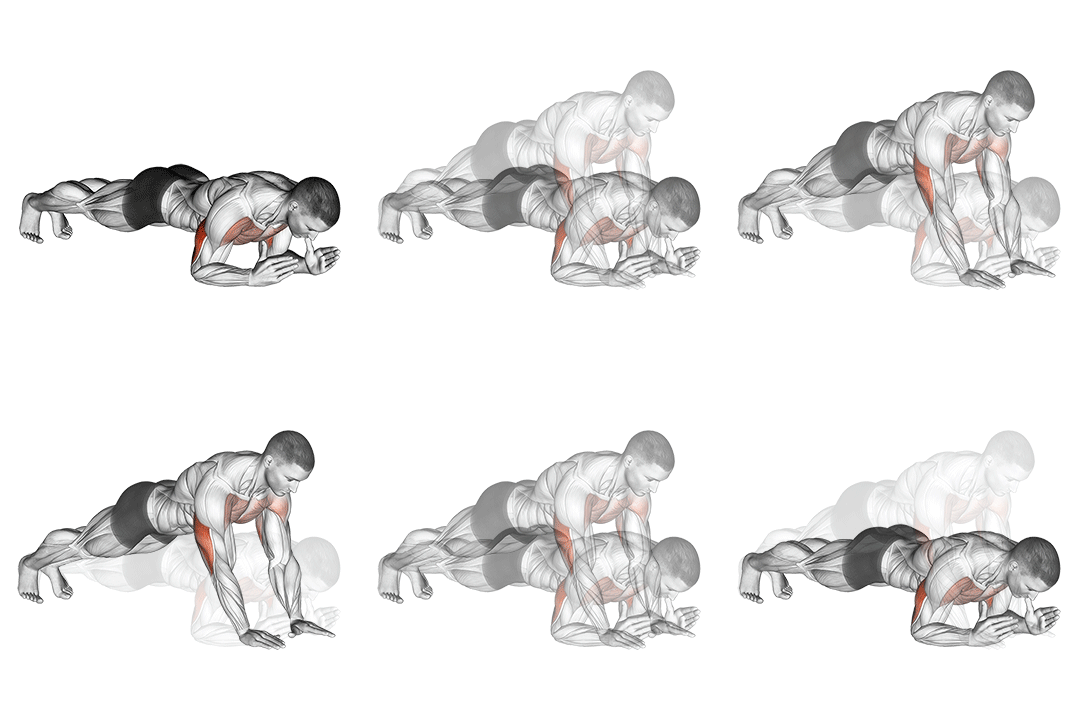
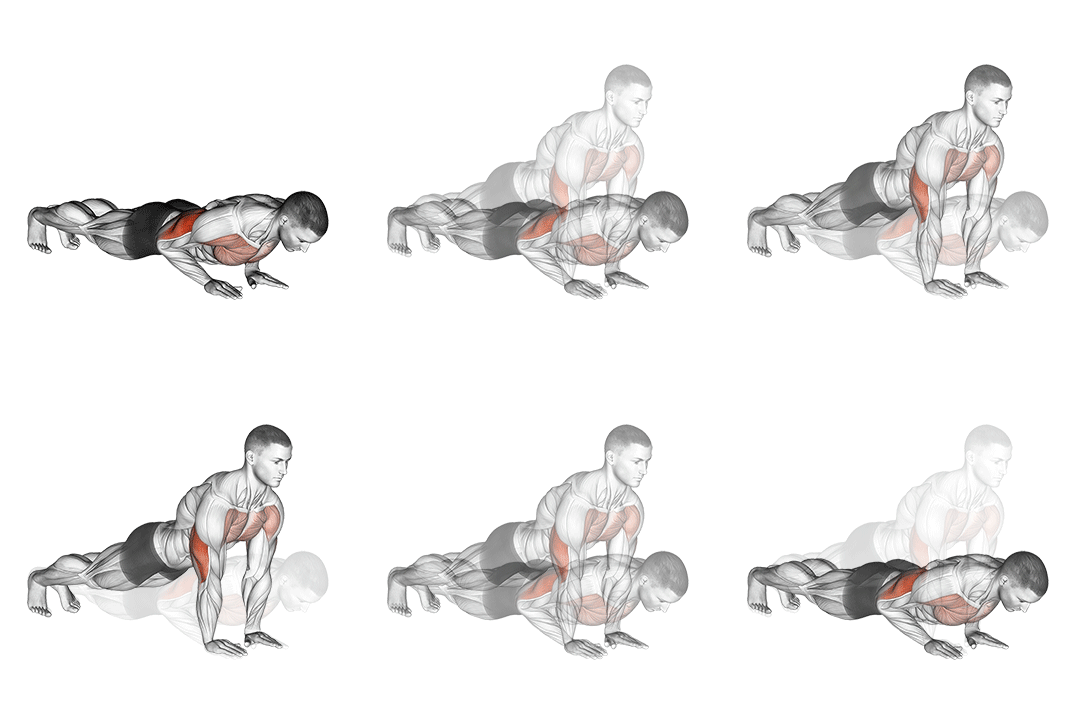
Diamond Push-up
Head-to-Head Comparison
| Attribute | Bench Dip (knees Bent) | Diamond Push-up |
|---|---|---|
| Target Muscle |
Triceps
|
Triceps
|
| Body Part |
Upper-arms
|
Upper-arms
|
| Equipment |
Body-weight
|
Body-weight
|
| Difficulty |
Beginner
|
Advanced
|
| Movement Type |
Compound
|
Compound
|
| Secondary Muscles |
2
|
2
|
Secondary Muscles Activated
Bench Dip (knees Bent)
Diamond Push-up
Visual Comparison
Overview
Bench Dip (knees Bent) vs Diamond Push-up — two bodyweight triceps builders that look similar on paper but load your arms and shoulders very differently. You’ll get a clear breakdown of which exercise hits the triceps harder, how the chest and shoulders contribute, what equipment and progressions each needs, and which one carries more joint risk. Read technique cues, rep ranges for strength and hypertrophy (6–12 for muscle growth; 3–6 for strength), and specific recommendations so you can pick the right move for your program.
Key Differences
- Difficulty levels differ: Bench Dip (knees Bent) is beginner, while Diamond Push-up is advanced.
- Both exercises target the Triceps using Body-weight. The main differences are in their movement patterns and muscle activation angles.
Pros & Cons
Bench Dip (knees Bent)
+ Pros
- Beginner-friendly with knees bent to reduce load
- Strong long-head triceps and chest stretch due to shoulder extension
- Easy to set up on common gym or home furniture
- Simple to increase load by extending legs or adding weight
− Cons
- Higher shoulder impingement risk in deep range
- Chest can dominate if torso drops too far forward
- Limited scapular control can lead to poor movement patterns
Diamond Push-up
+ Pros
- Excellent triceps overload with narrow hand placement
- Minimal equipment—ideal for strict home training
- Easier on anterior shoulder capsule than deep dips
- Lots of progression options (deficit, archer, one-arm, tempo)
− Cons
- Technically demanding—requires strong scapular and core control
- Increases wrist and elbow stress in some lifters
- Harder for true beginners to perform with full range
When Each Exercise Wins
Bench dips place the triceps and chest on a longer length-tension curve and allow a deep stretch under load, which supports hypertrophy when performed in 6–12 rep ranges with controlled tempos and progressive overload.
Diamond push-ups scale into heavier, more specific pressing progressions (weighted vests, decline or one-arm variations) and develop pressing mechanics that transfer well to loaded horizontal pushes.
Knees-bent dips reduce effective load and simplify elbow-focused strength work, letting you train triceps in a controlled range before advancing to body-line demanding moves.
Diamond push-ups need only floor space and provide scalable options without furniture, making them more practical for limited-equipment home setups.
Frequently Asked Questions
Can I do both Bench Dip (knees Bent) and Diamond Push-up in the same workout?
Yes. Pairing them works well—use bench dips as a hypertrophy/set-up exercise (8–12 reps) and diamond push-ups as a strength or finishing movement (3–6 heavy reps or tempo sets). Monitor shoulder fatigue and reduce volume if form breaks.
Which exercise is better for beginners?
Bench Dip (knees Bent) is better for absolute beginners because the knees-bent position lowers the load and isolates elbow extension. Once you build core and scapular control, progress toward diamond push-ups for a more functional pressing pattern.
How do the muscle activation patterns differ?
Diamond push-ups concentrate triceps activation near lockout due to a shorter shoulder moment arm, while bench dips load the long head more through shoulder extension and greater pec stretch. The differing shoulder angles change torque curves and where muscles produce peak force.
Can Diamond Push-up replace Bench Dip (knees Bent)?
Yes for many trainees: diamond push-ups can replace dips when you need minimal equipment and safer shoulder mechanics. But if your goal is to maximize long-head stretch and chest involvement for hypertrophy, include bench dips carefully in your plan.
Expert Verdict
Choose Bench Dip (knees Bent) when you want a beginner-friendly triceps movement that gives a strong stretch to the long head and chest—use 3–4 sets of 6–12 reps, control the descent 2–3 seconds, and stop short of painful shoulder end-range. Pick Diamond Push-up when you need a scalable, equipment-free pressing pattern that loads the triceps more directly and transfers to single-arm or weighted progressions; aim for 4–6 sets of 3–8 reps for strength or 8–15 for hypertrophy. If you have a history of shoulder pain, favor diamond push-ups with strict scapular control; if you lack pressing strength, start with bench dips and progress safely.
Also Compare
More comparisons with Bench Dip (knees Bent)
Compare More Exercises
Use our free comparison tool to analyze any two exercises head-to-head.
Compare Exercises