

Bench Dip (knees Bent) vs Dips - Triceps Version: Complete Comparison Guide
Bench Dip (knees Bent) vs Dips - Triceps Version — two staple bodyweight moves that train your triceps but demand different strength, technique, and equipment. I’ll walk you through how each exercise loads the triceps, how chest and shoulder involvement changes, and which to pick for hypertrophy, strength, or home training. You’ll get clear technique cues (elbow position, torso angle, ROM targets), a side-by-side on accessibility and injury risk, and practical progressions so you can apply the right choice to your program.
Exercise Comparison
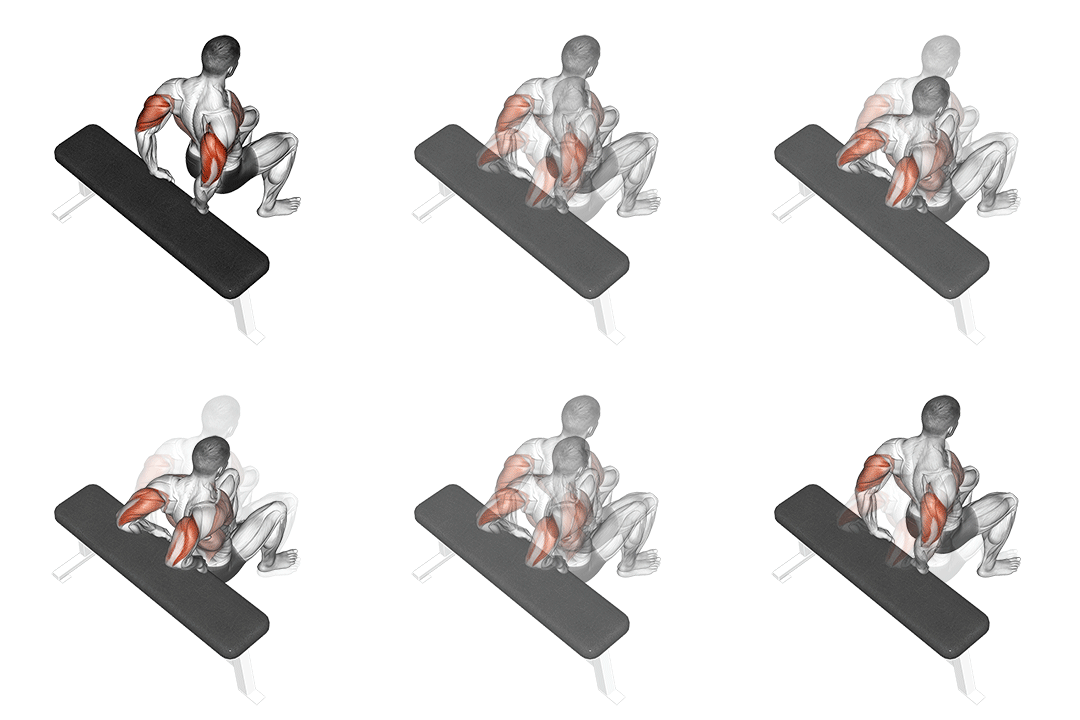
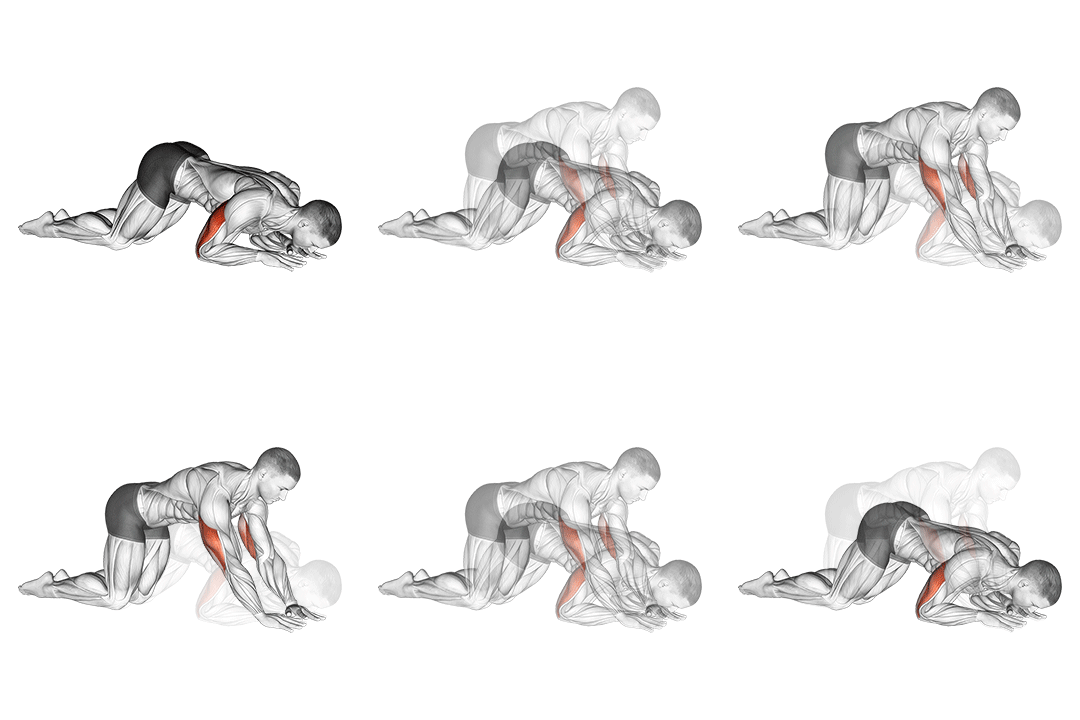
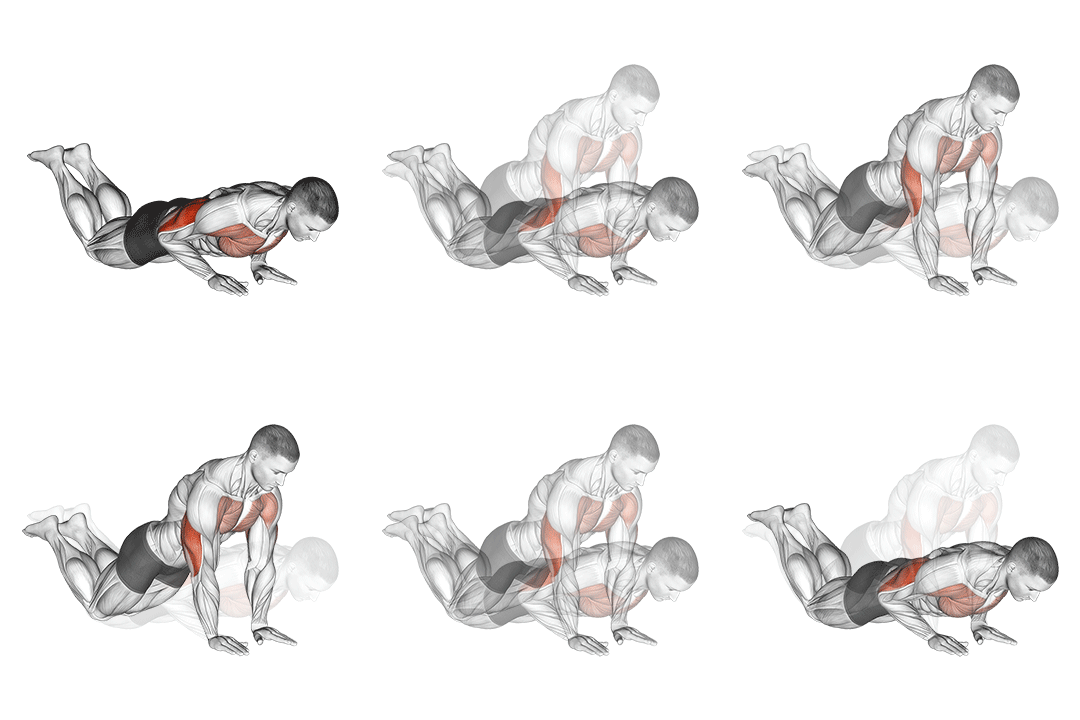
Bench Dip (knees Bent)
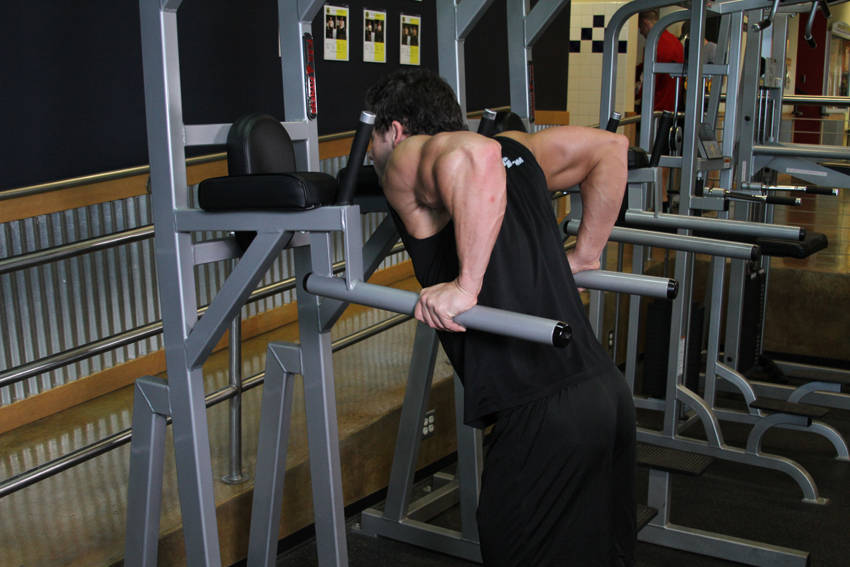
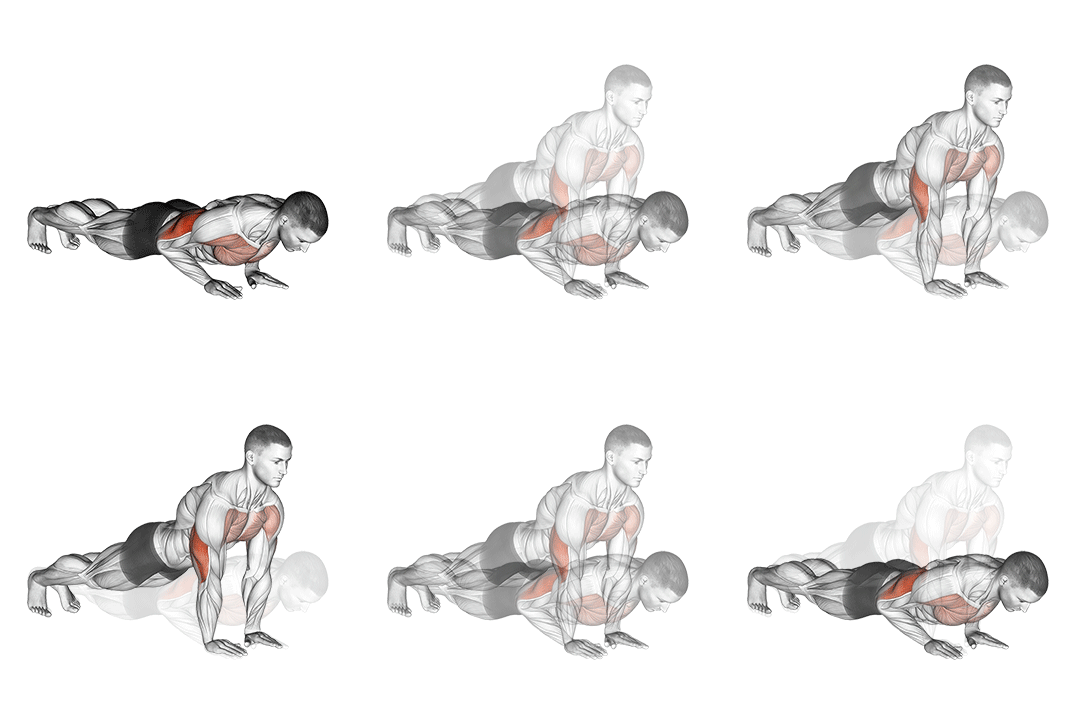
Dips - Triceps Version
Head-to-Head Comparison
| Attribute | Bench Dip (knees Bent) | Dips - Triceps Version |
|---|---|---|
| Target Muscle |
Triceps
|
Triceps
|
| Body Part |
Upper-arms
|
Upper-arms
|
| Equipment |
Body-weight
|
Body-weight
|
| Difficulty |
Beginner
|
Intermediate
|
| Movement Type |
Compound
|
Compound
|
| Secondary Muscles |
2
|
2
|
Secondary Muscles Activated
Bench Dip (knees Bent)
Dips - Triceps Version
Visual Comparison
Overview
Bench Dip (knees Bent) vs Dips - Triceps Version — two staple bodyweight moves that train your triceps but demand different strength, technique, and equipment. I’ll walk you through how each exercise loads the triceps, how chest and shoulder involvement changes, and which to pick for hypertrophy, strength, or home training. You’ll get clear technique cues (elbow position, torso angle, ROM targets), a side-by-side on accessibility and injury risk, and practical progressions so you can apply the right choice to your program.
Key Differences
- Difficulty levels differ: Bench Dip (knees Bent) is beginner, while Dips - Triceps Version is intermediate.
- Both exercises target the Triceps using Body-weight. The main differences are in their movement patterns and muscle activation angles.
Pros & Cons
Bench Dip (knees Bent)
+ Pros
- Easy to set up at home with a chair or bench
- Lower external load makes it beginner-friendly for learning elbow extension
- Good for high-rep metabolic work and muscular endurance (12–30+ reps)
- Easy to regress or modify by changing foot placement or bench height
− Cons
- Lower maximum mechanical tension limits long-term strength progression
- Can place anterior shoulder in compromised horizontal extension at deep ROM
- Less effective for progressive overload compared to parallel-bar dips
Dips - Triceps Version
+ Pros
- Provides high mechanical tension for triceps strength and hypertrophy
- Clear progression path (added weight, deeper ROM, rings)
- Train scapular stability and core coordination under load
- Allows varied force vectors by adjusting torso angle to bias triceps or chest
− Cons
- Requires dip bars or rings and more setup than bench dips
- Higher shoulder and elbow joint stress, especially with poor technique
- Steeper learning curve; beginners may need regressions or assistance
When Each Exercise Wins
Dips let you create greater mechanical tension and longer muscle length under load, which drives muscle growth. You can progressively overload with added weight and train through a fuller ROM, which increases time under tension and stimulus for growth.
Dips handle heavier external loads and preserve a long lever arm, producing larger joint moments at the elbow and shoulder—key for building triceps strength. The exercise scales well with weighted belts or vests to increase force demands.
Bench dips reduce the moment arm and let you learn elbow extension and control at a lower intensity. They’re simple to set up and easier on technique, letting you build baseline triceps endurance before advancing.
Bench dips require only a stable chair or bench and minimal space, making them ideal for home routines. You can still manipulate difficulty (foot position, bench height) without specialized equipment.
Frequently Asked Questions
Can I do both Bench Dip (knees Bent) and Dips - Triceps Version in the same workout?
Yes — pair bench dips as a warm-up or volume-set, then perform weighted or bodyweight dips as your heavy or main strength set. That sequence warms the triceps and reinforces motor patterns while letting you apply higher intensity to the stronger movement.
Which exercise is better for beginners?
Bench Dip (knees Bent) is better for most beginners because it reduces load and simplifies positioning. It lets you practice elbow extension and build endurance before progressing to full dips.
How do the muscle activation patterns differ?
Dips typically place the triceps under higher tension and at longer muscle lengths, increasing force production via the length-tension relationship. Bench dips shorten the lever and often shift some load to the chest and anterior deltoid, reducing peak triceps activation.
Can Dips - Triceps Version replace Bench Dip (knees Bent)?
Yes, if you have the strength and equipment—dips can replace bench dips for heavier work and progression. However, keep bench dips in your toolbox for regressions, high-rep endurance, or when equipment is limited.
Expert Verdict
Use Bench Dip (knees Bent) if you’re starting out, rehabbing, or need a convenient home option: it minimizes load, teaches elbow extension, and suits high-rep work. Choose Dips - Triceps Version when you want heavy mechanical tension, clear progressive overload, and greater triceps stimulus—keep torso upright and elbows tucked to bias the triceps and add external weight for strength phases. Always control descent to ~90° elbow flexion, maintain scapular retraction, and avoid extreme shoulder horizontal extension. Rotate both into your program: bench dips as warm-up/regression, dips for peak intensity and progression.
Also Compare
More comparisons with Bench Dip (knees Bent)
More comparisons with Dips - Triceps Version
Compare More Exercises
Use our free comparison tool to analyze any two exercises head-to-head.
Compare Exercises